
Vitamin C dissolves in water, vitamin D in fat, and both gradually lose their health-promoting properties through oxidation. Dr Szymon Juchniewicz of Wroclaw University of Economics and Business will investigate whether the two can be enclosed together in a gel made entirely from plant-based ingredients. He has received PLN 47,498 from the National Science Centre (NCN) for preliminary research.
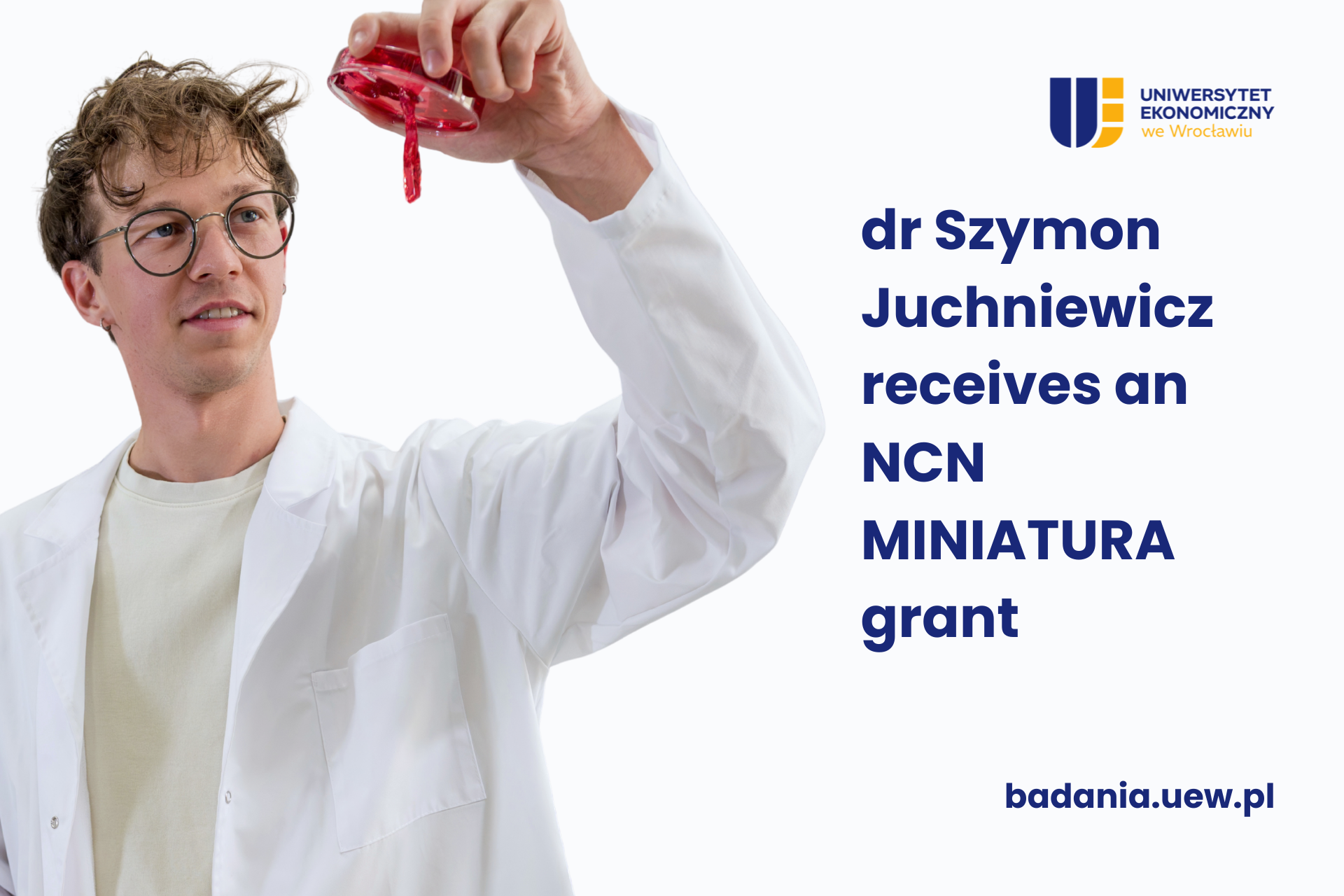
The project “Plant-based protein-polysaccharide emulgels as matrices for the stabilisation of vitamins C and D” appears on the fifth ranking list of the MINIATURA 10 call, published by the NCN on 30 September 2026. The list includes 158 projects with total funding of more than PLN 6 million.
More and more people are choosing plant-based alternatives to traditional products, as well as vitamin-fortified foods. For manufacturers, this poses a specific technological challenge. Vitamins are unstable: their health-promoting properties are affected by exposure to oxygen, light and storage time. In addition, vitamins C and D require completely different environments, so keeping both in good condition in a single product until the end of its shelf life is difficult.
Dr Juchniewicz is looking for a solution in emulgels. These are soft, jelly-like structures in which a watery gel network holds tiny droplets of oil in suspension. Such a material has room for both water-soluble and fat-soluble ingredients. In Dr Juchniewicz’s project, the gels will be made exclusively from plant proteins and polysaccharides.
Gels of this kind are usually assessed on a single property, such as density or active ingredient content. The researcher wants to study them as a whole: to examine how the composition of the gel affects its internal structure and strength, and how long the vitamins enclosed in it remain active. This knowledge would make it possible to design food products deliberately rather than developing recipes by trial and error.
“In a few years, gels like these could find their way into plant-based functional foods and gummy supplements. First, however, we need to establish which combinations of plant proteins and polysaccharides protect vitamins best. That is the question the MINIATURA-funded project is designed to answer,” says Dr Szymon Juchniewicz.
The results could form the basis for developing plant-based functional foods, supplements in new formats such as gummies, and products that retain their nutritional value for longer. The MINIATURA grant funds preliminary research intended to test the project’s assumptions and lay the groundwork for a larger research proposal.
From the laboratory to industry
This is not the only funding Dr Juchniewicz has secured this year. In March 2026, a UEW team of which he is a member received PLN 40,000 under the Nestlé Polska grant programme for the WaterSmartFat project. The researchers aim to replace traditional fats with plant-based emulgels and oleogels. According to the project’s assumptions, this will reduce the water footprint of the ingredient, meaning the amount of water used in its production, by more than 50 per cent. The solution is intended for products including sauces, plant-based meat alternatives and desserts.
His project has also qualified for the first phase of the LIDER UP programme run by the National Centre for Research and Development (NCBR). Out of 708 applications from across Poland, 100 young researchers were selected. They will receive training in the commercialisation of research results and mentoring from business experts, after which they will be able to apply for funding of up to PLN 2.5 million.
Dr Juchniewicz also leads the ALFAGEL project, selected for funding under the Science4Business programme, which supports research results with commercial potential. The project has already been launched; its full title is “Plant-based emulgel formulation for the development of functional gel products and gummies” [working translation of the title].
About the researcher
Dr Szymon Juchniewicz is a food technologist and assistant professor in the Department of Biotechnology and Food Analysis at UEW. He completed his engineering and master’s degrees, as well as doctoral school, in food technology and nutrition at the Wrocław University of Environmental and Life Sciences. In April 2026, he defended his doctoral thesis on shaping the structure of protein gels using a magnetic field.
He studies how to design and control the structure of food. His work focuses on water-based gels (hydrogels), oil-based gels (oleogels) and combinations of the two (emulgels). He examines their consistency and texture, and uses techniques such as ultrasound and magnetic fields to shape them. He also carries out sensory analyses and consumer research, assessing how new products taste and how consumers perceive them.
He has completed research placements at the University of Southern Denmark in Odense, most recently in June 2026, focusing on advanced microscopy techniques. He has also completed a research placement at KU Leuven in Belgium, where, under the supervision of Professor Deniz Z. Gunes, he learned new research methods in rheology – the study of how materials flow and deform. He has taken part in summer schools and workshops in Spain and Italy on topics such as sustainable food and the recovery of valuable compounds from food industry by-products. He has presented his findings at international conferences, including the Annual European Rheology Conference in Kraków and FOODBALT in Latvia, where he gave three presentations in 2026.
His academic supervisor is Professor Joanna Harasym, Head of the Department of Biotechnology and Food Analysis at UEW. She is the author of more than 150 scientific publications and a co-inventor on a number of patents, leads projects funded by the NCN and by the government Nutritech programme, and serves as an expert for the European Commission.
Author: Justyna Morawska-Płoskonka
See similar content
See also
Joanna Radomska of WUEB awarded the title of professor
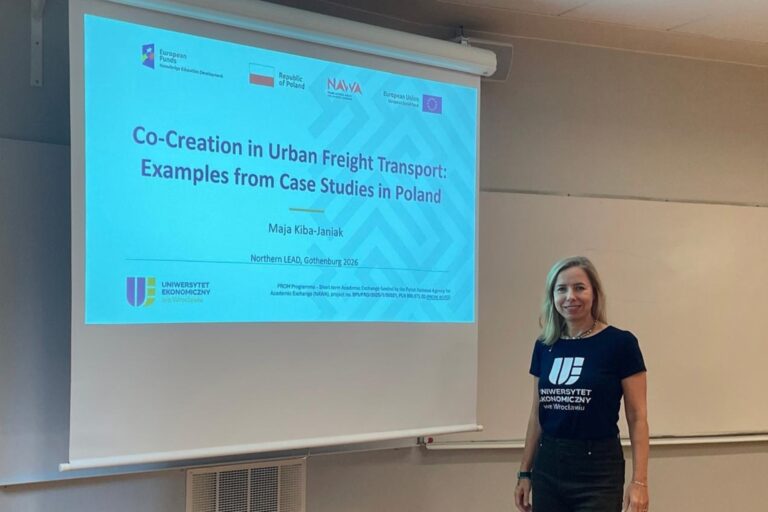
How can solutions for urban freight transport be co-created? Dr hab. inż. Maja Kiba-Janiak’s, Professor of the WUEB research fellowship in Gothenburg

WUEB Experts Weekly Review: Research, Projects and Academic Successes (21–27 September 2026)
Poland’s demographic crisis: Professor Marek Kośny on the economic consequences
What is Bitcoin and How is it Changing Finance? dr Michał Kisiel on the Future of Money
WUEB Experts Weekly Review: Research, Projects and Academic Successes (14–20 September 2026)
WUEB Experts Weekly Review: Research, Projects and Academic Successes (7–13 September 2026)