
Goods deliveries are an integral part of city life, but organising them requires the needs of residents, businesses, carriers and local authorities to be taken into account. How can solutions be found that respond to these different expectations? Dr hab. Maja Kiba-Janiak, prof. UEW, explored this question during a research fellowship at the University of Gothenburg in Sweden. Founded in 1891, the university is ranked 151–200 in the Shanghai Ranking. The stay contributed to international research cooperation in urban logistics, sustainable transport and stakeholder management.
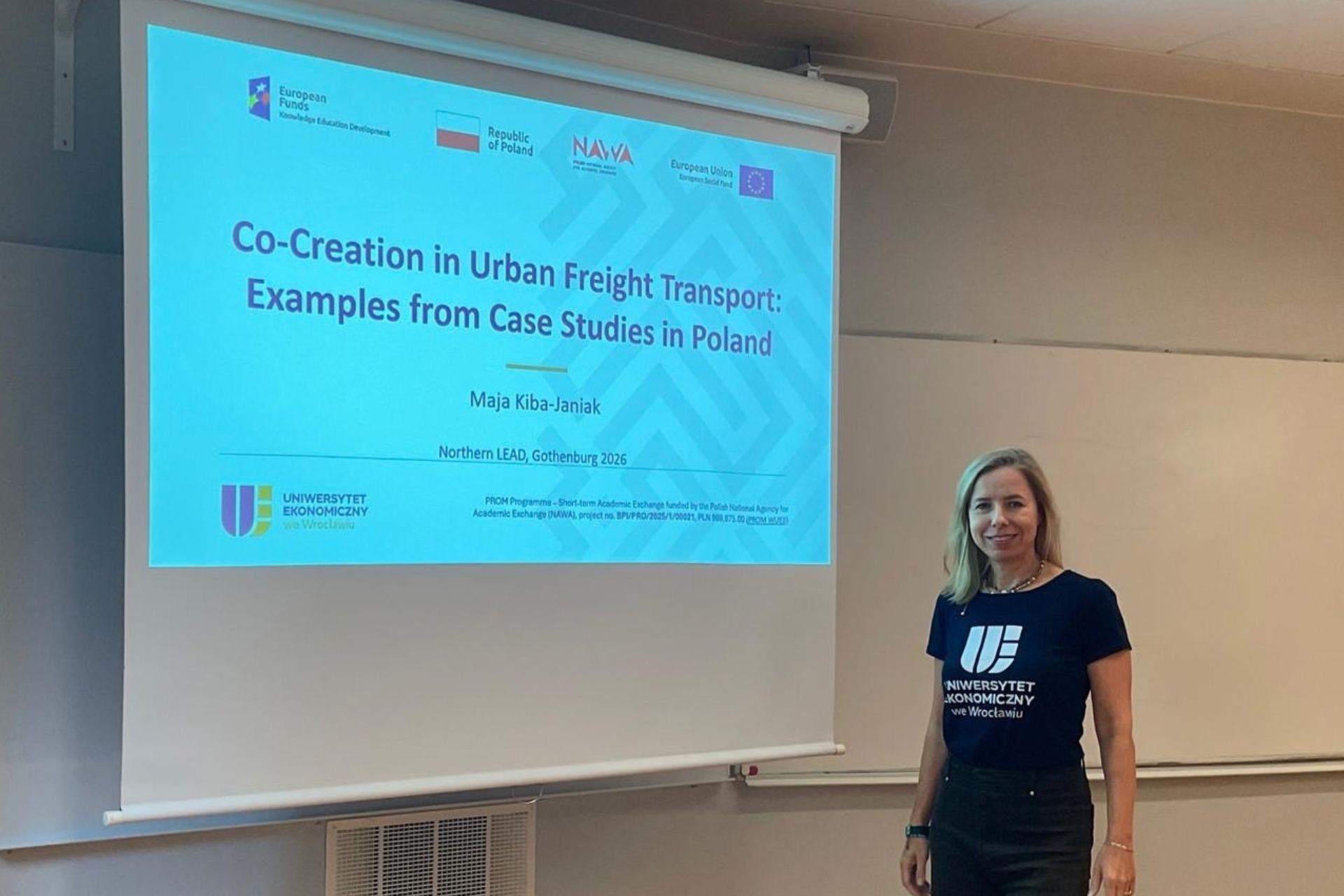
From 20 August to 19 September, the researcher from the Department of Strategic Management and Logistics at Wroclaw University of Economics and Business worked on the co-creation of urban freight transport solutions. The fellowship took place under the PROM Programme, a short-term academic exchange funded by the Polish National Agency for Academic Exchange (NAWA). It was supervised by Professor Michael Browne, an expert in urban logistics. He is a member of the Scientific Council of the International Conference on City Logistics and the Scientific Committee of the Institute for City Logistics, and Chair of SIG B-4 within the World Conference on Transport Research Society (WCTRS).
From the experience of two cities to a model for collaboration
The research involved analysing the experiences of Gothenburg and Wrocław. Comparing the two cities made it possible to examine how urban freight transport is organised in different contexts. Interviews with representatives of key stakeholder groups were an important part of the fellowship. These are people and organisations affected by the way deliveries and transport are organised in a city, including public bodies, businesses and carriers.
The work resulted in a model for co-creating urban logistics solutions. The researcher brought together an analysis of practices in the two cities and interviews with stakeholders, then used the findings to propose a structured approach to collaboration. The model can provide a starting point for further research and discussion on how to take different needs into account when planning urban freight transport.
The fellowship forms part of Dr hab. Maja Kiba-Janiak’s wider research on last-mile deliveries and e-commerce returns from the perspectives of different stakeholder groups. A practical example of a similar approach is Wrocław’s shared urban microhub, from which goods are transported to the city centre by cargo bike.
These topics are also closely related to NEXTLOGIC, a project led by Dr hab. inż. Maja Kiba-Janiak, prof. UEW. The project develops innovative urban logistics solutions for climate-neutral cities.
Read more about the project: https://badania.uew.pl/en/next-gen-urban-freight-logistics-for-net-zero-emissions-through-innovative-solutions-nextlogic/
Read also: From discussing innovation to practical action: why does a city need urban logistics? https://badania.uew.pl/en/why-do-cities-need-urban-logistics/
Knowledge exchange in an international research community
The fellowship also included academic events and meetings. Dr hab. Maja Kiba-Janiak took part in the IFEL Seminars, the Northern Lead Seminar and a meeting of the Gothenburg Freight Network. She also delivered a guest lecture at Chalmers University of Technology. These meetings enabled her to exchange knowledge with people working in urban transport and logistics in an international setting.
Funding: PROM Programme – Short-term Academic Exchange funded by the Polish National Agency for Academic Exchange (NAWA), project no. BPI/PRO/2025/1/00021, PLN 999,675.00 (PROM WUEB).
Author of text: Barbara Grzelczak
See similar content
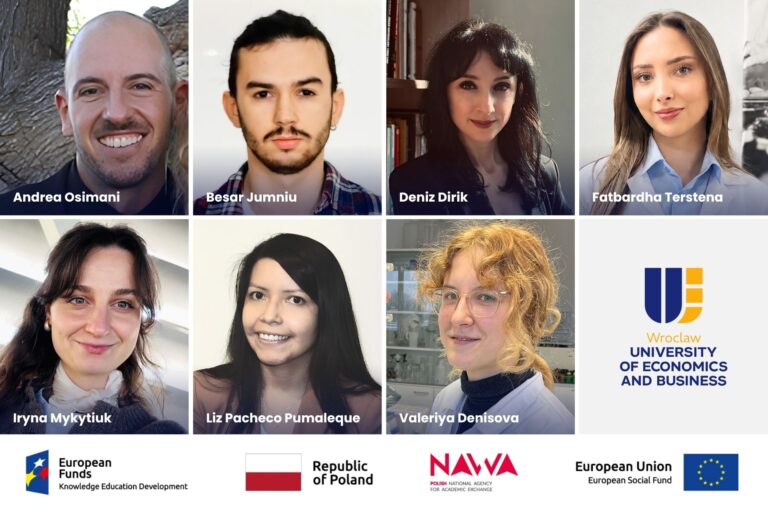
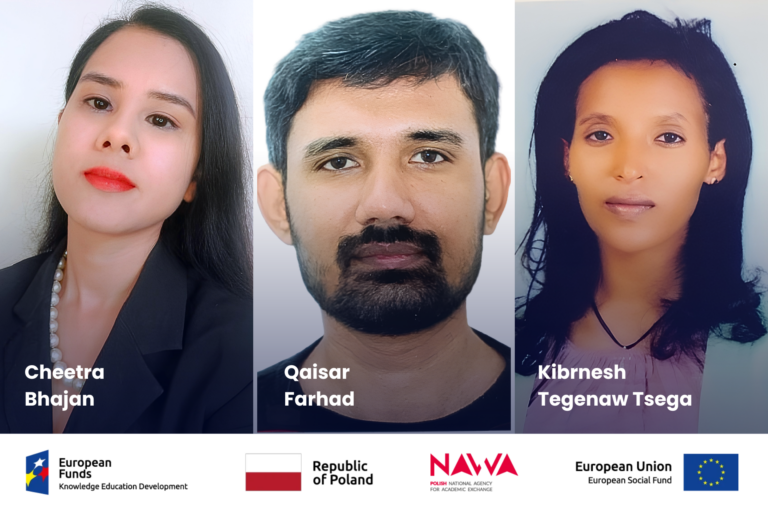
International Research Visitors at the Wroclaw University of Economics and Business – Summer 2025 Cohort
Where research impact begins. May research visits at WUEB
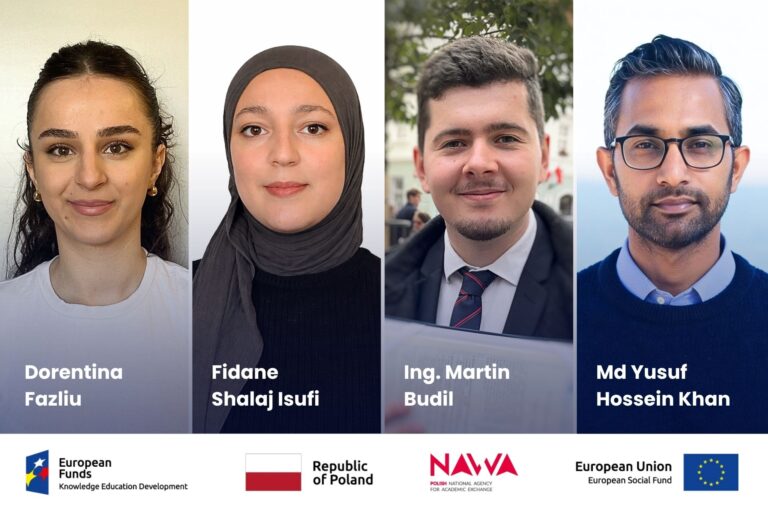
International Researchers and Doctoral Candidates at WUEB – Second Cohort under the PROM Programme
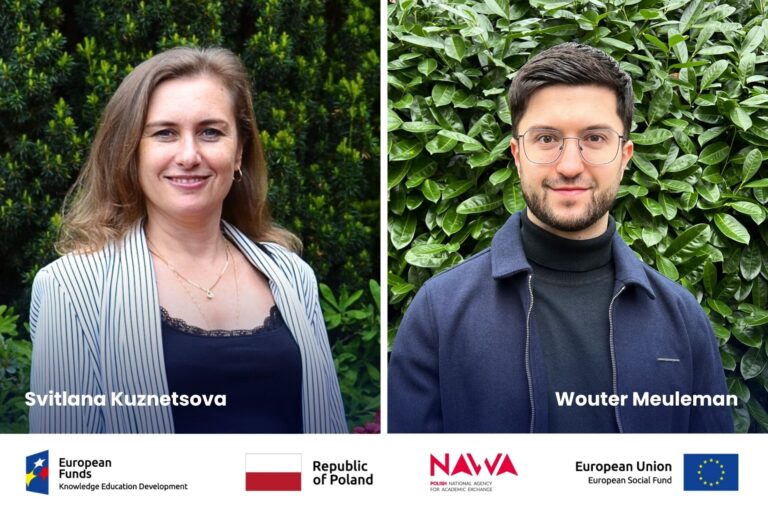
International research mobility at WUEB: green finance and sustainable food systems in focus
See also
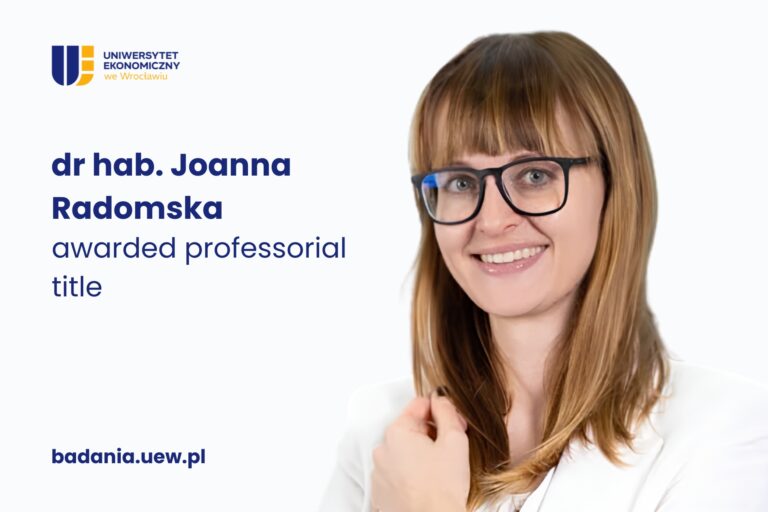
Joanna Radomska of WUEB awarded the title of professor

WUEB Experts Weekly Review: Research, Projects and Academic Successes (21–27 September 2026)
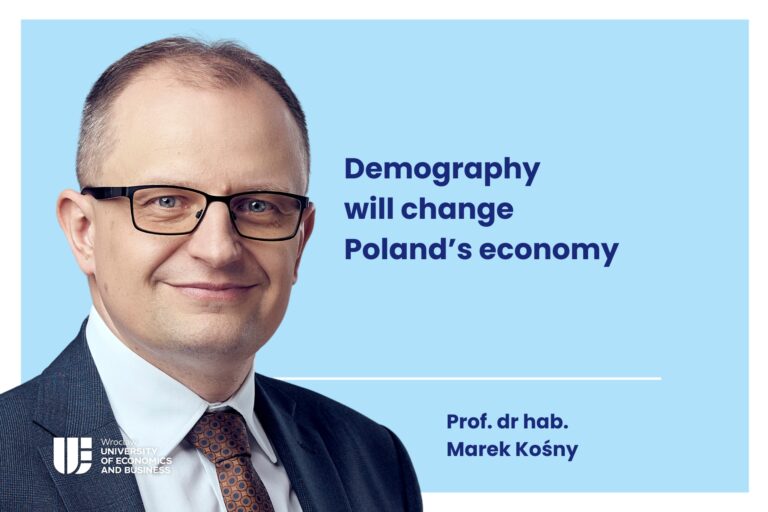
Poland’s demographic crisis: Professor Marek Kośny on the economic consequences
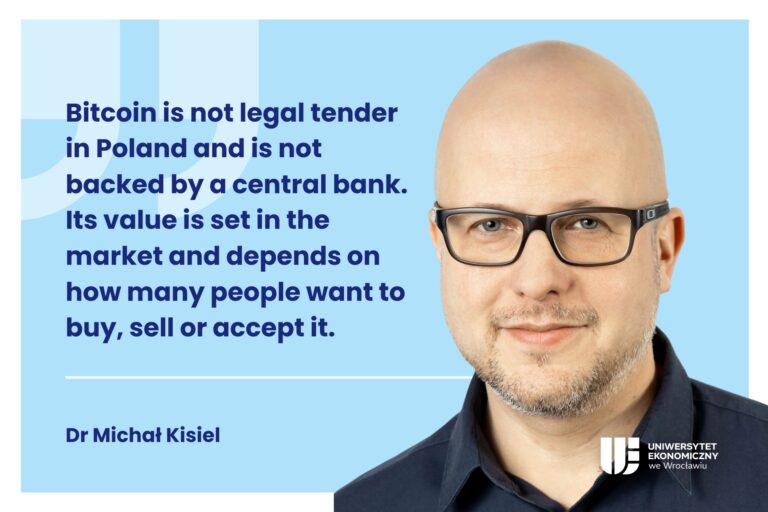
What is Bitcoin and How is it Changing Finance? dr Michał Kisiel on the Future of Money
WUEB Experts Weekly Review: Research, Projects and Academic Successes (14–20 September 2026)
WUEB Experts Weekly Review: Research, Projects and Academic Successes (7–13 September 2026)
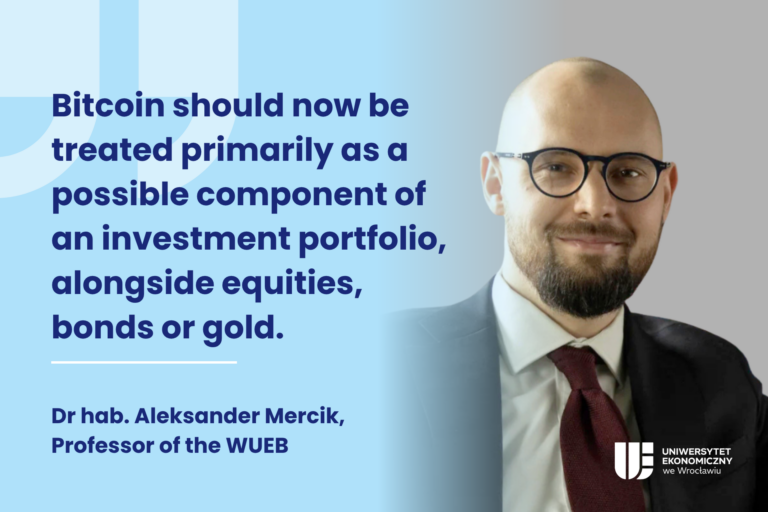
Bitcoin is not the digital equivalent of the Polish zloty. A WUEB expert explains how to understand cryptocurrencies.