

The vision behind WUEB’s Strategy 2030 is unambiguous: this is meant to be a University that stands out in the region by carrying out original research significant for international science.
The first half of 2026 turned that ambition into a hard, countable fact. Twenty academic staff members and doctoral candidates — drawn from three distinct research areas of the University — left Wrocław to work, research and present across fifteen locations on three continents. This overview covers outgoing mobilities of WUEB staff only — the University also hosted the same number of researchers from abroad under the programme. NAWA’s PROM programme provided the funding instrument. But the scale and diversity of what was actually accomplished reflects something larger than grant availability: internationalisation has become daily research practice at WUEB, not a line in a policy document.
From laboratories in Valencia and Vienna, through field interviews in Prishtina and Turin, to results presented in Tokyo and Jelgava — every one of these mobilities speaks directly to a Strategic Priority of the University: recognised, practice-inspired research, the education of tomorrow’s experts and business leaders, and the building of a modern, globally engaged institution. WUEB’s International Development Plan puts it just as plainly: the goal is a University that is recognised and competitive on the international market, one that foreign researchers travel to for knowledge exchange, and whose own staff are invited as reviewers and experts abroad. What follows is a snapshot of that ambition in practice.
Area I: Food Science & Materials Engineering
Eight researchers and doctoral candidates from the Department of Biotechnology and Food Analysis fanned out across six countries — from Scandinavia to the Balkans — for laboratory work spanning food technology, bioactive-compound extraction and microscopy, alongside conference presentations of their results. This is the area where the University’s ambition to be a recognised partner in practice-inspired research is most directly visible: theory moves from the bench to the food industry fastest here.
| Name | Mobility location | Scope of tasks |
| Szymon Juchniewicz | Jelgava, Latvia | Conference participation, presentation of research results |
| Anna Owczarek | Portugal | Conference participation, poster presentation |
| Alona Tiupova | Valencia, Spain | Laboratory research in food technology |
| Ewa Biazik | Vienna, Austria | Laboratory research in food analysis |
| Oliwia Paroń | Odense, Denmark | Laboratory research using microscopy techniques |
| Patryk Słota | Valladolid, Spain | Laboratory research on extraction of bioactive compounds |
| Rafał Wiśniewski | Madrid, Spain | Laboratory research in food analysis |
| Svitlana Nedvih | Sliven, Bulgaria | Laboratory research in food technology |
Area II: Green Transition, Energy & Institutional Economics
Six academics and doctoral candidates worked in centres of real consequence for the global economy and energy policy — from Beijing to Seoul, Kaunas and Malaga. A double presence in Beijing and research stays in South Korea show that WUEB is building substantive, not symbolic, relationships with East Asia’s academic centres — a region now shaping the direction of the green transition and the institutional architecture of the world economy.
| Name | Mobility location | Scope of tasks |
| Adam Sulich | Beijing, China | Research stay, study visits, comparative analysis |
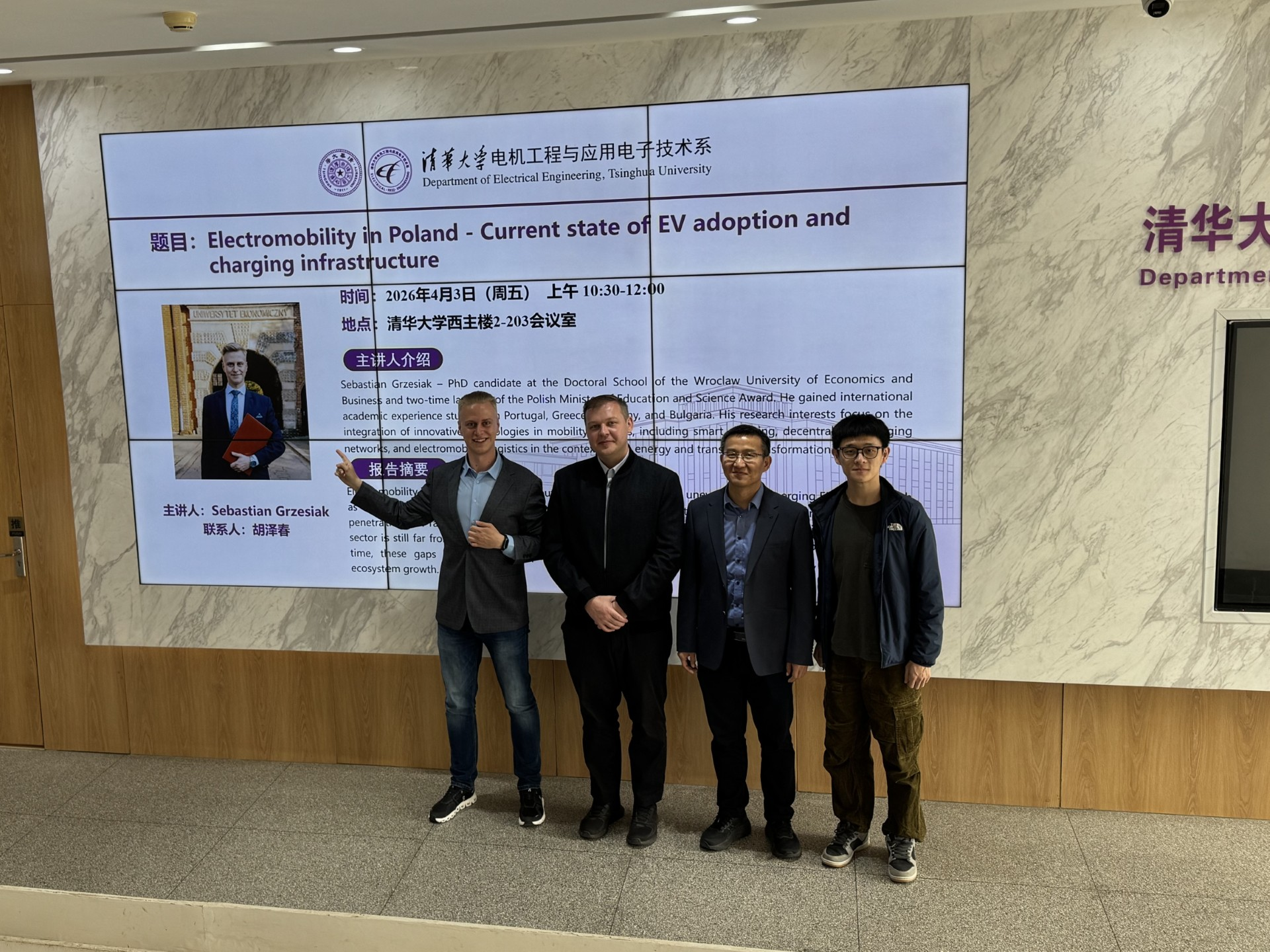
| Sebastian Grzesiak | Beijing, China | Research stay, study visits, seminar participation |
| Maciej Krahel | Prishtina, Kosovo | Research stay, field research |
| Jakub Sukiennik | Malaga, Spain | Research stay, work on a scientific publication |
| Paweł Brusiło | Seoul, South Korea | Research stay, interviews and data analysis |
| Olgierd Jeż | Kaunas, Lithuania | Research stay, comparative analysis |
Area III: Management, Social Systems & Human-Centred Design
Six members of the University community carried out field research and academic consultations from Turin to Tokyo, speaking directly to the Strategic Priority on educating tomorrow’s experts and business leaders. This is the area where mobilities translate most visibly into teaching quality — experience gathered in Seoul, Salerno or Prishtina returns to Wrocław as new case studies, research contacts and curriculum ideas.
| Name | Mobility location | Scope of tasks |
| Agnieszka Jagoda | Turin, Italy | Research stay, research interviews |
| Paulina Graczyk | Prishtina, Kosovo | Research stay, field research |
| Żaneta Soból | international conference | Conference participation, presentation of research results |
| Anna Mempel-Śnieżyk | Seoul, South Korea | Research stay, research consultations |
| Dorota Malinowska | Tokyo, Japan | Conference participation, poster presentation |
| Kamila Łuczak | Salerno, Italy | Research stay, laboratory work |
The bigger picture: numbers that build a brand
Twenty outgoing mobilities by WUEB researchers – matched by the same number of researchers from abroad who came to Wrocław under the programme. Fifteen cities and regions across three continents. Three research areas spanning the full breadth of the University’s expertise — from food science, through economics and energy, to management and human-centred design. Each of these trips represents a separate partnership, a separate academic contact, and a separate building block in establishing Wrocław University of Economics and Business as an institution that — in line with the ambition of Strategy 2030 — is discussed and cited beyond Poland’s borders. These completed mobilities do not close this process; they open it: the contacts made are now the starting point for joint publications, further research projects, and future editions of the PROM programme.
The PROM programme (International Scholarship Exchange of PhD Candidates and Academic Staff) is funded by the Polish National Agency for Academic Exchange (NAWA) and implemented under WUEB’s International Development Plan, itself rooted in the University’s Strategy 2030.
Author of text: Anna Śliwa
See similar content
How can solutions for urban freight transport be co-created? Dr hab. inż. Maja Kiba-Janiak’s, Professor of the WUEB research fellowship in Gothenburg
International Research Visitors at the Wroclaw University of Economics and Business – Summer 2025 Cohort
Where research impact begins. May research visits at WUEB
International Researchers and Doctoral Candidates at WUEB – Second Cohort under the PROM Programme
See also
Wroclaw’s micro-hub at the Economic Forum. Natalia Szozda, Associate Professor , on when a city truly becomes smart
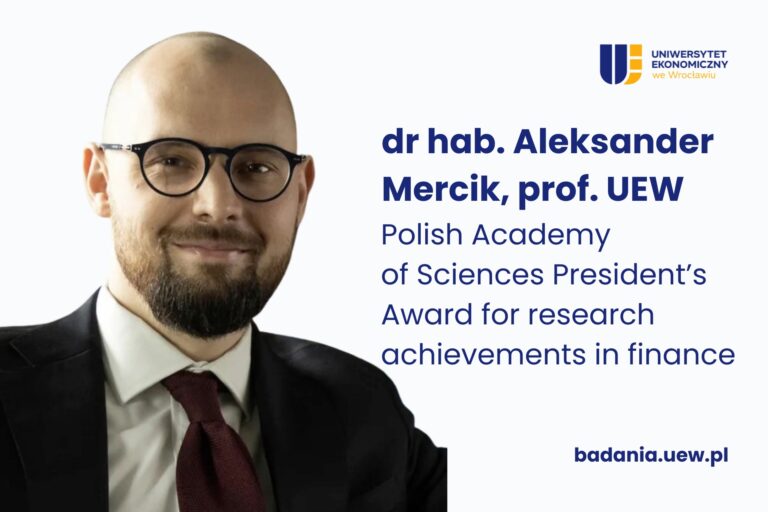
Dr hab. Aleksander Mercik, Professor of the WUEB, receives the Andrzej Gospodarowicz Award in Finance from the President of the Polish Academy of Sciences

WUEB Experts Weekly Review. Research, Projects and Academic Successes (5–11 October 2026)
Wroclaw University of Economics and Business researchers among the world’s leading scientists: six included in the 2026 World’s Top 2% Scientists database
WUEB Experts Weekly Review: Research, Projects and Academic Successes (28 September–4 October 2026)
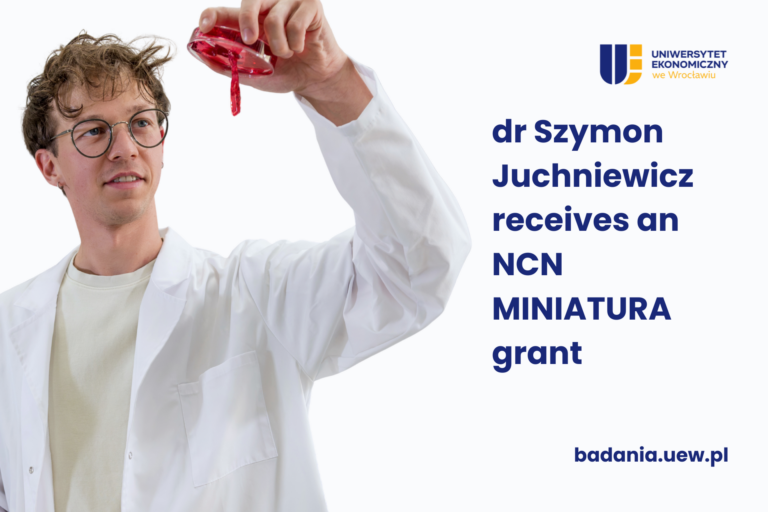
Vitamins C and D in a single plant-based gel: UEW researcher awarded NCN grant
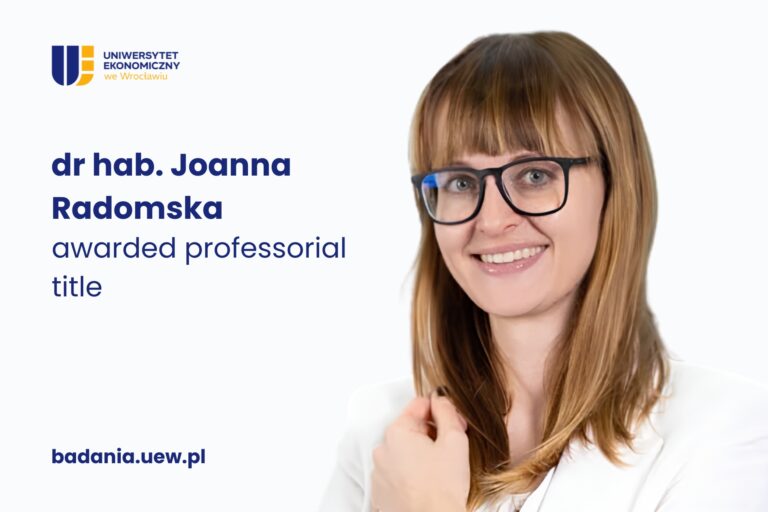
Joanna Radomska of WUEB awarded the title of professor