
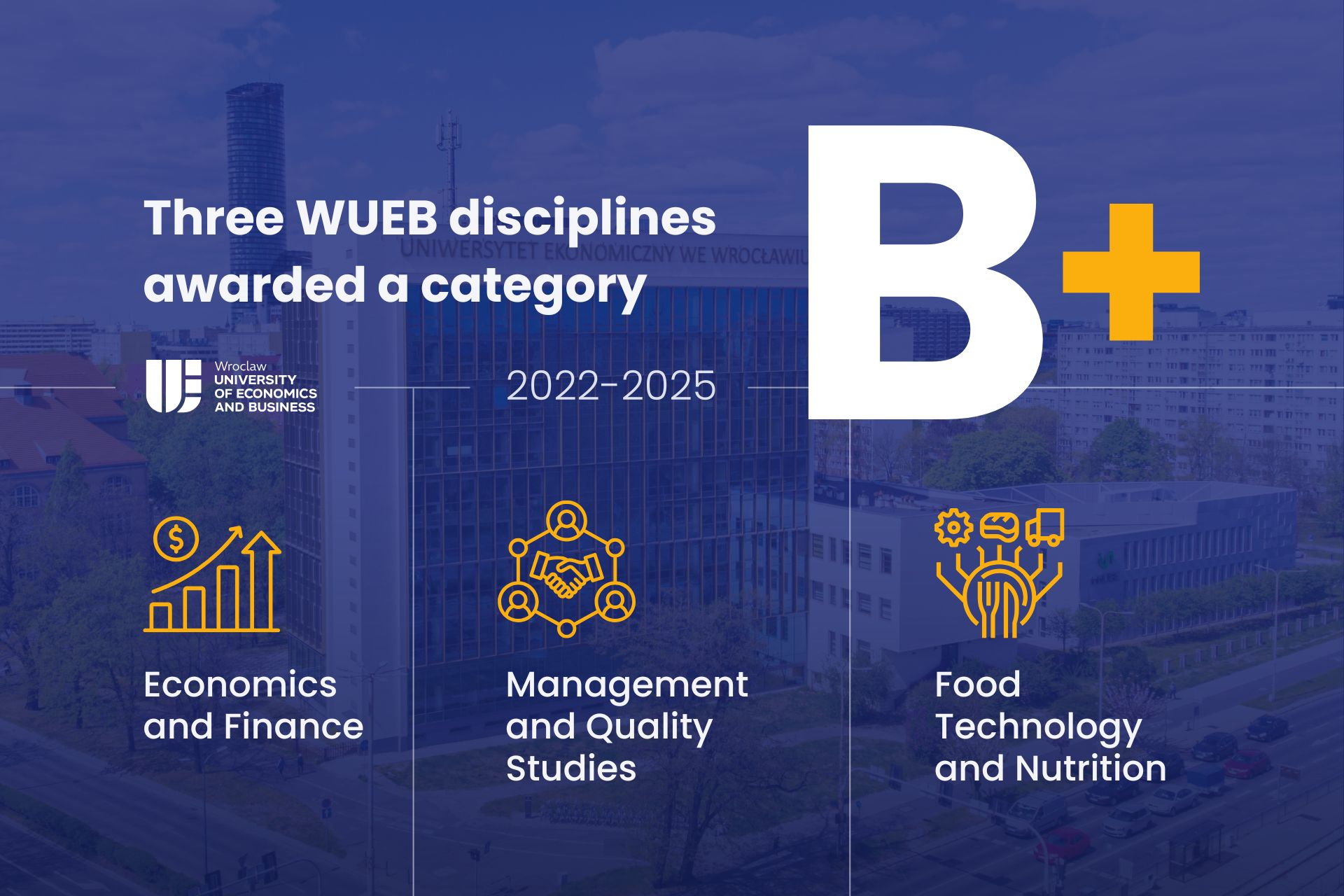
Economics and finance, management and quality sciences, and food technology and nutrition have retained category B+ in the evaluation of the quality of scientific activity for 2022-2025. The results confirm the stable academic position of UEW while also revealing three distinct profiles of strength: publication output, documented research impact, and high productivity combined with economic applications.
Management and quality sciences: international research impact
The strongest element of the discipline of management and quality sciences at UEW proved to be the impact of scientific activity on society and the economy. The discipline’s score under this criterion exceeded the reference value set for category A, and all the impact case studies submitted were assessed positively.
The highest-rated case concerned the digital and green transformation of cities and regions. The experts considered this impact to be breakthrough in nature and international in scope. Research conducted at UEW became the basis for tools and models used by companies as well as municipal and public institutions.
The confirmed effects include an algorithmic solution used by more than 1,000 companies, mostly foreign, as well as systems supporting waste management in Polish cities. The research findings also contributed to the creation of Poland’s first shared logistics micro-hub in Wroclaw.
The experts also confirmed the impact of UEW research on the functioning of the healthcare system. The University’s researchers co-developed the certification framework in the European EUnetCCC project and a maturity model prepared for use in more than 100 centres. The assessment highlighted the combination of scientific foundations with concrete implementation tools intended for use in national and European practice.
A separate area of impact covered the application of artificial intelligence, data analytics and process automation in the insurance, medical and services sectors.
Food technology and nutrition: productivity and industrial applications
The discipline of food technology and nutrition achieved the highest normalised score among the disciplines analysed under the criterion of scientific level. This result came close to the reference value set for category A.
The experts confirmed UEW’s leading role in producing the scientific results and the link between the research conducted and its use in the economy. The research has resulted in industrially implemented product and process solutions for the processing of hemp for food purposes. Cooperation between researchers and entrepreneurs also led to the launch of the postgraduate programme “Hemp Business”.
The confirmed applications also include the use of beta-glucan isolated from oats in the diet therapy of people with inflammatory bowel disease.
The profile of the discipline combines high scientific productivity with research that has patent, industrial and educational potential.
Economics and finance: research used in public policy
UEW’s result in the discipline of economics and finance was based on its scientific level, which significantly exceeded the reference value for category B+. The discipline also confirmed the importance of UEW research for the design and modernisation of public policies.
The experts positively assessed the impact of the research on the system of social benefits and services in Poland. The findings of work conducted at UEW were used by the inter-ministerial Team for Counteracting the Shadow Economy led by the Ministry of Finance.
The research has also been applied in the development and deinstitutionalisation of social services in the Lower Silesia region and in expert work on the reform of the foster care system.
The results show that the economic knowledge developed at UEW supports decision-making processes in public administration and the preparation of solutions addressing significant social problems.
Interdisciplinarity as a source of impact
In their assessments, the experts repeatedly indicated that an important condition for generating impact was the interdisciplinary nature of the research conducted at UEW.
In the cases assessed, methods specific to economics and management were combined with, among others, computer science, mathematics, medical sciences, sociology, legal sciences and engineering. This made it possible not only to describe problems, but also to design and implement solutions used by companies, public administration, local governments and healthcare institutions.
Position maintained, three complementary profiles
The retention of category B+ by the three disciplines confirms the stability of UEW’s research potential. A shared category does not, however, mean an identical structure of achievements.
Management and quality sciences stand out for their documented research impact and their ability to combine knowledge from different disciplines. Food technology and nutrition achieves high scientific productivity and develops solutions used in industry. Economics and finance bases its position on publication output and the application of research findings in public policy.
Together they form a research portfolio covering the economy, management, digitalisation, urban and regional development, public health and food technologies. The evaluation results will serve as a point of reference for further strengthening research quality and for systematically documenting how research is used outside the University.
Data based on the decisions of the Minister of Science concerning the evaluation of the quality of scientific activity for 2022-2025.
Author: Justyna Morawska-Płoskonka
See similar content
What comes after a PhD? Dr Milena Kowalska at the Economic Forum in Karpacz
Visual Simulation of Business Processes (WSPB) joins the Polish Roadmap for Research Infrastructures
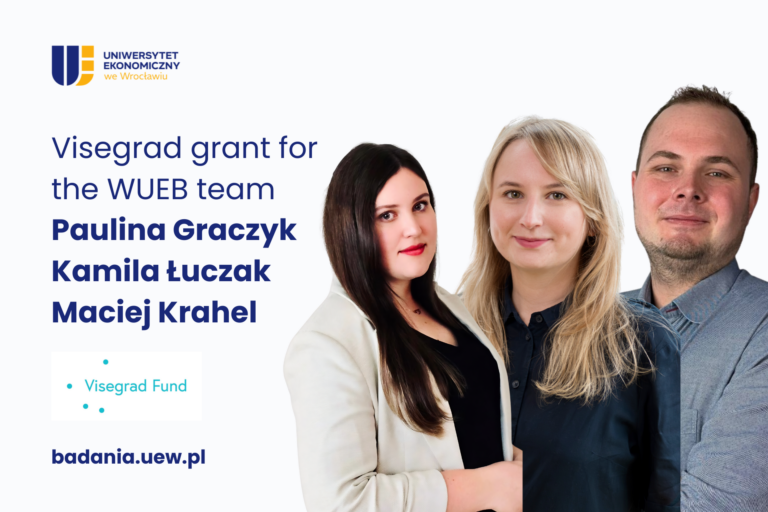
WUEB awarded Visegrad grant to study the skills gap across the V4
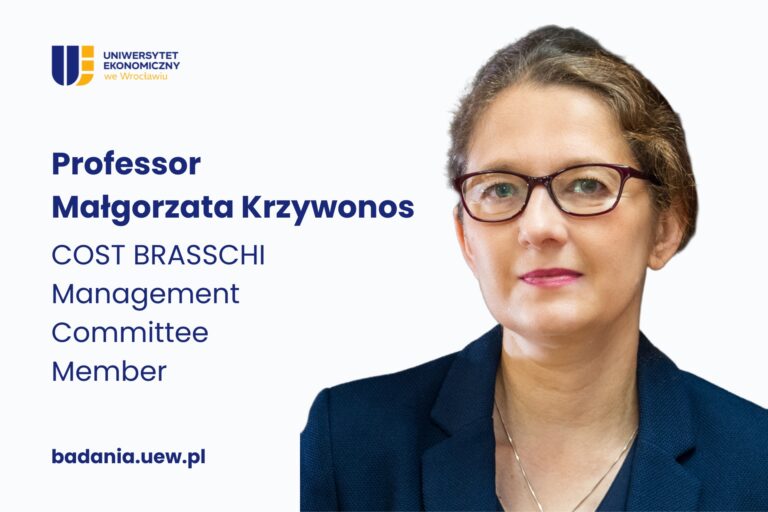
Prof Małgorzata Krzywonos joins the Management Committee of COST Action BRASSCHI
See also
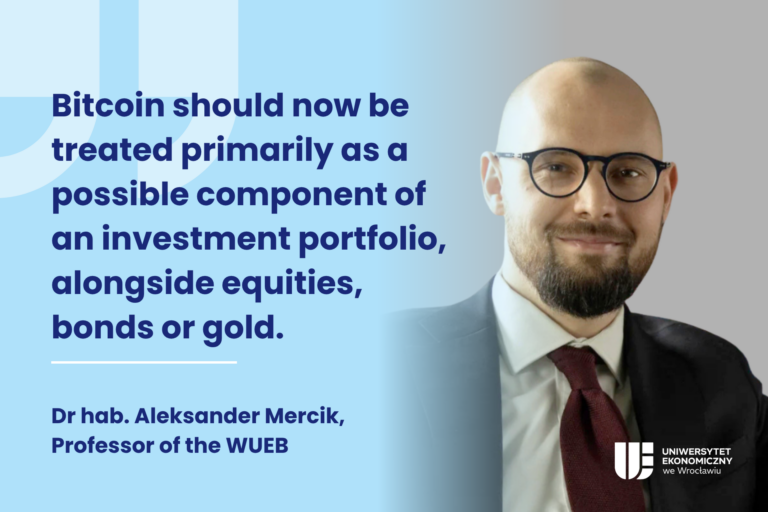
Bitcoin is not the digital equivalent of the Polish zloty. A WUEB expert explains how to understand cryptocurrencies.

WUEB Experts Weekly Review. Research, Projects and Academic Successes (31 August–6 September 2026)
What comes after a PhD? Dr Milena Kowalska at the Economic Forum in Karpacz

Bridging V4 Universities and Business through Design Thinking
WUEB Experts Weekly Review. Research, Projects and Academic Successes (24 – 30 August 2026)
Visual Simulation of Business Processes (WSPB) joins the Polish Roadmap for Research Infrastructures
WUEB experts weekly rewiev. Research, Projects and Academic Successes (17–23 August 2026)