

What connects public safety, a child’s first pocket money, a EUR 3 duty added to a parcel from China, and gold transferred to a blockchain? In each case, a seemingly minor change can influence the decisions of individuals, businesses or public institutions.
This week, WUEB experts addressed civil protection, the future of logistics, children’s financial education, consumer behaviour, taxation and the risks associated with digital assets.
Universities join the civil protection system
WUEB expert: Professor Czesław Zając, Rector of Wroclaw University of Economics and Business
Lower Silesia is developing Poland’s first academic civil protection support system of its kind. DAKOL will bring together academic expertise, university resources and student engagement to help the region prepare for emergencies. WUEB will contribute its expertise in logistics and management, both of which are essential to the effective operation of public authorities and emergency services.
By 2040, logistics will no longer be merely a support function
WUEB expert: Associate Professor Maja Kiba-Janiak
Disrupted supply chains, predictive analytics and process integration are changing the role of logistics. What was once regarded as a supporting function is becoming a source of business value and competitive advantage. The main challenge is no longer access to technology, but its effective implementation and an organisational culture that supports digitalisation.
What sales data cannot tell us about coffee and tea
WUEB expert: Associate Professor Magdalena Sobocińska
Sales figures show what consumers choose. They do not, however, fully explain why people make particular decisions. Market research becomes most valuable when methodological rigour is combined with an understanding of genuine business problems and the mechanisms shaping consumer behaviour.
83 per cent recognise its importance, but only 15 per cent act regularly
WUEB expert: Dr Magdalena Swacha-Lech
Poland’s first recurring assessment of children’s financial education has revealed a clear gap between parents’ beliefs and their everyday practice. Although 83 per cent consider financial education important, only 15 per cent engage in educational activities several times a week. Parents most often discuss shopping and saving, while investing, taxation and insurance receive far less attention.
The EUR 3 charge changing the behaviour of customers and platforms
WUEB expert and author of the analysis: Dr Dominika Florek-Sapkowska
The new duty on low-value parcels from outside the European Union has coincided with double-digit falls in the number of shipments sent directly from China. It is still unclear how much of this decline results from the additional charges and how much from the seasonal summer slowdown. Platforms are already adapting their logistics by moving more stock to warehouses within the European Union.
Three changes businesses need to watch
WUEB expert and author of the analyses: Dr Dominika Florek-Sapkowska
Draft proposal UD116 may change the rules governing lump-sum taxation for some businesses and rental income. It remains a proposal rather than binding law. The current provisions governing tax relief for robotisation are due to expire at the end of 2026. Businesses may also claim a one-month exemption from selected social security contributions, although health insurance contributions remain payable.
Sources:
When does a child’s lemonade stand become a business?
WUEB expert and author of the analysis: Dr Dominika Florek-Sapkowska
Children may occasionally sell lemonade, fruit or homemade cakes without using a cash register or registering with the sanitary authorities. The dividing line is whether the activity becomes regular and organised. Even a one-off stall must follow basic food hygiene and safety rules, including providing information about allergens.
Gold on the blockchain: an asset or a promise?
WUEB expert: Associate Professor Aleksander Mercik
Tokenised gold makes trading easier and provides digital exposure to the price of the precious metal. At the same time, it changes the nature of the risk. The investor does not own physical gold, but a digital record whose value depends on the issuer’s credibility and the quality of the underlying collateral. Technology increases liquidity, but it does not eliminate the question of who guarantees the token’s value and how.
Lower yields, higher costs: a difficult harvest balance
WUEB expert: Associate Professor Bogusław Półtorak
The early harvest has ended in Lower Silesia. Farmers have brought in winter barley, and some farms have already sold this year’s crops. Lower yields combined with rising production costs are, however, weakening the financial position of farms.
Source: https://wroclaw.tvp.pl/94476692/slabe-zniwa-na-dolnym-slasku-plony-nizsze-koszty-wyzsze
European programmes brought closer to the public
WUEB expert: Dr Paweł Brusiło
Dr Paweł Brusiło, a member of the European Commission’s Team Europe Direct expert network, was included in the programme of the European Funds Zone at the St James Fair in Lębork. The discussions covered mobility, traineeships, volunteering and development opportunities available through European Union programmes.
More research, expert commentary and projects: badania.uew.pl
Author: Justyna Morawska-Płoskonka
See similar content
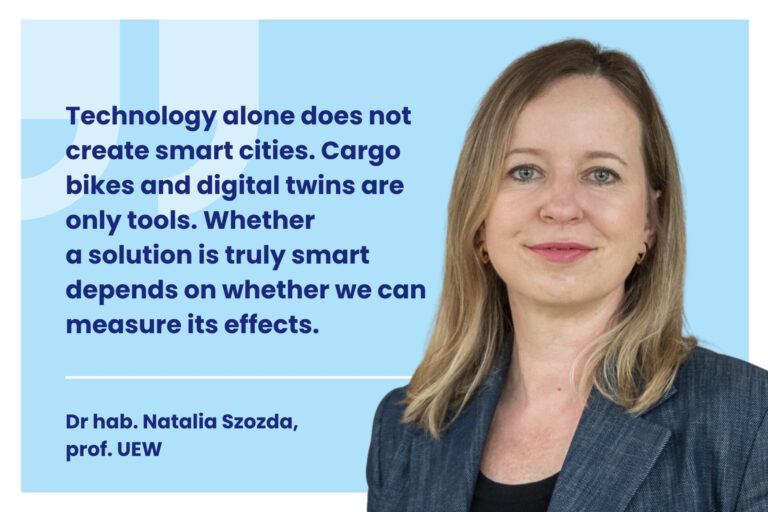
Wroclaw’s micro-hub at the Economic Forum. Natalia Szozda, Associate Professor , on when a city truly becomes smart

WUEB Experts Weekly Review. Research, Projects and Academic Successes (5–11 October 2026)
WUEB Experts Weekly Review: Research, Projects and Academic Successes (28 September–4 October 2026)
WUEB Experts Weekly Review: Research, Projects and Academic Successes (21–27 September 2026)
See also
The World Within Wrocław’s Reach. How the PROM research mobilities confirm WUEB’s place on the map of global academia
Wroclaw’s micro-hub at the Economic Forum. Natalia Szozda, Associate Professor , on when a city truly becomes smart
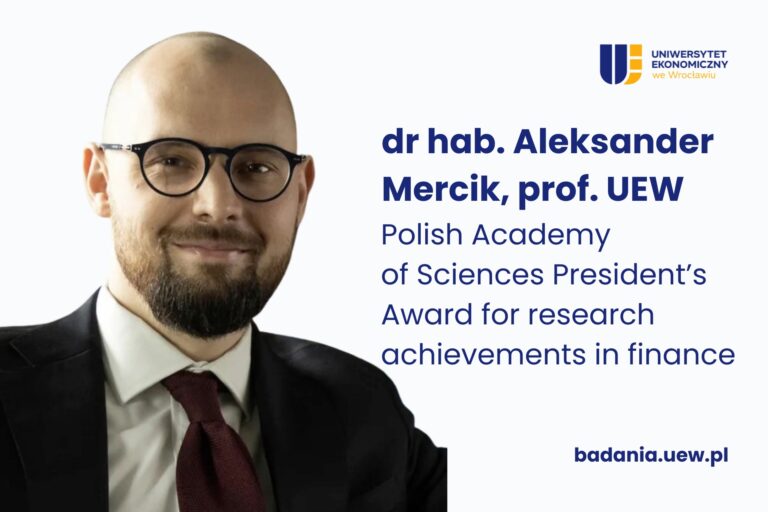
Dr hab. Aleksander Mercik, Professor of the WUEB, receives the Andrzej Gospodarowicz Award in Finance from the President of the Polish Academy of Sciences
WUEB Experts Weekly Review. Research, Projects and Academic Successes (5–11 October 2026)
Wroclaw University of Economics and Business researchers among the world’s leading scientists: six included in the 2026 World’s Top 2% Scientists database
WUEB Experts Weekly Review: Research, Projects and Academic Successes (28 September–4 October 2026)
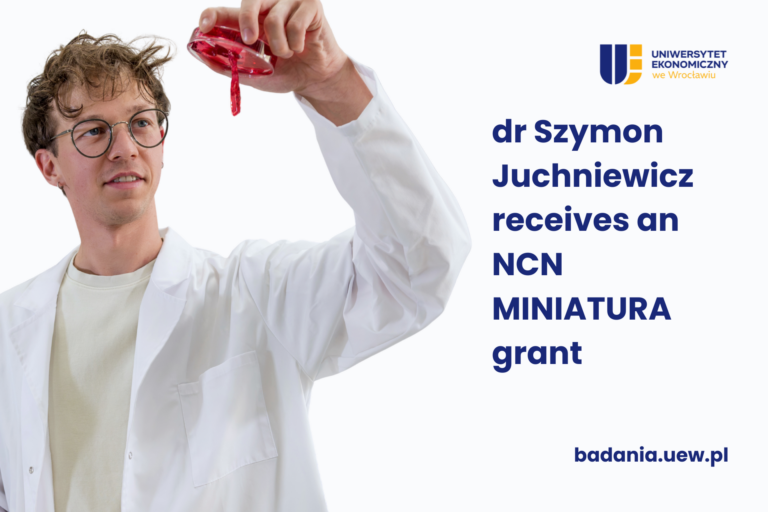
Vitamins C and D in a single plant-based gel: UEW researcher awarded NCN grant