
The cultural and creative industries are regarded as the core of the modern economy, and the Video Game Industry Ecosystem (VGIE) plays a leading role among them, combining advanced technological solutions with the production of cultural content. An interdisciplinary team from Wroclaw University of Economics and Business has examined what sets this cooperation in motion, what blocks it, and which mechanisms shape the way it unfolds. The article has appeared in Games and Culture, a journal placed in the highest scoring band on the Polish ministerial list (200 points).
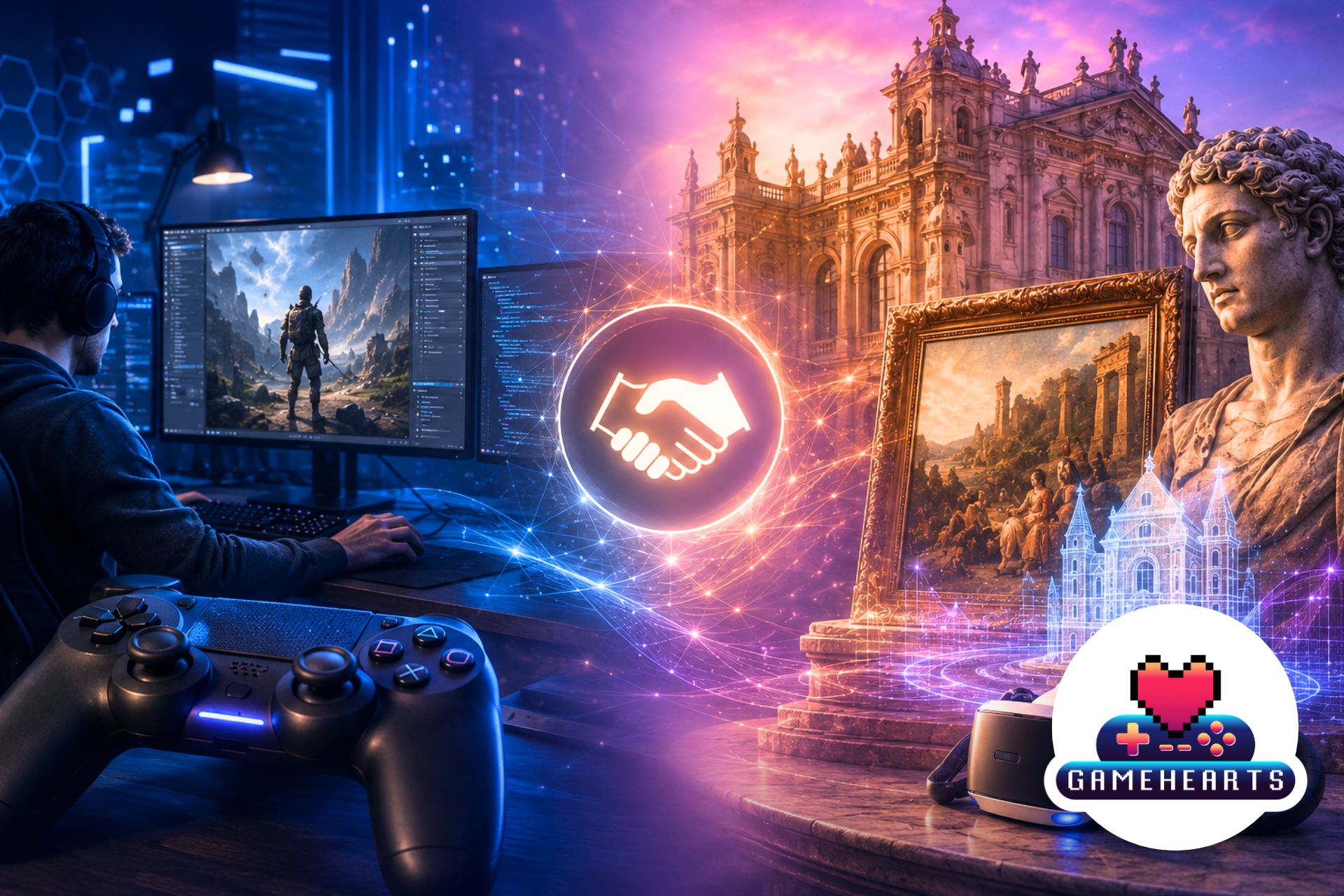
The publication sets out in detail what motivates game developers and cultural institutions to work together, the barriers they encounter, and which coordination mechanisms determine the success of joint projects.
Innovation grows out of cooperative relationships: four drivers of cooperation
Combining a systematic literature review with an expert group interview, the researchers identified four principal drivers of cooperation within the video game ecosystem:
- Financial support. Public grants and tax reliefs are central to getting joint projects off the ground.
- Access to talent. Game development needs, for instance, artistic competences or historical knowledge that cannot be built inside a production team alone.
- The complexity of games. Modern productions call for multidimensional innovation, achievable only through co-creation.
- Care for heritage. A wish to protect and revitalise culture through modern, engaging digital media.
Proximity that builds value
The study shows that effective cooperation requires not only capital but, above all, proximity mechanisms. The researchers confirmed the earlier findings of Boschma (2005), which point to the key role of five value-building proximity dimensions: cognitive (convergence of technologies and competences), social (trust and social relationships), organisational (similar working cultures), institutional (shared norms and values) and geographical, including temporal (shared events and trade fairs).
Proximity concept: Boschma R. (2005), Proximity and innovation: a critical assessment, “Regional Studies”, 39(1), pp. 61-74.
“The most effective projects rest on solid relationships that combine trust, a shared vision and care for the good of the audience”
— the study participants emphasise.
Legal anchors and mental barriers
Despite the considerable potential of such cross-industry cooperation, the WUEB researchers point to significant barriers holding it back. Among the most serious are outdated legal regulations, which have not kept pace with the dynamics of the digital market. The experts also point to silo thinking and to a lack of understanding of what is specific about games among public decision-makers, who at times still treat the area as marginal.
A further problem is the language barrier, and here the issue is not English but industry jargon. Game developers and representatives of cultural institutions and other creative industries often speak ‘different languages’, which makes it harder to define shared objectives and project scope with any precision.
The authors give particular attention to a stage that has been almost entirely overlooked in academic literature: the ending phase of cooperation, meaning what happens to a partnership as it winds down or moves into dormancy. The distinction matters: a dormant partnership is not a broken one – it can be reactivated for a later project, if trust and a shared language were built earlier on. The two strands of the study converge on a single point. A contemporary video game is at once a sophisticated technological product and a digital artefact of culture, so neither industry can build its value alone. The authors therefore treat breaking out of industry “silo thinking” as one of the conditions of effective cross-industry cooperation.
The GAMEHEARTS project and Horizon Europe
The research was carried out within the international GAMEHEARTS project (Games, Heritage, Arts, & Sport: the economic, social, and cultural value of the European videogame ecosystem), funded by the European Union under Horizon Europe (Grant Agreement No. 101132543, call HORIZON-CL2-2023-HERITAGE-01-06). The project examines the economic and cultural value of the European video game industry ecosystem.
ABOUT THE AUTHORS
All five researchers named below are co-authors of the article. The team brings together strategic management, inter-organisational cooperation, information science, international human resource management, and process design and facilitation:
- Professor Patrycja Klimas (Department of Advanced Research in Management), coopetition and inter-organisational relationships in the cultural and creative industries, head of the Polish GAMEHEARTS team.
- Dr hab. Joanna Radomska, Professor at WUEB (Department of Strategic Management), open strategy and strategy execution in the creative industries.
- Dr Dawid Kościewicz (Main Library, WUEB), the use of academic and business databases in research and education.
- Dr Gabriela Strzelec (Department of Advanced Research in Management), international human resource management, expatriation and international mobility.
- Dr Sylwia Wrona, Professor at WUEB (Department of Advanced Research in Management), marketing and management, facilitation of team processes and Design Thinking.
THE WUEB TEAM ON GAMEHEARTS
The project team is wider than the group of authors. The following researchers are also involved in delivering GAMEHEARTS at WUEB:
- Dr hab. Monika Hajdas, Professor at WUEB (Department of Marketing Management), consumer and strategy-as-practice research;
- Dr inż. Michał Nadolny (Department of Process Management), quantitative methods, modelling and data analysis;
- Dr Aleksandra Szpulak (Department of Corporate Finance and Public Finance), modelling, forecasting and quantitative data analysis.
An invitation to collaborate
The findings offer recommendations for managers, developers and decision-makers. We invite gaming clusters and cultural institutions to get in touch and develop innovative solutions with us.
Would you like to know more, or to establish cooperation? Contact the project lead: Professor Patrycja Klimas, email: [email protected]
You can find more information about the project on the project website and in the project description at badania.uew.pl:
https://gamehearts.eu/
https://badania.uew.pl/gry-dziedzictwo-sztuka-i-sport-ekonomiczna-spoleczna-i-kulturowa-wartosc-europejskiego-ekosystemu-gier-wideo-gamehearts/
Source: Klimas, P., Radomska, J., Kościewicz, D., Strzelec, G., & Wrona, S. (2026). What are the Drivers, Barriers, Mechanisms, and Anchors of cross-industry cooperation? The Perspective of the Video Game Industry Ecosystem. Games and Culture, 21, Article 6. https://doi.org/10.1177/15554120251317276
Author of text: Justyna Morawska-Płoskonka
See also

Space Logistics, Interplanetary Supply Chains and Interdisciplinary Research and Educational Projects Related to Space at UEW in Jelenia Góra
Wrocław has FinTech potential. A WUEB expert argues it is time to turn that potential into advantage
Academic Entrepreneurship as Architecture of Impact. The New Issue of „Impakt Dolny Śląsk” (2/2025)

Hospital Nutrition Reform in Poland: Between Policy and Practice
See similar content

Vitamins C and D in a single plant-based gel: UEW researcher awarded NCN grant

Joanna Radomska of WUEB awarded the title of professor
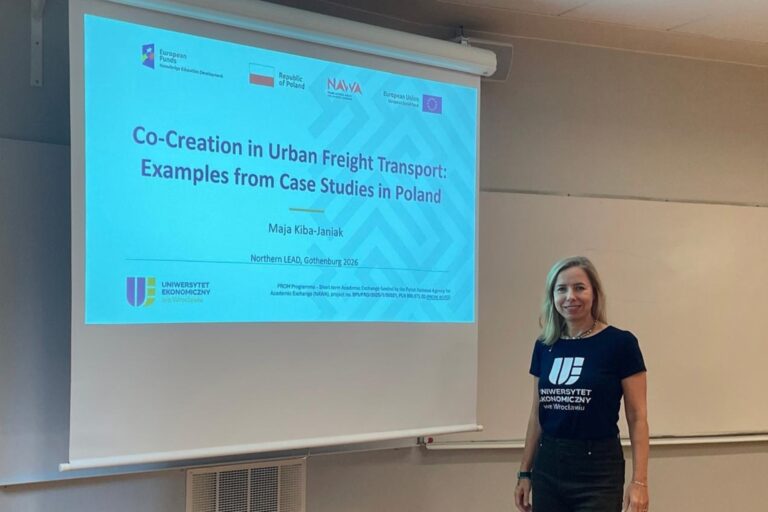
How can solutions for urban freight transport be co-created? Dr hab. inż. Maja Kiba-Janiak’s, Professor of the WUEB research fellowship in Gothenburg

WUEB Experts Weekly Review: Research, Projects and Academic Successes (21–27 September 2026)
Poland’s demographic crisis: Professor Marek Kośny on the economic consequences

What is Bitcoin and How is it Changing Finance? dr Michał Kisiel on the Future of Money
WUEB Experts Weekly Review: Research, Projects and Academic Successes (14–20 September 2026)