

Dr Milena Kowalska of the Wroclaw University of Economics and Business will take part in a discussion on career development for early-career researchers. The panel will be held at 11.30 am on 9 September 2026 during the 35th Economic Forum in Karpacz
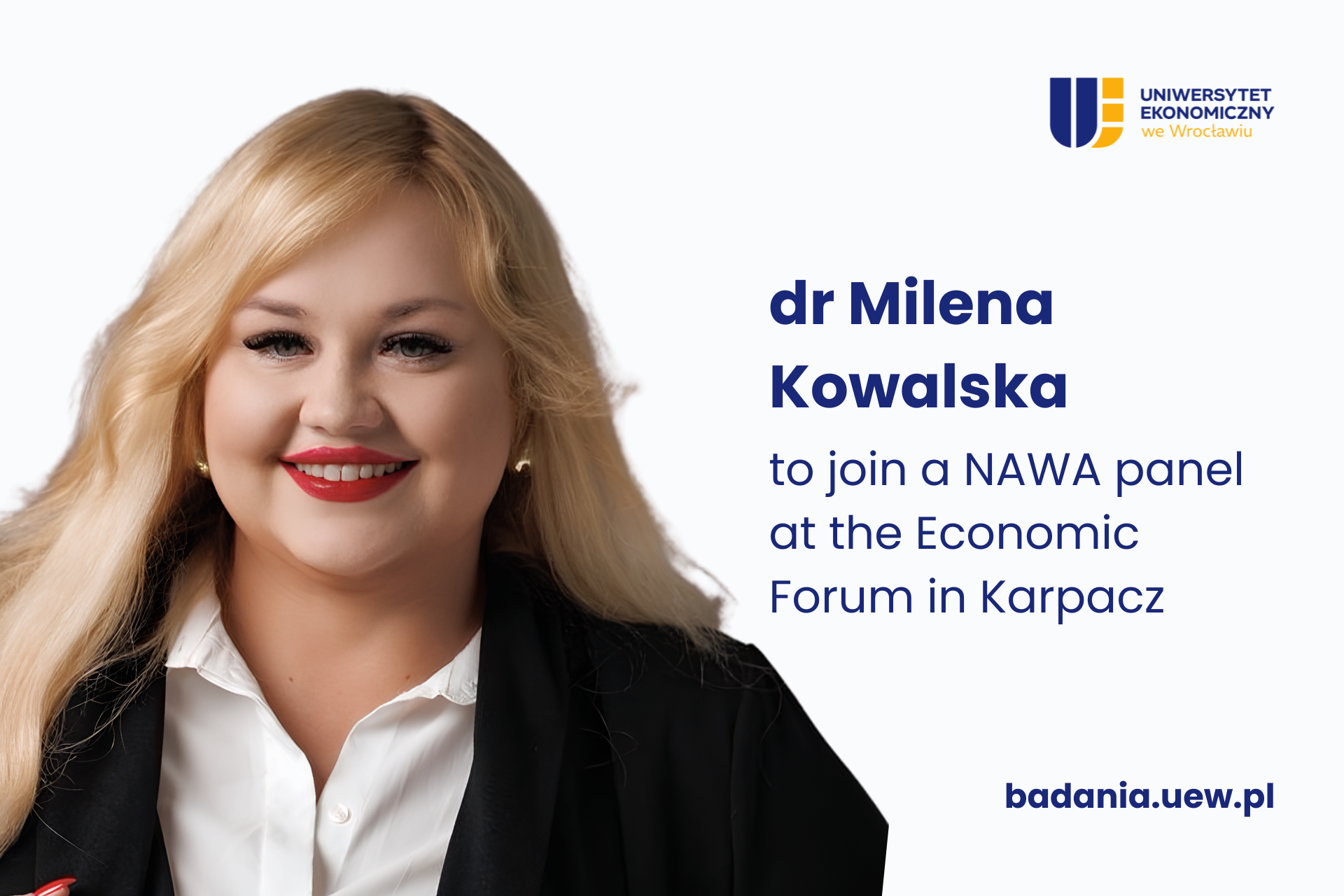
The session, ‘What comes after a PhD? Opportunities and risks for early-career researchers’, will bring together two perspectives. Dr Milena Kowalska will speak as Chair of Young Scientists’ Council (Rada Młodych Naukowców), while mgr inż. Rafał Ramut will represent the National Representation of Doctoral Candidates (Krajowa Reprezentacja Doktorantów) as its Chair. The discussion will be moderated by dr Damian Syjczak, Deputy Director General of the Polish National Agency for Academic Exchange. According to the programme, the panel has been prepared by NAWA.
The 35th Economic Forum will take place in Karpacz from 8 to 10 September. This year’s theme is ‘The architecture of a new order – stability in times of change’. The organisers expect more than 500 programme sessions and over 6,000 participants. The programme covers eight areas, including the economy, society, sustainable development, and international politics and security.
Early-career researchers need viable routes for development
Dr Milena Kowalska has chaired the ninth term of the Young Scientists’ Council since its first meeting in March 2026. The Council advises the Minister of Science and Higher Education. It identifies barriers to the development of early-career researchers and prepares opinions on measures designed to support their careers. Its current term runs until 29 February 2028. Dr Kowalska is one of two Council members representing the social sciences. The Ministry of Science and Higher Education provides further information about the Council’s membership and responsibilities.
WUEB’s research website also provides further information about dr Milena Kowalska’s appointment to the Young Scientists’ Council – https://badania.uew.pl/en/dr-milena-kowalska-on-the-young-scientists-council/
The question in the panel title concerns the point at which the clearly defined route towards a PhD ends and less straightforward career decisions begin. Some researchers want to remain at a university, while others move to research institutes, business, public administration or civil society organisations. Academic achievement alone does not determine whether a PhD will lead to a stable career. Access to funding, mobility, mentoring and transparent employment conditions also matters.
Research and experience of science policy
Dr Milena Kowalska works in the Department of Corporate and Public Finance in the Faculty of Economics and Finance at WUEB. Her research covers economic and social inequalities, universal basic income and local government finance. These are areas in which institutional decisions have a direct effect on economic security and the opportunities available to different groups.
In July 2026, she was also appointed to NAWA’s Evaluation Team for Academic Exchange and the Internationalisation of Doctoral Schools. The Team supports work on international academic exchange and higher standards of internationalisation in doctoral education.
More information about dr Milena Kowalska’s appointment to the NAWA team is available at https://badania.uew.pl/en/academic-success-dr-milena-kowalska-appointed-nawa-expert/
Her research output includes the monograph ‘Nowa codzienność z bezwarunkowym dochodem podstawowym – jak zmieniłoby się nasze życie?’, which examines how universal basic income could affect economic security, participation in the labour market and people’s everyday decisions. She is also a co-author of ‘Local Tax Policy in Central and Eastern Europe. Property Taxation and Municipal Finance’, an English-language monograph on property taxation and local government finance.
A full list of dr Milena Kowalska’s publications is available in a knowledge and research potential platform
A PhD does not have to lead only to academia
The perspective of current doctoral candidates will be presented by mgr inż. Rafał Ramut. In April 2026, he argued that the limited number of academic posts made it necessary to think more broadly about the skills developed during a PhD.
Speaking to the Science in Poland service, the KRD Chair noted that a PhD was still too often regarded only as preparation for an academic career. He also announced the ‘Beyond the PhD’ programme, designed to help doctoral candidates develop careers in a range of professional settings.
A detailed description of the Karpacz panel has not yet been published. Its title and line-up nevertheless indicate that the discussion may address both the conditions for remaining in research and the use of research skills beyond academia. Relevant issues include funding, social security, international mobility and preparing doctoral candidates for work in organisations that need skills in data analysis, project delivery and solving complex problems.
The panel will bring together the experience of the Young Scientists’ Council, the National Representation of Doctoral Candidates and NAWA. It will begin with a practical question: what options are available to people completing a PhD, and what do they need to make an informed decision about their next step?
Author: Barbara Grzelczak
See similar content
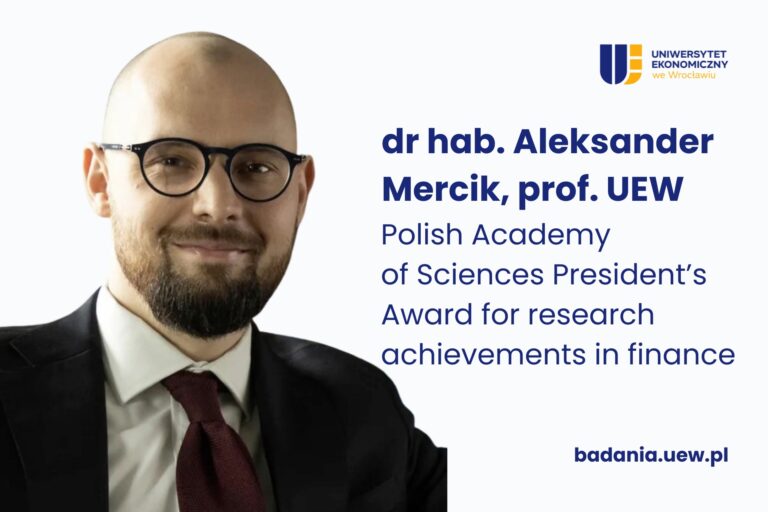
Dr hab. Aleksander Mercik, Professor of the WUEB, receives the Andrzej Gospodarowicz Award in Finance from the President of the Polish Academy of Sciences
Wroclaw University of Economics and Business researchers among the world’s leading scientists: six included in the 2026 World’s Top 2% Scientists database
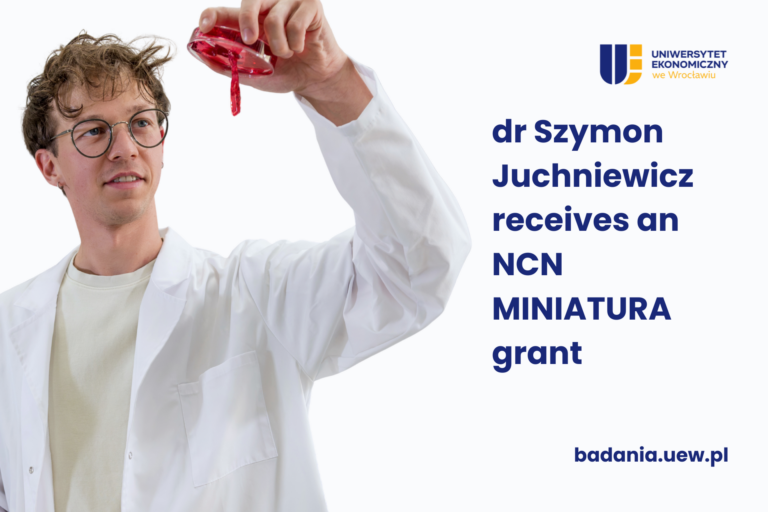
Vitamins C and D in a single plant-based gel: UEW researcher awarded NCN grant

Joanna Radomska of WUEB awarded the title of professor
See also

WUEB Experts Weekly Review. Research, Projects and Academic Successes (12–18 October 2026)
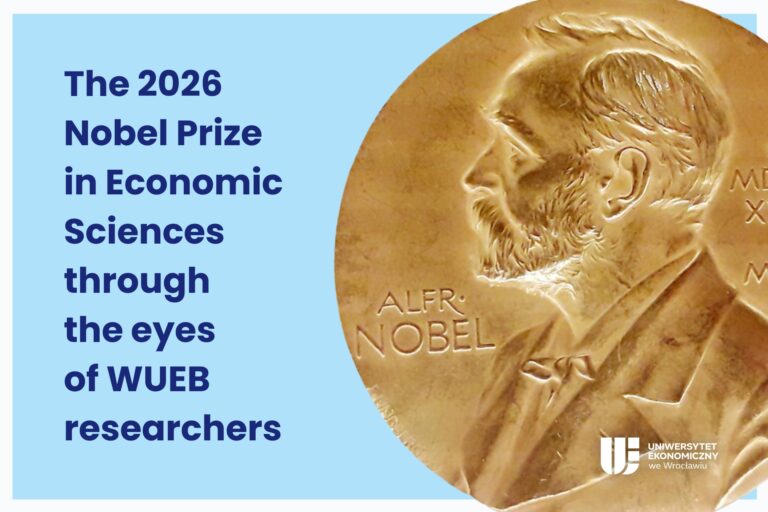
How can economic fluctuations be smoothed? The 2026 Nobel Prize in Economic Sciences through the eyes of WUEB researchers
The World Within Wrocław’s Reach. How the PROM research mobilities confirm WUEB’s place on the map of global academia
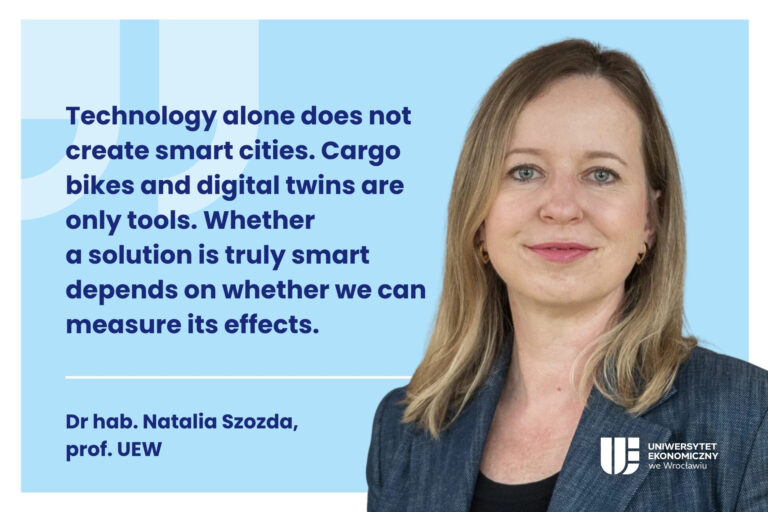
Wroclaw’s micro-hub at the Economic Forum. Natalia Szozda, Associate Professor, on when a city truly becomes smart
Dr hab. Aleksander Mercik, Professor of the WUEB, receives the Andrzej Gospodarowicz Award in Finance from the President of the Polish Academy of Sciences
WUEB Experts Weekly Review. Research, Projects and Academic Successes (5–11 October 2026)
Wroclaw University of Economics and Business researchers among the world’s leading scientists: six included in the 2026 World’s Top 2% Scientists database