

On Polish Science Day, we highlight something essential: we are proud of the research created at Wroclaw University of Economics and Business (UEW)—its quality, visibility, and, importantly, its ability to translate into practical solutions for the economy and public institutions.
Innovation as an outcome, not a slogan
At UEW, we understand innovation primarily as an outcome: the ability to design education and research so they lead to competencies and tools that can be applied beyond the university. At the same time, we strengthen organisational innovation by digitalising and automating processes, shortening information flows, improving data quality, and managing evidence of outcomes more effectively. These efforts do not sit “alongside” our academic mission—they are at the core of the updated Strategy 2030 priorities: research for a knowledge- and innovation-based economy, and the digitalisation and automation of how the university operates.
Lifelong learning-one coherent pathway
Our strength is also a consistently built lifelong development ecosystem: from programmes for children and young people-such as the Children’s University of Economics and the Young Economist Academy-through offers for leaders and the socio-economic environment (including an Executive MBA), to the University of the Third Age. It is a coherent pathway for transferring knowledge and skills, present at different stages of education and career.
A strong economic core + interdisciplinary reach
At the same time, we are developing a research profile that combines a strong economic core with interdisciplinary areas of growing national and international importance. This is visible in international projects, but also in implementations and the real-world use of research results. Key areas include, among others, sustainable urban logistics and mobility (NEXTLOGIC, Horizon Europe) as well as the cultural and creative sectors, primarily the video games industry (GAMEHEARTS)—work that connects innovation and competitiveness with the perspective of public policy.
From lab to implementation
A distinctive UEW specialisation is research on food, nutrition, and public health, leading to measurable implementation outcomes: the development and patenting of a β-glucan production technology (a European patent) and the 2023 implementation of the QUUS preparation, along with commercialisation and export. These are complemented by product and process innovations-among others for the hemp industry-with genuine knowledge transfer to the socio-economic environment.
Standards that go beyond academia
UEW’s contribution also includes areas where research quality is measured by whether standards are adopted outside academia. This includes, among others, investment decision security and financial education (in cooperation with capital market institutions), as well as standardisation of business and asset valuation (KSWS and participation in the development of the European Valuation Standards within TEGOVA). In parallel, we conduct research supporting the modernisation of public policies and social services, used in practice by state and local government institutions.
Seven pillars of our research profile
An internal bibliometric analysis (Scopus and Web of Science, after deduplication, including citations and funding) organises this picture into seven key areas defining UEW’s current research profile: economics, finance and management; sustainable development, ESG and the environment; energy transition and renewables; artificial intelligence, data analytics and decision systems; logistics, operations management and process optimisation; food, nutrition and public health; and public policies, education and social issues. It is a coherent, multi-dimensional profile, consistently strengthened—grounded in scientific quality and application relevance.
People matter most
Today we celebrate science—but just as much we celebrate the people and teams who create it: publishing, delivering projects, building standards, and achieving implementations. These achievements are what make the university credible—and they are our shared responsibility to keep strengthening.
Author: Justyna Morawska-Płoskonka
See similar content
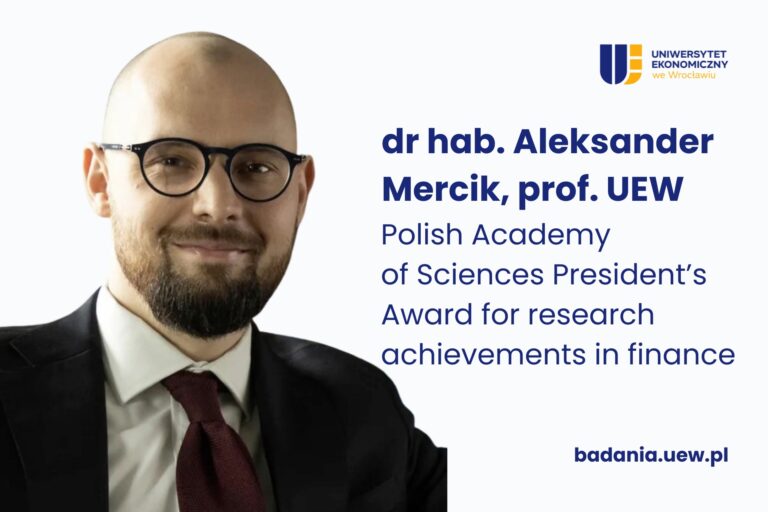
Dr hab. Aleksander Mercik, Professor of the WUEB, receives the Andrzej Gospodarowicz Award in Finance from the President of the Polish Academy of Sciences
Wroclaw University of Economics and Business researchers among the world’s leading scientists: six included in the 2026 World’s Top 2% Scientists database
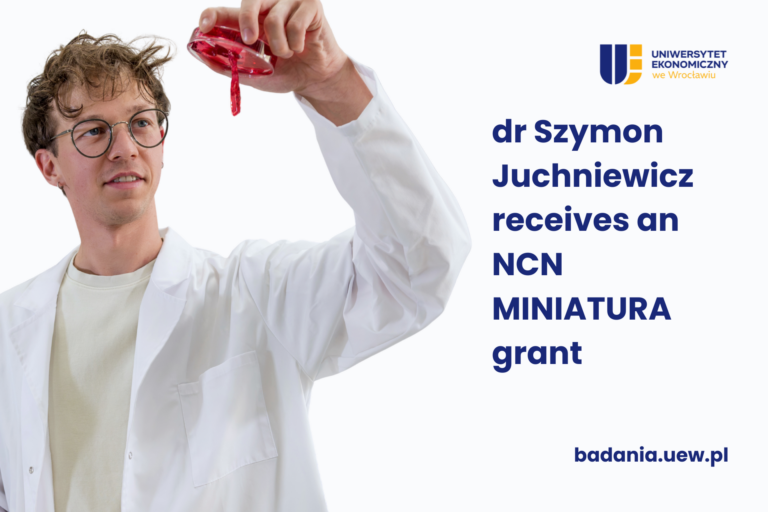
Vitamins C and D in a single plant-based gel: UEW researcher awarded NCN grant

Joanna Radomska of WUEB awarded the title of professor
See also

WUEB Experts Weekly Review. Research, Projects and Academic Successes (12–18 October 2026)
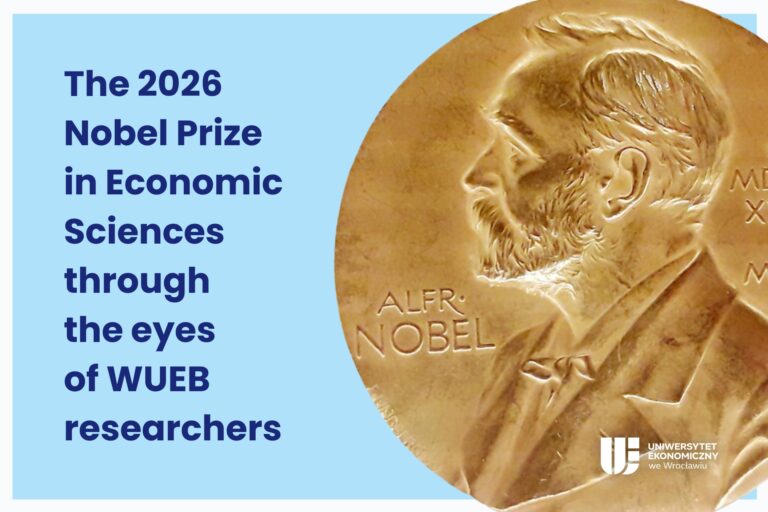
How can economic fluctuations be smoothed? The 2026 Nobel Prize in Economic Sciences through the eyes of WUEB researchers
The World Within Wrocław’s Reach. How the PROM research mobilities confirm WUEB’s place on the map of global academia
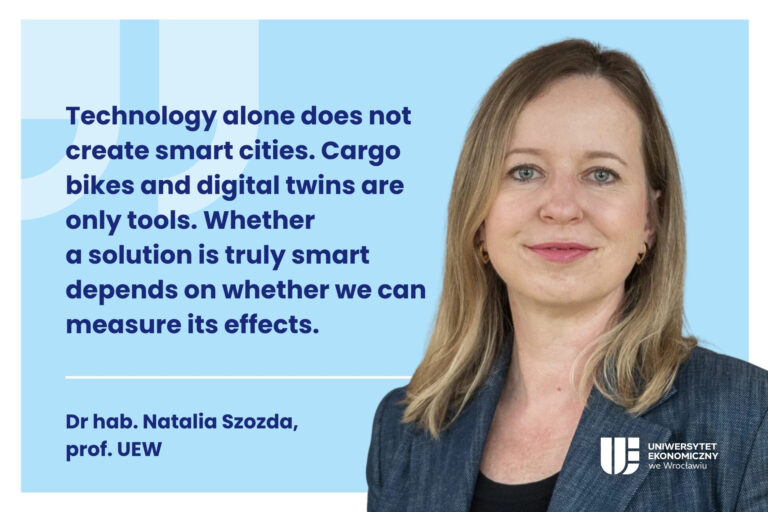
Wroclaw’s micro-hub at the Economic Forum. Natalia Szozda, Associate Professor, on when a city truly becomes smart
Dr hab. Aleksander Mercik, Professor of the WUEB, receives the Andrzej Gospodarowicz Award in Finance from the President of the Polish Academy of Sciences
WUEB Experts Weekly Review. Research, Projects and Academic Successes (5–11 October 2026)
Wroclaw University of Economics and Business researchers among the world’s leading scientists: six included in the 2026 World’s Top 2% Scientists database