

Can politics stop the green revolution in business? The answer is not as obvious as it might seem. Dr Karolina Daszyńska‑Żygadło (Assistant Professor, WUEB) explains that environmental, social and governance principles – ESG – are no longer a niche. ESG refers to the environmental, social and governance responsibilities of firms; companies are expected to protect the environment, respect people and ensure transparency in corporate governance. A few years ago ESG was niche, but today it has become one of the most important trends in global business, as investors and consumers increasingly recognise that caring for the planet and society is not a fad but a source of competitive advantage.
Donald Trump versus the climate
In 2017 President Donald Trump announced that the United States would withdraw from the Paris Agreement. “I was elected to represent the citizens of Pittsburgh, not Paris,” he said, stressing that the interests of the American economy were more important than global climate commitments. His administration subsequently repealed or weakened more than one hundred environmental regulations, from emission standards for coal‑fired power plants to car standards. During his 2023 campaign Trump reiterated: “We will not let woke ESG policies dictate how we invest taxpayer money”. Yet this political hostility towards ESG does not mean that corporate America has abandoned climate action. Companies such as Microsoft, Apple and Google have actually intensified their pro‑environmental activities; they invest billions of dollars in renewable energy, reduce emissions and set ambitious climate goals because they know that customers, investors and partners increasingly choose responsible companies.
The EU’s Omnibus package – deregulation, opportunity and controversy
In February 2025 the European Commission unveiled Omnibus I, a set of simplifications to ESG reporting. Detailed sustainability reporting will be required only of the largest firms – those with more than 1 000 employees, a balance‑sheet total above €25 million or revenues exceeding €50 million. About 80 per cent of EU companies, mainly small and medium‑sized enterprises (SMEs), will therefore be exempt; for them ESG reporting becomes voluntary. Firms that remain subject to reporting gain two additional years to prepare for the new requirements, and the Commission promises simpler standards and voluntary, lighter rules for smaller businesses.
Proponents argue that these changes could reduce bureaucracy by 25 per cent for large companies and by up to 35 per cent for SMEs, allowing businesses to focus on action rather than paperwork. Critics warn that simplifying the rules may dilute ESG standards and reduce the availability of data on corporate environmental impact. Non‑governmental organisations fear that transparency will suffer, whereas business representatives complain that earlier regulations were too complex and costly, especially for smaller firms. Controversy also surrounds proposed changes to the carbon border adjustment mechanism and the idea of replacing individual supplier assessments with regional certificates; NGOs see a risk of diffusing supply‑chain responsibility, while business welcomes the potential reduction in bureaucracy and costs.
The climate emergency will not wait
Regardless of political decisions, climate change is accelerating. The Intergovernmental Panel on Climate Change (IPCC) reported in 2023 that average global temperature has already risen by 1.1 °C above pre‑industrial levels. Extreme weather events – droughts, floods, wildfires – are no longer distant threats but part of our reality. Business therefore plays a critical role: companies have a significant environmental impact yet also immense potential to mitigate it. Investment in renewable energy, circular‑economy models and technological innovation helps protect the planet while generating economic benefits.
Polish companies on the green path
Polish firms are increasingly taking concrete climate actions not just because of regulation but out of conviction that sustainability pays off. The LPP Group, owner of fashion brands such as Reserved and Cropp, has consistently implemented a sustainable‑development strategy; it invests in renewable energy at its logistics centres, reduces plastic in packaging and develops collections made from environmentally friendly materials. In 2023 LPP reduced its CO₂ emissions by more than 20 per cent compared with the previous year. The convenience‑store chain Żabka promotes electromobility and energy efficiency by using energy‑efficient refrigerators, drawing on green energy and developing an electric delivery fleet; in 2024 it opened Poland’s first climate‑neutral store equipped with photovoltaic panels and heat‑recovery systems. KGHM, one of the world’s largest copper producers, invests in photovoltaic farms and metal‑recycling projects and has declared that by 2030 it wants to achieve climate neutrality in its own energy production. These examples show that Polish business not only sees opportunities in the green transition but actively harnesses them, regardless of regulatory changes.
Business sees opportunity in the green transition
Despite deregulation and simplification, more and more companies recognise that climate action is not merely an obligation but an opportunity. As Satya Nadella, the chief executive of Microsoft, puts it: “We believe that sustainability is not only good for the planet, but also for business”. Environmental responsibility becomes an asset in competition for customers, investors and the best employees. In practice this means that, even if the law no longer requires detailed ESG reporting, many firms will continue to do it because business partners, consumers and financial markets expect it. Green certificates, transparency and investment in innovation build competitive advantage.
Conclusion – politics is not everything
Politics can slow or accelerate the green transition but cannot stop it. Business increasingly understands that the future belongs to those who combine development with care for the environment and society. The EU’s Omnibus package is an opportunity to simplify regulations and focus on real action, but it also brings controversy and challenges. The future of ESG in Europe will depend on finding a balance between simplification and regulatory effectiveness and on whether firms, irrespective of the rules, will look for genuine opportunities rather than focusing solely on risks.
Watch the entire video on YouTube
See similar content
Women raise productivity and innovation in the economy. Yet female managers still earn one-fifth less

Computer and video games: economy, technology, society. Prof. Patrycja Klimas comments
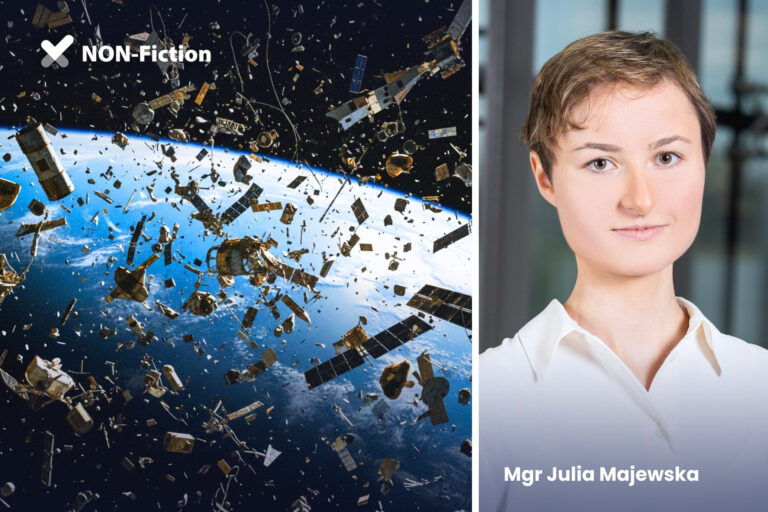
A new era of space – humanity’s future or visionary wastefulness?

Why doesn’t Poland have its own Spotify? The middle‑income trap and a strategy for the future
See also
How can economic fluctuations be smoothed? The 2026 Nobel Prize in Economic Sciences through the eyes of WUEB researchers
The World Within Wrocław’s Reach. How the PROM research mobilities confirm WUEB’s place on the map of global academia
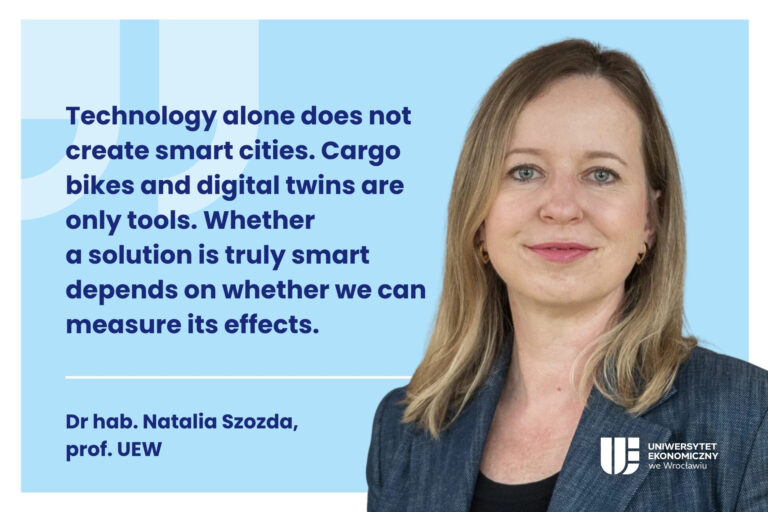
Wroclaw’s micro-hub at the Economic Forum. Natalia Szozda, Associate Professor, on when a city truly becomes smart
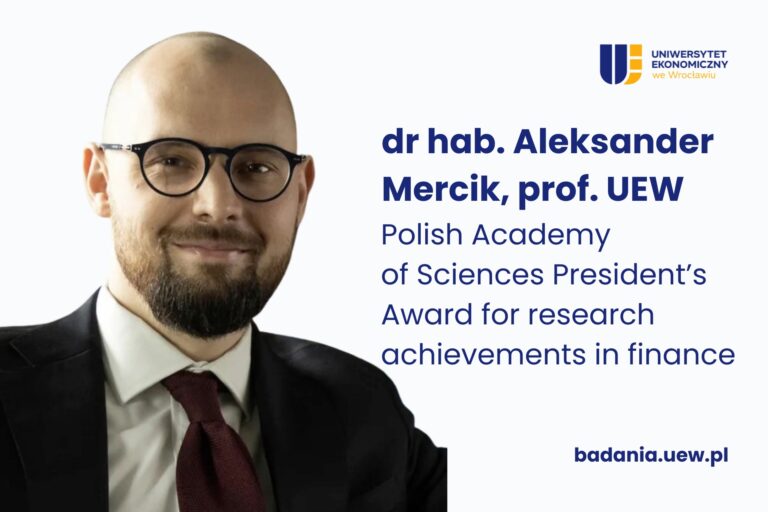
Dr hab. Aleksander Mercik, Professor of the WUEB, receives the Andrzej Gospodarowicz Award in Finance from the President of the Polish Academy of Sciences

WUEB Experts Weekly Review. Research, Projects and Academic Successes (5–11 October 2026)

Wroclaw University of Economics and Business researchers among the world’s leading scientists: six included in the 2026 World’s Top 2% Scientists database
WUEB Experts Weekly Review: Research, Projects and Academic Successes (28 September–4 October 2026)