
What is the significance and role of computer and video games for the economy, technology, and society — and, just as importantly, for us as people?
In both social and public discourse, a relatively widespread assumption persists that computer games are trivial entertainment, or even a medium that encourages violent attitudes. Yet wide-ranging research conducted under the GameHearts project — drawing primarily on qualitative methods, including in-depth analysis of academic literature and industry reports as well as individual and focus group interviews — shows that contemporary games can have a markedly positive influence. Negative effects certainly exist and should not be dismissed, but neither can the many ways in which games contribute to development and growth.

Economy: figures that surprise
From an economic standpoint, the sector exerts a clear influence on GDP, employment levels, and — in Poland’s case — the trade balance. For several years, the computer and video games industry has generated higher global revenues than film and music combined. It is now the largest segment of the entertainment market in the world. Poland is among the few countries that record a positive trade balance in this sector: we export considerably more than we import.
Technology that has moved beyond games
In the field of technology, we are witnessing intensive transfer of solutions developed within the games industry. Virtual and augmented reality now serve purposes far beyond entertainment: they are used in advanced training simulators, and in the education of medical professionals, soldiers, and pilots. Microsoft Flight Simulator is one example of a tool successfully applied in real-world aviation training. Game engines such as Unreal, meanwhile, have found broad application in animation, architecture, television, and film — substantially accelerating production processes and raising the quality of visual output.
Culture: new routes to the same content
Games also shape culture. They expand its accessibility and are themselves a significant element of digital and interactive culture — one that is particularly close to younger generations, who increasingly engage with culture outside traditional formats. Through games, a person can visit the Louvre, learn the history of the Wieliczka salt mine, or experience historical events in ways that neither a textbook nor a museum display case can offer. The integration of games with museums, philharmonics, and theatres can genuinely bring culture closer to younger audiences — not as a substitute for existing forms, but as a distinct and fully valid medium in its own right.
Society: relationships, empathy, communities
From a societal perspective, games can support the building of social capital. For many people — not only those with physical disabilities, but also those who are introverted — games are the only, or the most comfortable, space in which to form relationships and engage in collaborative activity. Beyond this, titles such as This War of Mine demonstrate that games are capable of fostering empathy and social awareness. Many address themes of tolerance, social sensitivity, and moral attitudes and norms.
What is particularly significant across all of this is that interactive, digital communication of such content proves exceptionally effective in reaching a young, digitally fluent generation.
Visit the GAMEHEARTS project website: https://gamehearts.eu/
Author of the text: Patrycja Klimas, Justyna Morawska-Płoskonka
See also

Women raise productivity and innovation in the economy. Yet female managers still earn one-fifth less

A new era of space – humanity’s future or visionary wastefulness?
Donald Trump’s presidency, the EU Omnibus package and the climate emergency – how politics shapes the future of ESG

Why doesn’t Poland have its own Spotify? The middle‑income trap and a strategy for the future
See similar content

Vitamins C and D in a single plant-based gel: UEW researcher awarded NCN grant

Joanna Radomska of WUEB awarded the title of professor
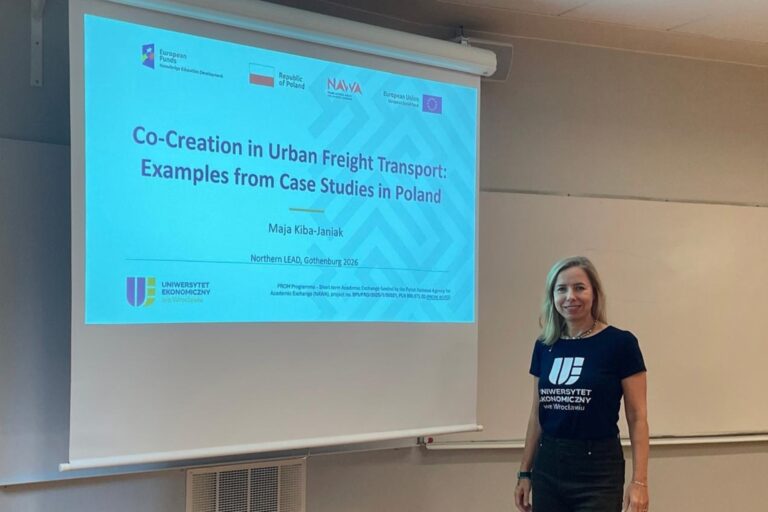
How can solutions for urban freight transport be co-created? Dr hab. inż. Maja Kiba-Janiak’s, Professor of the WUEB research fellowship in Gothenburg

WUEB Experts Weekly Review: Research, Projects and Academic Successes (21–27 September 2026)
Poland’s demographic crisis: Professor Marek Kośny on the economic consequences

What is Bitcoin and How is it Changing Finance? dr Michał Kisiel on the Future of Money
WUEB Experts Weekly Review: Research, Projects and Academic Successes (14–20 September 2026)