
Miękinia in Lower Silesia was expected to become part of Intel’s European plans. Following the change in the company’s investment strategy, the site near Wrocław is now attracting interest from Taiwanese technology firms. This raises a wider question: can Poland use such investments for more than job creation and investment announcements?
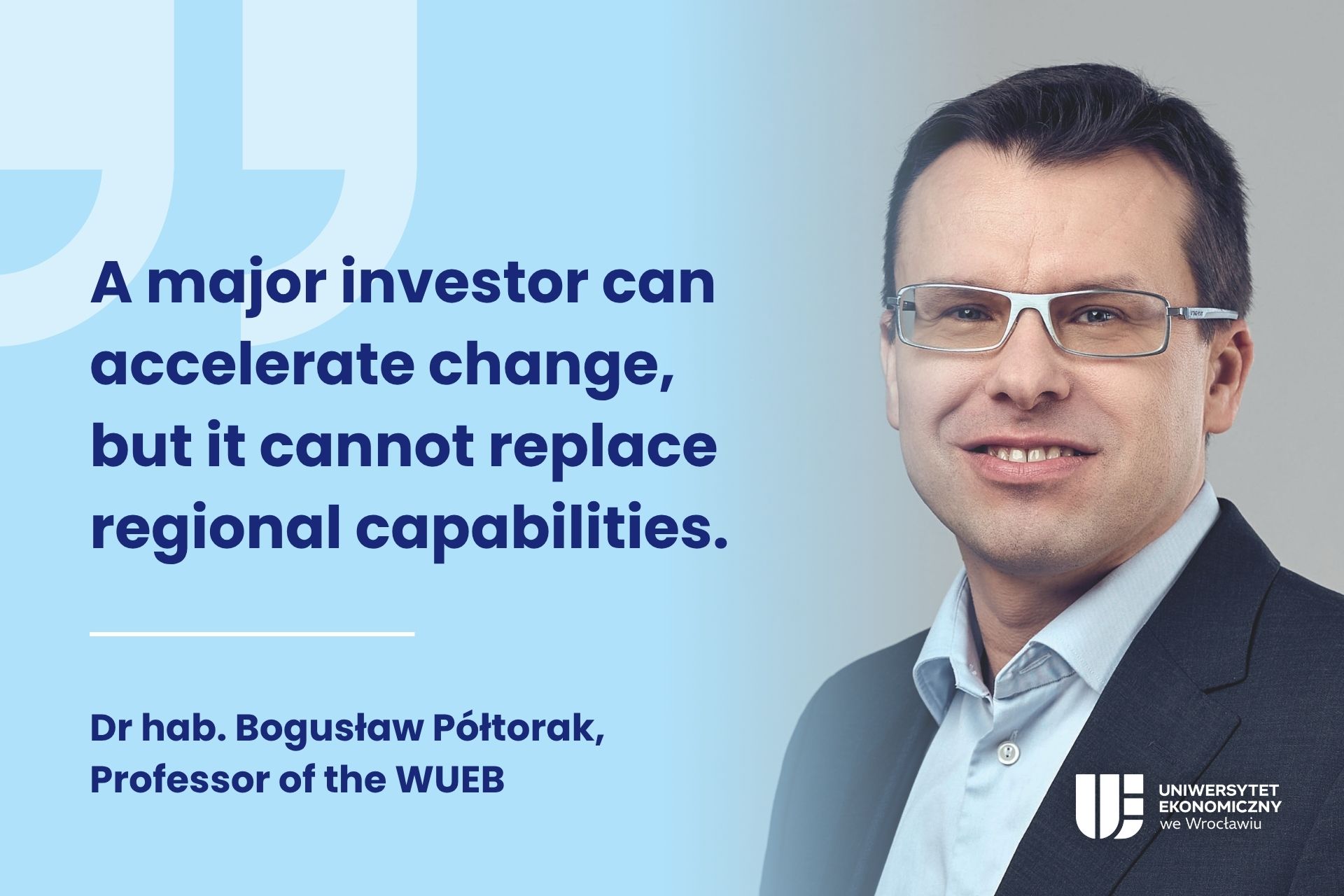
In Radio Wrocław’s Rozmowa Dnia, Dr hab. Bogusław Półtorak, Professor of the WUEB, from the Department of Finance at Wroclaw University of Economics and Business, commented on the planned investment by Taiwanese companies in Miękinia. As a researcher in economics and finance, and Chair of the Council of the Impakt Dolny Śląsk Think Tank, he looks at the project beyond one site near Wrocław. He sees it as a test of the region’s capacity to make effective use of major technology investments.
The planned projects in Miękinia are part of a broader debate about Poland’s place in the technology economy. In recent years, Poland has sought investment in semiconductors, data centres, cloud services, batteries, electromobility and infrastructure for artificial intelligence. Examples include Intel’s planned investment near Wrocław, Microsoft’s cloud region in Poland and the development of LG Energy Solution near Wrocław. Each of these projects shows that competition for technology is played out not only between companies. It also involves countries, regions, universities and labour markets.
Regions work for investment over many years
In public debate, major investments are often reduced to a few questions: how many jobs they will create, when production will start and which company is investing. These are important questions, but they do not show the full complexity of the process. Prof. Półtorak draws attention to a process that lasts much longer than negotiations with one investor.
Lower Silesia has spent years building an environment that is attractive to global companies. Wrocław and its surrounding area benefit from their location close to the EU market. That advantage, however, would not be enough without skilled people, universities, infrastructure, suppliers and experience in working with international business. Lower Silesia is not starting from scratch. Industrial, automotive, service, financial and technology investments have already created a base for more complex projects.
For this reason, the preparation of the site for Intel’s earlier planned investment should not be seen only as an unrealised promise. A serviced site, procedures, infrastructure and organisational experience can support another project. This is an important lesson for development policy: a major investor is not attracted by one decision alone. A region earns that position through consistency, credibility and the ability to handle complex ventures.
Poland in the global value chain
The strongest point in the interview concerned the strategic importance of the project. As Prof. Półtorak noted, representatives of the Taiwanese government describe the project as an investment intended to position Taiwan strategically in Europe. In practice, this means choosing a location from which Taiwanese firms can serve the EU market, develop production closer to European customers and reduce some risks linked to global supply chains. It may become part of a broader Taiwanese presence in Europe, especially in electronics, artificial intelligence and electromobility.
Such investments operate within global value chains: networks that connect design, production, supply, logistics, financing and sales. For Poland, the key question is what role it wants to play in these chains.
Poland may become a place where simpler stages of production are carried out. It may also develop skills, local suppliers, services, process management, financial capacity and research and development cooperation. Prof. Półtorak recalls that Foxconn itself grew from the role of subcontractor and is now one of the major players in advanced electronics and AI-related solutions. This example shows that participation in global production can become a starting point for development, provided that the economy is able to learn.
Skills, automation and the role of universities
Skills were one of the central themes of the interview. A modern technology investment needs more than production workers. It also needs engineers, logistics specialists, data analysts, finance experts, quality specialists, maintenance teams, process organisers and project managers.
Automation is changing the structure of work. Some tasks are being taken over by machines, digital systems and algorithms. At the same time, supervision, analysis, security and well-organised processes are becoming more important. This is where the role of universities becomes particularly clear. Technology needs people who understand costs, risk, supply chains, financing, management and the social effects of investment.
This is why Prof. Bogusław Półtorak’s commentary helps to put the issue in order. It looks beyond the simple idea of a large factory and presents the investment as a test of maturity for the state, the region, universities and the local economy. A major investor can accelerate change, but it will not do this work on Poland’s behalf.
Miękinia may become an important point on the economic map of Lower Silesia and Poland. Its significance will depend on whether the investment helps to build skills, cooperation and lasting value for the economy.
Read more expert commentaries on badania.uew.pl and see how researchers from Wroclaw University of Economics and Business explain the processes shaping regional development, the economy and the labour market.
Author: Barbara Grzelczak
See similar content

WUEB Experts Weekly Review: Research, Projects and Academic Successes (28 September–4 October 2026)
WUEB Experts Weekly Review: Research, Projects and Academic Successes (21–27 September 2026)
Poland’s demographic crisis: Professor Marek Kośny on the economic consequences
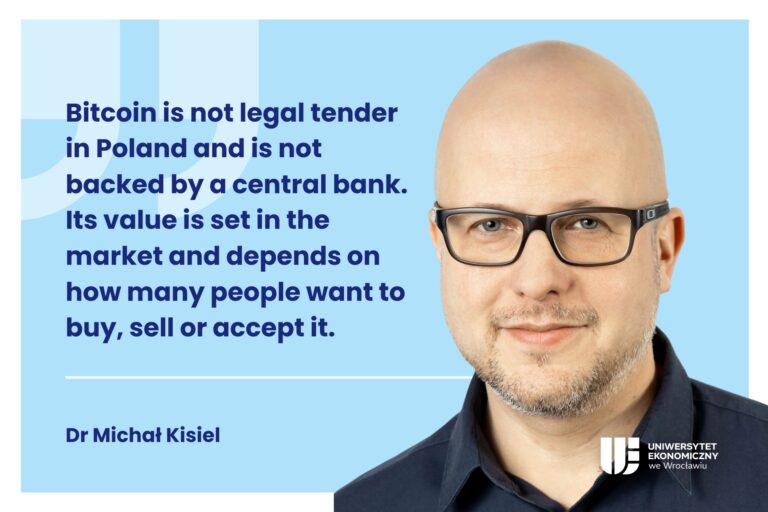
What is Bitcoin and How is it Changing Finance? dr Michał Kisiel on the Future of Money
See also
WUEB Experts Weekly Review: Research, Projects and Academic Successes (28 September–4 October 2026)
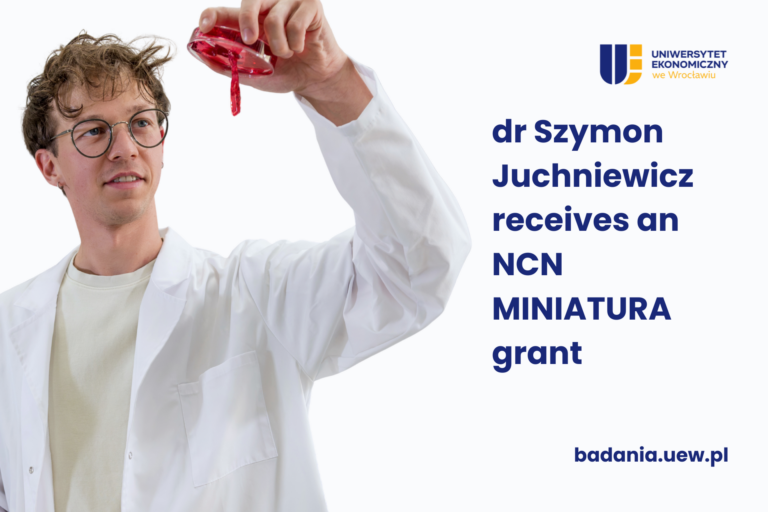
Vitamins C and D in a single plant-based gel: UEW researcher awarded NCN grant
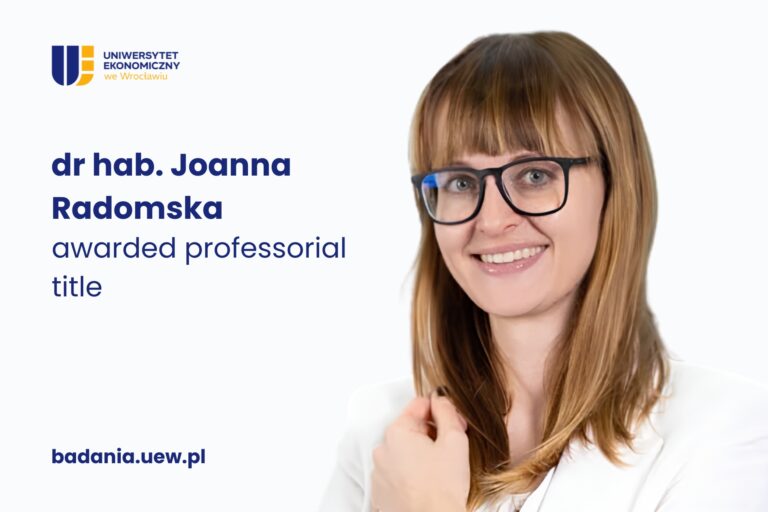
Joanna Radomska of WUEB awarded the title of professor
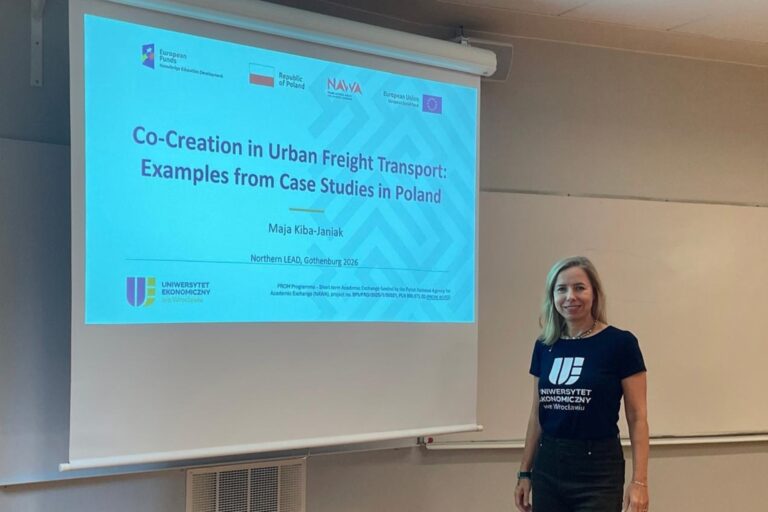
How can solutions for urban freight transport be co-created? Dr hab. inż. Maja Kiba-Janiak’s, Professor of the WUEB research fellowship in Gothenburg
WUEB Experts Weekly Review: Research, Projects and Academic Successes (21–27 September 2026)
Poland’s demographic crisis: Professor Marek Kośny on the economic consequences
What is Bitcoin and How is it Changing Finance? dr Michał Kisiel on the Future of Money