

How can food supply chains remain stable during crises while becoming more environmentally sustainable and economically viable? Prof. dr hab. inż. Małgorzata Krzywonos of Wroclaw University of Economics and Business will help address this question as a member of the Management Committee of COST Action CA25139 BRASSCHI.
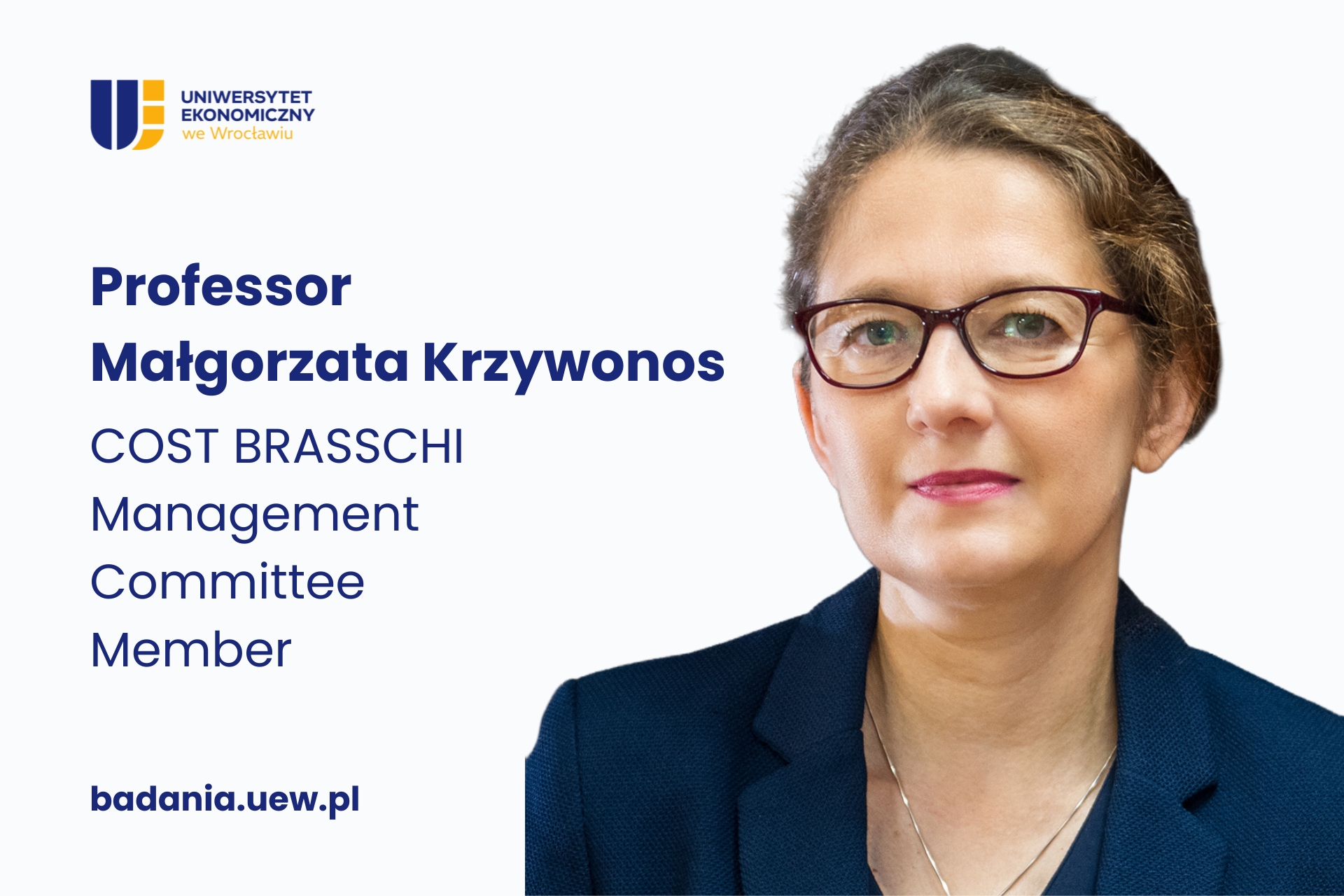
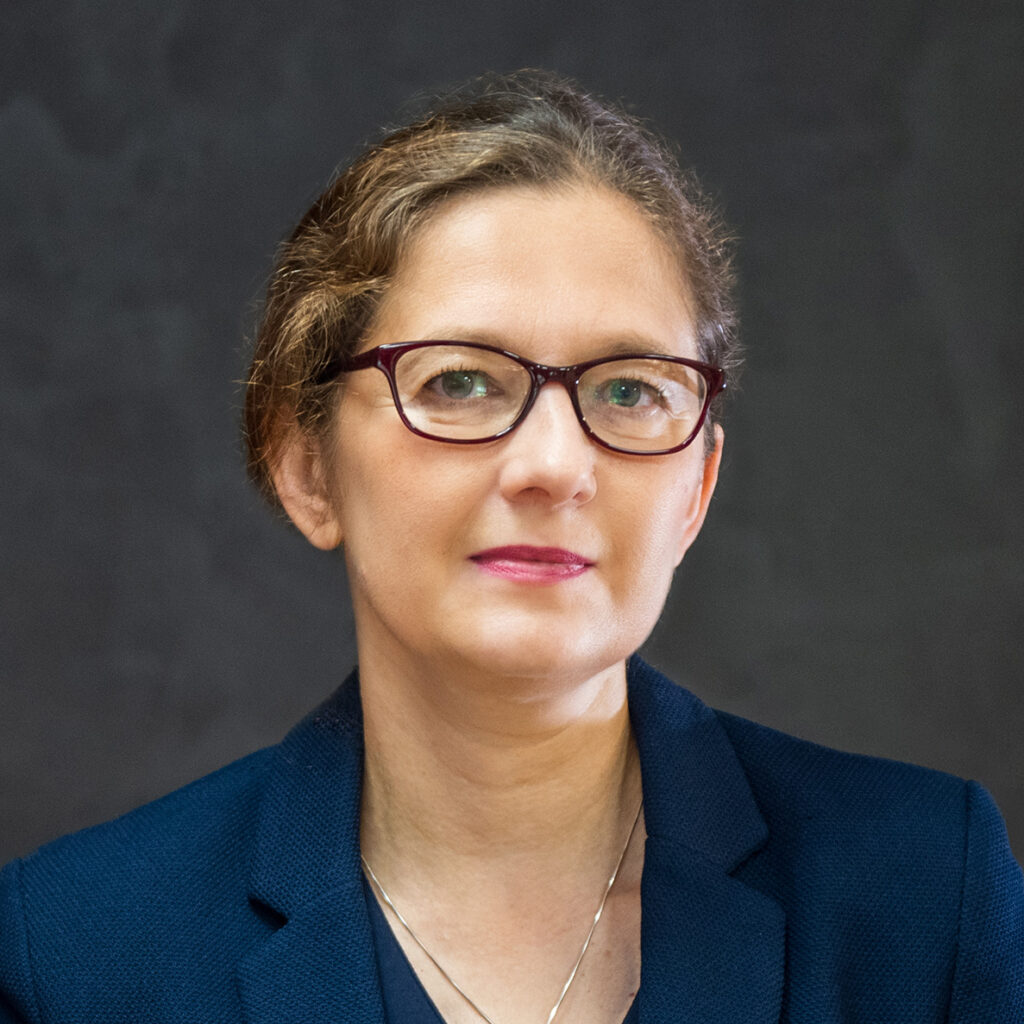
Prof Małgorzata Krzywonos specialises in the circular economy in the food sector, the use of industrial by-products, and the environmental and economic assessment of innovation. Her work brings together food technology, process management and business models, supported by experience of working with companies and evaluating research and development projects.
A European research network, not a single event
BRASSCHI, or Building Resilient Agri-Food Systems Through Sustainable Supply Chain Innovation, is an international network focused on making food systems more resilient and sustainable. It was established under COST (European Cooperation in Science and Technology), a European programme that supports collaboration between researchers, businesses, public institutions and other groups interested in applying research findings.
COST funds networking activities rather than research itself. It enables participants to work together and exchange knowledge through meetings, workshops, training schools, Short-Term Scientific Missions and activities that communicate research findings. BRASSCHI will begin on 10 September 2026 and run until 9 September 2030.
It is therefore not a single event or a conventional research project delivered by a closed consortium. The network will bring together specialists in agriculture, technology, economics, environmental science, management and public policy. They will compare experiences, prepare joint initiatives and examine which solutions can be adapted to different economic and social contexts.
Prof Małgorzata Krzywonos is one of two representatives of Poland on the Management Committee. This is the network’s main decision-making body, responsible for coordinating its work, implementing the Action plan and making decisions about the future development of BRASSCHI.
„No single institution, country, or discipline possesses the comprehensive expertise necessary to address the multifaceted challenges”
— the authors state in the BRASSCHI Technical Annex.
The resilience of a food system depends on climate, access to raw materials, technology, the organisation of supply chains, consumer behaviour, economic viability and regulation. A solution that works in one country or sector cannot always be transferred directly to another. Collaboration is needed to establish which models can be adapted to different markets and social conditions.
From food technology to the circular economy
Prof Małgorzata Krzywonos’s role on the Management Committee reflects her long-standing research profile. She is a professor of agricultural sciences with a habilitation in food technology and human nutrition. She works in the Department of Process Management at the Faculty of Management at Wroclaw University of Economics and Business.
One of her principal research areas is the valorisation of by-products from the food industry. This means finding valuable uses for materials left over from production instead of treating them solely as waste. Closely related to this is food upcycling: using safe by-products or unused raw materials to create new products with a higher value.
Her research recorded in the WUEB Knowledge Base includes work on food-waste recovery and management, the use of biomass, circular economy solutions in the food industry, and public responses to sustainable products.
A key part of her expertise is translating research into practice. She works with food, biotechnology and municipal companies. Her expertise can support organisations in assessing their circular economy potential, designing models for the use of by-products, evaluating innovation, conducting consumer research, and preparing and assessing R&D projects.
She also evaluates research and development projects for Polish and European institutions. This gives her an understanding of both the scientific basis of the green transition and the barriers that companies encounter when putting new solutions into practice.
Expertise that can lead to practical solutions
BRASSCHI covers eight connected areas:
- climate change adaptation,
- digital transformation,
- supply chain diversification and risk management,
- the circular economy,
- knowledge transfer,
- the economic viability of the transition,
- consumer behaviour, and
- closer alignment of regulations and policies across countries.
The areas most closely related to Prof Małgorzata Krzywonos’s research are circular economy implementation and waste reduction. Planned work will include identifying where by-products arise and in what quantities, assessing possible uses for them, and developing business models that can be applied across different value chains.
Her expertise is also relevant to research on consumer behaviour, the economic viability of innovation, and collaboration between businesses, researchers and public authorities. At this stage, no information has been published about which Working Group she will join.
The network aims to develop integrated food-system models, transition scenarios and common approaches to assessing the environmental, economic and social effects of proposed measures. Planned outputs include open-access publications, technical guidelines, policy recommendations and interactive decision-support tools. Knowledge will be exchanged through workshops, training schools, Short-Term Scientific Missions, stakeholder meetings and pilot demonstrations.
Membership of the Management Committee means that Prof Małgorzata Krzywonos’s role will extend beyond taking part in the network’s activities. She will also contribute to decisions about the direction of the Action. Her experience in food technology, the circular economy, process management and innovation assessment can bring a perspective that connects research with the practical needs of businesses.
For Wroclaw University of Economics and Business, her involvement provides another opportunity to strengthen international research links in sustainable food systems and the circular economy.
Visit expert profile
Prof. dr hab. Inż. Małgorzata Krzywonos
Expert in the field of: New technologies and innovation, Food and diet
You can also learn more about COST Action CA25139 BRASSCHI.
Author of text: Barbara Grzelczak
See also
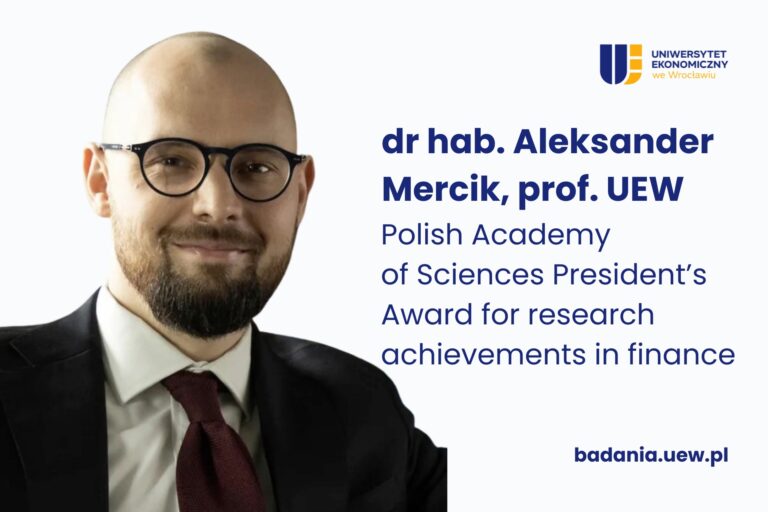
Dr hab. Aleksander Mercik, Professor of the WUEB, receives the Andrzej Gospodarowicz Award in Finance from the President of the Polish Academy of Sciences
Wroclaw University of Economics and Business researchers among the world’s leading scientists: six included in the 2026 World’s Top 2% Scientists database
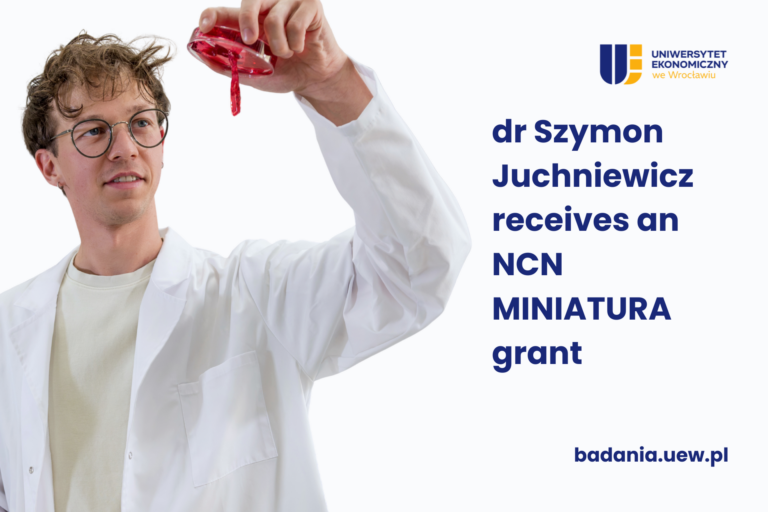
Vitamins C and D in a single plant-based gel: UEW researcher awarded NCN grant
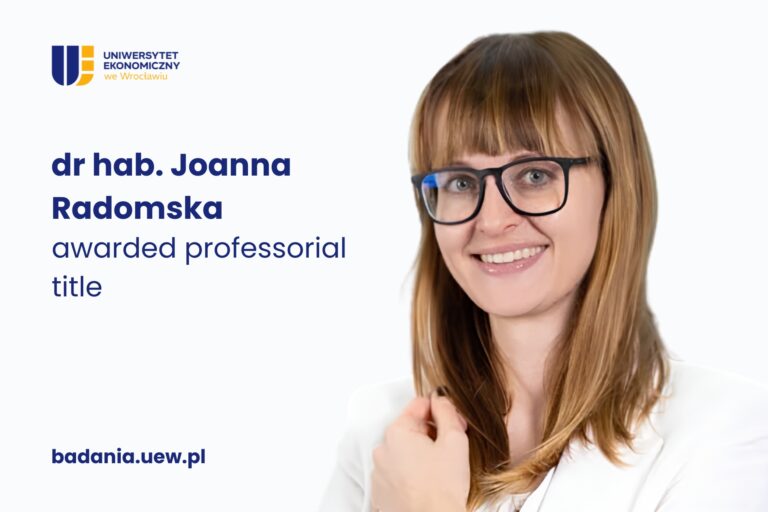
Joanna Radomska of WUEB awarded the title of professor
See similar content
The World Within Wrocław’s Reach. How the PROM research mobilities confirm WUEB’s place on the map of global academia
Wroclaw’s micro-hub at the Economic Forum. Natalia Szozda, Associate Professor , on when a city truly becomes smart
Dr hab. Aleksander Mercik, Professor of the WUEB, receives the Andrzej Gospodarowicz Award in Finance from the President of the Polish Academy of Sciences

WUEB Experts Weekly Review. Research, Projects and Academic Successes (5–11 October 2026)
Wroclaw University of Economics and Business researchers among the world’s leading scientists: six included in the 2026 World’s Top 2% Scientists database
WUEB Experts Weekly Review: Research, Projects and Academic Successes (28 September–4 October 2026)
Vitamins C and D in a single plant-based gel: UEW researcher awarded NCN grant