

Green jobs will be a central focus of a six-month research stay by dr inż. Adam Sulich, Professor of the WUEB, in Czechia. The WUEB researcher will examine how the energy transition affects businesses, workforce skills and employment structures.
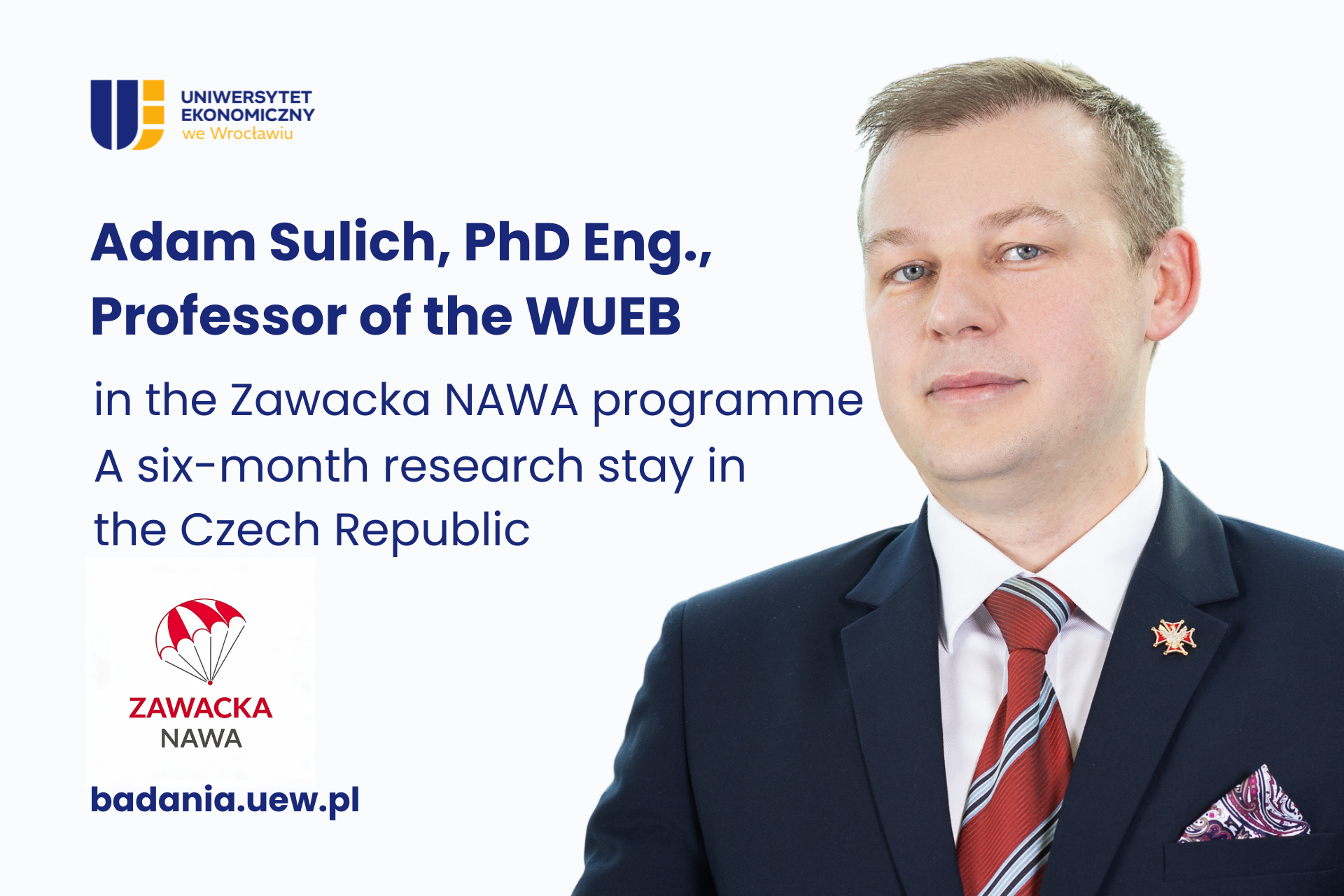
The application submitted by the researcher from the Department of Advanced Research in Management at the Wroclaw University of Economics and Business has been approved under the Zawacka NAWA Programme for the 2026/2027 academic year. His stay at the Faculty of Business Administration of the Prague University of Economics and Business is planned from late October 2026 until late April 2027.
The Zawacka NAWA Programme supports international academic exchange. It enables students, doctoral candidates, academic teachers and researchers to undertake study and research stays abroad. The programme aims to strengthen participants’ skills and deepen cooperation between Polish and international academic institutions.
Green jobs: what really creates new employment?
The research project is entitled Green job creation under the energy transition: organisational, regulatory, and labour-market perspectives. A comparative analysis of Poland and the Czech Republic.
Green jobs are roles that emerge or change as economies move towards more sustainable models. They are not limited to renewable energy. The transition also affects industry, transport, logistics, services, public administration and the way organisations are managed.
Professor Adam Sulich will analyse the mechanisms behind green job creation, the effects of the energy transition and electromobility on labour markets, and the role of public regulation and changing skills requirements.
Green management will form an important part of the research. This involves integrating environmental objectives into decisions concerning strategy, investment, organisational processes and employee development.
Technology alone is not enough to create lasting jobs. Appropriate regulation, skilled workers and organisations capable of managing the transition are also required.
Poland and Czechia: similar challenges, different experiences
A comparison of Poland and Czechia will show how the two countries respond to similar challenges and which measures support the development of green employment. The research will cover public policies, regulation, organisational practices and changes in the labour market.
Electromobility will be a particular focus. It involves more than replacing petrol and diesel vehicles with electric alternatives. It also changes demand for workers in manufacturing, energy, infrastructure, logistics, maintenance and related services. Some occupations are entirely new, while others require additional qualifications.
Cooperation with the Faculty of Business Administration at the Czech university will include joint research, participation in seminars and the preparation of articles for international academic journals. Further joint research and grant proposals are also planned.
“The project also aims to produce joint academic publications and develop long-term international cooperation,”
— says dr inż. Adam Sulich.
Research expertise and international cooperation
The research stay is directly connected with dr inż. Adam Sulich’s work as a WUEB expert on the green transformation of the economy, sustainable strategic management and labour-market change.
His research brings together the perspectives of businesses, public institutions and workers. It may therefore provide knowledge relevant to both academic research and socio-economic stakeholders.
Professor Sulich’s previous international work has also included participation in a team preparing a United Nations report on sustainable development.
The planned stay aligns with the priorities of the WUEB Strategy 2030. These include conducting research that responds to economic and social challenges, strengthening the University’s international presence and developing activities that have a positive impact on society and the environment.
Follow badania.uew.pl for updates on the cooperation and the results of research into green labour markets.
Author of text: Barbara Grzelczak
See also
Dr hab. Aleksander Mercik, Professor of the WUEB, receives the Andrzej Gospodarowicz Award in Finance from the President of the Polish Academy of Sciences
Wroclaw University of Economics and Business researchers among the world’s leading scientists: six included in the 2026 World’s Top 2% Scientists database
Vitamins C and D in a single plant-based gel: UEW researcher awarded NCN grant
Joanna Radomska of WUEB awarded the title of professor
See similar content
How can economic fluctuations be smoothed? The 2026 Nobel Prize in Economic Sciences through the eyes of WUEB researchers
The World Within Wrocław’s Reach. How the PROM research mobilities confirm WUEB’s place on the map of global academia
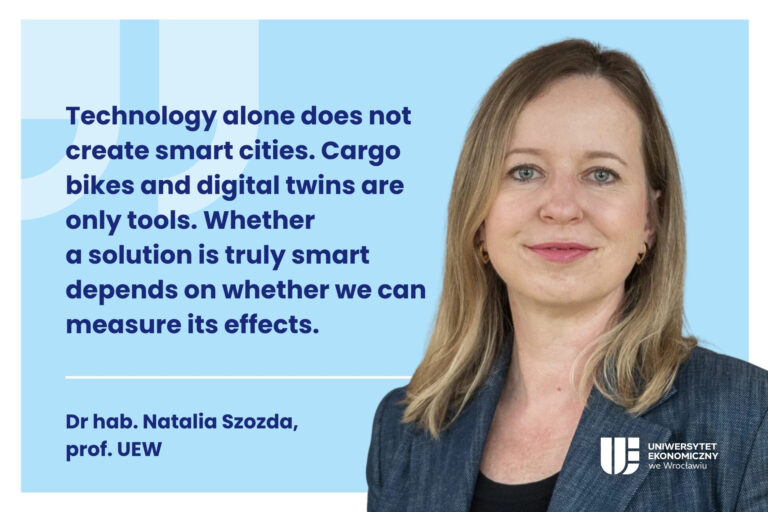
Wroclaw’s micro-hub at the Economic Forum. Natalia Szozda, Associate Professor, on when a city truly becomes smart
Dr hab. Aleksander Mercik, Professor of the WUEB, receives the Andrzej Gospodarowicz Award in Finance from the President of the Polish Academy of Sciences

WUEB Experts Weekly Review. Research, Projects and Academic Successes (5–11 October 2026)
Wroclaw University of Economics and Business researchers among the world’s leading scientists: six included in the 2026 World’s Top 2% Scientists database
WUEB Experts Weekly Review: Research, Projects and Academic Successes (28 September–4 October 2026)