

Low-cost purchases, free delivery and a parcel arriving at your door several days or weeks later. For many people, this has become a routine part of online shopping. That model is now beginning to change.
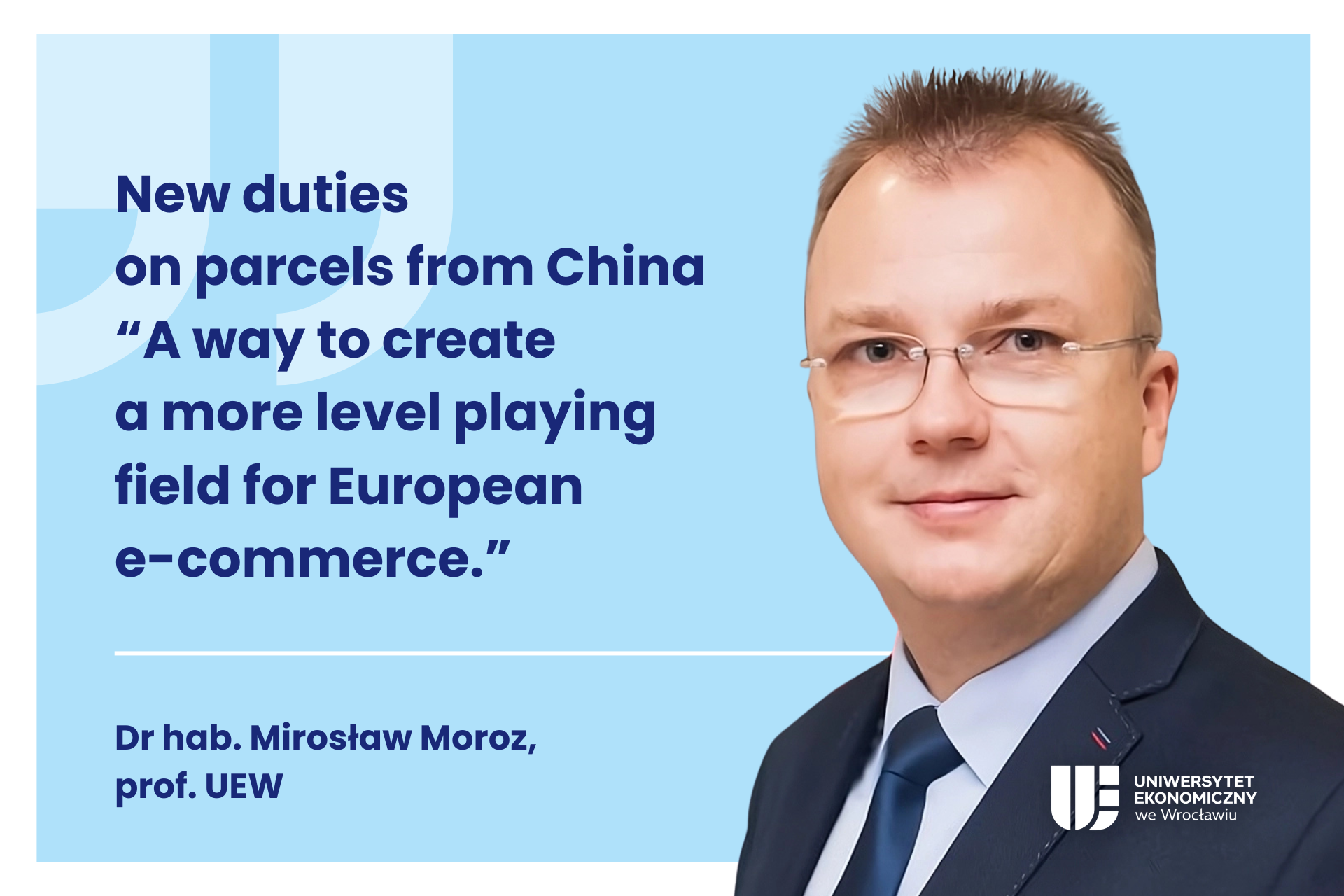
In Radio Wrocław’s Rozmowa Dnia, dr hab. Mirosław Moroz, Professor of the WUEB, from the Department of Economics and Organization of Enterprise at the Wroclaw University of Economics and Business, discussed the new rules for low-value consignments imported from outside the European Union. His areas of expertise include e-commerce, e-marketing, e-business and change management.
The discussion was not limited to whether purchases from Chinese platforms would become more expensive. The broader issue is who competes in today’s online retail market and under what conditions.
“The essence of this change is to create a more level playing field between Polish and, more broadly, European e-commerce and Chinese products.”
— Mirosław Moroz, Professor of the WUEB.
New duties on parcels from outside the EU and the €3 charge
Since 1 July 2026, the European Union has applied a temporary €3 customs duty to low-value consignments worth up to €150 imported from outside the EU. The European Commission announced the measure in its communication on the temporary charge for low-value imports. The changes are also based on Council Regulation (EU) 2026/382 and Commission Implementing Regulation (EU) 2026/1200.
The current arrangement is expected to remain in force until 1 July 2028. After that date, goods are to be subject to the standard customs rates applicable to their product category.
As Professor Moroz explained, the measure should not be seen simply as an additional charge on each parcel. A product’s customs classification also matters, as it determines how the item is treated within the tariff system. This may sound technical to consumers, but the effects are practical. A small item costing only a few złoty may no longer offer the same value as before.
For years, purchases of this kind have driven the popularity of Asian online marketplaces. Watch straps, cables, holders, clothing accessories, decorations and household gadgets were inexpensive, while delivery costs often seemed almost invisible. We have previously examined a similar pattern of impulse purchasing in our article on ultra-fast fashion – An Ultra Fast Fashion Hub near Wrocław. What Do We Really Buy When We Click “Order”?
Quick choices, low prices and the ease of adding more products to a basket all encourage spontaneous purchases. The new charges may weaken that effect, as a single low-cost item may no longer appear to be such an obvious bargain.
Chinese marketplaces and competition in e-commerce
The central issue in the interview was competition. European online retailers operate within an extensive regulatory framework. They must ensure product safety, protect personal data, provide transparent pricing, respect consumer rights, process complaints and meet information requirements.
These responsibilities are governed by specific regulations, including the General Data Protection Regulation, the Omnibus Directive and product safety legislation. They provide greater protection for consumers. For retailers, however, they require staff time, system changes, procedures, data management and accountability for errors.
Compliance carries a cost. European sellers must include these obligations in their prices, operations and customer service. The discussion about customs duties is therefore not only about consumers paying more. It is also about the conditions under which companies compete.
When one side bears the costs of regulatory compliance, product safety and legal responsibility, while the other benefits from lower production costs, economies of scale and cheaper logistics, the price difference does not result solely from more efficient sales. Professor Moroz highlighted this broader mechanism. Behind every very cheap parcel is an entire system of production, transport, regulation and differences in operating costs.
Purchases from China, European warehouses and changing consumer habits
The interview also addressed logistics, an issue of particular relevance to Lower Silesia.
Large online marketplaces are preparing for the changes by expanding their warehouse networks in Europe. Poland, including the Wrocław area, is an attractive location for this model because of its geographical position, infrastructure and access to major markets.
As a result, some products may no longer need to be sent directly from Asia to individual customers. They can first be delivered to a European warehouse and then dispatched to the buyer.
From the customer’s perspective, delivery may remain fast. From the market’s perspective, however, the operating model changes significantly.
If individual low-cost consignments become less economical, platforms may increasingly encourage customers to place larger orders, combine products or purchase higher-value items. Consumers will still have a wide choice, but their purchasing decisions may become less impulsive.
Professor Mirosław Moroz’s interview shows that the €3 charge represents more than a technical adjustment to the customs system. It affects consumers, online marketplaces, European retailers and logistics companies.
For consumers, it may encourage greater consideration before making small purchases. For European companies, it may create more balanced competitive conditions. For regions such as Lower Silesia, it may strengthen the role of local logistics facilities.
Read also: Major technology investments in Poland
Interview with Professor Mirosław Moroz on Radio Wrocław:
Source: Radio Wrocław, Rozmowa Dnia: Dr hab. Mirosław Moroz on New Duties on Goods from China
Author of text: Barbara Grzelczak
See also
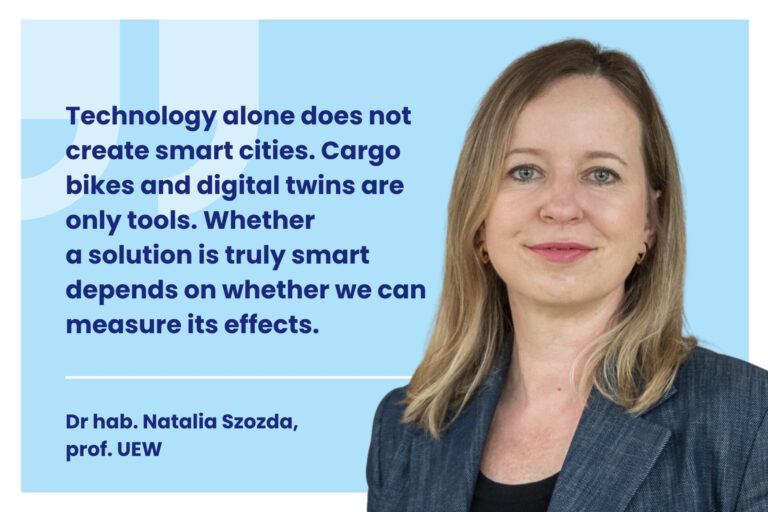
Wroclaw’s micro-hub at the Economic Forum. Natalia Szozda, Associate Professor , on when a city truly becomes smart

WUEB Experts Weekly Review. Research, Projects and Academic Successes (5–11 October 2026)
WUEB Experts Weekly Review: Research, Projects and Academic Successes (28 September–4 October 2026)
WUEB Experts Weekly Review: Research, Projects and Academic Successes (21–27 September 2026)
See similar content
The World Within Wrocław’s Reach. How the PROM research mobilities confirm WUEB’s place on the map of global academia
Wroclaw’s micro-hub at the Economic Forum. Natalia Szozda, Associate Professor , on when a city truly becomes smart

Dr hab. Aleksander Mercik, Professor of the WUEB, receives the Andrzej Gospodarowicz Award in Finance from the President of the Polish Academy of Sciences
WUEB Experts Weekly Review. Research, Projects and Academic Successes (5–11 October 2026)

Wroclaw University of Economics and Business researchers among the world’s leading scientists: six included in the 2026 World’s Top 2% Scientists database
WUEB Experts Weekly Review: Research, Projects and Academic Successes (28 September–4 October 2026)

Vitamins C and D in a single plant-based gel: UEW researcher awarded NCN grant