

Just outside Wrocław, a major logistics hub of one of the world’s largest ultra fast fashion platforms has been launched. Thousands of jobs are expected to be created. At first glance, it looks like a success story: investment, employment, regional development. In an interview with Radio Wrocław, Karolina Daszyńska-Żygadło, PhD, from Wrocław University of Economics and Business, raises a fundamental question: should we really be celebrating this model of growth?
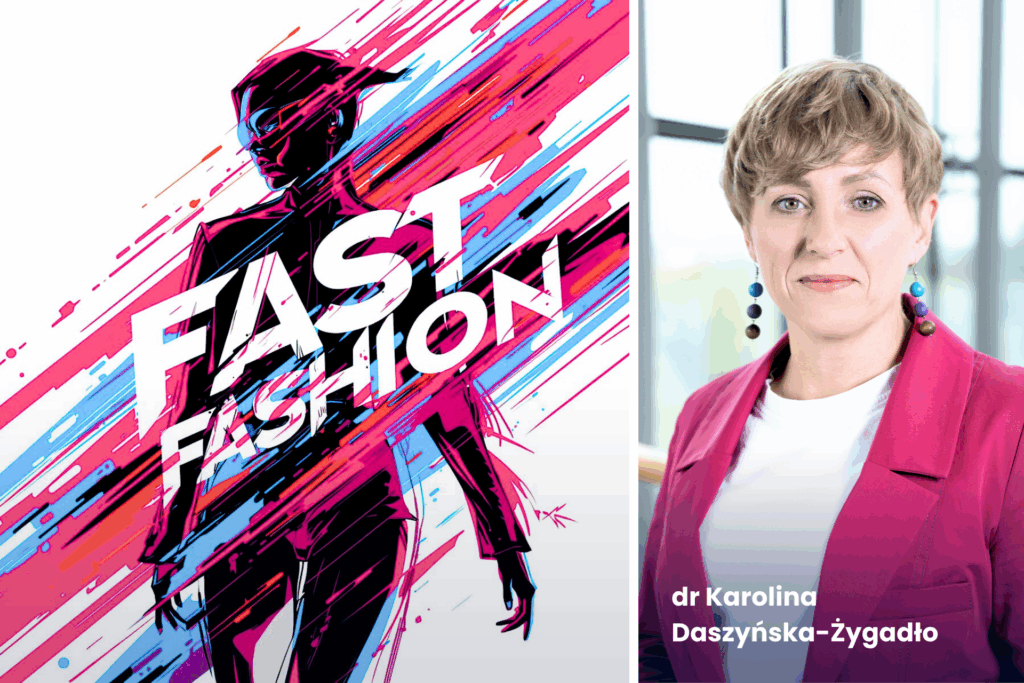
Fast fashion vs ultra fast fashion: a difference that changes the scale
Fast fashion already transformed the industry by replacing four seasons with up to twelve “micro-seasons” a year. Ultra fast fashion goes even further. It relies on a constant stream of new products, algorithm-driven recommendations and extreme ease of purchasing: a few clicks, another suggestion, another promotion.
The result is clothing that is cheap, visually attractive online, but often short-lived, difficult to repair and misleading at the point of purchase. As the expert points out, this model fuels overconsumption while hiding its real costs.
The invisible price: waste, labour conditions and Ghana
The fashion industry generates around 92 million tonnes of waste every year. In Poland alone, approximately 400,000 tonnes of textile waste are discarded annually. On average, Europeans throw away about 11 kg of textiles per person per year.
Most of this waste does not remain in Europe. It is shipped in containers to poorer regions, including Ghana, where it becomes a severe local environmental and social problem, polluting soil and water and overburdening communities.
When we throw away a T-shirt, the problem does not disappear – it simply changes location.
A regional question, not just an economic one
The logistics hub near Wrocław serves the entire European market. No production takes place there, but it is from this location that millions of parcels will be dispatched – many of them turning into waste shortly afterwards.
Universities in Poland have already withdrawn from cooperation with fast fashion platforms after public criticism, citing inconsistency with their mission and sustainability commitments. This sends a broader signal.
For regional authorities and development agencies, investment decisions are no longer evaluated solely in terms of jobs created. Increasingly, they shape the long-term reputation of a region and influence trust, talent attraction and social cohesion.runek regionu wpływa na jakość kolejnych inwestycji, przyciąganie talentów oraz spójność lokalnej wspólnoty.
Is change possible?
Despite the scale of the problem, there is cautious optimism. Slow fashion and second-hand markets are growing rapidly. Forecasts suggest that by 2035, the second-hand clothing market could surpass fast fashion in value.
This shift indicates a growing awareness among consumers and increasing pressure for more responsible business models.
badania.uew.pl – because responsible choices start with reliable knowledge.
Author: Justyna Morawska-Płoskonka
See similar content
How can economic fluctuations be smoothed? The 2026 Nobel Prize in Economic Sciences through the eyes of WUEB researchers
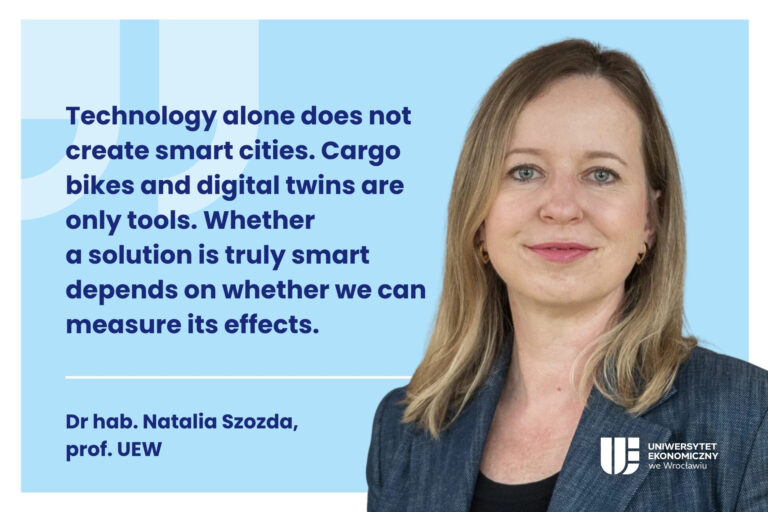
Wroclaw’s micro-hub at the Economic Forum. Natalia Szozda, Associate Professor, on when a city truly becomes smart

WUEB Experts Weekly Review. Research, Projects and Academic Successes (5–11 October 2026)
WUEB Experts Weekly Review: Research, Projects and Academic Successes (28 September–4 October 2026)
See also
How can economic fluctuations be smoothed? The 2026 Nobel Prize in Economic Sciences through the eyes of WUEB researchers
The World Within Wrocław’s Reach. How the PROM research mobilities confirm WUEB’s place on the map of global academia
Wroclaw’s micro-hub at the Economic Forum. Natalia Szozda, Associate Professor, on when a city truly becomes smart
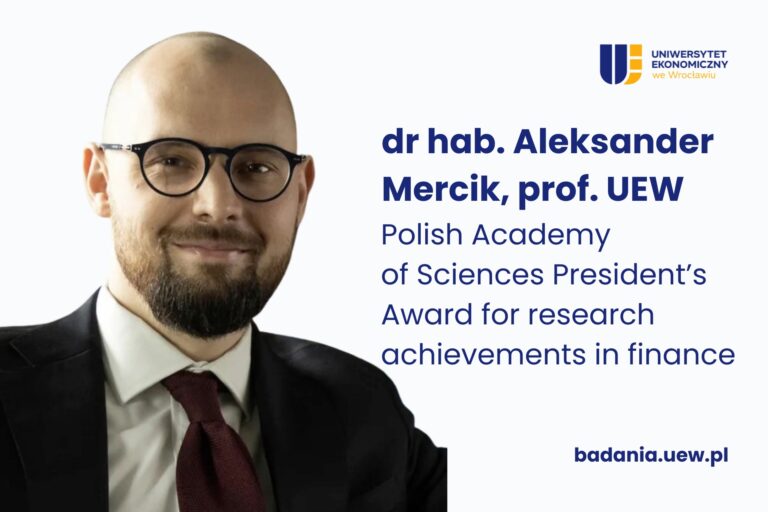
Dr hab. Aleksander Mercik, Professor of the WUEB, receives the Andrzej Gospodarowicz Award in Finance from the President of the Polish Academy of Sciences
WUEB Experts Weekly Review. Research, Projects and Academic Successes (5–11 October 2026)
Wroclaw University of Economics and Business researchers among the world’s leading scientists: six included in the 2026 World’s Top 2% Scientists database
WUEB Experts Weekly Review: Research, Projects and Academic Successes (28 September–4 October 2026)