

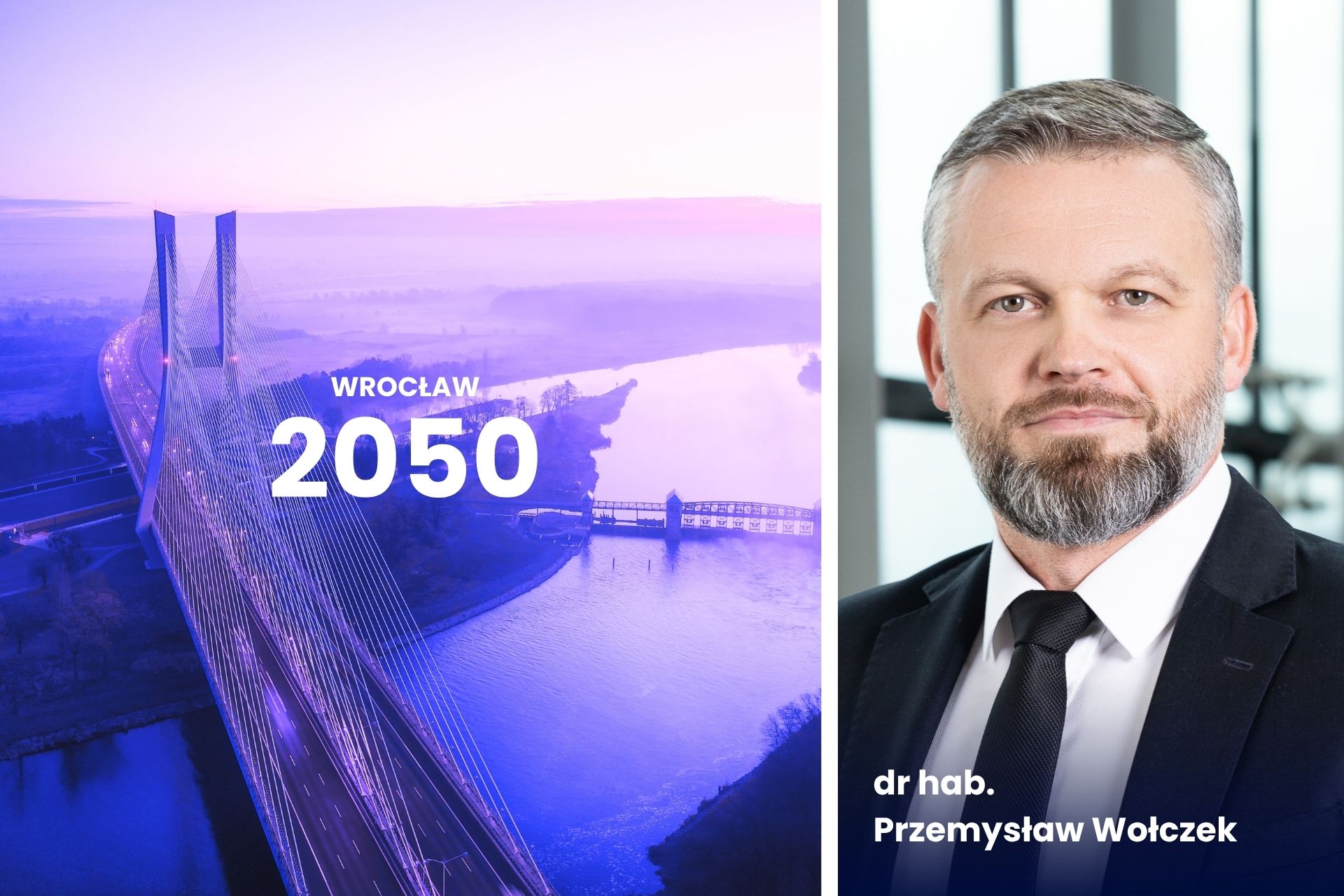
The city of Wrocław is setting out its vision for 2050. But the key question remains: What makes a strategy more than just a document?
Dr Przemysław Wołczyk, Associate Professor at Wroclaw University of Economics and Business, an expert in regional development strategies, offers a direct answer – and highlights where most long-term plans go off track.
“A strategy isn’t an elegant PDF. It’s a decision about direction, priorities, resource use, and how trust is built. It’s the beginning of the journey – not the conclusion.”
In the Radio Wrocław programme “Para dla Dolnego Śląska”, he outlined three pillars that determine whether a strategy becomes a true driver of change – or remains a well-worded vision on a website.
Revision, not prediction
Looking ahead to 2050 demands scenario-based thinking. But those scenarios, Prof. Wołczyk argues, can’t all be optimistic.
“In 3–5 years, many assumptions may need serious revision. That’s normal. The world is changing. Demographics are shifting. Technology is accelerating. Artificial intelligence is redefining entire sectors. A strategy that doesn’t anticipate revision is already outdated.”
Implementation is the ultimate test
Writing a strategy is not the end of the process – it’s only the beginning.
“Without resources – financial, human, institutional – vision cannot be delivered. Strategy without people who know what to do is just administrative fiction.”
In regions struggling with depopulation and social capital erosion, it’s not enough to ask what we want to achieve. The real question is who will deliver it – and at what cost.
Continuity beyond political terms
If every new administration redefines the plan, communities lose trust.
“A strategy must go beyond political cycles. It needs institutional champions. Without them, no community or business will treat it seriously – and without them, nothing will happen.”
A wake-up call for planners, policymakers and city leaders
Because it touches on the real tensions faced by every city, region, and public agency trying to plan beyond one term in office.
This is a conversation not only for policy designers – but also for public leaders, strategy consultants, civic organisations, and those responsible for building trust with communities.
If you believe strategy should be more than a slogan – if it should be a tool for action, leadership, and long-term change – this is worth your time.
badania.uew.pl/en – because the world needs informed voices, when noise drowns out reason.
Author: Justyna Morawska-Płoskonka
See similar content
How can economic fluctuations be smoothed? The 2026 Nobel Prize in Economic Sciences through the eyes of WUEB researchers
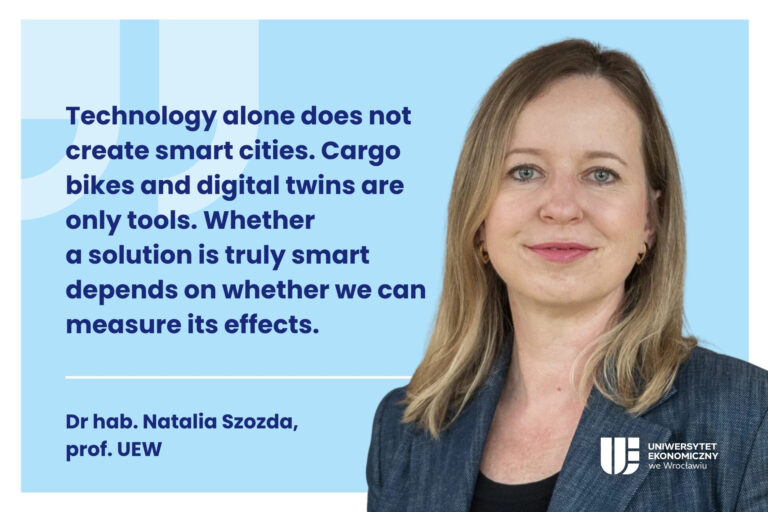
Wroclaw’s micro-hub at the Economic Forum. Natalia Szozda, Associate Professor, on when a city truly becomes smart

WUEB Experts Weekly Review. Research, Projects and Academic Successes (5–11 October 2026)
WUEB Experts Weekly Review: Research, Projects and Academic Successes (28 September–4 October 2026)
See also
How can economic fluctuations be smoothed? The 2026 Nobel Prize in Economic Sciences through the eyes of WUEB researchers
The World Within Wrocław’s Reach. How the PROM research mobilities confirm WUEB’s place on the map of global academia
Wroclaw’s micro-hub at the Economic Forum. Natalia Szozda, Associate Professor, on when a city truly becomes smart
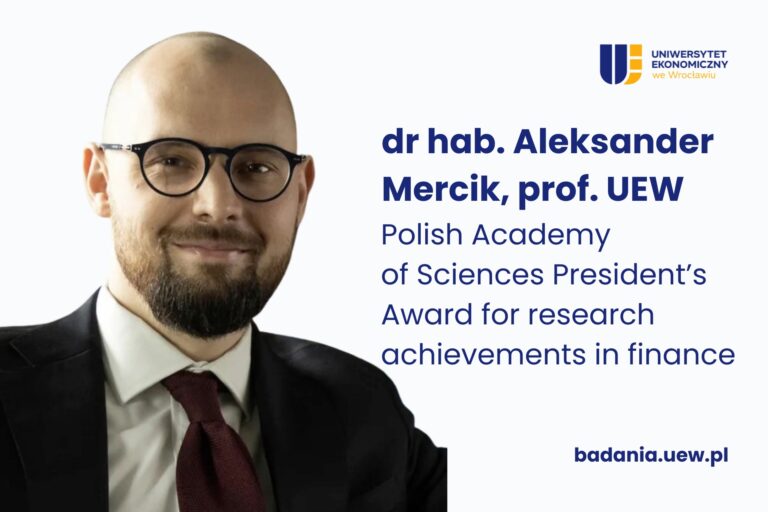
Dr hab. Aleksander Mercik, Professor of the WUEB, receives the Andrzej Gospodarowicz Award in Finance from the President of the Polish Academy of Sciences
WUEB Experts Weekly Review. Research, Projects and Academic Successes (5–11 October 2026)
Wroclaw University of Economics and Business researchers among the world’s leading scientists: six included in the 2026 World’s Top 2% Scientists database
WUEB Experts Weekly Review: Research, Projects and Academic Successes (28 September–4 October 2026)