

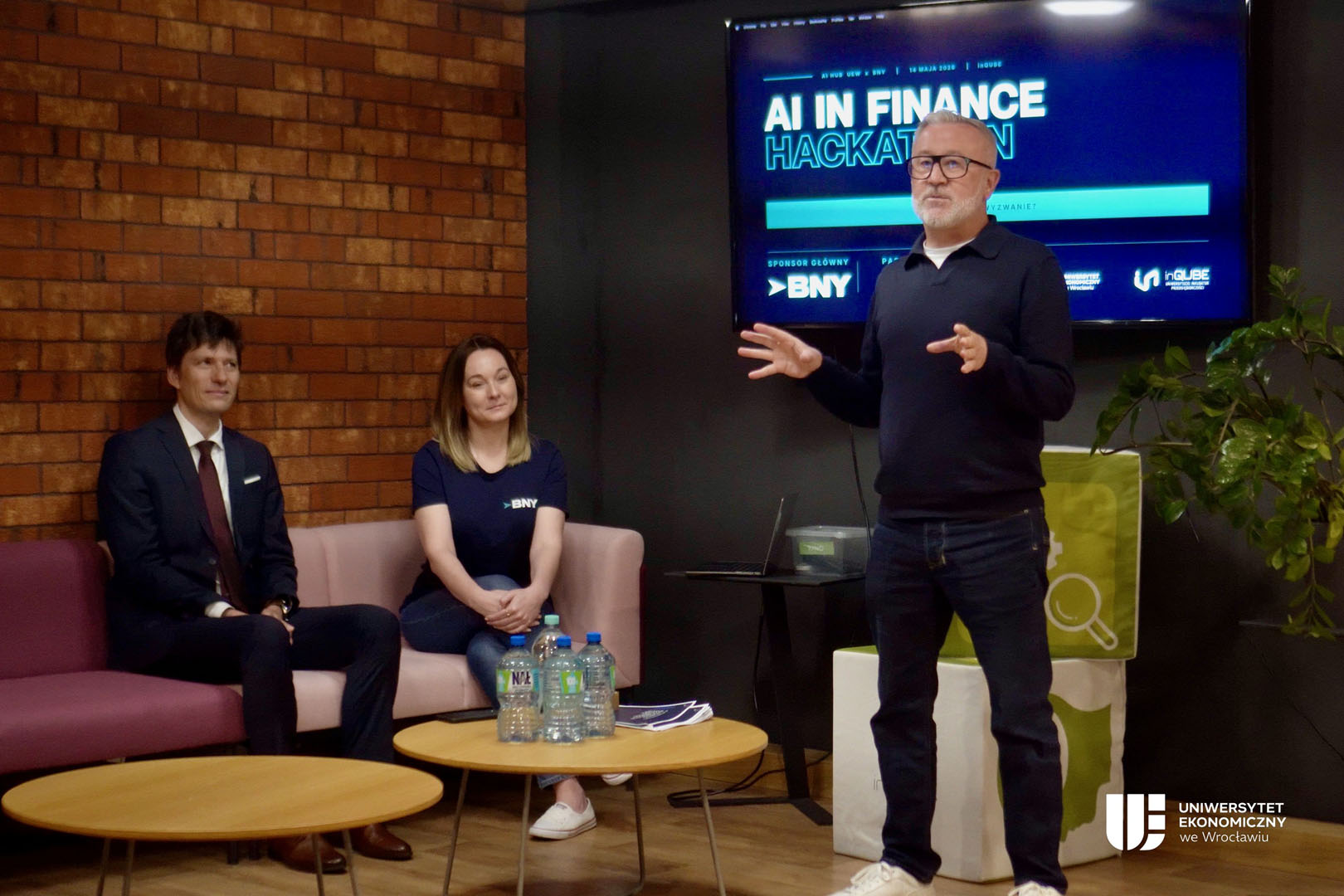
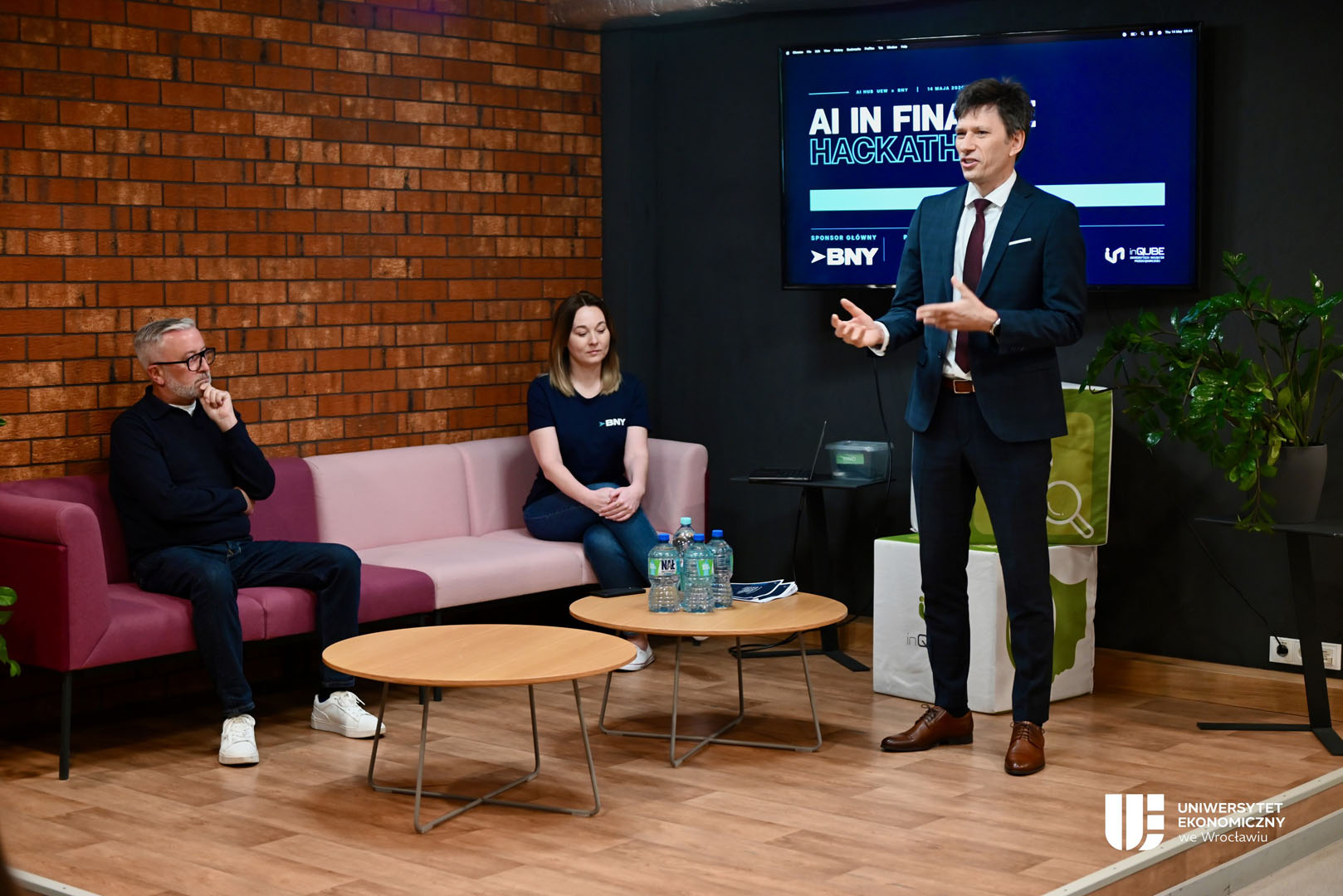
Students, doctoral candidates, WUEB researchers and BNY experts worked together at inQUBE on AI-based solutions for the financial sector. The AI in FINANCE Hackathon was not a one-off event or an academic exercise. It was another stage in a developing collaboration in which knowledge created at the university enters the technological, business and student environment at the same time.
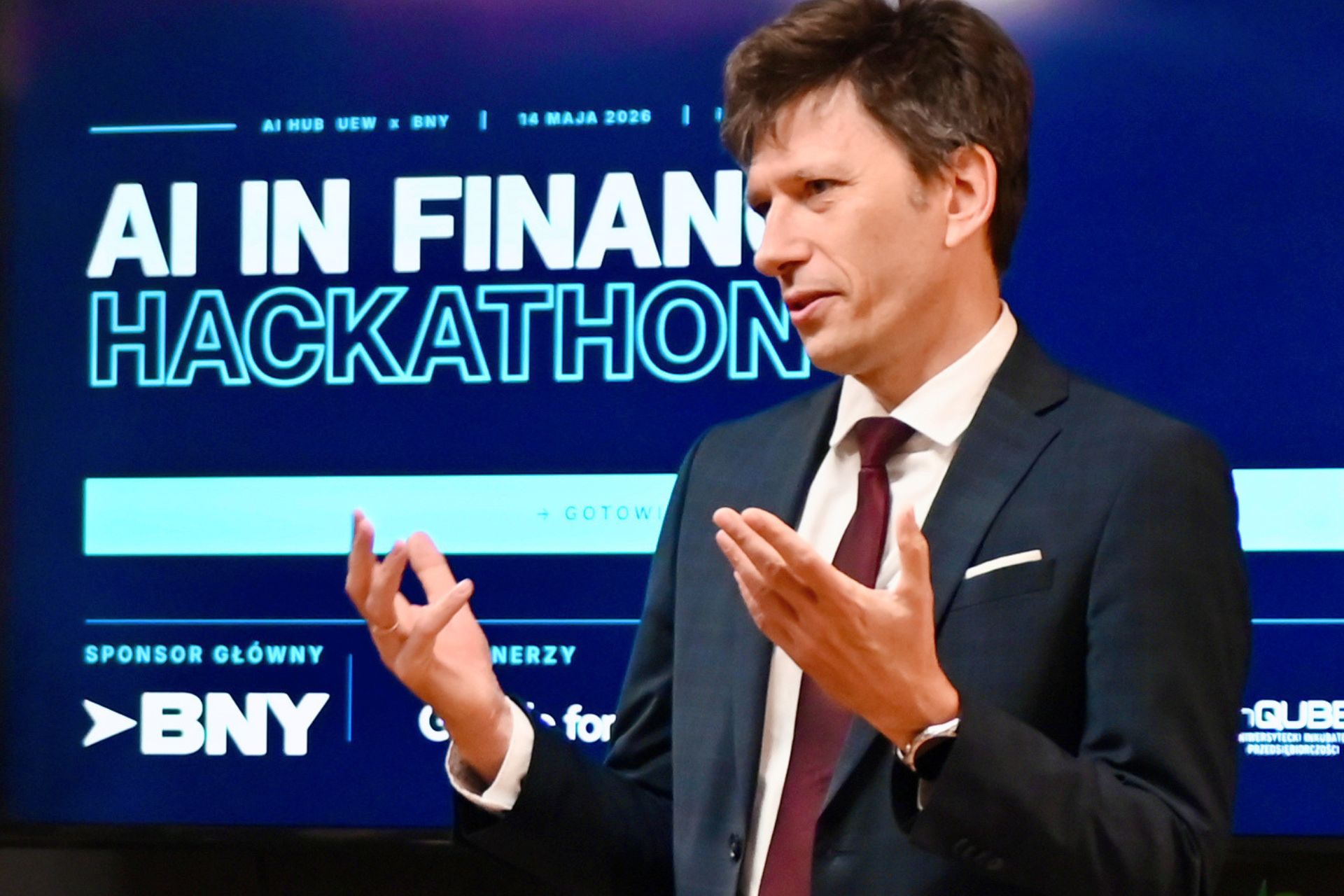
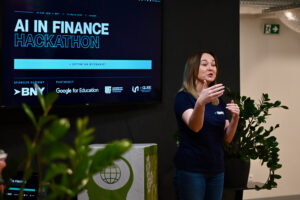
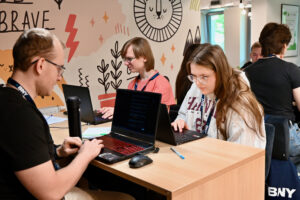
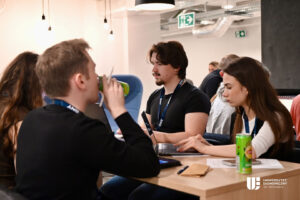
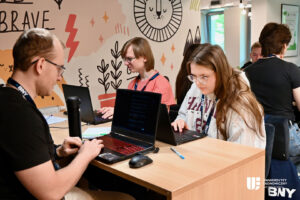
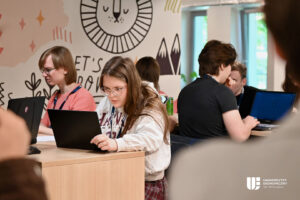
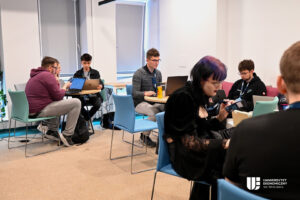
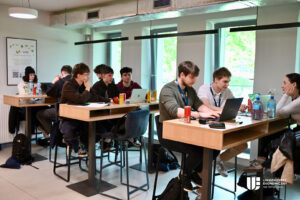
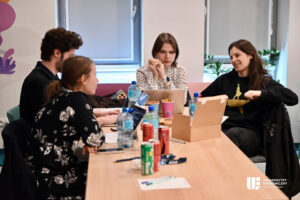
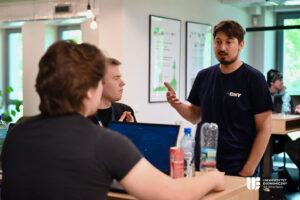
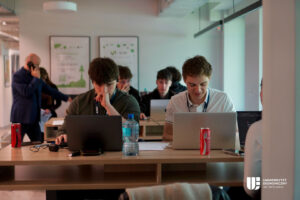
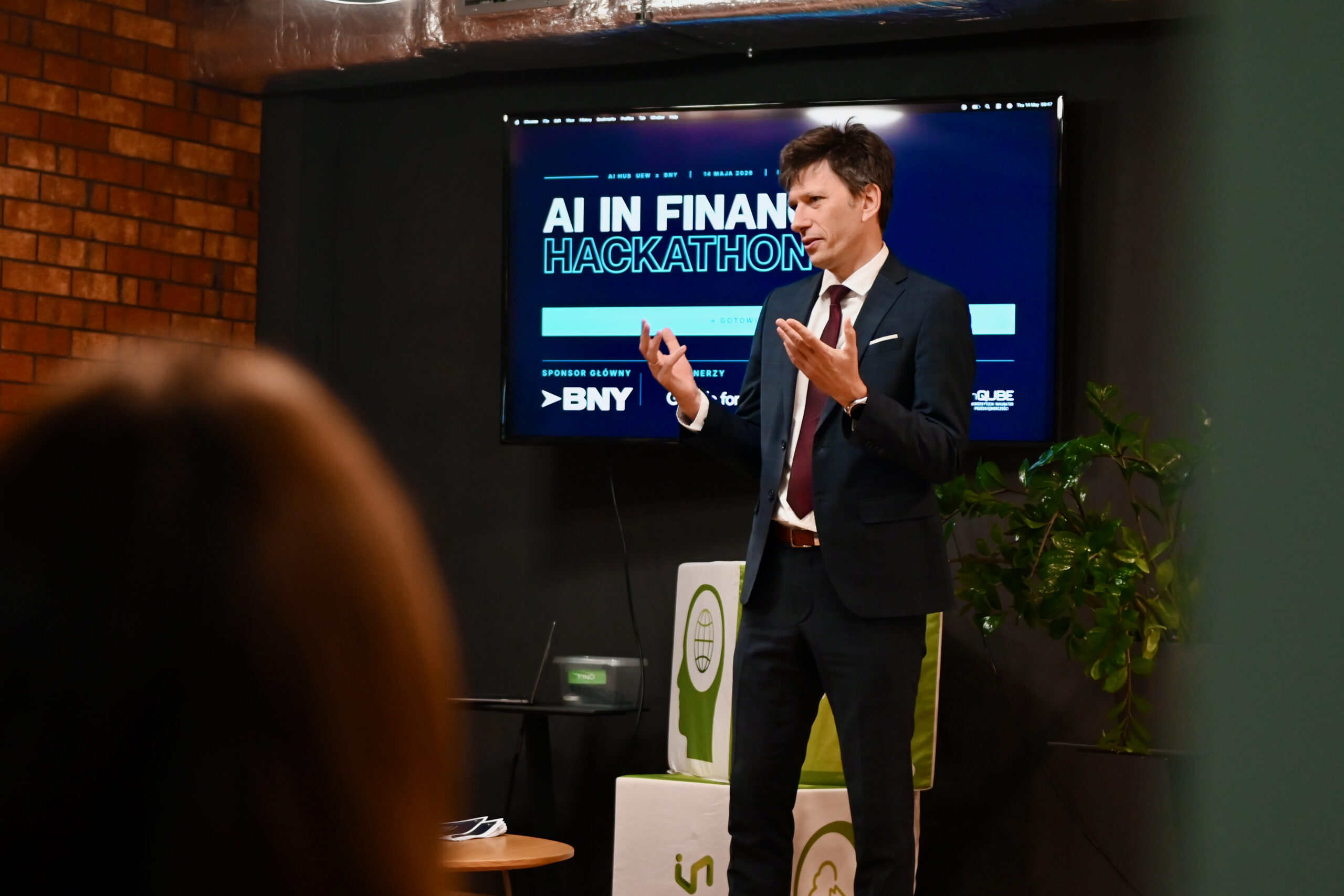
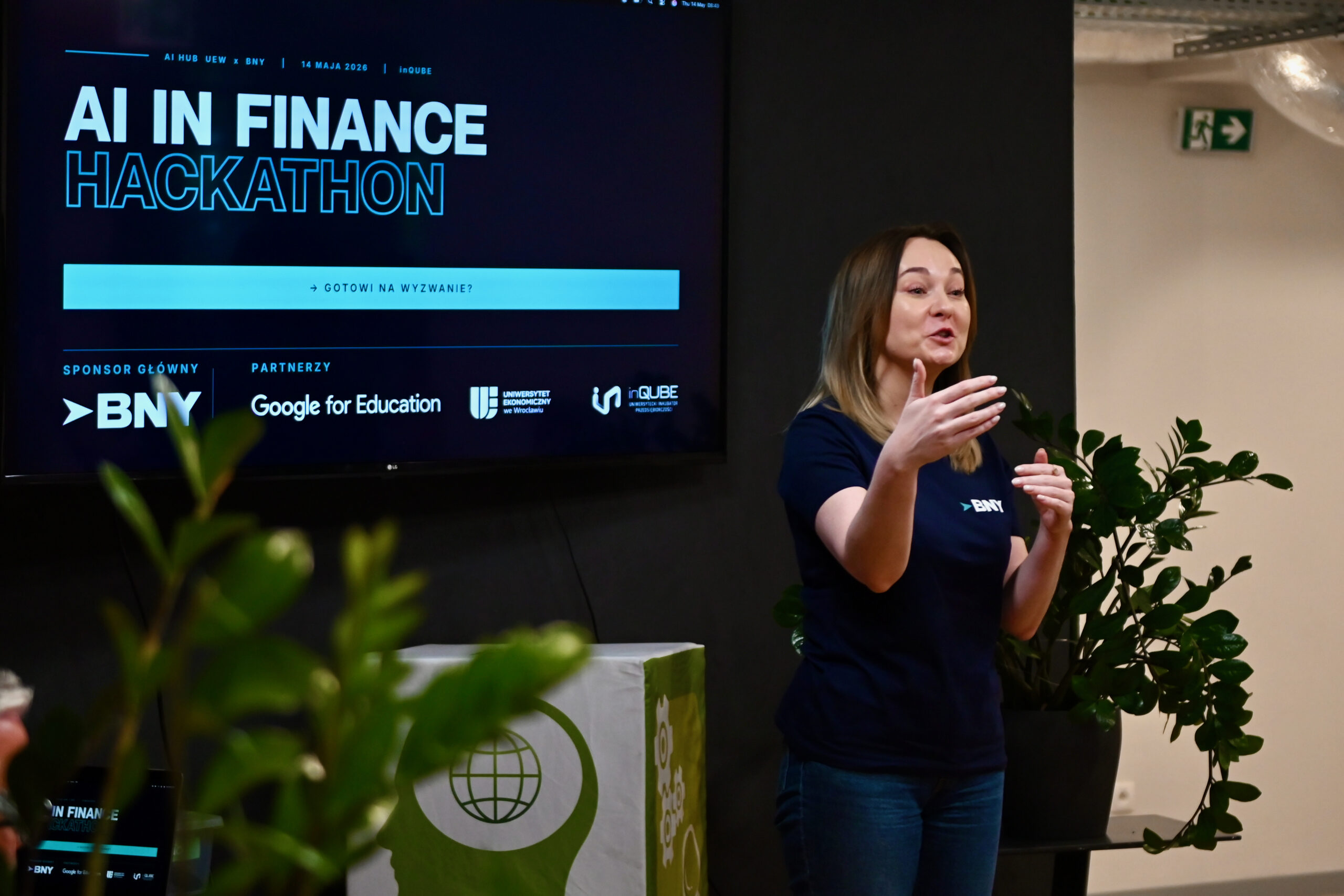
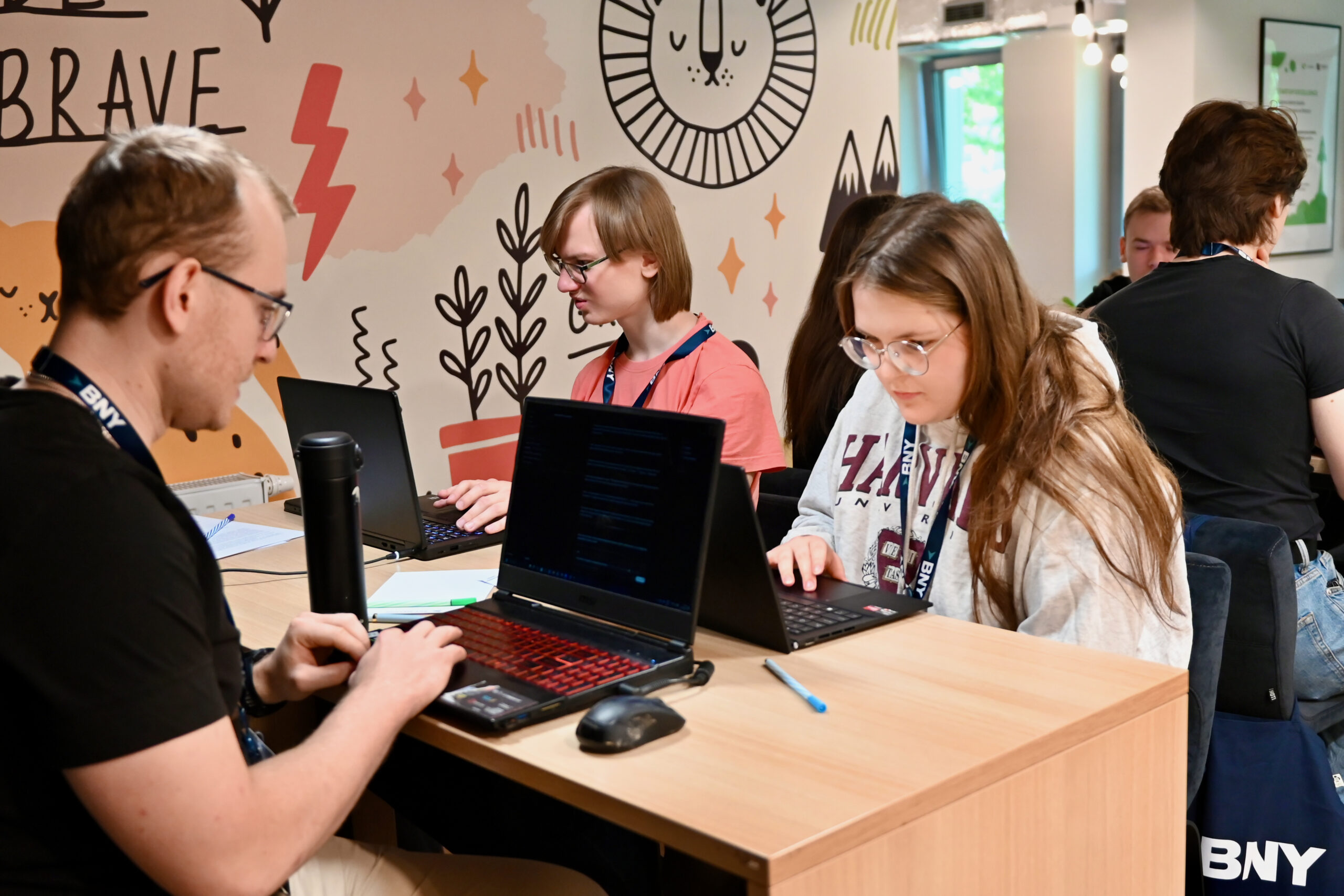
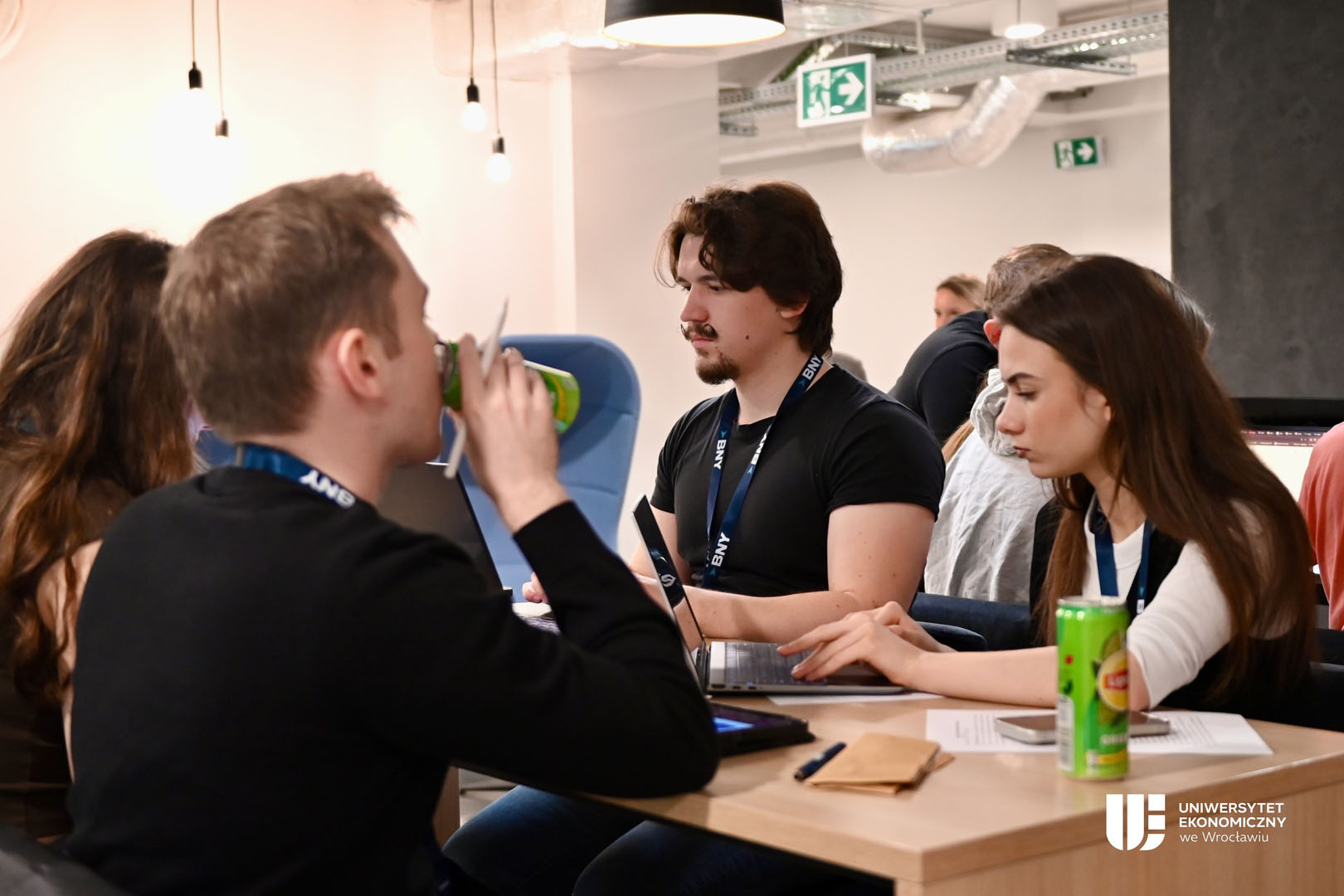
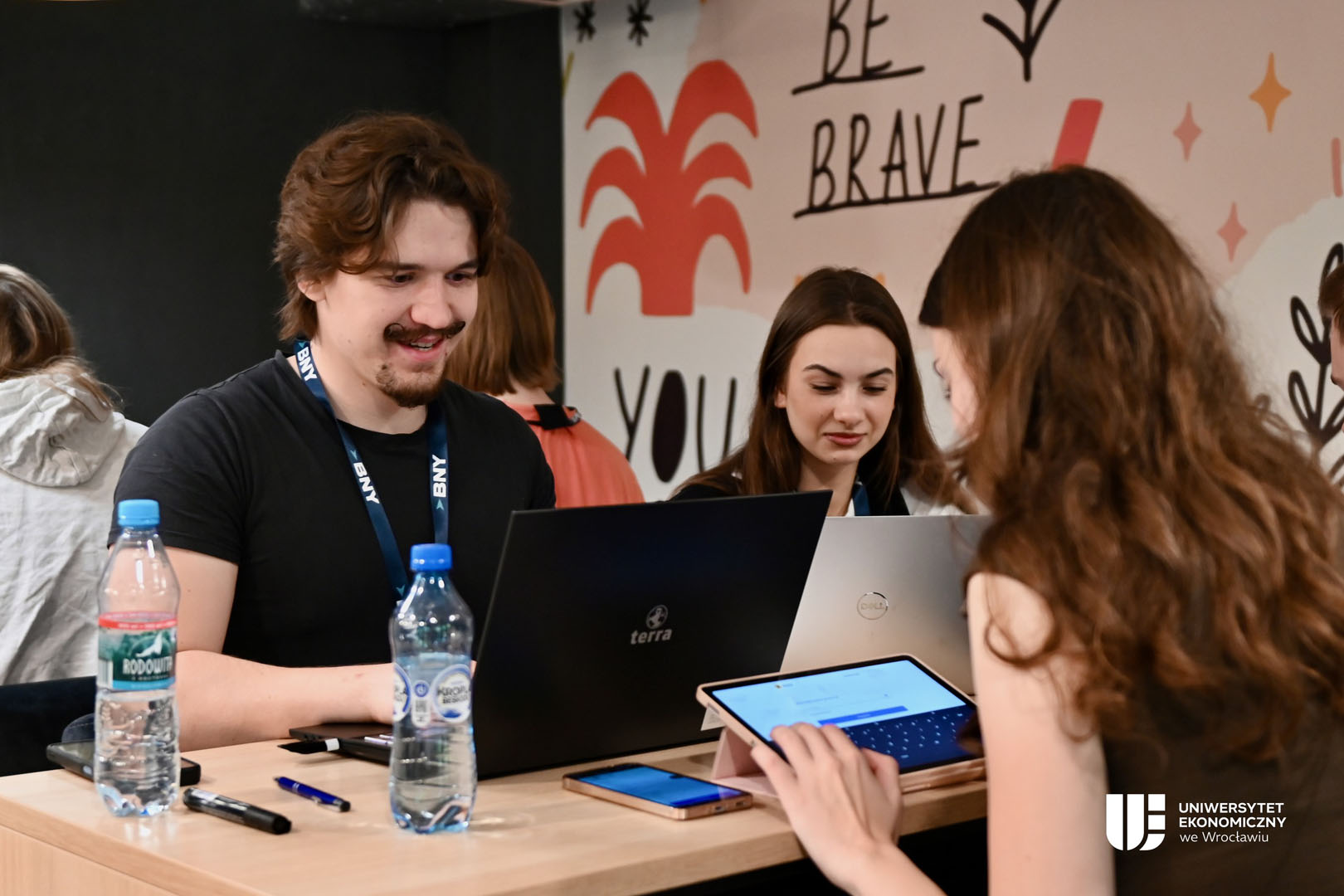
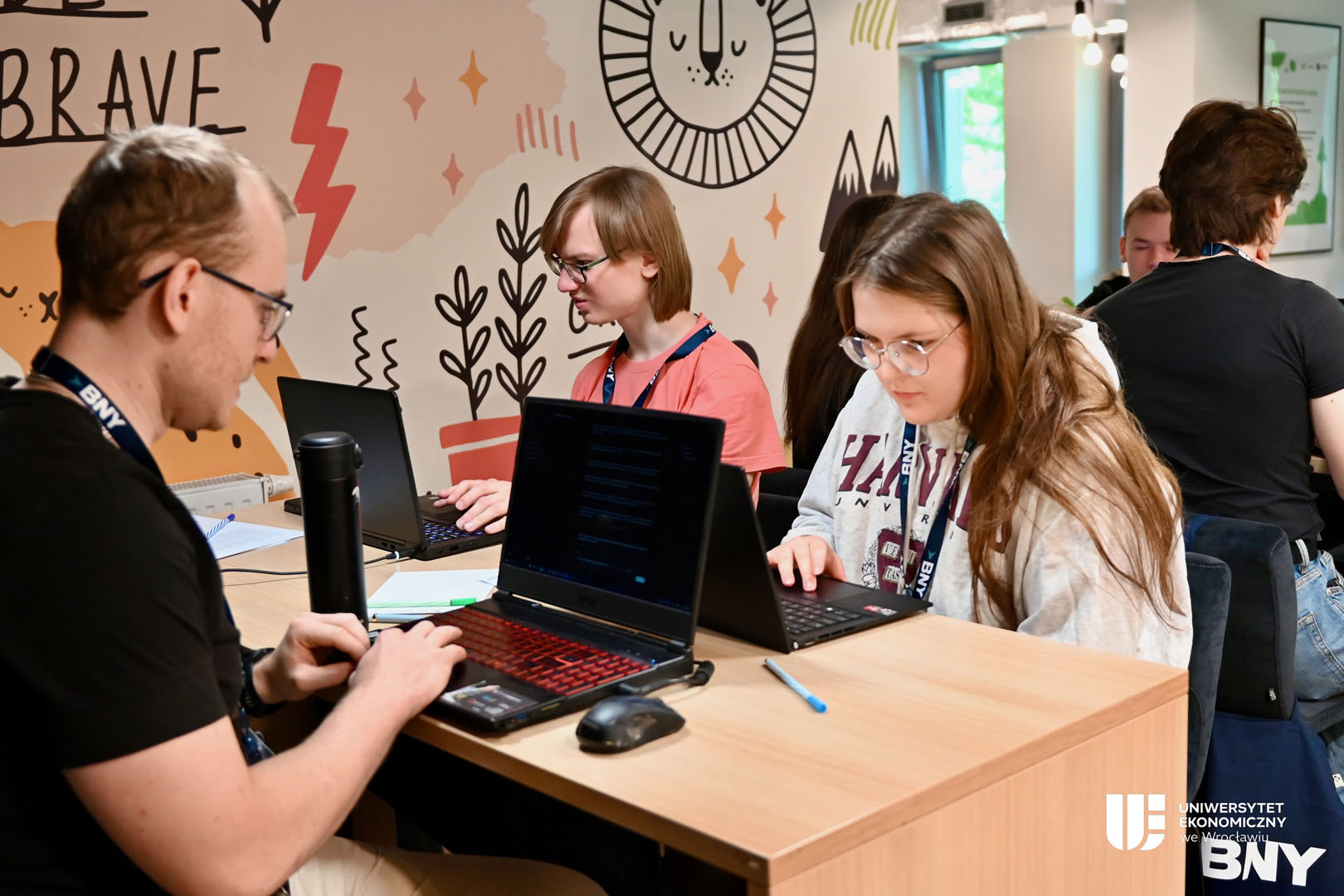
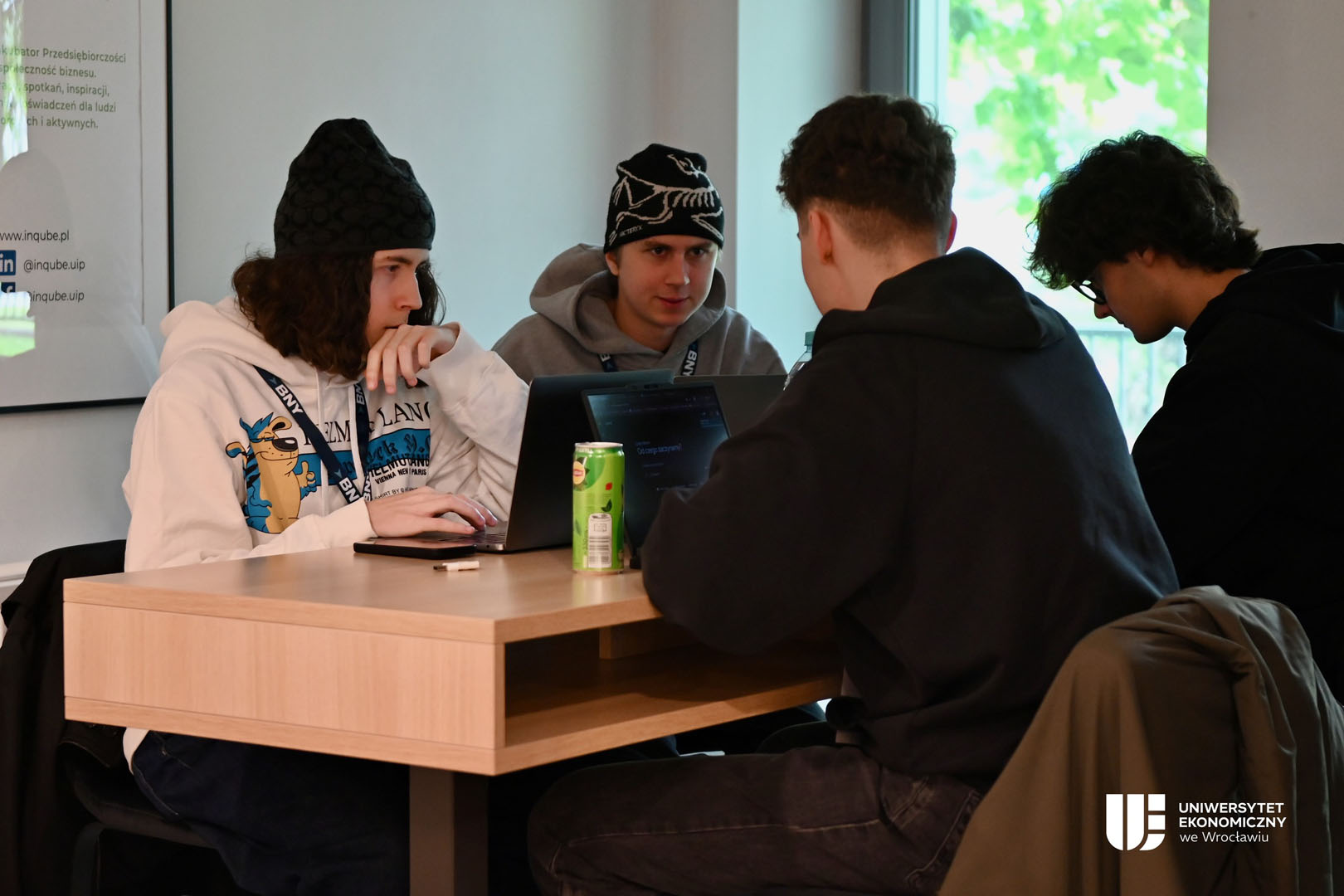
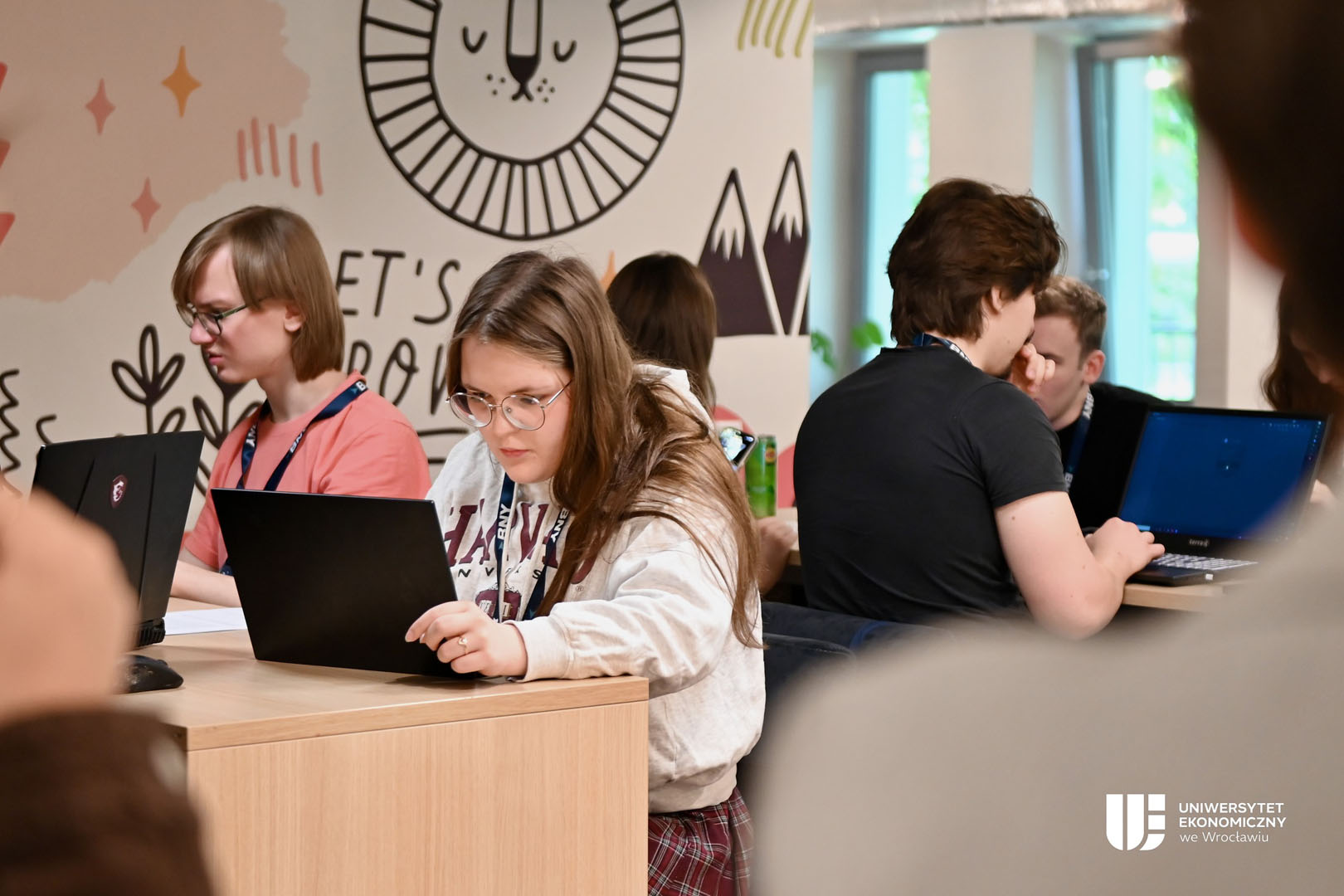
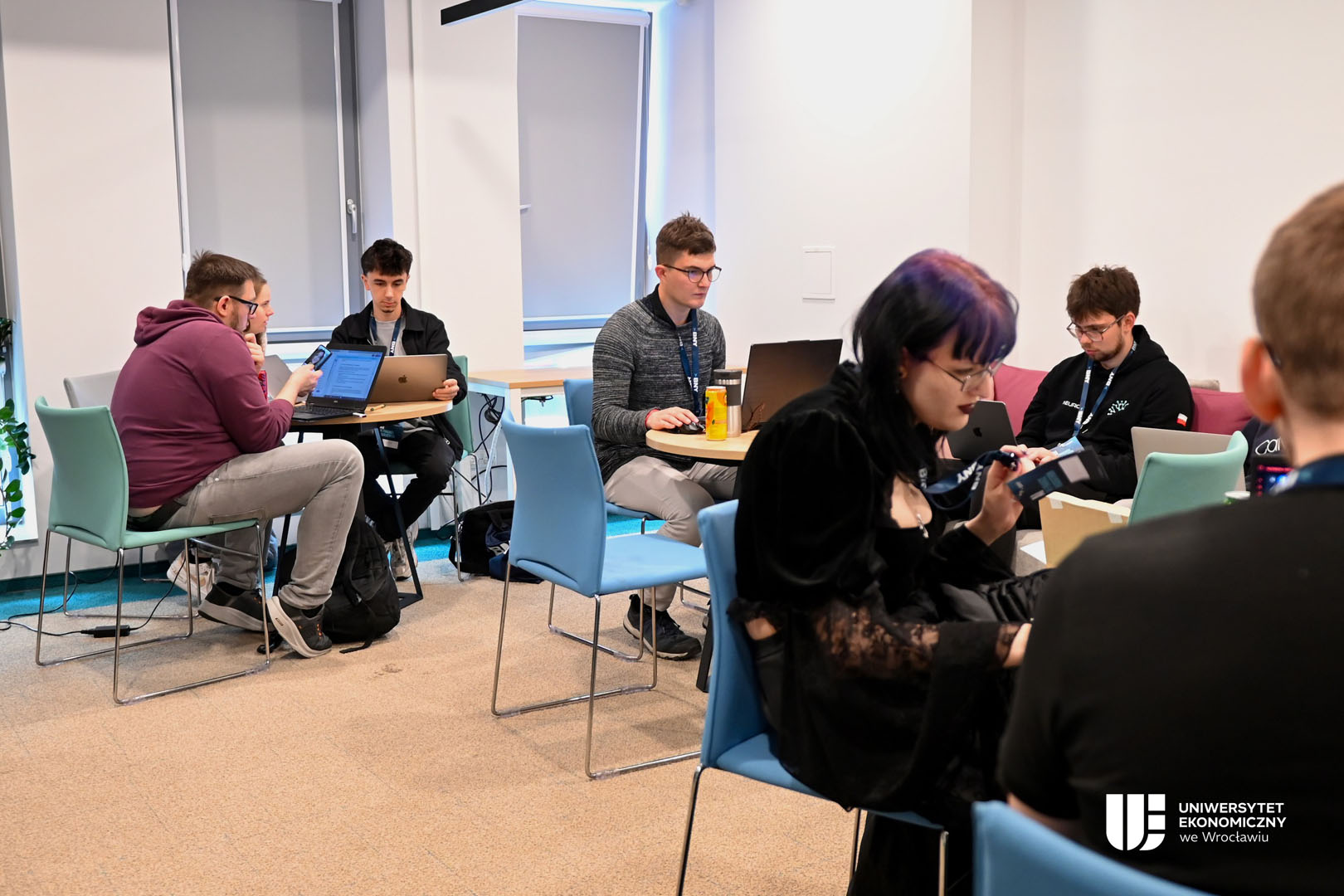
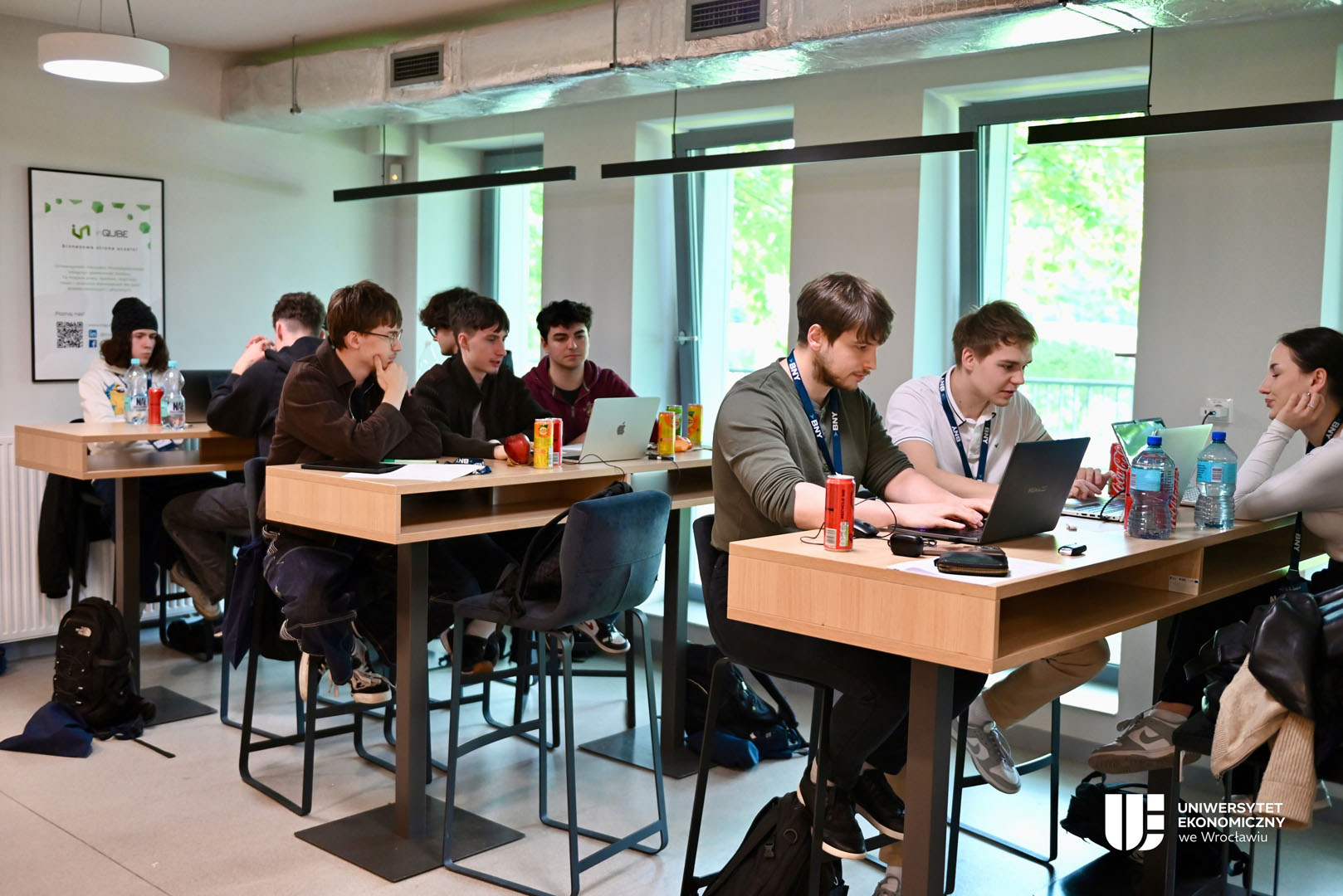
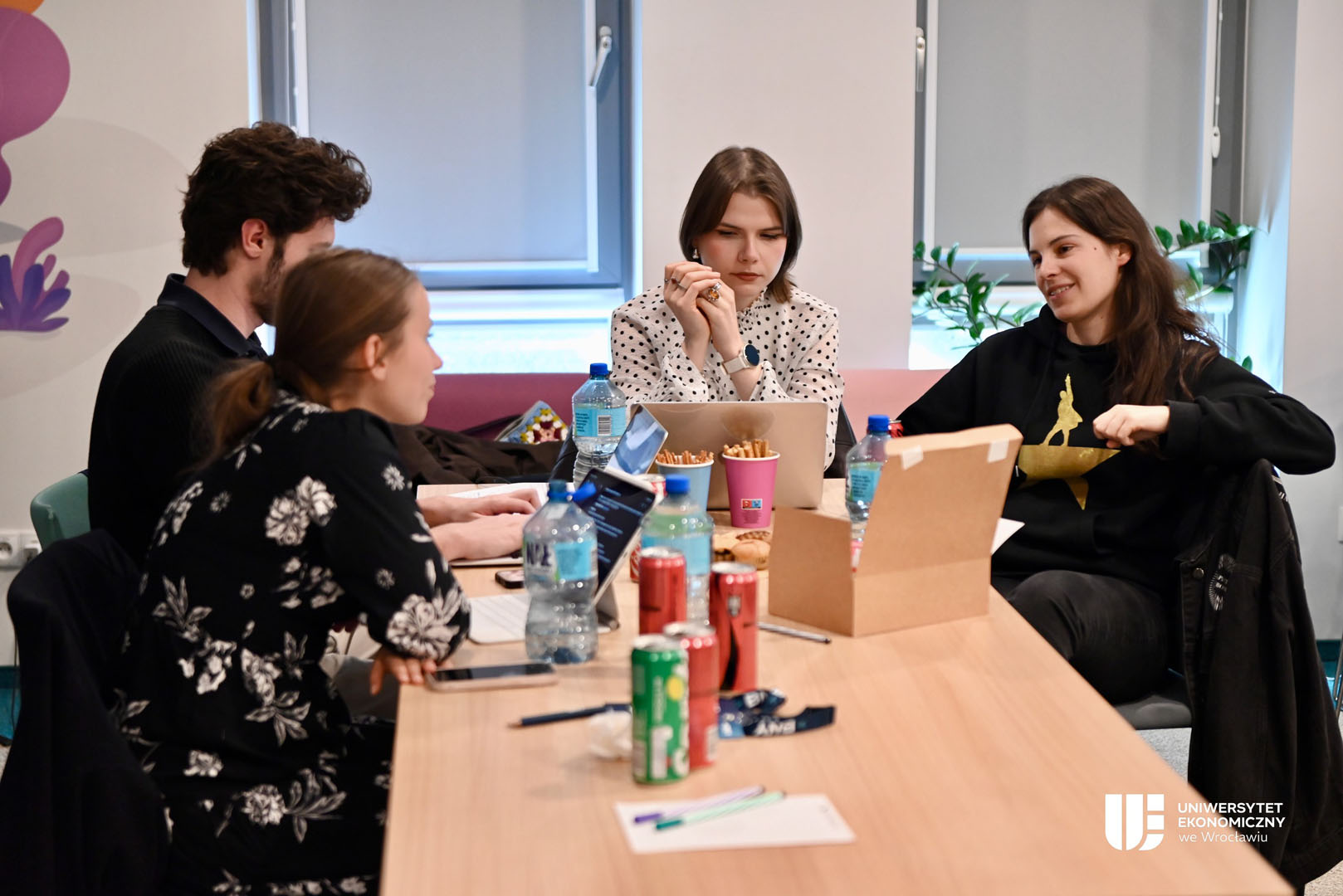
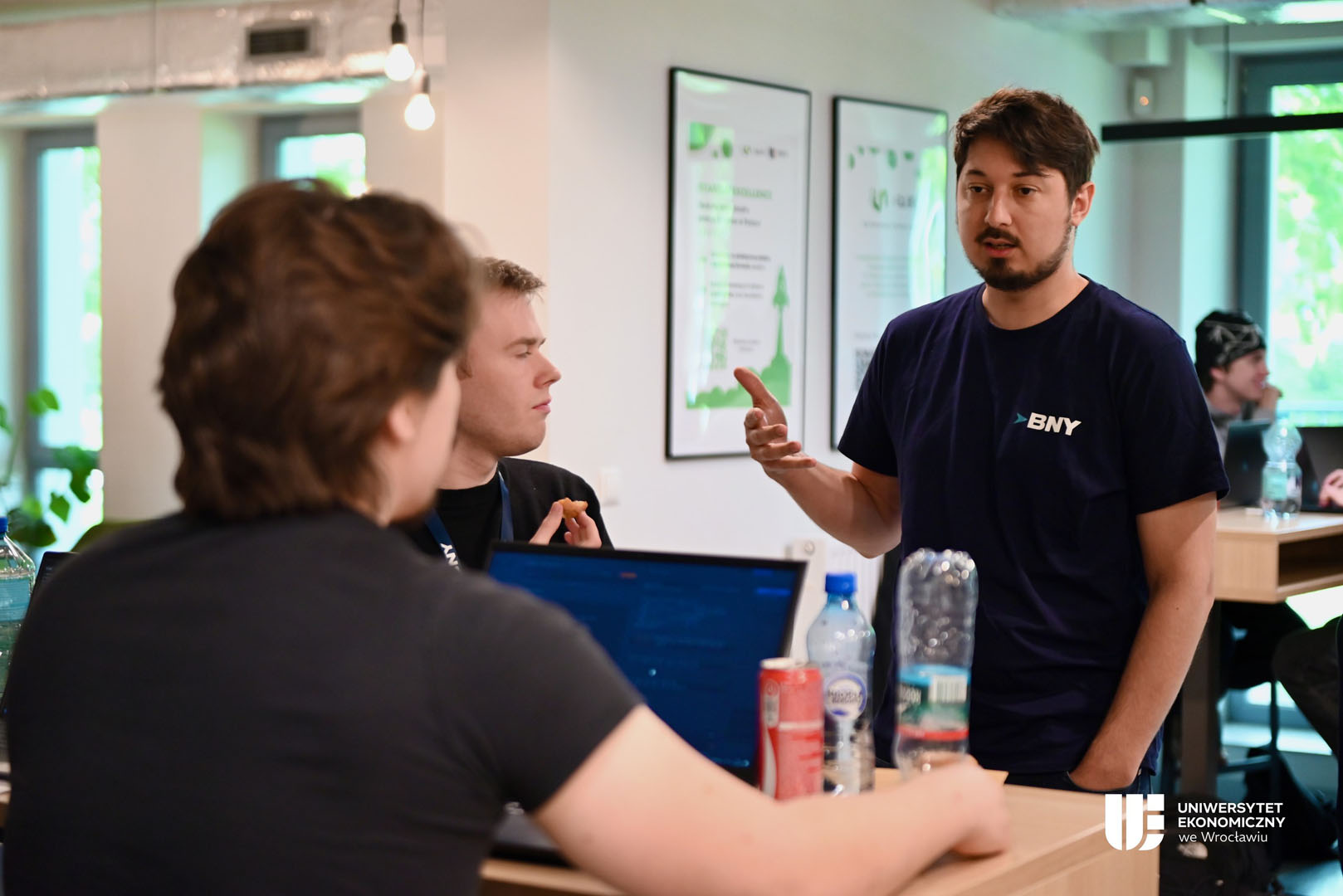
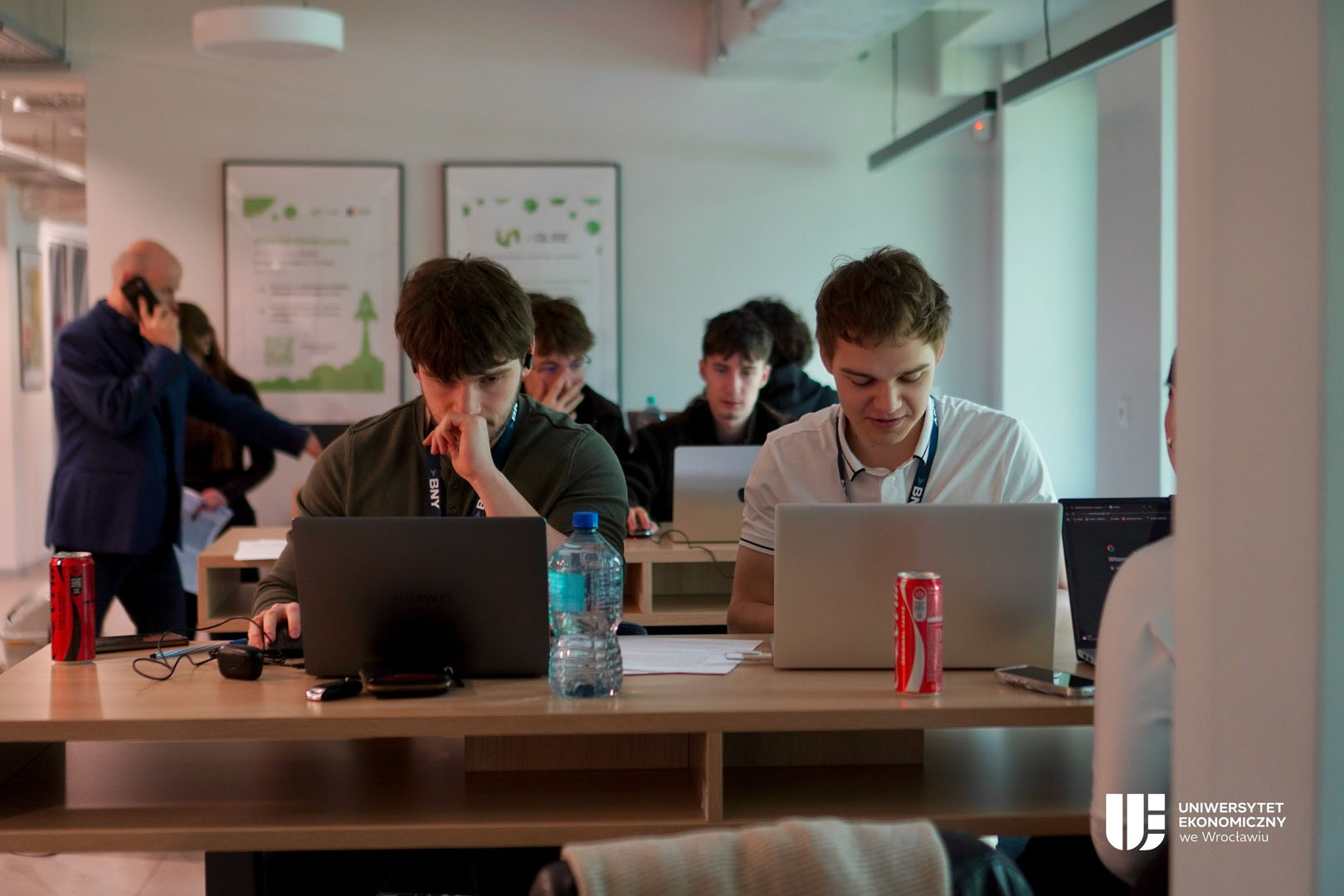
On Wednesday, 14 May, the AI in FINANCE Hackathon took place at inQUBE in Wrocław. The event was organised by the AI HUB UEW community, under the auspices of the WUEB Academic AI Centre, in cooperation with BNY. Student teams worked on a challenge rooted in the financial sector, using artificial intelligence, machine learning and data analysis tools.
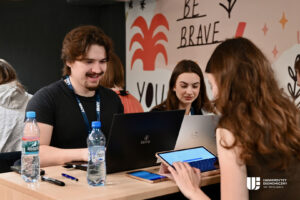
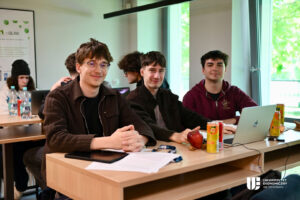
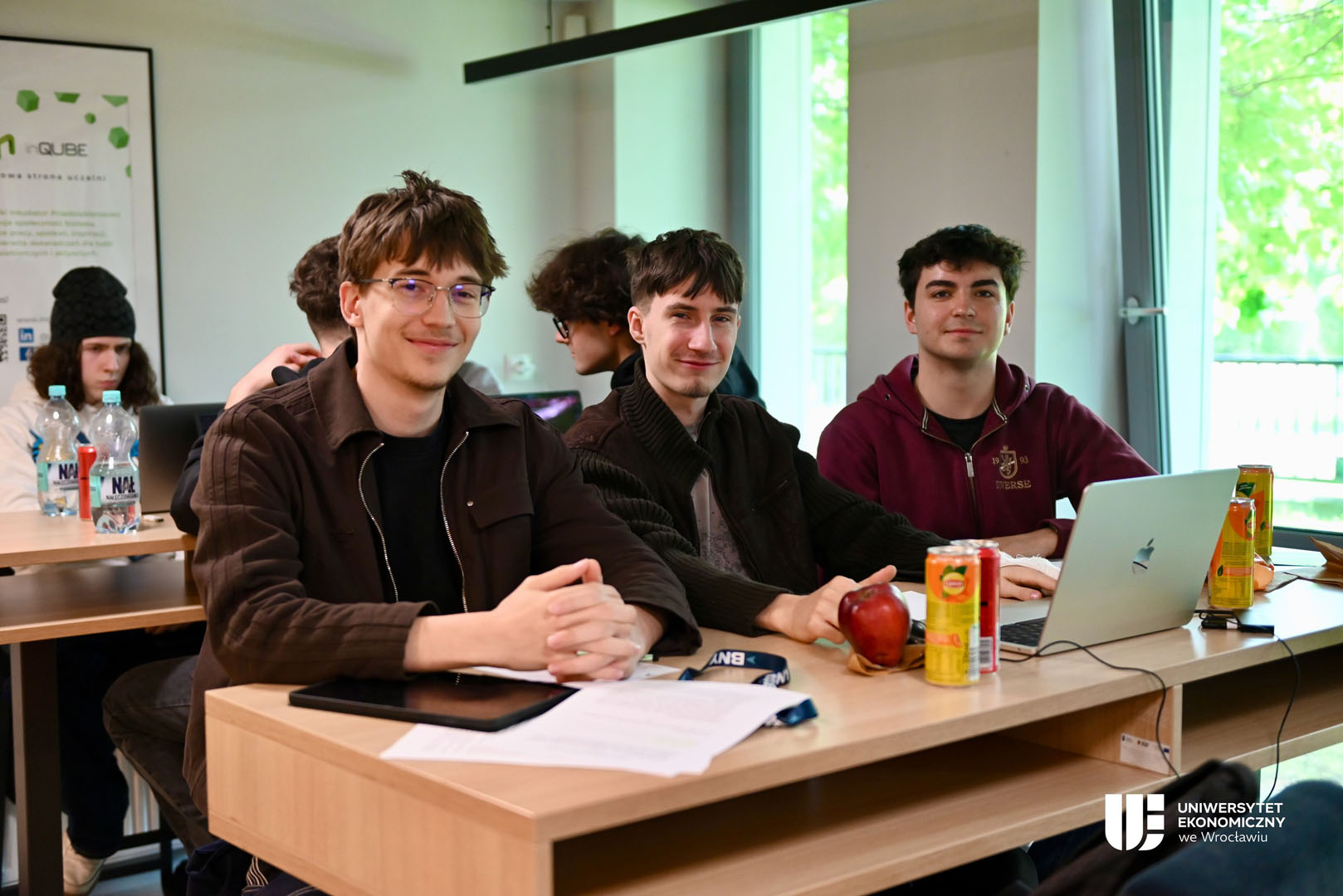
Four teams reached the final. The main prize of PLN 10,000 was awarded to the team composed of Maksymilian Zakrzewski, Wojciech Hebisz and Maciej Zmitrukiewicz.
Not a promotional event, but a format for competence transfer
The significance of the hackathon lies not only in the fact that students worked on a challenge prepared by a global financial institution. What matters is who came together around that challenge and what competences they brought to the teams.
On one side were students from AI HUB UEW, developing their skills in artificial intelligence, data analysis and the design of organisational solutions. On the other were BNY experts, working in an environment where technological solutions must pass tests of code quality, business relevance, security, usability and implementation potential. Between them stood WUEB’s research base: researchers, doctoral candidates and mentors working with artificial intelligence not as a passing trend, but as a tool for managing knowledge, processes and decisions.
This structure shows what research impact can look like in practice. It does not always begin with a finished product, patent or implementation. Sometimes it begins when competences developed at a university are brought into contact with a market challenge, and students learn to think not only as users of technology, but as people responsible for its application.
A research base that works seriously with AI
The hackathon was mentored by dr hab. Iwona Chomiak-Orsa, prof. UEW [academic title in English to be verified], who conducts research on generative artificial intelligence in organisational knowledge management and dr hab. Krzysztof Piontek, prof. UEW. Students were also supported by doctoral candidates from the Department of Business Intelligence in Management at WUEB and Department of Information Technologies at WUEB.
This matters because AI HUB UEW does not operate separately from the research conducted at the university. Student activity is developing in an environment where artificial intelligence is studied from the perspective of management, finance, data, organisational processes, audit, digital medicine, smart city and new models of work. As a result, the hackathon becomes not only a project competition, but also a place where knowledge moves between research, teaching and economic practice.
In this sense, the event fits well into the logic of research impact. It shows how an economics and business university can build an environment in which academic knowledge does not remain confined to publications and seminars, but becomes a resource for students, institutional partners and the financial sector.
What students learn when the problem has no ready-made answer
During the hackathon, projects were assessed across several dimensions: technical quality, the suitability of the AI model used, business value and user experience. These criteria are close to the way technological solutions are evaluated in financial organisations.
For students, this meant working in conditions different from a typical academic assignment. It was not enough to prepare code that worked. They had to show that the solution addressed a problem, that it could be justified technologically, that it made sense within a business process and that users would be able to work with it.
This experience has particular educational value. It shows that artificial intelligence in finance is not only a matter of a model, an algorithm or an impressive demonstration. It is part of a complex system of decisions, risks, procedures, data and responsibility.
Continuing cooperation with BNY
The AI in FINANCE Hackathon is another stage in WUEB’s cooperation with BNY. BNY previously acted as a strategic partner of the inQUBE Academy programme and later co-created, together with Google experts, workshops on designing AI tutors for academic teachers from three WUEB faculties. This year’s hackathon extends that cooperation towards students, project teams and applications of AI in finance.
This shift is important. It shows that the relationship between the university and a technology and financial partner is not limited to a single event. It can gradually involve further groups: academic staff, teachers, doctoral candidates, students and teams developing solutions for practice.
For WUEB, this means strengthening an environment in which research, teaching and cooperation with the economic environment form a shared circulation of knowledge. For students, it means direct contact with the requirements of the financial sector and mentors working in an international institution. For partners, it means access to talent, analytical competences and the academic base of an economics and business university.
What was developed
eams worked on prototypes of solutions using AI and ML in a financial context. The projects addressed, among other areas, data analysis, automation of selected processes, prediction and the design of tools supporting operational decision-making.
The AI in FINANCE Hackathon shows that research impact does not have to be described only through major implementations. It can also be seen in the way a university builds an environment of competence: from research projects, through doctoral candidates and student clubs, to partners who bring problems requiring the responsible use of technology.
We would like to thank all participants, the AI HUB UEW team, dr hab. Iwona Chomiak-Orsa, prof. UEW, dr hab. Krzysztof Piontek, prof. UEW and doctoral candidates from the Department of Business Intelligence in Management at WUEB and Department of Information Technologies at WUEB, BNY mentors and the inQUBE team.
More: ai.uew.pl
badania.uew.pl, because the world needs competent voices when technology starts setting the pace of change.

Author of text: Justyna Morawska-Płoskonka
See also

Sport as a Language of Nation Branding. A WUEB Expert in Consultations on Poland’s “Sport Development Strategy to 2040”
5-26.04.2025 IX NATIONAL STUDENT CONFERENCE “TURAWA” TURAWA 2025
08-10.09.2025 XXVIII Scientific Conference “PROBLEMS OF ECONOMY, ECONOMIC POLICY AND PUBLIC FINANCE” (KEIPE2025)
23-24.09.2025 34th Scientific Conference of the Classification and Data Analysis Section of the Polish Statistical Association (39th Taxonomic Conference) “Classification and data analysis – theory and applications” SKAD 2025
See similar content

WUEB Experts Weekly Review. Research, Projects and Academic Successes (12–18 October 2026)
How can economic fluctuations be smoothed? The 2026 Nobel Prize in Economic Sciences through the eyes of WUEB researchers
The World Within Wrocław’s Reach. How the PROM research mobilities confirm WUEB’s place on the map of global academia
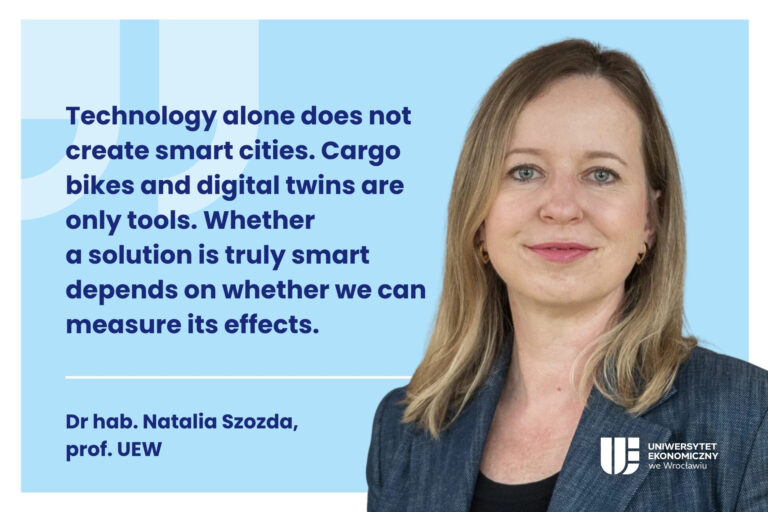
Wroclaw’s micro-hub at the Economic Forum. Natalia Szozda, Associate Professor, on when a city truly becomes smart
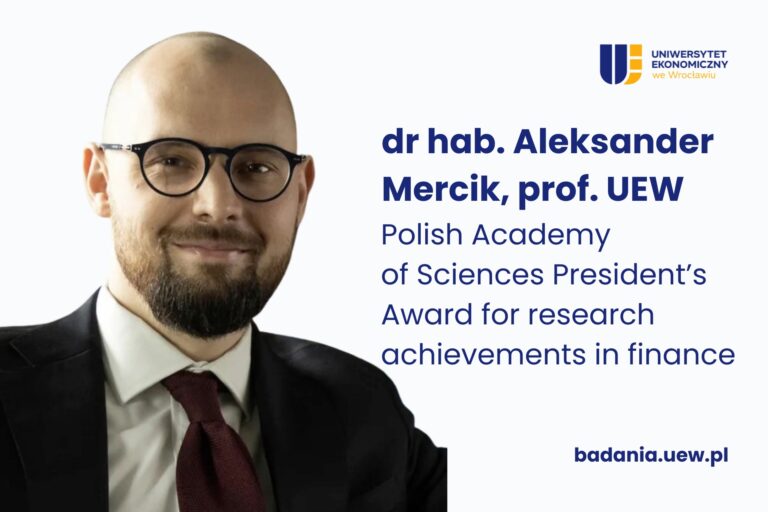
Dr hab. Aleksander Mercik, Professor of the WUEB, receives the Andrzej Gospodarowicz Award in Finance from the President of the Polish Academy of Sciences
WUEB Experts Weekly Review. Research, Projects and Academic Successes (5–11 October 2026)
Wroclaw University of Economics and Business researchers among the world’s leading scientists: six included in the 2026 World’s Top 2% Scientists database