

Can we tell the story of Poland through sport, not only through results but through emotion, shared social experience, and the way a state presents itself to the world? This was the question at the heart of the Wrocław consultations on the government’s sport strategy, in which an expert from Wrocław University of Economics and Business took part.
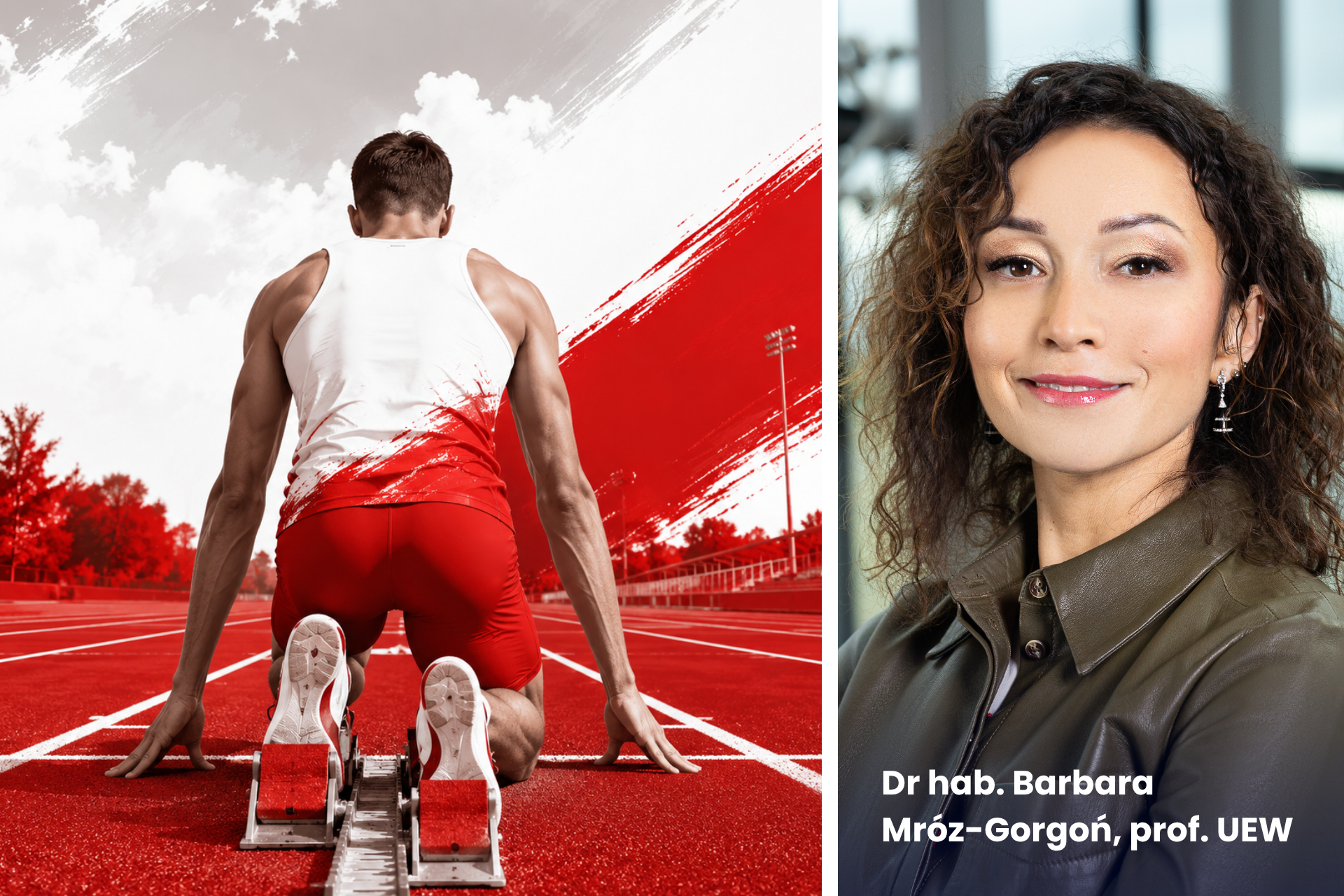
Sport has long ceased to be merely a space of competition, medals, and major events. Today it is also a tool for building a state’s reputation, its international visibility, and the way it tells the story of its ambitions, values, and capacity for cooperation.
What kind of Poland does our sport show the world? Modern and open? Dynamic? Credible? Or still mostly measured by the final result?
These were the questions at the heart of the consultative meeting on the “Sport Development Strategy to 2040” (commonly referred to as the Polish Sport Development Strategy 2040), held on 11 May 2026 at the Wrocław University of Physical Education (AWF Wrocław). The consultations, organised by the Ministry of Sport and Tourism, are part of a nationwide debate on the document that will set the long-term direction of Polish sport and embed it within the broader development agenda of the state.
The meeting brought together representatives of central government, regional government, the academic community, sports organisations, Olympic athletes, and experts in strategic communication. Participants included Piotr Borys, Secretary of State at the Ministry of Sport and Tourism; Wojciech Bochnak, Deputy Marshal of the Lower Silesian Voivodeship; Robert Korzeniowski, Adviser to the Minister of Sport and Tourism for Sport Strategy and four-time Olympic champion in race walking; Prof. Tadeusz Stefaniak, Rector of AWF Wrocław; and representatives of PwC, which has been advising the Ministry on the strategy since June 2025.
Wrocław University of Economics and Business was represented by Dr hab. Barbara Mróz-Gorgoń, Prof. WUEB, from the Department of Advanced Research in Management at the Faculty of Management. In her presentation she discussed sport as one of the most important elements of contemporary soft power and as a tool for building a comprehensive national brand.
Sport as a tool for building a state’s reputation
The WUEB expert pointed out that contemporary sport increasingly shapes not only public health or the economy, but also the international image of the state, its recognisability, and its capacity to build trust and community.
“This is not just about medals. It is about the systemic design of moments, people, events, and experiences that make Poland visible, felt, and remembered as an active, ambitious, and capable country”
— she said during her presentation.
In the debate she drew on the concept of soft power, framing sport as a tool of attraction, dialogue, and reputation-building through emotions, symbols, athletes’ stories, events, and shared social experiences.
“Sport is today one of the most emotional, and at the same time most universal, languages of state communication. It is through sport that we shape associations of modernity, community, consistency, and capability”
— the WUEB expert emphasised.
She stressed that what matters is not only medal-table success, but also how sport is narrated, the visibility of women in sport, the development of parasport, and the experiences of young talents and their coaches.
“A strong nation brand is not built by promotional campaigns alone. It is also built through emotions, shared social experiences, and stories with which people want to identify. Sport offers states exactly that opportunity today”
— said Prof. Barbara Mróz-Gorgoń.
A sport strategy and the role of science
The Wrocław meeting was one stage of a nationwide consultation process. Discussions covered the reform of the coaching profession, the digitalisation of the sport system, talent management, the role of regions, the monitoring of young athletes’ health, and the long-term system of support for physical activity and competitive sport. Deputy Minister Piotr Borys underlined that the strategy is intended as a response to the challenges facing contemporary sport: from coaching reform to digitalisation and more effective talent management (source: awf.wroc.pl, 11 May 2026).
The participation of Dr hab. Barbara Mróz-Gorgoń, Prof. WUEB in the group of consulting experts is another example of how researchers from Wrocław University of Economics and Business contribute to strategic policy work, in areas that go well beyond what is traditionally understood as economics.
Author of text: Justyna Morawska-Płoskonka
See also
AI in finance: when research expertise meets a market challenge
5-26.04.2025 IX NATIONAL STUDENT CONFERENCE “TURAWA” TURAWA 2025
08-10.09.2025 XXVIII Scientific Conference “PROBLEMS OF ECONOMY, ECONOMIC POLICY AND PUBLIC FINANCE” (KEIPE2025)
23-24.09.2025 34th Scientific Conference of the Classification and Data Analysis Section of the Polish Statistical Association (39th Taxonomic Conference) “Classification and data analysis – theory and applications” SKAD 2025
See similar content

WUEB Experts Weekly Review. Research, Projects and Academic Successes (12–18 October 2026)
How can economic fluctuations be smoothed? The 2026 Nobel Prize in Economic Sciences through the eyes of WUEB researchers
The World Within Wrocław’s Reach. How the PROM research mobilities confirm WUEB’s place on the map of global academia
Wroclaw’s micro-hub at the Economic Forum. Natalia Szozda, Associate Professor, on when a city truly becomes smart
Dr hab. Aleksander Mercik, Professor of the WUEB, receives the Andrzej Gospodarowicz Award in Finance from the President of the Polish Academy of Sciences
WUEB Experts Weekly Review. Research, Projects and Academic Successes (5–11 October 2026)
Wroclaw University of Economics and Business researchers among the world’s leading scientists: six included in the 2026 World’s Top 2% Scientists database