

In the run-up to Easter, regional food gains renewed attention. Consumers more often reach for products rooted in place, tradition and local methods. For millennials, this return to tradition is not nostalgic – it reflects contemporary values and everyday choices.
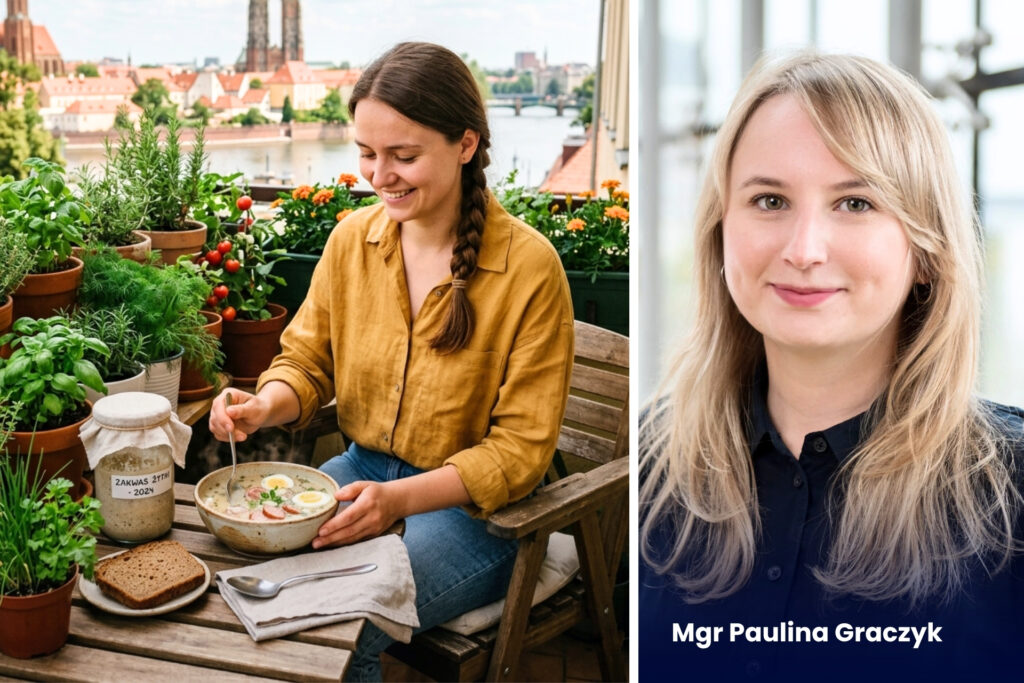
Ahead of Easter, regional food takes on particular significance. Many households still rely on familiar flavours passed down through generations: sourdough bread, white sausage, żurek soup, horseradish, mazurek cakes, Easter babas, and regional meats and cheeses.
Today, however, regional food is no longer seen solely as cultural heritage. It is increasingly part of a broader lifestyle shaped by conscious consumption and everyday practices.
Millennials (born between 1980 and 1996) show that returning to tradition can take a contemporary form. They navigate innovation with ease, while also cultivating home gardens, growing herbs on windowsills and revisiting family recipes.
Homemade bread, preserves or Easter żurek prepared with natural sourdough often appear in their social media feeds. The popular joke that garden centres become “magical places” after thirty reflects a wider shift: a growing need for simplicity, quality and control over what ends up on the plate.
Growing up during rapid globalisation and product standardisation, this generation increasingly values food with a clear origin and story. A regional product is not just food – it carries meaning, tradition and identity. Easter, deeply rooted in family and culinary rituals, reinforces the search for flavours that feel genuine rather than anonymous.
Millennials combine tradition with modern expectations. They pay attention to ingredients, production methods, short supply chains, seasonality and environmental impact. Regional food aligns with this mindset: it is natural, high-quality and responsibly produced. It also fits within broader trends such as slow food, less waste and conscious consumption.
The return to local food also has an emotional dimension. Many seek a sense of rootedness – in childhood tastes, family customs and products associated with home. Choosing regional cheeses, meats, bread, honey or baked goods becomes not only a culinary decision, but also a way to reconnect with place and community.
For producers, this shift is significant. Millennials do not choose regional products out of sentiment alone. They want to know who made the product, how it was produced and what story it tells.
Regional food becomes more than tradition – it becomes a way to build credibility, authenticity and competitive advantage. To engage consumers, however, the product itself is not enough. Clear storytelling, transparency and thoughtful presentation are essential.
The pre-Easter period, when demand for products “with a story” intensifies, offers a particular opportunity for local producers to communicate these values.
Millennials are indeed driving a return to local food in purchasing decisions. This is not a simple revival of the past, but a reinterpretation of tradition through a contemporary lens.
They do not replicate their grandparents’ lifestyles. Instead, they select what they consider valuable: seasonality, simplicity, home recipes, local ingredients and respect for food.
They return to their roots – with a shopping app, an online recipe and a photo of homemade sourdough shared on Instagram. At Easter, this often means combining family traditions with modern lifestyles, so that celebrations remain both meaningful and aligned with personal values.
Millennials are among the key groups restoring the contemporary appeal of regional food. They show that locality can be current, and tradition can remain relevant. For many, the Easter table has become a space where this renewed form of tradition is most visible.
Doctoral candidate, Doctoral School, Wroclaw University of Economics and Business
Discipline: Management and Quality Sciences, research and teaching assistant at the Department of Sociology and Social Policy
Project lead: Local Flavours of Lower Silesia – Global Values (LSDS) [to be verified]
Selected publications
Bagińska, J., Graczyk, P., Wisniewska, A. M., & Włodkowska, A. (2025). Challenges and opportunities for cultural diversity in managing research and educational institutions in the economic age of 5.0. In E. Jędrych & A. Rzepka (Eds.), Organizational Development, Innovation, and Economy 5.0. Challenges in the Digital Era (pp. 129–137). Routledge.
Graczyk, P. (2024). ESG reporting and the brewing industry. In P. Dominik (Ed.), Sustainable development in culinary tourism (pp. 97–113). Vistula Academy of Finance and Business, Vistula School of Hospitality.
Media:
https://echo24.tv/pl/11_wiadomosci/90302_wyjatkowa-mapa-smakow-dolnego-slaska.html
Author of the text: Paulina Graczyk
See similar content

Video games are more than entertainment. WUEB researchers on cooperation between game developers and the cultural and creative industries

Space Logistics, Interplanetary Supply Chains and Interdisciplinary Research and Educational Projects Related to Space at UEW in Jelenia Góra
Wrocław has FinTech potential. A WUEB expert argues it is time to turn that potential into advantage
Academic Entrepreneurship as Architecture of Impact. The New Issue of „Impakt Dolny Śląsk” (2/2025)
See also

WUEB Experts Weekly Review. Research, Projects and Academic Successes (12–18 October 2026)

How can economic fluctuations be smoothed? The 2026 Nobel Prize in Economic Sciences through the eyes of WUEB researchers
The World Within Wrocław’s Reach. How the PROM research mobilities confirm WUEB’s place on the map of global academia
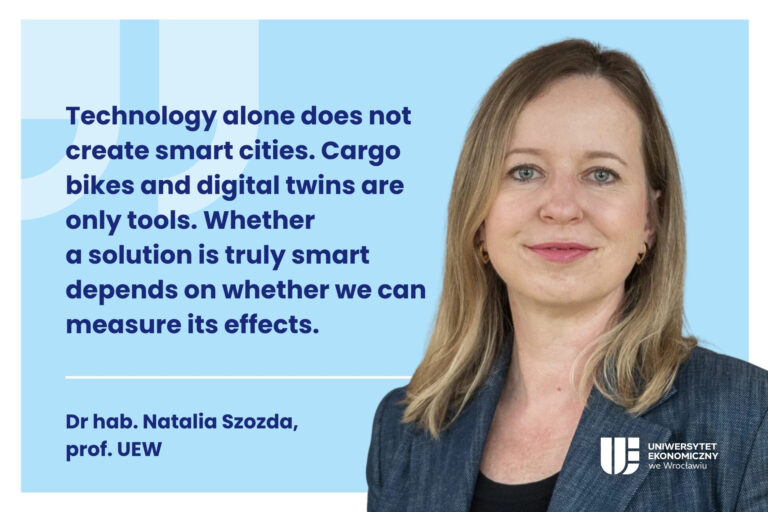
Wroclaw’s micro-hub at the Economic Forum. Natalia Szozda, Associate Professor, on when a city truly becomes smart
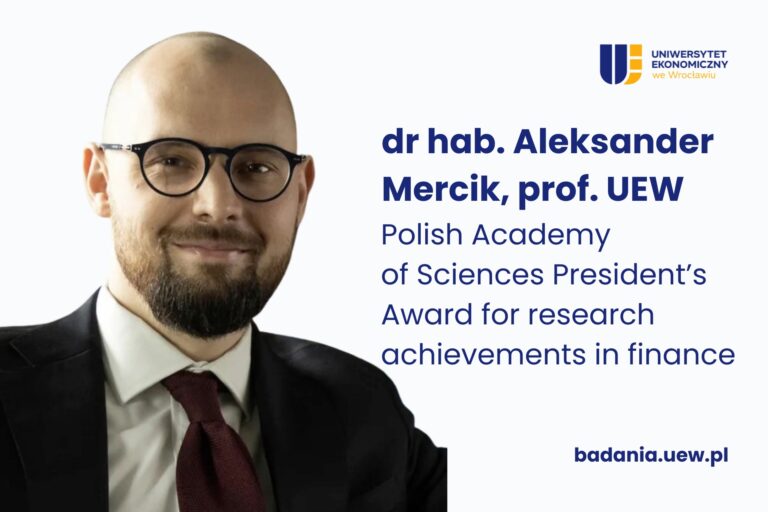
Dr hab. Aleksander Mercik, Professor of the WUEB, receives the Andrzej Gospodarowicz Award in Finance from the President of the Polish Academy of Sciences
WUEB Experts Weekly Review. Research, Projects and Academic Successes (5–11 October 2026)
Wroclaw University of Economics and Business researchers among the world’s leading scientists: six included in the 2026 World’s Top 2% Scientists database