

This week’s review brings together public engagement with science and projects with practical applications in urban logistics, healthcare and housing-market research. WUEB experts also discuss artificial intelligence, US public debt, investment and risk.
The Lower Silesian Science Festival returns in September
WUEB Expert: dr hab. inż. Agnieszka Orkusz, Professor of the WUEB
The 29th Lower Silesian Science Festival will open on 12 September with a Science Town in Wrocław’s Plac Solny. This year’s programme comprises more than 2,100 events for children, young people, adults and older people under the theme ‘Discover, enjoy, remember!’.
The WUEB stand will offer two activities: Magical World of Chemistry, with demonstrations of chemical phenomena and reactions, and Creative Relaxation Space, combining rest with creative activities. Admission to the Festival’s outdoor opening is free. WUEB coordinator is dr hab. inż. Agnieszka Orkusz, professor of the WUEB.
Source: https://forumakademickie.pl/we-wrzesniu-dolnoslaski-festiwal-nauki/
Wrocław invites residents to Smart City Day 2026 – innovation in the heart of the city
WUEB Expert: dr hab. inż. Maja Kiba-Janiak, Professor of the WUEB
The second Smart City Day was held in Plac Solny on 27 August. Residents could see and test solutions for transport, health, safety, the environment, energy and digital urban services.
The technology and transport zone also presented NEXTLOGIC, a project focused on micromobility and last-mile logistics, delivered by the City of Wrocław, Wroclaw University of Economics and Business and Velohub. The project leader at WUEB is dr hab. inż. Maja Kiba-Janiak, professor of the WUEB. It is an example of WUEB’s contribution to solutions for the day-to-day operation of the city.
WUEB visual simulation of business processes included in the Polish Research Infrastructure Roadmap
WUEB Expert: dr hab. Krzysztof Nowosielski, Professor of the WUEB
The Visual Simulation of Business Processes infrastructure, submitted by the Wroclaw University of Economics and Business, has been included in the Polish Research Infrastructure Roadmap. The concept is being developed at the WUEB Business Process Simulation Centre, established and headed by dr hab. Krzysztof Nowosielski, prof. UEW.
The Centre enables researchers to create computer models of processes in areas including production, logistics, administration, trade, finance and accounting, and then run 3D visual simulations. Different scenarios can be compared and the effects of planned changes assessed before they are implemented in an organisation. Inclusion in the Roadmap confirms the research importance of the infrastructure developed at WUEB in the field of social sciences.
Source: Wizualna symulacja procesów biznesowych z UEW na Polskiej Mapie Infrastruktury Badawczej
Discover WUEB’s Business Process Simulation Centre: https://cspb.uew.pl/pl/
UMW doctoral researcher develops digital support for patients before a medical procedure
WUEB Expert: dr hab. Andrzej Dudek, Professor of the WUEB
An implementation doctorate at Wroclaw Medical University is developing a digital tool to help patients prepare for planned medical procedures. Dr hab. Andrzej Dudek, prof. UEW, is the auxiliary supervisor responsible for the digital part of the project.
The solution will be based on a personalised expert system. It is intended to provide instructions tailored to the patient’s health, medication and procedure, using text, audio, images or video. The project includes a pilot with about 30 patients and 10 staff members, followed by an assessment of the final version involving at least 100 patients and 20 staff members.
Source: https://forumakademickie.pl/doktorantka-umw-pracuje-nad-cyfrowym-wsparciem-pacjenta-przed-zabiegiem/
From a rush to stability: only one in ten agents now sells studio flats within a month
Study co-produced by WUEB: Real Estate Sentiment Monitor
The recurring study by Nieruchomosci-online.pl and Wroclaw University of Economics and Business was conducted in June 2026 among 1,521 estate agents from every Polish region. Some 11.8% now report an average sale time of less than 30 days for studio flats, compared with 8.5% in 2025 and 25% during the market surge in 2023.
For flats larger than studios, 2.7% of agents report a sale within a month. The figure is 0.9% for detached houses and 2.2% for building plots. The results point to different rates of change across individual segments, rather than a uniform improvement across the whole market.
AI – technological challenges and social challenges
WUEB Expert: prof. dr hab. Krzysztof Jajuga
In an expert contribution prepared by WUEB as a partner of the 35th Economic Forum, prof. dr hab. Krzysztof Jajuga distinguishes between technological and social challenges arising from the development of artificial intelligence. The first group includes energy use by data centres, emissions, semiconductor costs and the limited supply of reliable training data.
He also draws attention to investments in AI systems made without assessing the expected economic benefits, and to inadequate investment in staff preparation. Social risks include disinformation, interference with privacy, labour-market disruption and a widening gap between using models and understanding them. He presents Europe’s approach as an attempt to combine technological development with ethical standards and the protection of people and the environment.
Source: https://www.forum-ekonomiczne.pl/pl/aktualnosci/ai-wyzwania-technologiczne-i-wyzwania-spoleczne
Klimek: amerykańskie pudrowanie długu [OPINIA]
WUEB Expert: dr hab. Artur Klimek, Professor of the WUEB
In an opinion article for Dziennik Gazeta Prawna, dr hab. Artur Klimek, prof. UEW, examines US public debt, which has exceeded USD 40 trillion. He begins by asking whether economic growth will be sufficient to reduce the debt when markets remain sceptical about this scenario.
The article notes that the US budget deficit is around 6% of GDP despite economic growth and low unemployment, while debt-servicing costs are rising. The issue extends beyond the United States because US Treasury bonds serve as a benchmark for other borrowing costs and form part of the reserves held by many countries and financial institutions.
Current affairs interview: dr hab. Aleksander Mercik, prof. UEW, on investment and risk
WUEB Expert: dr hab. Aleksander Mercik, Professor of the WUEB
Dr hab. Aleksander Mercik, prof. UEW, appeared on Radio Wrocław’s Interview of the Day. He explained how Bitcoin works and how it differs from money issued by a central bank. He noted that Bitcoin is now treated primarily as an investment asset. Its potential for high returns is accompanied by considerable risk and substantial price volatility.
Discussing problems involving cryptocurrency platforms, the expert distinguished between the risk associated with Bitcoin itself and the risk of entrusting assets to a centralised exchange. He identified an understanding of private keys, their proper protection and secure backup copies as the foundations of cryptocurrency security.
Author: Barbara Grzelczak
See similar content
How can economic fluctuations be smoothed? The 2026 Nobel Prize in Economic Sciences through the eyes of WUEB researchers
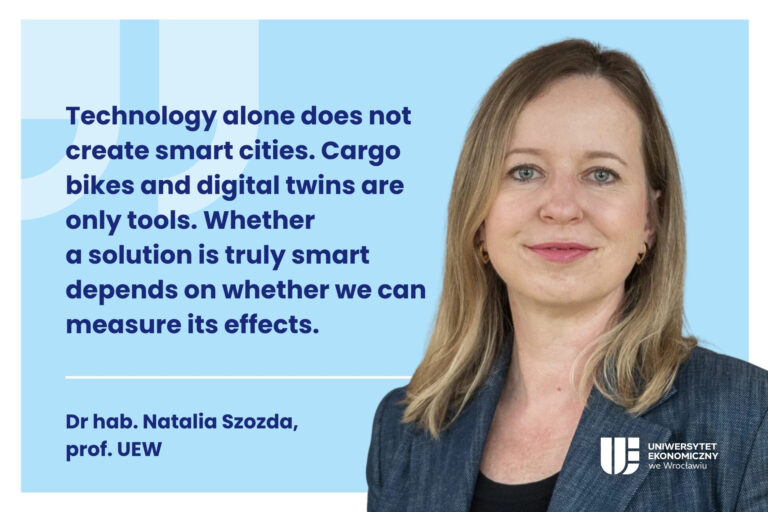
Wroclaw’s micro-hub at the Economic Forum. Natalia Szozda, Associate Professor, on when a city truly becomes smart

WUEB Experts Weekly Review. Research, Projects and Academic Successes (5–11 October 2026)
WUEB Experts Weekly Review: Research, Projects and Academic Successes (28 September–4 October 2026)
See also
How can economic fluctuations be smoothed? The 2026 Nobel Prize in Economic Sciences through the eyes of WUEB researchers
The World Within Wrocław’s Reach. How the PROM research mobilities confirm WUEB’s place on the map of global academia
Wroclaw’s micro-hub at the Economic Forum. Natalia Szozda, Associate Professor, on when a city truly becomes smart
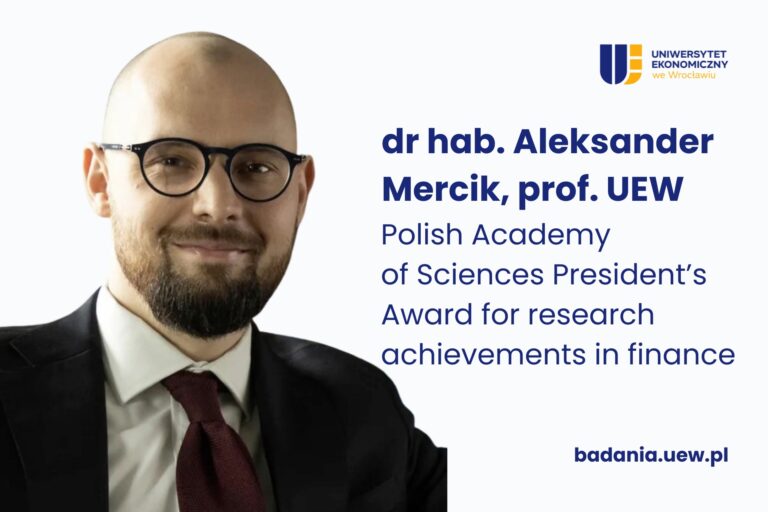
Dr hab. Aleksander Mercik, Professor of the WUEB, receives the Andrzej Gospodarowicz Award in Finance from the President of the Polish Academy of Sciences
WUEB Experts Weekly Review. Research, Projects and Academic Successes (5–11 October 2026)
Wroclaw University of Economics and Business researchers among the world’s leading scientists: six included in the 2026 World’s Top 2% Scientists database
WUEB Experts Weekly Review: Research, Projects and Academic Successes (28 September–4 October 2026)