

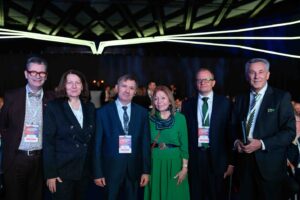
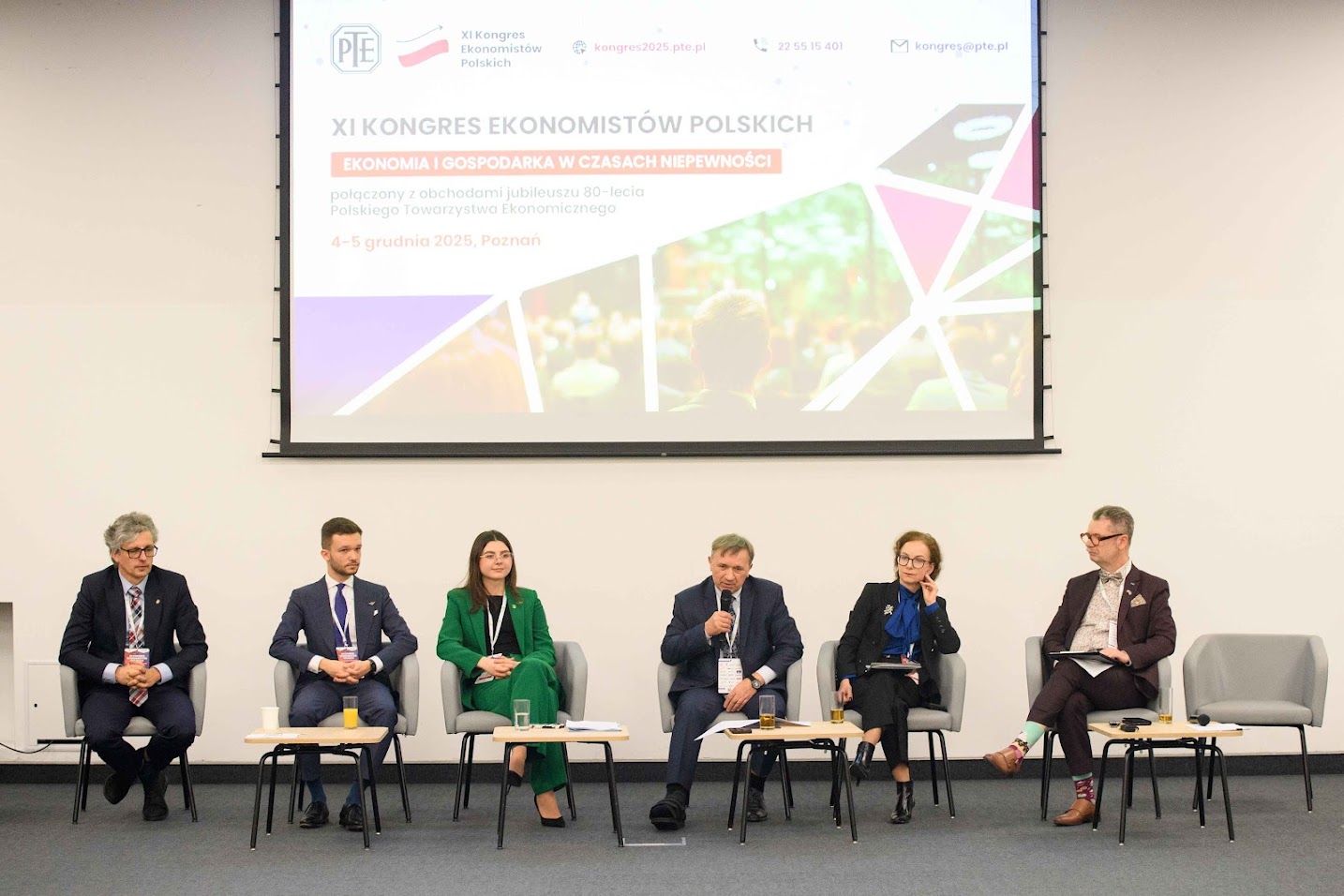
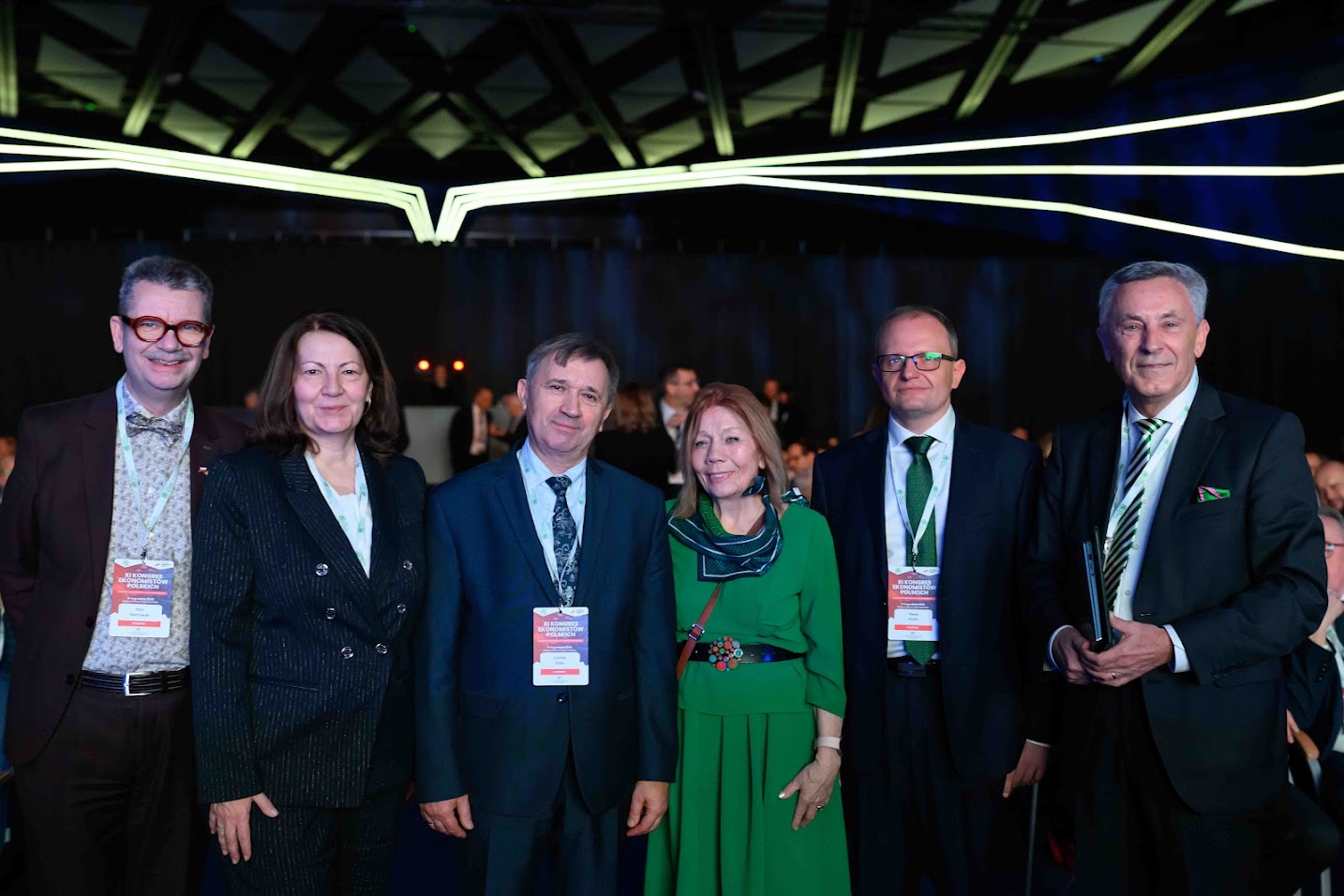
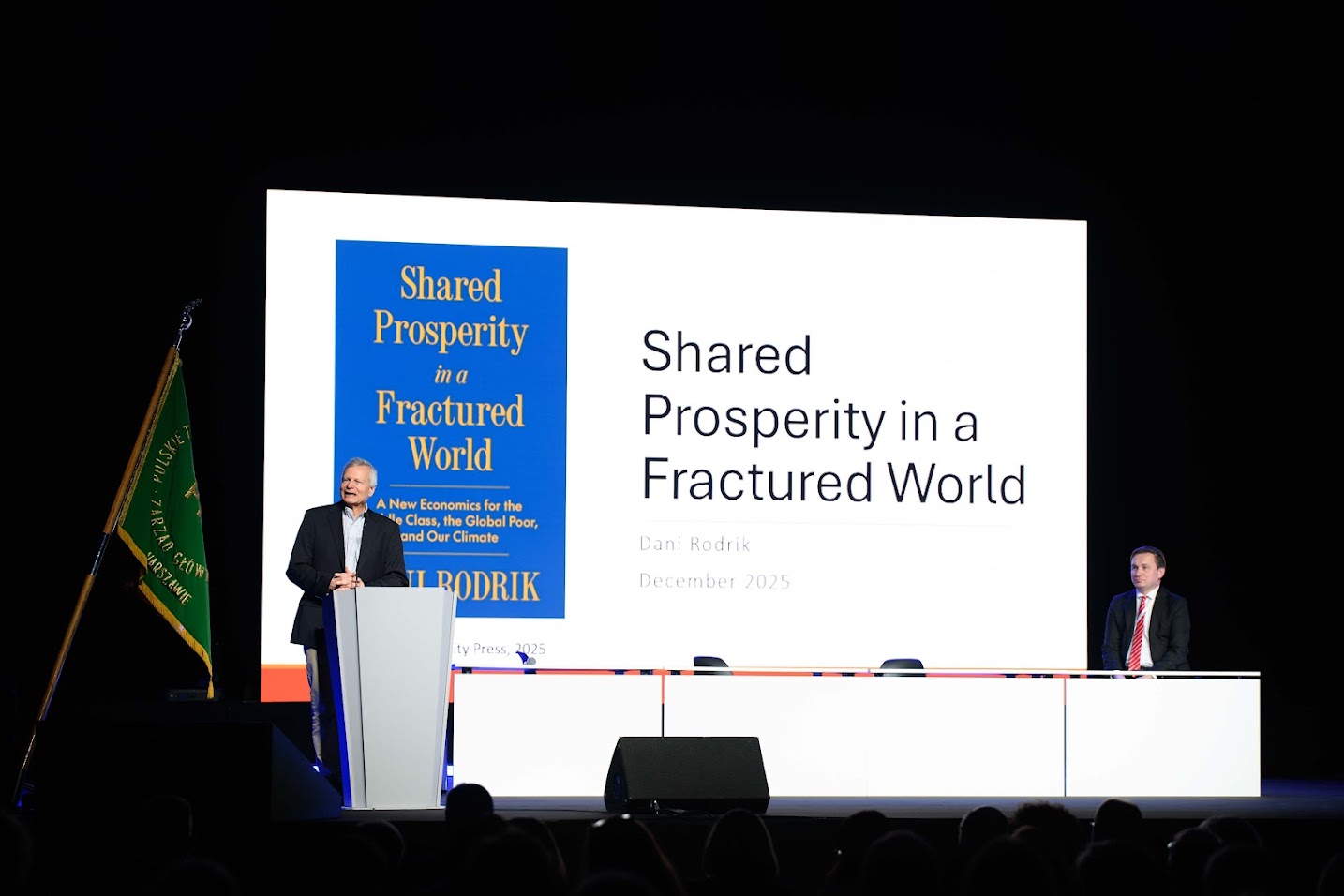
On 4-5 December 2025, Poznan hosted the 11th Congress of Polish Economists, combined with the celebrations of the 80th anniversary of the Polish Economic Society. The Congress culminated in the Poznan Declaration – a set of 11 recommendations addressed to decision-makers, as well as to academic and business communities. The strong involvement of representatives of the Wroclaw University of Economics and Business in the Program Council, the Organising Committee and thematic sessions makes WUEB one of the key co-authors of this agenda for the years ahead.

The 11th Congress of Polish Economists – a place where priorities for the next decade are set
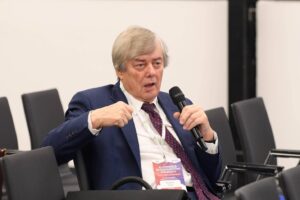
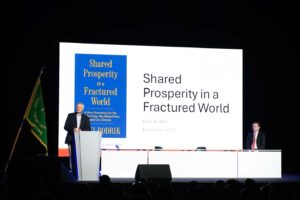
The 11th Congress of Polish Economists, organised in Poznan by the Polish Economic Society, was this year’s most important forum for economic debate in Poland. Several dozen plenary, panel and paper sessions brought together representatives of academia, public administration, business, civil society organisations and the media. Discussions addressed the consequences of geopolitical tensions, the energy and digital transitions, demographic challenges, the condition of public finances and the evolving role of economists in designing public policies.
A key theme of the Congress was the responsibility of the academic community for the quality of decisions taken in the state and in the economy. At the heart of the debate were questions about how to translate economic knowledge and research findings into concrete, long-term action – not in the perspective of a few quarters, but of at least the next two decades.
The Poznan Declaration – 11 recommendations for an economy built on trust, knowledge and responsibility
At the close of the Congress, participants adopted the Poznan Declaration – a document containing 11 key recommendations. What unites them is an appeal to rebuild trust in public institutions, strengthen the role of science in shaping economic policy and restore the idea of the social market economy as a foundation for Poland’s long-term, sustainable development, in line with Article 20 of the Constitution of the Republic of Poland.
The recommendations concern, among others:
- building trust in state institutions and consistently embedding economic policy in the principle of the social market economy,
- developing a coherent, knowledge-based strategy for Poland’s economic development that is resilient to geopolitical and macroeconomic shocks,
- ensuring broadly understood security – in military, energy, resource and technological dimensions,
- responding to population ageing and demographic challenges, including the development of the silver economy and a responsible migration policy,
- strengthening the sustainability of public finances and the transparency of public spending,
- undertaking a responsible green transition that reduces the economy’s emissions without undermining its competitiveness,
- promoting an economy of moderation and shifting models of rationality towards more holistic approaches,
- accelerating the digital transition, including harnessing the potential of artificial intelligence with full respect for citizens’ rights,
- creating conditions for entrepreneurship and innovation, for start-ups and family firms,
- developing economic education and future skills, from schools to universities,
- supporting an open, knowledge-based debate on Poland’s place in the European Union, including accession to the euro area.
The Declaration offers a coherent framework for thinking about the Polish economy with a time horizon extending at least to 2040 – from institutional stability and the green and digital transitions to the development of human capital. It is not only a summary of the Congress, but also an invitation to co-create a long-term development agenda.
WUEB’s voice in the debate: from future skills to a data-driven economy
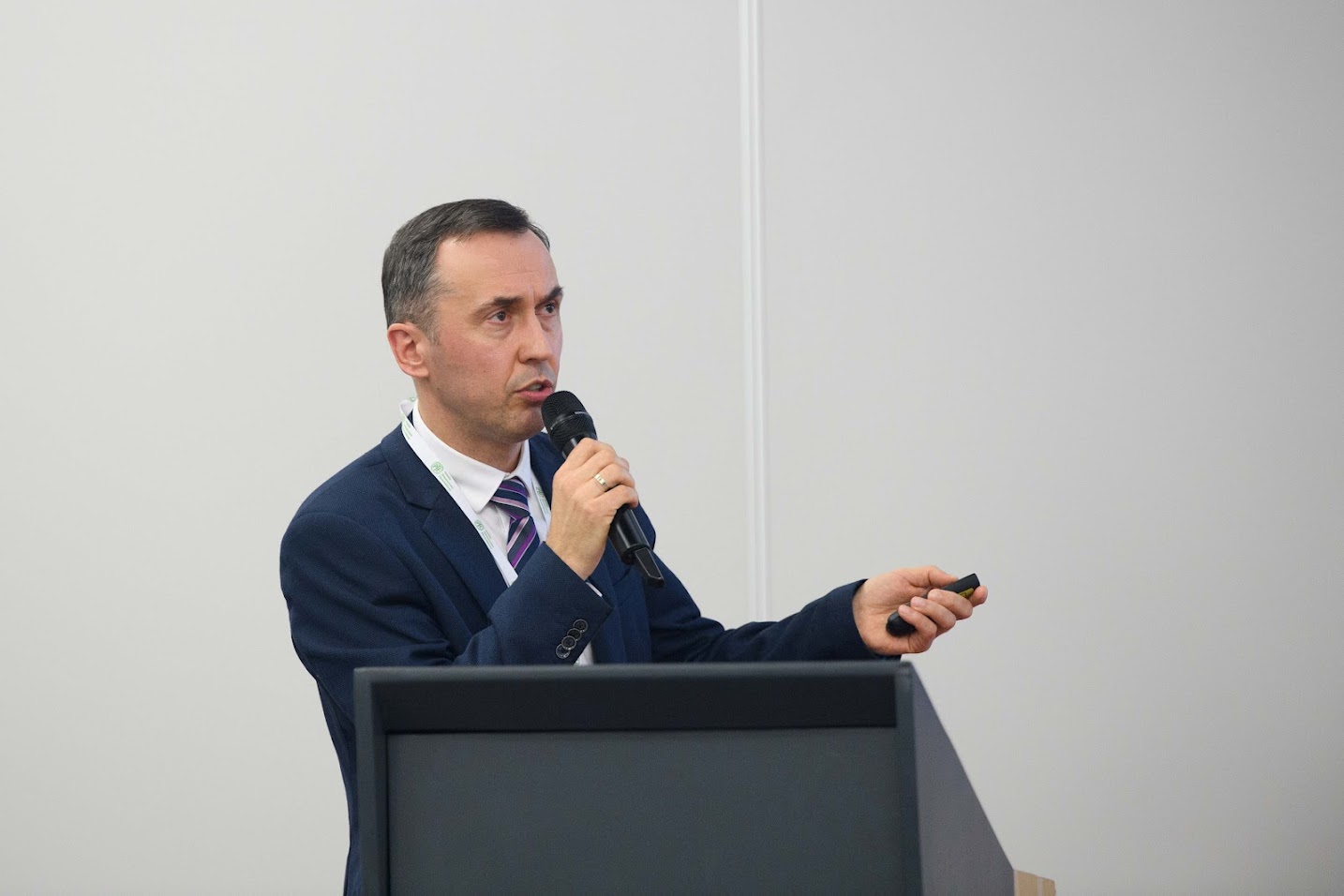
Faculty members of the Wrocław University of Economics and Business (WUEB) were present at all key moments of the Congress programme – from the opening session, through panel and scientific sessions, to the special event on artificial intelligence and the poster session. WUEB brought to the table themes such as future competencies, household economic security, energy and climate transition, fiscal sustainability, ESG, the role of official statistics, the “economy of moderation”, philosophy of economics and gender equality in science and finance.
1. The Rector as the voice of economics universities
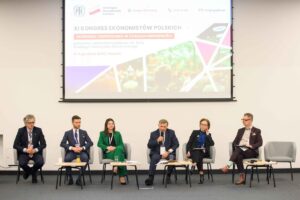
At the level of leadership within the community of economics universities, WUEB was represented by Professor Czesław Zając, Rector of the Wrocław University of Economics and Business. He took part in the KRUE panel “The role of economics universities in shaping future competencies”, where the discussion focused on the responsibility of universities for preparing graduates to work in an economy undergoing parallel green, digital and demographic transitions.
2. Strategy, economic security and the labour market
The “system-level” part of the debate was opened by Professor Marek Kośny, speaking on behalf of the Scientific Council of the Polish Economic Association. In the following sessions he chaired a panel on the labour market and socio‑economic changes and co‑created a discussion on the economic security of households under conditions of uncertainty.
In the same thematic area, Iwo Augustyński, PhD. contributed as co‑author of the paper “Employment guarantee. How to fix the Polish labour market?”. Through their participation, WUEB was present exactly where the most sensitive point of the economy was discussed: income stability and the quality of work.
3. Public finance, data science, artificial intelligence and ESG
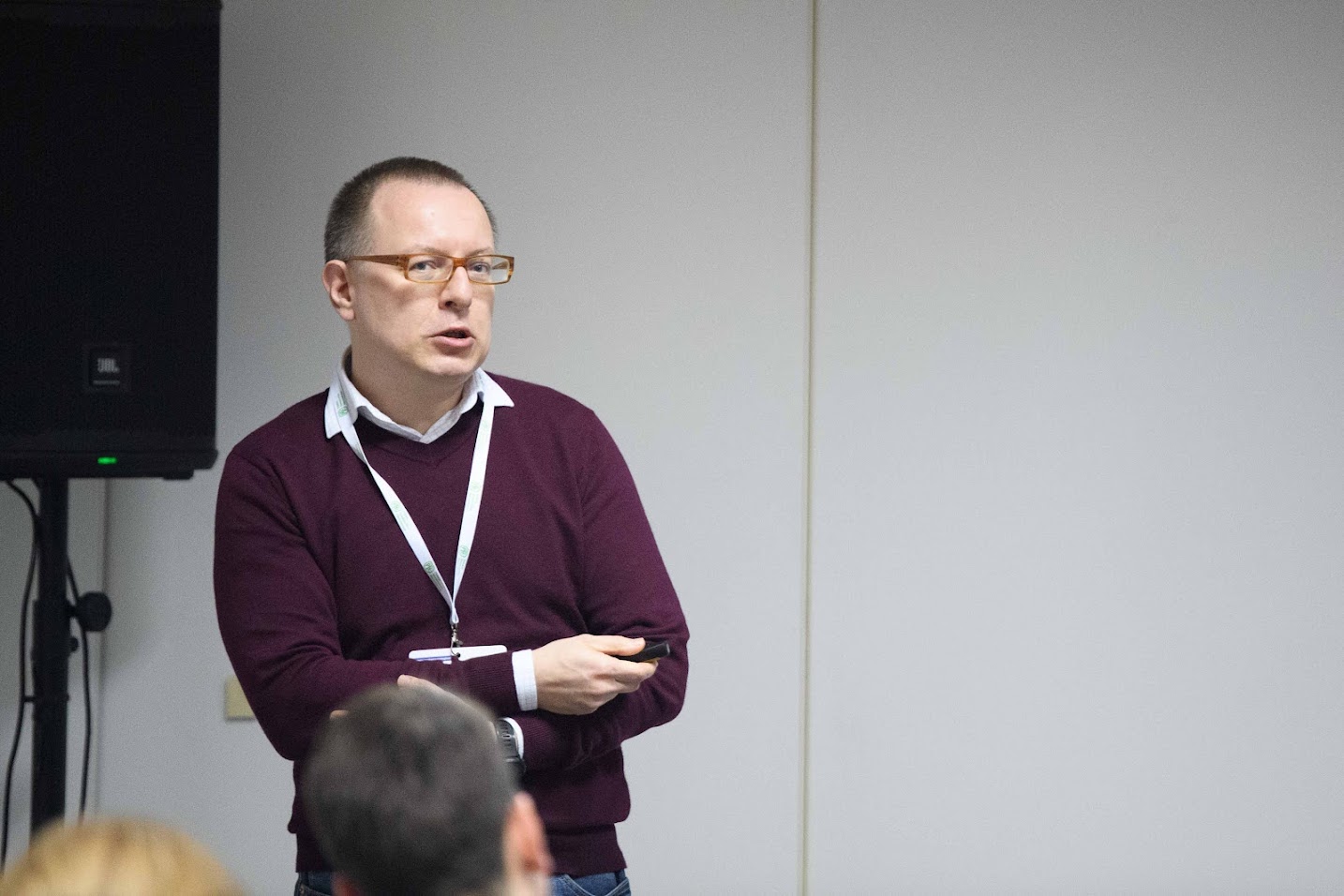
A strong thematic line was shaped by Professor Krzysztof Jajuga, with his paper “Modern data science in dealing with uncertainty – statistical inference and artificial intelligence”, his role in the panel on the stability of public finances, and his moderation of the special event “Artificial Intelligence – beyond the hype” and the session on the challenges of official statistics. This combination of finance, advanced data analysis and AI showed that WUEB operates in the top expert league in this field.
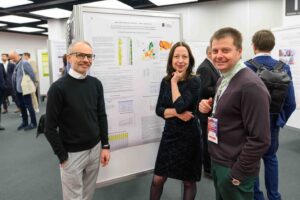
The theme of responsible finance was further developed by Professor Justyna Zabawa (WUEB), who moderated the panel on ESG strategies in the financial sector, Professor Magdalena Chmielowiec‑Lewczuk (WUEB) as a panelist, and Professor Małgorzata Solarz (WUEB) as co‑author of a poster on trust in “buy now, pay later” services.
4. Sustainable development, the economy of moderation and everyday household choices
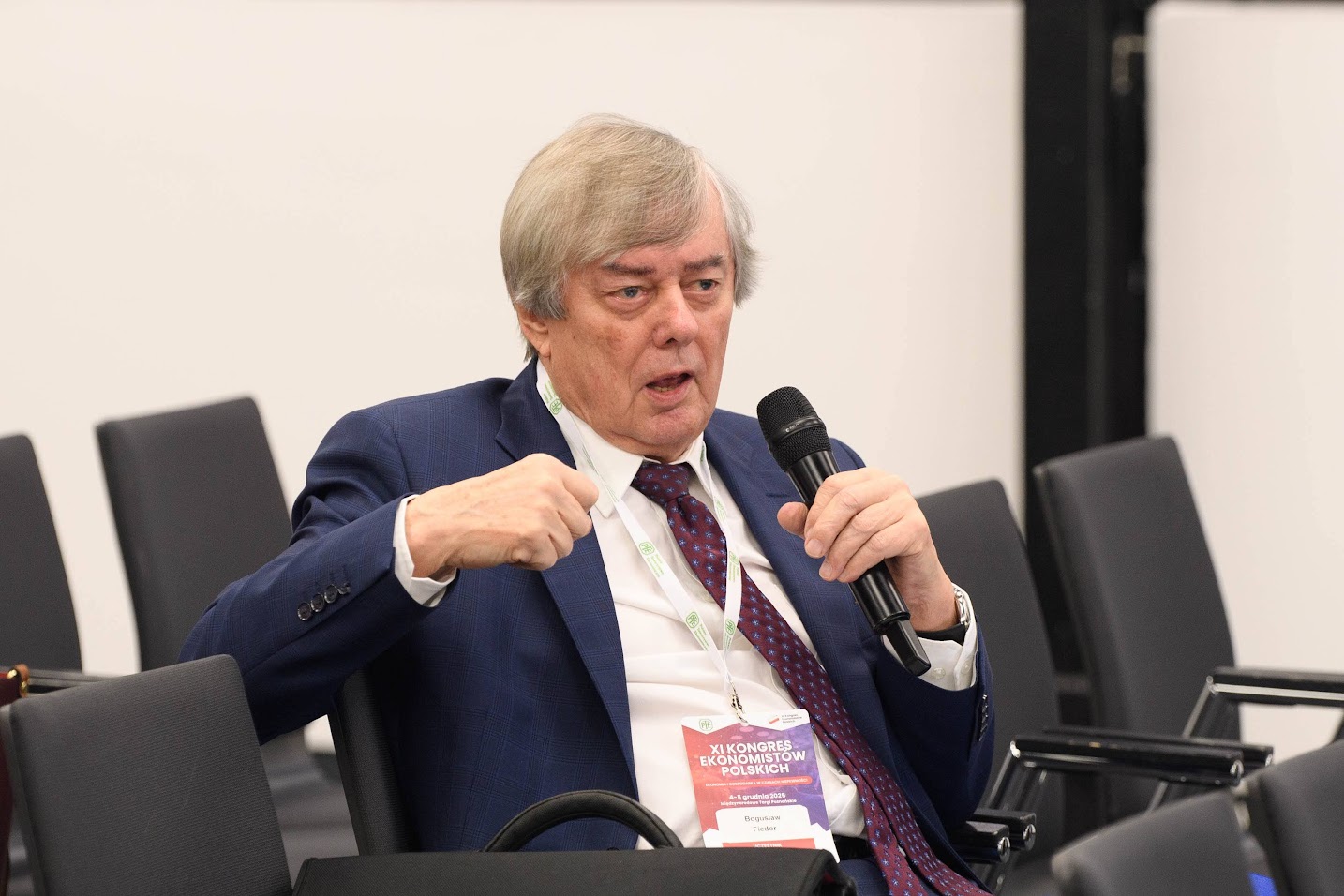
The second strong axis of the Congress concerned sustainable development and the economy of moderation. Professor Bogusław Fiedor chaired the session “Sustainable development and the economy of moderation”, co‑authored a paper on economic growth in the context of contemporary socio‑political tensions and took part in the session “The global crisis of unsustainable development and the need for a global economy of moderation”.
Together with Professor Bogusława Drelich‑Skulska and Professor Andrzej Graczyk, he also co‑created the panel “Activities of universities and economics faculties for sustainable development”, in which universities presented case studies of how they translate sustainability ideas into practice.
This thematic axis was complemented by the research of Professor Agnieszka Stanimir (WUEB) and Klaudia Przybysz PhD. on subjective satisfaction of needs and tourism‑related purchasing decisions of households. Their work shows how everyday consumer choices fit into the broader picture of a sustainable economy.
5. Philosophy of economics, the crisis of unsustainable development and the history of the economics community
The Congress also highlighted a philosophical dimension – a reflection on how we think about economics in the first place. In the session “Contemporary challenges for the theory and philosophy of economics”, WUEB was represented by:
Professor Bogusław Fiedor with a contribution on the global crisis of unsustainable development and the need for an economy of moderation,
Dr Aleksander Ostapiuk with a critical analysis of neoclassical and neoliberal economics in the context of democracy, climate and equality,
Dr hab. (habilitated doctor) Bartosz Scheuer with a paper on the relationship between economics and the philosophy of economics.
This part of the programme positioned WUEB not only as an analytical centre, but also as a university with the potential to redefine economic paradigms.
This perspective was complemented by Professor Jędrzej Chumiński in the panel “History of economic societies in Poland”, bridging today’s debate with the tradition of organisation within the economics community and the 80th anniversary of the Polish Economic Association.
Ww. perspektywę uzupełniła debata prof. dr hab. Jędrzeja Chumińskiego, w panelu „Historia towarzystw ekonomicznych w Polsce” – łącząc współczesną debatę z tradycją organizowania się środowiska ekonomistów i 80leciem Polskiego Towarzystwa Ekonomicznego.
6. Gender equality and feminist economics
A strong signal from WUEB came from participation in the session “Feminist economics – contexts, research, analyses”. The team composed of Magdalena Rozwadowska, Professor Agnieszka Bem (WUEB), Milena Kowalska PhD. and Paweł Prędkiewicz PhD. presented the paper “Where Are the Women? Gender Gaps in Economics and Finance Research”, devoted to gender gaps in economics and finance scholarship. This is a crucial topic, and the WUEB team clearly demonstrated how research policy, university organisational culture and the responsibility of the academic community should be combined.
7. International trade and economic integration
The area of the world economy and economic integration was represented by Professor Artur Klimek (WUEB), who delivered a paper on foreign direct investment in the semiconductor industry in the session on the future of the world economy and co‑moderated the session “Economic integration and international trade”. His contributions focused on what is now key: the security of supply chains, geopolitics and regulations shaping global trade.
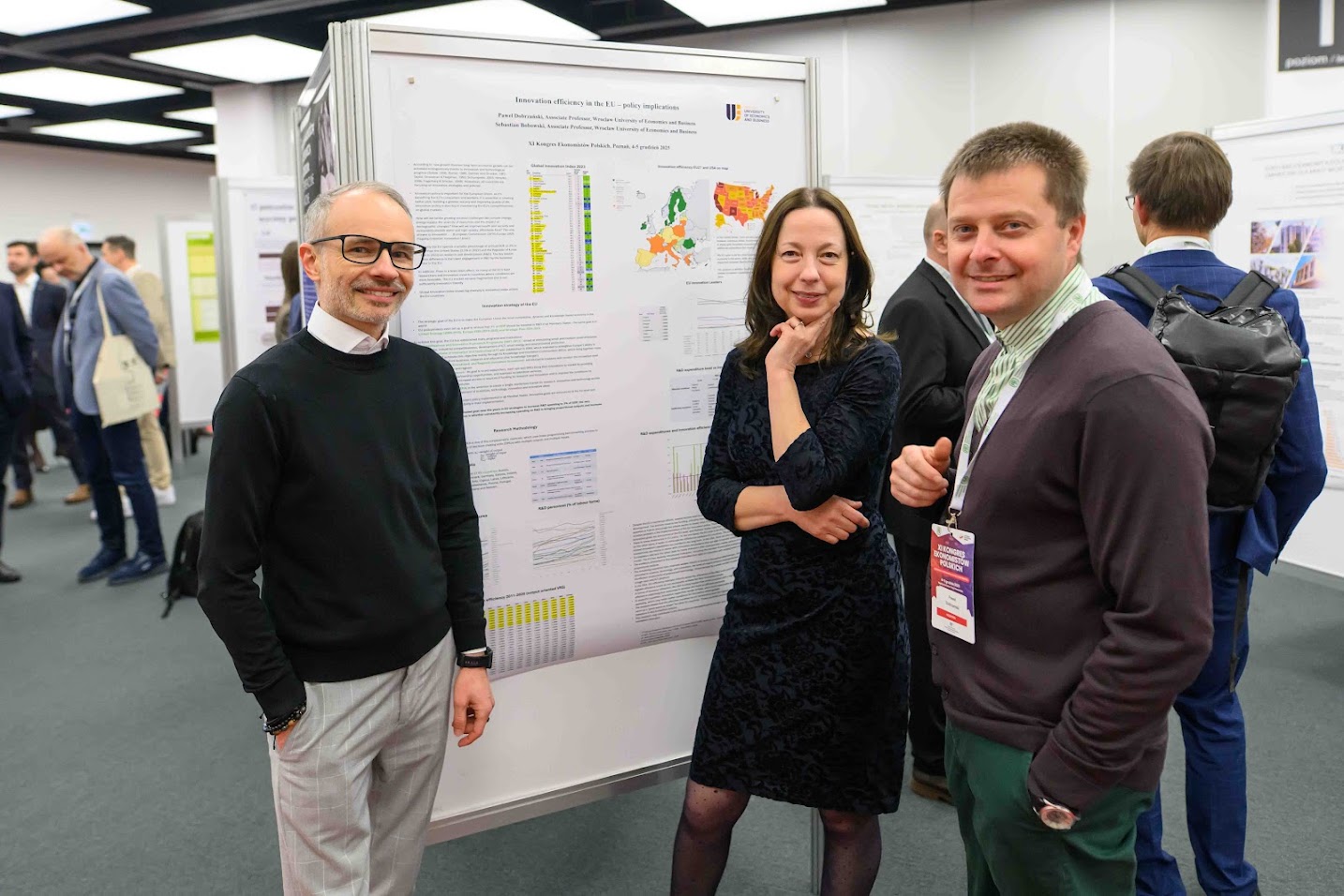
Research results on innovation efficiency in the European Union and their implications for economic policy were presented by Professors Paweł Dobrzański (WUEB) and Sebastian Bobowski (WUEB), authors of the poster “Innovation efficiency in the EU – policy implications”.
The appeal in “Rzeczpospolita” and the Poznan Declaration – a single voice from the economics community
The 11th Congress of Polish Economists was accompanied by an appeal from the economics community published in the daily “Rzeczpospolita”, which we reported on in a recent WUEB news item. Read together with the Poznan Declaration, the appeal forms a coherent message – initially addressed to the wider public and then developed into 11 detailed recommendations.
In conclusion, by responding to the appeal of the Organising Committee, we join the dissemination of the Poznan Declaration and encourage you to read the full document, which is an invitation to broad cooperation in support of a modern, responsible and solidarity-based economy.
Autor tekstu: Justyna Morawska-Płoskonka
Zobacz podobne treści

WUEB Experts Weekly Review. Research, Projects and Academic Successes (12–18 October 2026)
How can economic fluctuations be smoothed? The 2026 Nobel Prize in Economic Sciences through the eyes of WUEB researchers
Wroclaw’s micro-hub at the Economic Forum. Natalia Szozda, Associate Professor, on when a city truly becomes smart
WUEB Experts Weekly Review. Research, Projects and Academic Successes (5–11 October 2026)
Zobacz również
WUEB Experts Weekly Review. Research, Projects and Academic Successes (12–18 October 2026)
How can economic fluctuations be smoothed? The 2026 Nobel Prize in Economic Sciences through the eyes of WUEB researchers
The World Within Wrocław’s Reach. How the PROM research mobilities confirm WUEB’s place on the map of global academia
Wroclaw’s micro-hub at the Economic Forum. Natalia Szozda, Associate Professor, on when a city truly becomes smart
Dr hab. Aleksander Mercik, Professor of the WUEB, receives the Andrzej Gospodarowicz Award in Finance from the President of the Polish Academy of Sciences
WUEB Experts Weekly Review. Research, Projects and Academic Successes (5–11 October 2026)
Wroclaw University of Economics and Business researchers among the world’s leading scientists: six included in the 2026 World’s Top 2% Scientists database