

Let us pause for a moment and ask a simple question: is economic policy in Poland today genuinely grounded in economic expertise, or rather in the logic of political conflict? Three leading economists look for an answer in their article “Gorynia, Kośny, Hardt: Let us turn to economics”, published on 2 December 2025 in the daily Rzeczpospolita. In their appeal – addressed to those in government and in opposition alike – they argue that key economic decisions should build on the achievements of Polish economic research, not on short‑term political clashes.
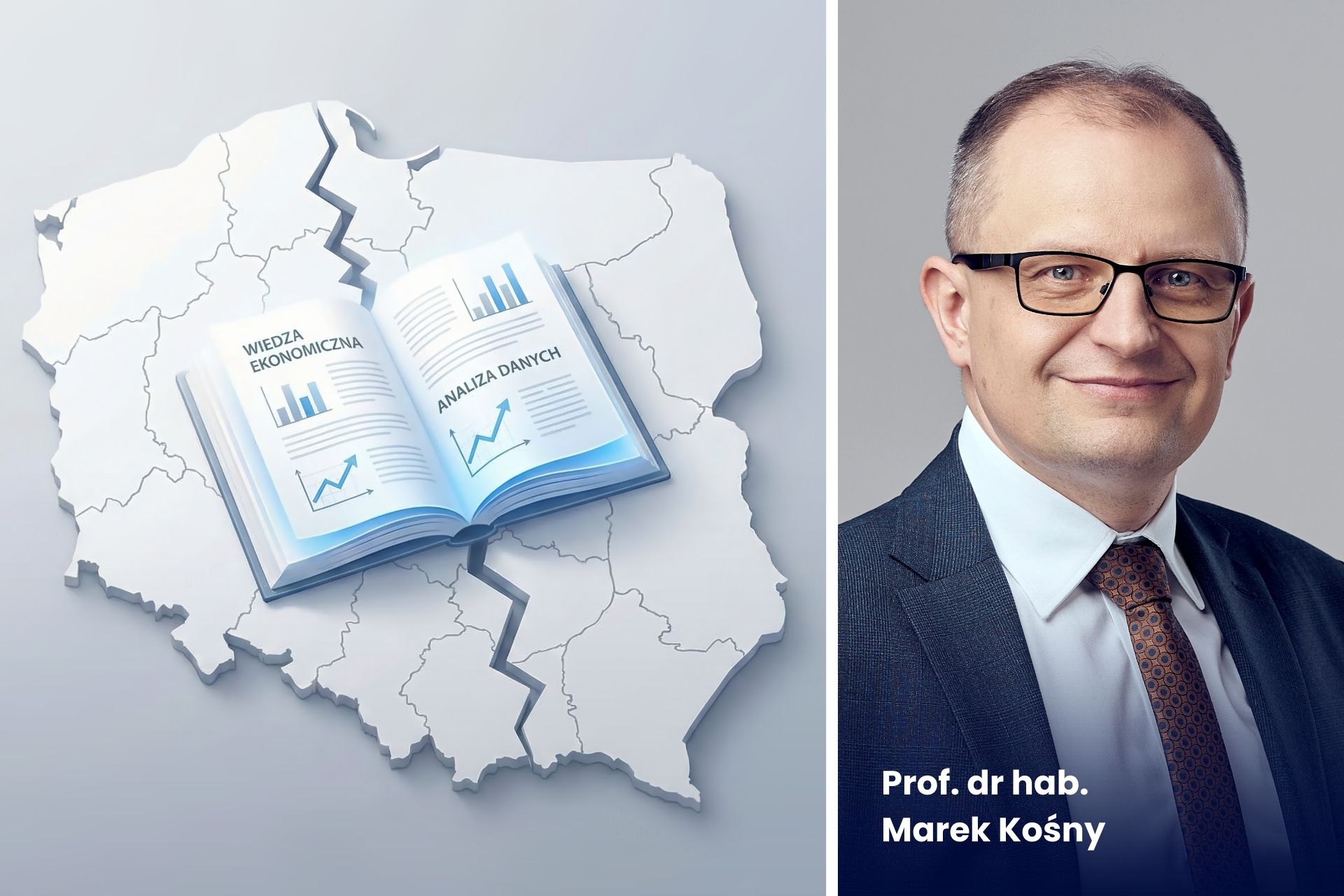
The article appears in the same week as the 11th Congress of Polish Economists in Poznań, organised by the Polish Economic Society to mark the organisation’s 80th anniversary. The Congress motto – “Economics and the economy in times of uncertainty” – aptly captures the context of the appeal: several hundred economists, across dozens of panels, present research findings and debate the long‑term challenges facing the Polish economy.
The authors diagnose public debate on the economy as highly polarised, driven by emotions, simplified narratives and the labelling of opponents, instead of rigorous data analysis and argument‑based disagreement. They call for a return to economics as a discipline that helps to structure complex processes, assess the costs and benefits of different policy options – from Poland’s entry into the euro area to changes in the statutory retirement age – and manage uncertainty more effectively. Economics does not replace politics or values, but it does indicate the boundaries of what is efficient, stable and sustainable in the long run.
A central claim of the article is that the Polish economy stands at a crossroads. After years of rapid growth and catching up with “the economic core of the West”, the simple drivers of development – low labour costs and an imitative growth model – are being exhausted. Poland now needs to move towards a growth model based on capital accumulation, innovation and a higher investment rate, while at the same time strengthening the skills and capabilities of its population.
Drawing on contemporary economic research, the authors stress that long‑term growth requires a balance between a strong, capable state and a vibrant civil society, as well as room for “creative destruction” – both in the economy and in the marketplace of ideas. Seizing the historic opportunity to close the income gap with the richest countries on a lasting basis depends on a substantial increase in expenditure on science and human capital, with particular emphasis on higher education and clear, predictable funding rules.
On a practical level, the article recalls that for more than a century Polish economists have co‑created key reforms – from rebuilding the state after 1918, through the post‑1989 transformation, to European integration – and that today they can again be reliable partners for any government engaged in a wise modernisation of the country. The authors appeal for “the strength of arguments, not the argument of strength” to prevail in disputes over economic policy, and for public programmes to be tested against the existing body of research, rather than only at the level of political slogans.
For Wrocław University of Economics and Business (UEW), this appeal has a particular significance: one of its co‑authors is Professor Marek Kośny, Professor of Social Sciences in the discipline of Economics and Finance, Vice‑Rector for Research at Wrocław University of Economics and Business (UEW), Head of the Department of Econometrics and Operations Research, and Chair of the Scientific Council of the Polish Economic Society. His research output includes, among others, the application of statistical and econometric methods to the analysis of tax systems, income redistribution and family policy instruments, as well as the co‑creation of solutions introduced into Polish legislation, such as the concept of Centres for Social Services.
Looking ahead to the next five years, the appeal published in Rzeczpospolita can be read as a signal of a more intensive involvement of the economics community – including scholars affiliated with UEW – in co‑designing Poland’s development strategy. The 11th Congress of Polish Economists and the planned Poznań Declaration are intended to become durable infrastructure for such cooperation, bringing together academic knowledge, institutional experience and responsibility for Poland’s long‑term economic development.
The article “Gorynia, Kośny, Hardt: Let us turn to economics” is available on the rp.pl website:
https://www.rp.pl/opinie-ekonomiczne/art43429751-gorynia-kosny-hardt-siegnijmy-do-ekonomii
badania.uew.pl – because the world needs competent voices in times of global tension.
Author: Justyna Morawska-Płoskonka
See similar content
How can economic fluctuations be smoothed? The 2026 Nobel Prize in Economic Sciences through the eyes of WUEB researchers
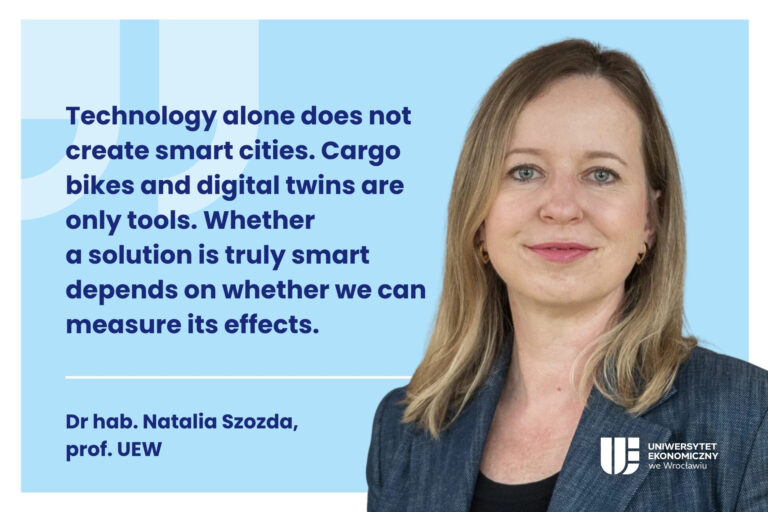
Wroclaw’s micro-hub at the Economic Forum. Natalia Szozda, Associate Professor, on when a city truly becomes smart

WUEB Experts Weekly Review. Research, Projects and Academic Successes (5–11 October 2026)
WUEB Experts Weekly Review: Research, Projects and Academic Successes (28 September–4 October 2026)
See also
How can economic fluctuations be smoothed? The 2026 Nobel Prize in Economic Sciences through the eyes of WUEB researchers
The World Within Wrocław’s Reach. How the PROM research mobilities confirm WUEB’s place on the map of global academia
Wroclaw’s micro-hub at the Economic Forum. Natalia Szozda, Associate Professor, on when a city truly becomes smart
Dr hab. Aleksander Mercik, Professor of the WUEB, receives the Andrzej Gospodarowicz Award in Finance from the President of the Polish Academy of Sciences
WUEB Experts Weekly Review. Research, Projects and Academic Successes (5–11 October 2026)
Wroclaw University of Economics and Business researchers among the world’s leading scientists: six included in the 2026 World’s Top 2% Scientists database
WUEB Experts Weekly Review: Research, Projects and Academic Successes (28 September–4 October 2026)