

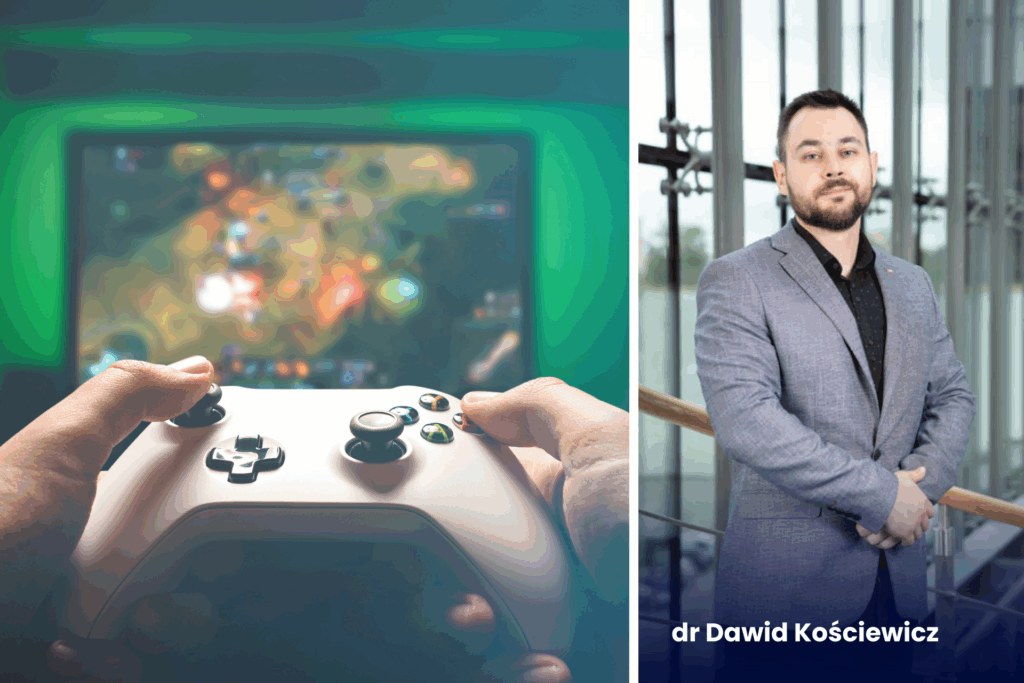
Modern video games and e-sport are more than entertainment. They are rapidly evolving spaces where technology, culture, education, and policy intersect. As part of the EU-funded GAMEHEARTS project (HORIZON Europe), researchers from the Wroclaw University of Economics and Business explore how games can inspire historical interest, support education, protect cultural heritage, and shape strategic narratives. Dawid Kościewicz, Ph.D. discussed the potential of games as tools of soft power and cultural strategy.
Games as Tools of Soft Power and Cultural Strategy
Currently video games are becoming instruments of cultural, social and geopolitical influence. Countries like Saudi Arabia are investing billions into the video games and e-sport sectors, treating them as platforms for building global recognition and national identity. Flagship events such as the E-sports World Cup and the Olympic E-sports Games are not just competitions – they are narrative platforms promoting modernity, innovation, and strategic ambition.
Europe, with its rich cultural heritage and strong creative industries, must proactively design its own sustainable video games and e-sport ecosystems. Games can carry values, history, and regional narratives – especially if they are intentionally developed and supported.
The Need for Development Strategy for Games and E-sport
Although European institutions have acknowledged the importance of the video games industry (e.g., the 2022 European Parliament resolution), there is still a lack of coherent and integrated development policy for games and e-sport including this type of digital entertainment in the broad-based development of European culture and heritage. In this context, the GAMEHEARTS project demonstrates that it is possible to connect culture, technology, and education through systemic cross-industry cooperation – involving game developers and other organizations form cultural and creative industries (e.g., museums, archives, animation, theatres, etc.) as well as other stakeholders such universities and policymakers.
Europe needs a strategic approach to video games, like its policies on artificial intelligence or digital infrastructure. Games and e-sport deserve a place in digital, media, educational, and cultural policy. GAMEHEARTS provides recommendations and roadmaps to support the growth of Europe’s video game industry ecosystem.
E-sport as a Space for Social Engagement
E-sports is a new arena of digital culture, attracting millions of young people – often beyond the reach of traditional media and institutions. It offers a space for community-building, civic education, and value promotion.
If public institutions choose to “enter the game,” e-sportcan become a channel for dialogue with younger generations, a space for social innovation, and a tool for strengthening cultural resilience. GAMEHEARTS reminds us that ecosystems can be, and sometimes should be, designed intentionally, planned longitudinally with rationale goals and objectives.
Game Examples That Combine Entertainment with Heritage and Values
GAMEHEARTS research not only explores systemic issues but also highlights specific titles that show how commercial games can support education and heritage – even without being designed as “serious games” but as traditional entertainment-focused video games.
Assassin’s Creed – Transmedia and Heritage Protection
The Assassin’s Creed series is a prime example of expansive transmedia storytelling. Ubisoft, the developer, created engaging narratives while reconstructing historical architecture, figures, and events. The Discovery Tour mode allows non-violent exploration of historical settings, and Ubisoft’s involvement in the restoration of Notre Dame Cathedral after the fire illustrates how games can contribute to real-world heritage protection.
Kingdom Come: Deliverance – Realism and Crowdfunding
Set in medieval Bohemia, Kingdom Come: Deliverance impressed players with its realism and attention to detail. Its partial crowdfunding success shows that audiences are willing to support projects that prioritize authenticity. The successful sequel KCD II confirms the potential of games rooted in history and regional culture.
This War of Mine – Education and Humanitarian Values
The Polish game This War of Mine (11-bit studios), inspired by war tragedies, including the Siege of Sarajevo, focuses on the civilian experience during wartime. It was added to the official reading list in Polish schools, making it a pioneering educational tool. Its humanitarian message was recognized by Amnesty International, and the publisher made the base game freely available for educational purposes – promoting values beyond commercial goals.
Further details about the findings from the comparative case study analysis are available in the desk research report: D3.1 State-of-the-Art Report 1.
About the GAMEHEARTS Project
In a rapidly evolving digital landscape, European Video Game Industry Ecosystems (EVGIE) face a key challenge: the need for deeper integration with both traditional and emerging cultural sectors. The lack of cohesion limits the full potential of EVGIE, affecting economic growth, job creation, and social cohesion.
In this context, the EU-funded GAMEHEARTS project stands out as a catalyst for change, firstly the change in our perception of games and video games industry. The consortium includes University of Salford (United Kingdom), Breda University of Applied Sciences (Netherlands), Tampere University (Finland), Wroclaw University of Economics and Business (Poland), University of Vienna (Austria), City Football Group (United Kingdom), London Symphony Orchestra (United Kingdom), Imperial War Museums (United Kingdom) and Ubisoft Entertainment SA (France). The project aims to build strategic partnerships and explore ludic experiences – how video game expertise can drive innovation in the creative and cultural industries.
This project will deliver policy recommendations and roadmaps, supporting sustained innovation and economic development across Europe.
The activities of the Polish research team in GAMEHEARTS include how video games can encourage the discovery and popularization of European cultural heritage, what are the innovations and innovativeness dimensions within the games industry, as well as what are the cooperation mechanisms exploited by video game developers. The consortium is developing recommendations to support the growth of Europe’s video games industry ecosystem.
GAMEHEARTS is a three-year project funded by the European Union, dedicated to examining the economic, social, and cultural value of the European video game ecosystem (HORIZON-CL2-2023-HERITAGE-01-06, Grant Agreement No. 101132543).
Learn more about the GAMEHEARTS project – e-sports and games&heritage.
Authors: Prof. Patrycja Klimas, Dawid Kościewicz PhD.
See similar content
Video games are more than entertainment. WUEB researchers on cooperation between game developers and the cultural and creative industries

Space Logistics, Interplanetary Supply Chains and Interdisciplinary Research and Educational Projects Related to Space at UEW in Jelenia Góra
Wrocław has FinTech potential. A WUEB expert argues it is time to turn that potential into advantage
Academic Entrepreneurship as Architecture of Impact. The New Issue of „Impakt Dolny Śląsk” (2/2025)
See Also

WUEB Experts Weekly Review. Research, Projects and Academic Successes (12–18 October 2026)
How can economic fluctuations be smoothed? The 2026 Nobel Prize in Economic Sciences through the eyes of WUEB researchers
The World Within Wrocław’s Reach. How the PROM research mobilities confirm WUEB’s place on the map of global academia
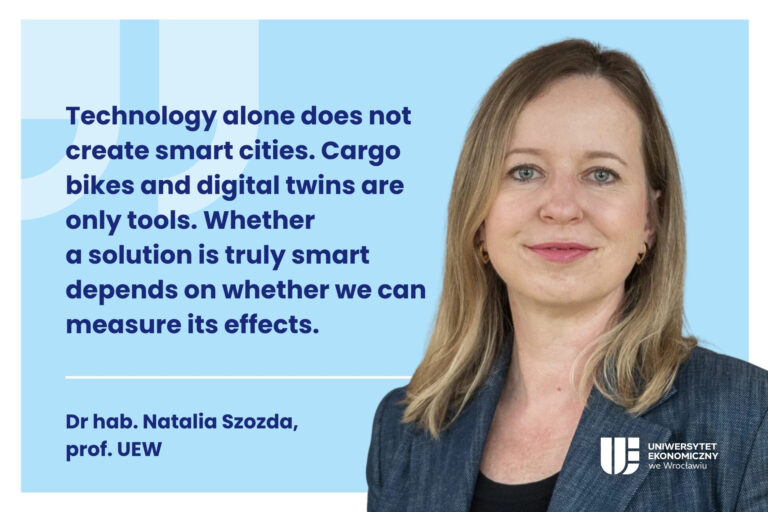
Wroclaw’s micro-hub at the Economic Forum. Natalia Szozda, Associate Professor, on when a city truly becomes smart
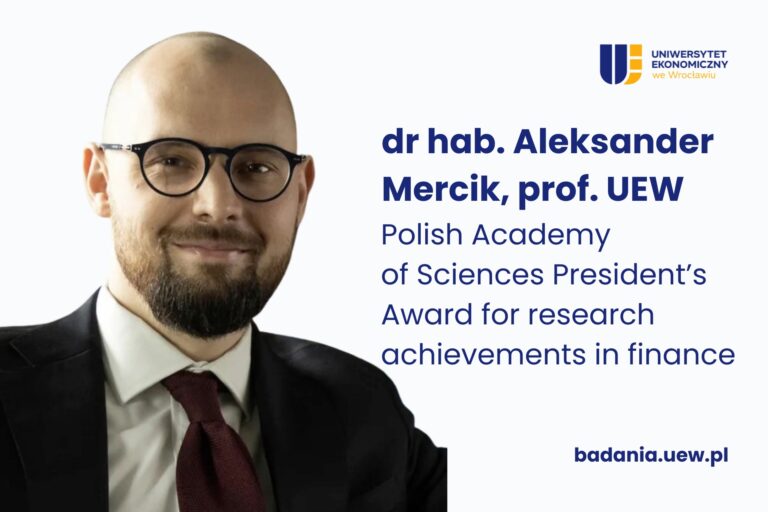
Dr hab. Aleksander Mercik, Professor of the WUEB, receives the Andrzej Gospodarowicz Award in Finance from the President of the Polish Academy of Sciences
WUEB Experts Weekly Review. Research, Projects and Academic Successes (5–11 October 2026)
Wroclaw University of Economics and Business researchers among the world’s leading scientists: six included in the 2026 World’s Top 2% Scientists database