

The 11th Wrocław Women’s Forum is now behind us. To mark the occasion, Prof. Barbara Mróz-Gorgoń, Ph.D., from the Wroclaw University of Economics and Business (WUEB), and Ewa Nowak-Iskra, Chair of the University of Wrocław Council, Director of WhiteRock Advisory and Vice-President of the Western Chamber of Commerce, Employers and Entrepreneurs, were special guests on Radio Wrocław’s programme “An Evening from Lower Silesia.”
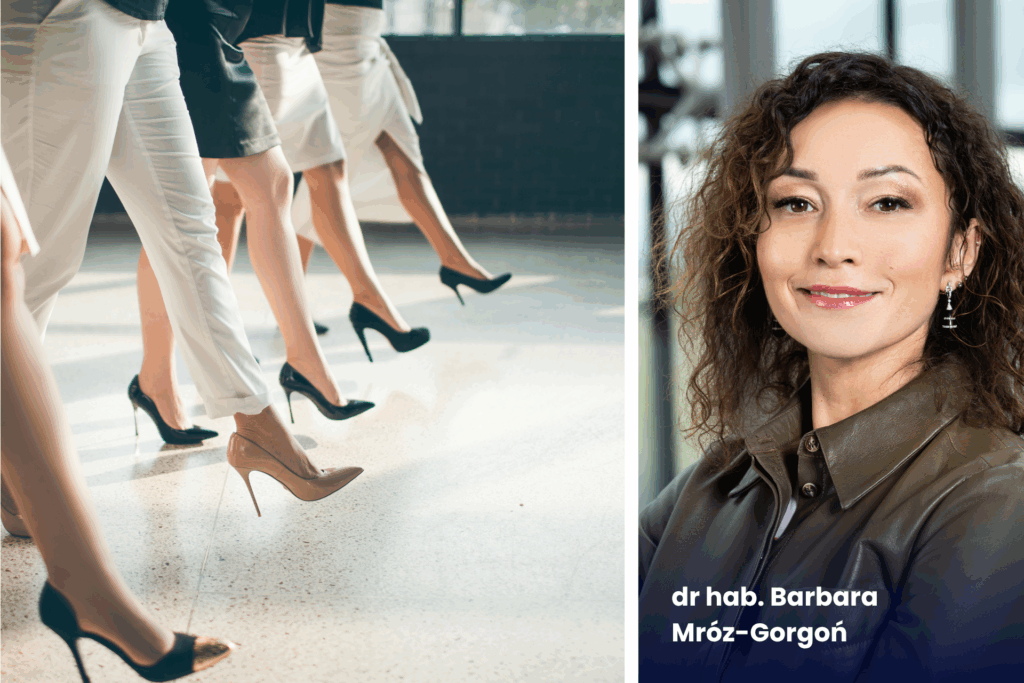
On 10 June 2025, the 11th edition of the Wrocław Women’s Forum took place. During the conversation with journalist Krzysztof Janos, the event’s organisers and keynote speakers—Prof. Barbara Mróz-Gorgoń (WUEB) and Ewa Nowak-Iskra—discussed key issues such as women’s leadership potential, the characteristics of female leadership, the role of women in business, and the influence of psychology on managerial careers.
At the outset, Prof. Mróz-Gorgoń highlighted the role of upbringing, which often prepares boys from an early age for leadership positions:
“The widespread mindset among men—that ‘I have to prove myself to everyone’—is more easily developed precisely because boys are often raised, even by mothers, with more freedom to take risks and make mistakes. This fosters a sense of self-confidence that later becomes a foundation for leadership. In many contexts, such confidence is indeed a valuable leadership trait.”
The discussion also touched on the internal doubts many women experience on the road to professional success. One key topic was the so-called “impostor syndrome,” often observed among female managers working in male-dominated business and leadership environments. The WUEB expert pointed again to the roots of this issue in the way girls and boys are raised:
“The term ‘impostor syndrome’ comes up not only at our Forum but also at virtually every conference we attend and in numerous academic studies. Once more, the way sons and daughters are raised proves to be essential. Girls often grow up with a deeply rooted belief that they are ‘not good enough’—even when this belief stems from a mother’s well-intentioned high expectations. Later in life, this develops into a mindset of being an ‘impostor’—even when women are more than qualified. In contrast, boys are encouraged from an early age to take risks—something rarely instilled in girls under traditional upbringing. Many things are still considered ‘improper’ for girls to do.”
— Prof. Barbara Mróz-Gorgoń, Ph.D., WUEB
What, then, distinguishes female leadership? Prof. Mróz-Gorgoń offers the following perspective:
“I recall a comment from Agnieszka Han, Vice-President of Hasco-Lek, who spoke at the Forum about the holistic approach women tend to have—seeing an organisation as a living organism. Women often possess a greater ability to ‘connect the dots’ in real time. On the other hand, statistically, more men tend to work in a task-oriented manner, focusing on the here and now.”
When asked what the currently unstable world might look like if women had greater influence, Prof. Mróz-Gorgoń responded:
“As someone who works closely with young people, I can say that I dream of a world—after the necessary revolution we are now undergoing—in which we will finally acknowledge that this is not just a ‘man’s world.’ Women’s voices should be heard equally, and in some matters, even more strongly. I truly dream of a world where competence governs above all, and gender no longer matters.”
— Prof. Barbara Mróz-Gorgoń, Ph.D., WUEB
You can listen to the full interview via Radio Wrocław: https://www.radiowroclaw.pl/articles/view/151859/Wieczor-z-Dolnego-Slaska-Nie-tylko-excel-Sila-kobiecej-wrazliwosci-w-biznesie
Text author: Sebastian Rogalski
See also

WUEB Experts Weekly Review. Research, Projects and Academic Successes (12–18 October 2026)
How can economic fluctuations be smoothed? The 2026 Nobel Prize in Economic Sciences through the eyes of WUEB researchers
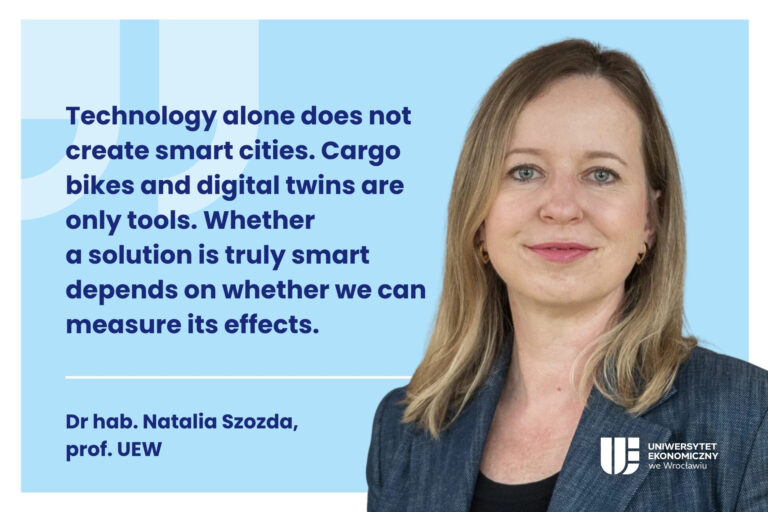
Wroclaw’s micro-hub at the Economic Forum. Natalia Szozda, Associate Professor, on when a city truly becomes smart
WUEB Experts Weekly Review. Research, Projects and Academic Successes (5–11 October 2026)
Related content
WUEB Experts Weekly Review. Research, Projects and Academic Successes (12–18 October 2026)
How can economic fluctuations be smoothed? The 2026 Nobel Prize in Economic Sciences through the eyes of WUEB researchers
The World Within Wrocław’s Reach. How the PROM research mobilities confirm WUEB’s place on the map of global academia
Wroclaw’s micro-hub at the Economic Forum. Natalia Szozda, Associate Professor, on when a city truly becomes smart
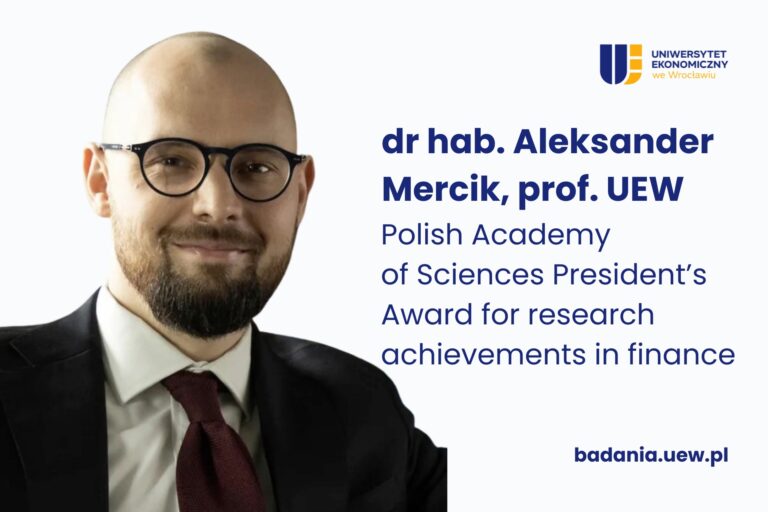
Dr hab. Aleksander Mercik, Professor of the WUEB, receives the Andrzej Gospodarowicz Award in Finance from the President of the Polish Academy of Sciences
WUEB Experts Weekly Review. Research, Projects and Academic Successes (5–11 October 2026)
Wroclaw University of Economics and Business researchers among the world’s leading scientists: six included in the 2026 World’s Top 2% Scientists database