

Is America “great again”? In economic terms, Donald Trump’s chosen tool to achieve this ambition is tariffs. But who truly benefits, and who stands to lose? These questions were explored by Artur Klimek, PhD, Professor at the Wroclaw University of Economics and Business, in an interview for Bankier.pl’s program Economic Point of View.
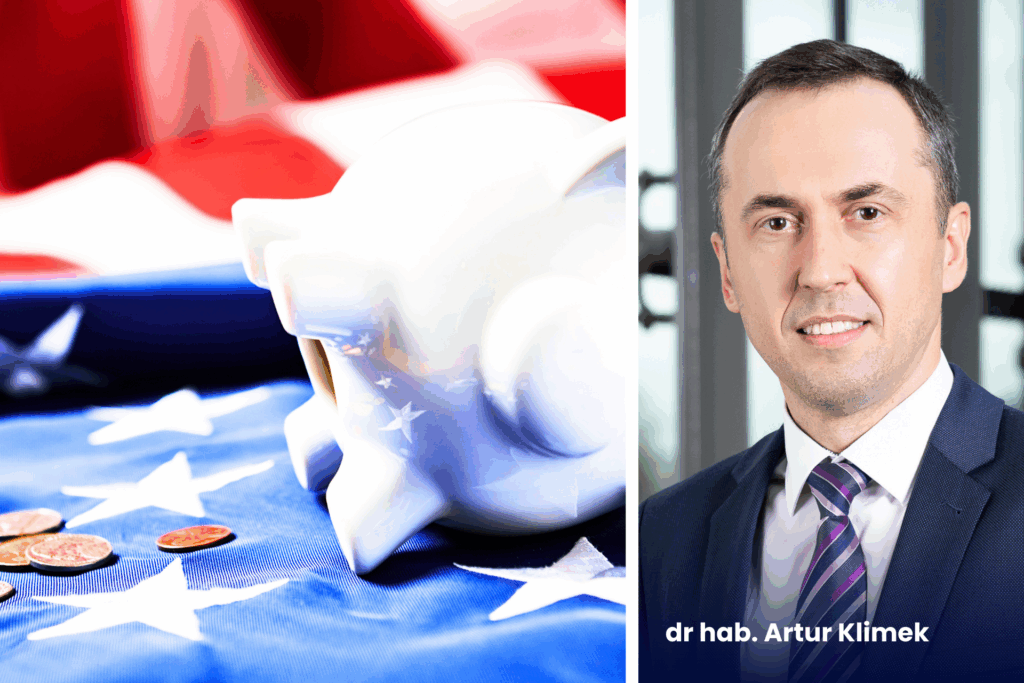
On August 1, 2025, Donald Trump signed an executive order imposing tariffs on imports from more than 70 countries (including 15% tariffs on Polish goods). In a conversation with journalist Aleksander Ogrodnik, Professor Klimek examined the rationale and potential consequences of this sharp shift in trade policy, drawing on U.S. market data from the first two quarters of the year—figures that do little to inspire optimism.
The WUEB expert pointed to uncertainty triggered by Trump’s decisions as one of the main obstacles to the project of “making America great again”:
“The numbers we receive and see in reports are not particularly encouraging. Unemployment has begun to rise somewhat, but in the U.S., an even more important indicator is the employment rate, which is declining—showing that the labor market is not in its best shape. Inflation has also started to rise—slowly, but still—mainly due to the gradual depletion of companies’ inventories. At the same time, interest rates remain uncertain. The Federal Reserve refuses to commit to lowering them, and Trump seems intent on shifting responsibility to the Fed.”
Professor Klimek cited data from the automotive industry as a telling example for the wider manufacturing sector:
“We are now at a point where major U.S. companies are reporting their results—and in the second quarter we can already see the impact of tariffs. General Motors estimates its annual profits will be lower by $4–5 billion, with $1 billion of losses attributable to tariffs in Q2 alone. Stellantis reported around $300 million in tariff-related losses. This shows that American corporations expected to grow stronger are, in fact, weakening—especially in the industrial sector.”
Despite the prevailing uncertainty, some sectors are performing relatively well—particularly in finance:
“The situation is different in services. Banks and consulting firms reported very strong results, benefiting from widespread uncertainty. So we cannot claim that the U.S. economy as a whole is weaker, but many of its components that were supposed to grow stronger are, in reality, becoming much more fragile.”
The WUEB expert also emphasized the broader effects of tariffs on product prices, effects seemingly overlooked by the Trump administration:
“In the entire debate on tariffs, we cannot assume a simple, linear outcome. The U.S. administration appears to have approached the issue this way—for example: a product costs 100, a 20% tariff brings the price to 120, and both consumers and producers will absorb the difference without much pain. But in practice, tariffs disrupt entire production chains, making some processes unprofitable. Those 10 or 20 percent tariffs are not just an add-on to prices—they fundamentally reshape, or even break apart, supply chains.”
The full interview is available on Bankier.pl: https://www.bankier.pl/wiadomosc/Celna-ruletka-USA-W-co-gra-Donald-Trump-8983793.html.
Author: Sebastian Rogalski
See similar content
How can economic fluctuations be smoothed? The 2026 Nobel Prize in Economic Sciences through the eyes of WUEB researchers
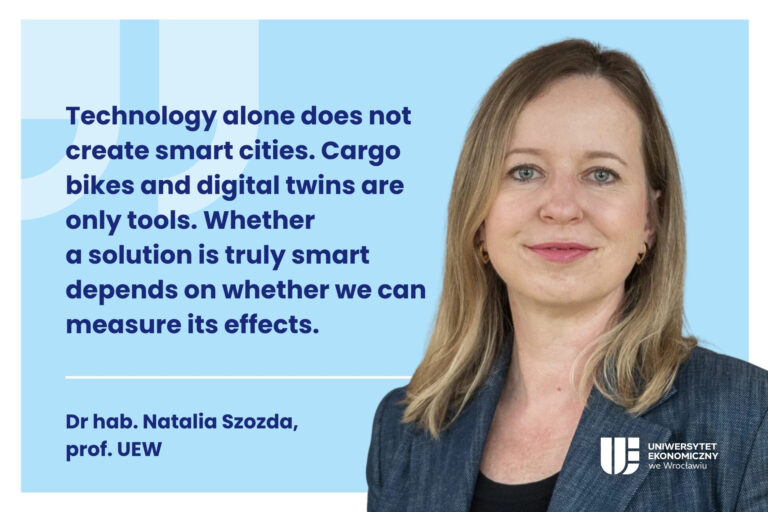
Wroclaw’s micro-hub at the Economic Forum. Natalia Szozda, Associate Professor, on when a city truly becomes smart

WUEB Experts Weekly Review. Research, Projects and Academic Successes (5–11 October 2026)
WUEB Experts Weekly Review: Research, Projects and Academic Successes (28 September–4 October 2026)
See also
How can economic fluctuations be smoothed? The 2026 Nobel Prize in Economic Sciences through the eyes of WUEB researchers
The World Within Wrocław’s Reach. How the PROM research mobilities confirm WUEB’s place on the map of global academia
Wroclaw’s micro-hub at the Economic Forum. Natalia Szozda, Associate Professor, on when a city truly becomes smart
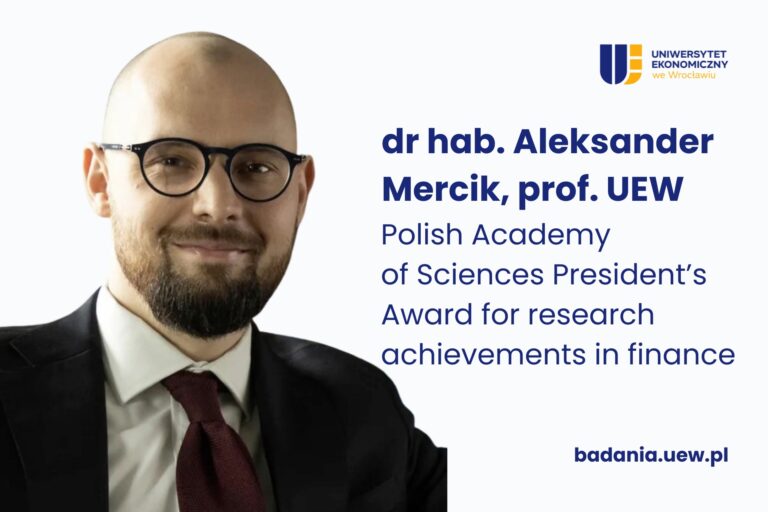
Dr hab. Aleksander Mercik, Professor of the WUEB, receives the Andrzej Gospodarowicz Award in Finance from the President of the Polish Academy of Sciences
WUEB Experts Weekly Review. Research, Projects and Academic Successes (5–11 October 2026)
Wroclaw University of Economics and Business researchers among the world’s leading scientists: six included in the 2026 World’s Top 2% Scientists database
WUEB Experts Weekly Review: Research, Projects and Academic Successes (28 September–4 October 2026)