

A phenomenon that endangers the stability of societies and the quality of democracy became the subject of a conversation with Prof. Krzysztof Jajuga of the Wroclaw University of Economics and Business. The interview was conducted by Paweł Czuma, Editor-in-Chief of Echo24 Television, as part of the Czas dla ekonomii series.
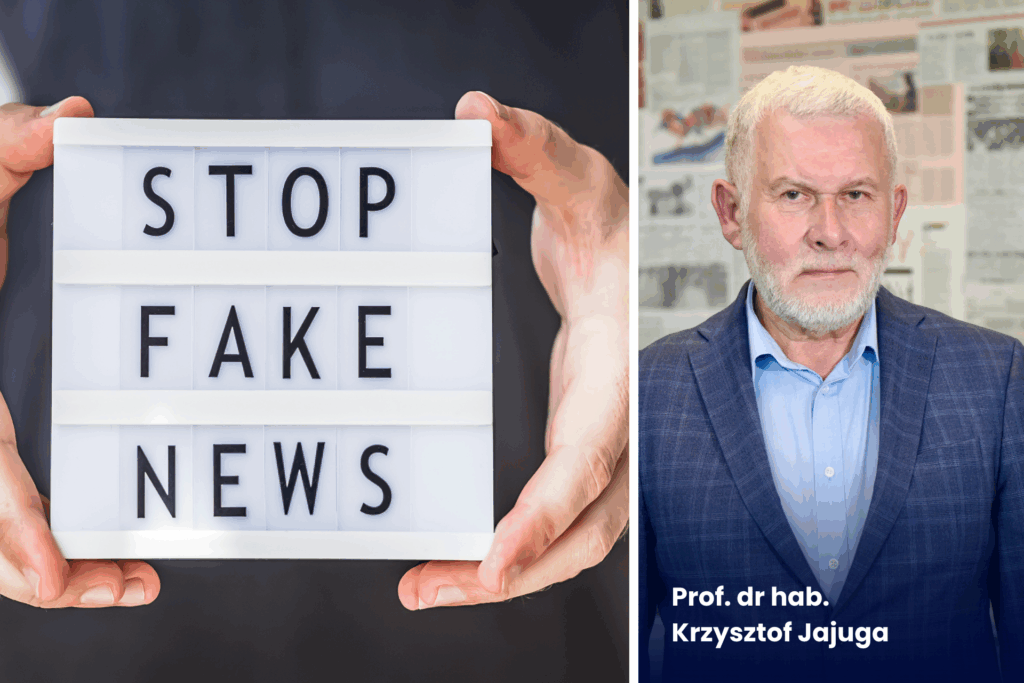
Disinformation – a Risk Surpassing Climate Change
Prof. Krzysztof Jajuga emphasizes that disinformation is currently one of the most pressing global threats. For the past two years, it has ranked higher than climate change in global risk assessments, taking the top position.
The expert explains that disinformation can be categorized into three main types:
- Disinformation – deliberate and systematic misleading, often through conspiracy theories,
- Misinformation – false content shared without harmful intent, spreading “virally” on social media,
- Malinformation – genuine information taken out of context, used for discrediting or hate campaigns.
The most dangerous of these is conscious, strategically designed disinformation, which has become a political weapon and a tool of hybrid warfare.
Social and Economic Consequences of Falsehood
Disinformation is not only a political issue – it directly affects the economy and everyday decisions of citizens. Examples include false statements by political leaders that can influence financial markets or consumer choices.
Prof. Jajuga points to the particular threat of deep fakes – artificially generated images and statements that never actually occurred. In the age of artificial intelligence, the boundary between truth and falsehood is disappearing at unprecedented speed.
Social Media – the Primary Channel of Disinformation
According to the research cited by the professor, in 2024 it was Facebook (57%) and X/Twitter (45%) that dominated in spreading false information. Instagram and TikTok are also platforms where fake news circulates, although their short formats somewhat limit the scale.
Unlike traditional media, social platforms lack editors and filtering mechanisms. As a result, fake news spreads faster and more widely than ever before.
Education as the Protective Shield
In Prof. Jajuga’s view, the only sustainable solution lies in education, beginning as early as preschool. Children and young people must be taught how to verify sources, recognize manipulation, and develop critical thinking skills.
Equally important are legal regulations regarding hate speech and fake news. The lack of accountability for spreading lies or hatred leads to social tragedies. The professor reminds us that hate destroys individuals and communities, and the state must ensure protective mechanisms.
Disinformation is not only a political or media issue – it poses a tangible risk to democracy, the economy, and social security. Prof. Krzysztof Jajuga stresses that our future depends on the ability to critically analyze information and on educating future generations.
Watch the full interview on Echo24 Television: https://echo24.tv/pl/757_programy/856_czas-dla-ekonomii/87651_czas-dla-ekonomii-dezinformacja-niszczy-demokracje.html#goog_rewarded
Polish Initiatives Building Resilience Against Disinformation
CyberOdporni (Kościuszko Institute)
An initiative raising awareness of disinformation and promoting media literacy among younger generations, while continuously monitoring the online environment and responding to key events.
Demagog Association – Fact-Checking Academy
Poland’s first fact-checking organization, offering workshops, training, and an educational platform that teaches how to recognize fake news and verify public statements.
“Together Against Disinformation” (coalition)
Launched by Demagog, the Digital Poland Foundation, and the Polish PR Association; its mission is to educate residents of smaller towns and promote the report Disinformation through the Eyes of Poles.
FakeHunter-Edu (Ministry of Education & Science, GovTech, IBE, PAP)
A nationwide educational campaign targeting schools and adults, providing videos, lesson plans, and exercises that foster critical thinking about online content.
Author: Barbara Grzelczak
See similar content

WUEB Experts Weekly Review. Research, Projects and Academic Successes (12–18 October 2026)
How can economic fluctuations be smoothed? The 2026 Nobel Prize in Economic Sciences through the eyes of WUEB researchers
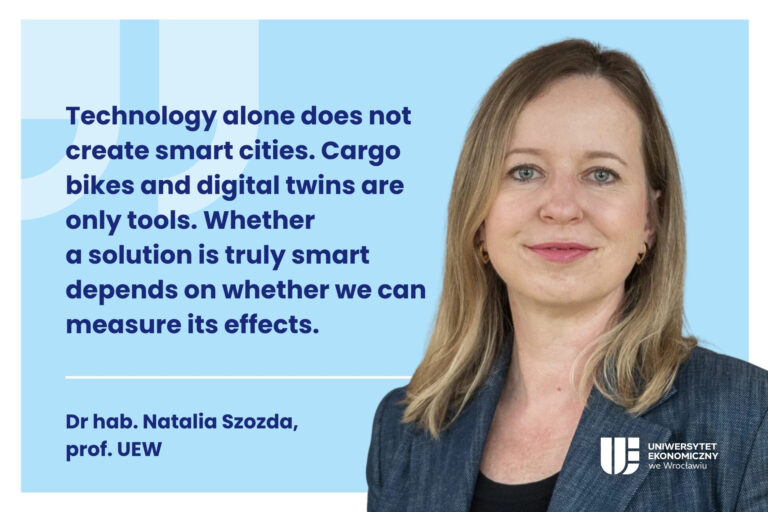
Wroclaw’s micro-hub at the Economic Forum. Natalia Szozda, Associate Professor, on when a city truly becomes smart
WUEB Experts Weekly Review. Research, Projects and Academic Successes (5–11 October 2026)
See also
WUEB Experts Weekly Review. Research, Projects and Academic Successes (12–18 October 2026)
How can economic fluctuations be smoothed? The 2026 Nobel Prize in Economic Sciences through the eyes of WUEB researchers
The World Within Wrocław’s Reach. How the PROM research mobilities confirm WUEB’s place on the map of global academia
Wroclaw’s micro-hub at the Economic Forum. Natalia Szozda, Associate Professor, on when a city truly becomes smart
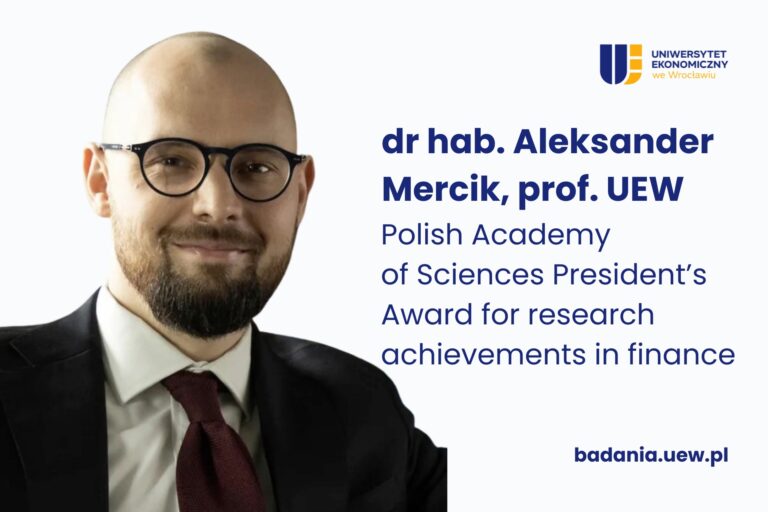
Dr hab. Aleksander Mercik, Professor of the WUEB, receives the Andrzej Gospodarowicz Award in Finance from the President of the Polish Academy of Sciences
WUEB Experts Weekly Review. Research, Projects and Academic Successes (5–11 October 2026)
Wroclaw University of Economics and Business researchers among the world’s leading scientists: six included in the 2026 World’s Top 2% Scientists database