
How should Europe read talk of a “war ministry”, the “strongest army in the world”, and a more transactional approach to alliances? In an interview for Radio Wrocław, Professor Przemysław Skulski (UEW) sets out what this rhetoric could mean for Europe and for Poland. The emphasis is on language, policy choices and practical consequences.
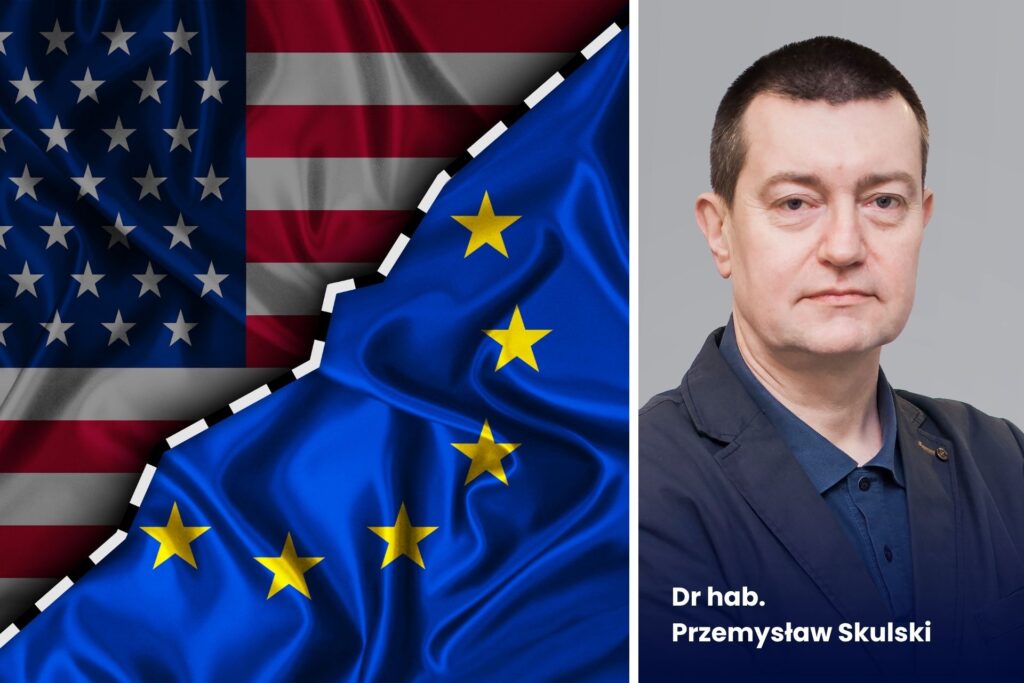
What is behind the tougher language from Washington?
At the core is rhetoric: a way of shaping the message for both a domestic US audience and the wider world. Phrases about fitness tests, “cleaning up” the army, ending “the diversity game”, or even creating a “war ministry” are designed to mobilise and signal resolve.
Rhetoric is not policy. Strong words do not automatically translate into structural reform. As Professor Skulski notes, effective military training does not rely on “shouting corporals”; there are professional ways to build discipline and readiness without recourse to violence.
Europe: less comfort, more self-reliance
The interview’s central point is clear: Europe must take its security architecture more seriously. With “America First” back in the vocabulary—and calls for Europeans to shoulder more of the burden, including support for Ukraine—strategic autonomy should move from aspiration to project.
“This is another signal that Europe must look after its own security,” says Professor Przemysław Skulski.
“Strategic autonomy” means the ability to plan, fund and conduct security action—military and civilian—on Europe’s own terms. It spans the defence industry, supply chains, workforce skills, and coordinated political decisions.
Transactions instead of presence? Implications for the defence market
A more transactional model could mean less permanent US military presence and more arms sales to allies. Commercially, that logic is sound. But there is a flip side: if Europe takes rearmament seriously, it may expand its own defence industry and, over time, reduce purchases from the United States. That would create real long-term competition on the global arms market.
Procurement never happens in a vacuum. Alliances and economic interests intersect, and buying decisions are strategic choices. Transactionalism might deliver short-term gains while eroding long-term allied cohesion.
Planning under uncertainty
US politics remains unpredictable, from NATO statements to judgements on foreign leaders. Planners should therefore work with scenarios: increased US engagement; status quo; withdrawal of presence with pure transactional ties. Each scenario needs a corresponding action map for states and institutions.
For Europe this means: strengthening own capabilities, aligning procurement and training standards, securing supply chains, and running a coherent information policy that builds societal resilience—understood as the capacity to withstand shocks and return to normal quickly.
Africa, China and “global interests”
Will the US truly step back from non-European regions where it has interests, for example in Africa? The paradox, as Professor Skulski notes, is that military presence has often protected economic interests (e.g. raw materials). Pulling back could leave the field to other players, notably China. Much will depend on shifting political choices, which in recent years have changed quickly.
What does this mean for Poland?
First, read the messages—do not be led by emotion. Tough language is not yet policy.
Second, accelerate European cooperation in security and defence industry, from common standards to R&D projects.
Third, strengthen civil resilience: education, crisis communication, and the society’s digital and information skills.
Finally, foster a competent public debate that distinguishes slogans from action and short-term gains from long-term stability.
Listen to the full discussion on Radio Wrocław
badania.uew.pl – because in a world full of slogans, a calm and competent voice matters.
Author: Barbara Grzelczak
See similar content

WUEB Experts Weekly Review. Research, Projects and Academic Successes (24 – 30 August 2026)
WUEB experts weekly rewiev. Research, Projects and Academic Successes (17–23 August 2026)
WUEB Experts Weekly Review. Research, Projects and Academic Successes (10–16 August 2026)
WUEB Experts Weekly Review: Research, Projects and Academic Successes (3–9 August 2026)
See also
What comes after a PhD? Dr Milena Kowalska at the Economic Forum in Karpacz
Bridging V4 Universities and Business through Design Thinking
WUEB Experts Weekly Review. Research, Projects and Academic Successes (24 – 30 August 2026)
Visual Simulation of Business Processes (WSPB) joins the Polish Roadmap for Research Infrastructures
WUEB experts weekly rewiev. Research, Projects and Academic Successes (17–23 August 2026)
WUEB awarded Visegrad grant to study the skills gap across the V4
Prof Małgorzata Krzywonos joins the Management Committee of COST Action BRASSCHI