


“Education is fascinating, but it works in the long term,” says prof. Krzysztof Jajuga. In Echo24 TV “Czas dla ekonomii”, he separates facts from hype and outlines when – and on what terms – it makes sense to step into less obvious markets.
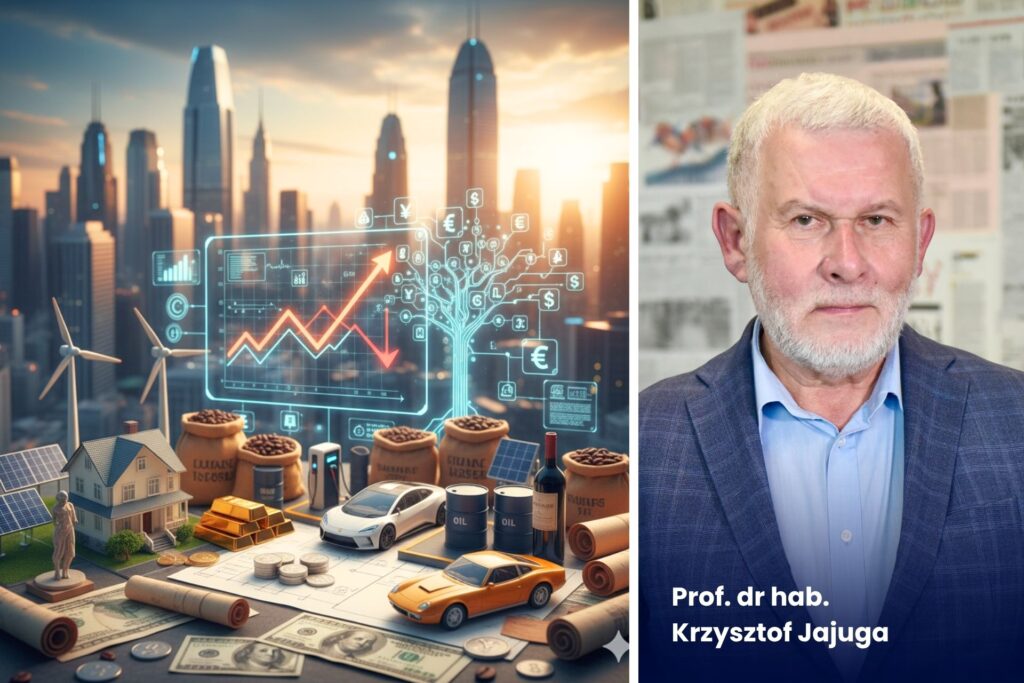
What counts as an alternative investment?
Prof. Krzysztof Jajuga starts with a simple split. “Classic” investing covers listed shares and bonds – assets with relatively well-understood links between return and risk. “Alternative investments” are everything else, where those links behave differently. For clarity, three broad groups:
Long-standing alternatives:
- Private equity – stakes in unlisted companies acquired outside public markets, with a view to value growth and/or an eventual exit.
- Real estate – not only for own use but also as income-producing assets; there are price indices and instruments whose valuation depends on property markets.
- Commodities – agriculture (e.g., grains, cocoa), metals (precious: gold, silver, platinum; industrial: copper, zinc; plus battery-relevant resources like lithium) and energy (oil, gas and electricity itself, with strong intraday price swings).
Emotional/collectable: Art, wine, whisky, vintage cars and instruments. This market is tiny and illiquid – there is no quick sale “at list price”. It is more about passion than fast capital growth.
Digital: Cryptocurrencies and tokens (digital “chips” tied to a project or firm). Alongside a narrow set with real use cases sits a vast layer of pure speculation amplified by social media and influencers.
How not to get caught in a bubble
Access and media attention make digital plays a place where advertising can masquerade as information. Influencers can “sell an emotion”, not necessarily knowledge – prime conditions for bubbles: sharp rises followed by equally sharp falls. Distinguish fashion from financing real activity.
An example from the interview: ICOs (Initial Coin Offerings) – issuances by firms seeking capital for projects. They resemble share issues but come with different risks and weaker safeguards than regulated markets. Before any digital allocation, ask: what backs the token? How is value created? Who earns, when and from what?
A practical note: short-term speculation is not the same as long-term investing. And if a “one-off win” happens, remember the basic rule we often forget: profits must be realised by selling; otherwise they remain “on paper”.
Diversification and education
Asked about the risk of “emotional” assets, the professor points to diversification – mixing assets with different risk profiles and correlations to smooth portfolio swings. The principle applies to classic and alternative classes alike.
The second pillar is education. It rarely produces instant fireworks but compounds over time. It is not a “nice extra” – it is the basis for reducing risk. In practice: courses, reading, conversations with practitioners and academics. When a topic is “hot”, check what the profit claim rests on and who benefits (issuer, intermediary, author of the recommendation).
Practical checklist:
- Set your horizon – short-term trading vs long-term investing- and stick to it.
- Know the instrument – understand where returns come from and what can erode them.
- Respect liquidity – in collectables, quick exits may be impossible.
- Filter information – separate learning materials from marketing and excitement.
- Rebalance periodically – tidy allocations so risk does not creep beyond plan.
Who are alternatives for?
Alternative investments are not for everyone or every budget. With collectables, “5% for passion” suits a wealthier investor rather than someone building basic financial safety. For commodities, energy, property or selected digital assets, fall back on financial craft: recognise risks, model scenarios, check liquidity and costs—and, again, learn.
Watch the Full conversation (Polish): https://echo24.tv/pl/757_programy/856_czas-dla-ekonomii/89681_czas-dla-ekonomii-alternatywne-inwestycje.html
Author: Barbara Grzelczak
See similar content

WUEB Experts Weekly Review. Research, Projects and Academic Successes (12–18 October 2026)
How can economic fluctuations be smoothed? The 2026 Nobel Prize in Economic Sciences through the eyes of WUEB researchers
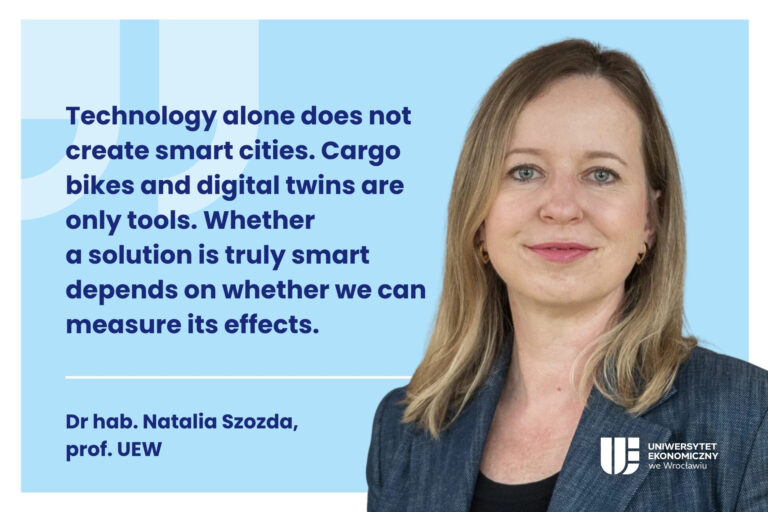
Wroclaw’s micro-hub at the Economic Forum. Natalia Szozda, Associate Professor, on when a city truly becomes smart
WUEB Experts Weekly Review. Research, Projects and Academic Successes (5–11 October 2026)
See also
WUEB Experts Weekly Review. Research, Projects and Academic Successes (12–18 October 2026)
How can economic fluctuations be smoothed? The 2026 Nobel Prize in Economic Sciences through the eyes of WUEB researchers
The World Within Wrocław’s Reach. How the PROM research mobilities confirm WUEB’s place on the map of global academia
Wroclaw’s micro-hub at the Economic Forum. Natalia Szozda, Associate Professor, on when a city truly becomes smart
Dr hab. Aleksander Mercik, Professor of the WUEB, receives the Andrzej Gospodarowicz Award in Finance from the President of the Polish Academy of Sciences
WUEB Experts Weekly Review. Research, Projects and Academic Successes (5–11 October 2026)

Wroclaw University of Economics and Business researchers among the world’s leading scientists: six included in the 2026 World’s Top 2% Scientists database