
How can universities better prepare young people for the labour market? What happens to an academic career after a doctorate? How much does it cost to equip a child for school, and how can science engage people beyond the academic community? This week, WUEB experts addressed questions connecting education, the economy and the public role of research.
The rising cost of preparing a child for school
WUEB expert: dr hab. Bogusław Półtorak, prof. UEW
The beginning of the school year brings additional expenses for families. School supplies are no longer limited to notebooks and basic stationery. They also include a school bag, sportswear, footwear, equipment required by the school and, increasingly, electronic devices.
Dr hab. Bogusław Półtorak, prof. UEW, an expert in financial systems, discussed the cost of preparing a child for school in a TVP3 Wrocław report. The programme page confirms his participation but does not provide a transcript or a detailed account of his comments. The complete contribution is available in the video.
Science for children, young people and adults
Coordination of WUEB events: dr hab. inż. Agnieszka Orkusz, prof. UEW
In September, science will move beyond lecture halls and laboratories. Wroclaw University of Economics and Business is inviting the public to events held as part of the Lower Silesian Science Festival. The programme ranges from chemistry demonstrations and activities for children to discussions about artificial intelligence, the labour market, finance, food and responsible consumption.
The Festival will begin with the Science Town in Wrocław’s Plac Solny on 12 September. Lectures, workshops, laboratory activities and demonstrations will then take place on the WUEB campus from 14 to 18 September. A further series of events will be held at the WUEB Branch in Jelenia Góra on 15 October. Registration for activities requiring advance booking opens successively from 1 September, and places for some events are limited.
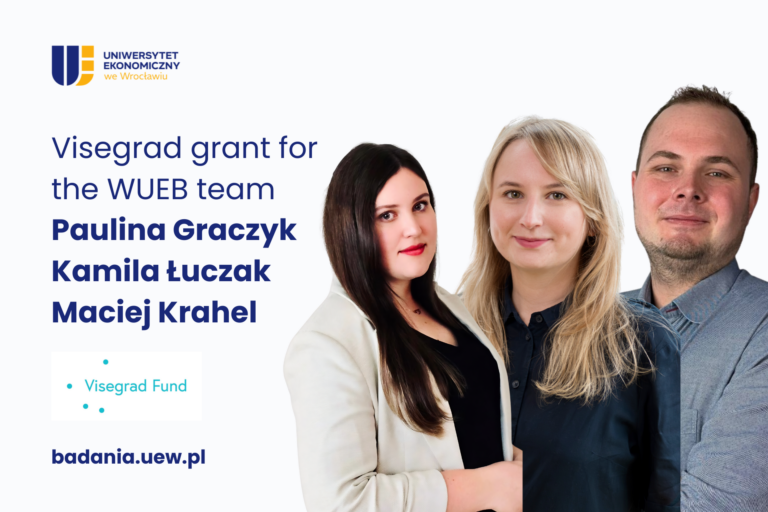
WUEB leads a project connecting universities and business across the V4
Project leader: Wroclaw University of Economics and Business | WUEB team: mgr Paulina Graczyk, mgr Kamila Łuczak i mgr Maciej Krahel
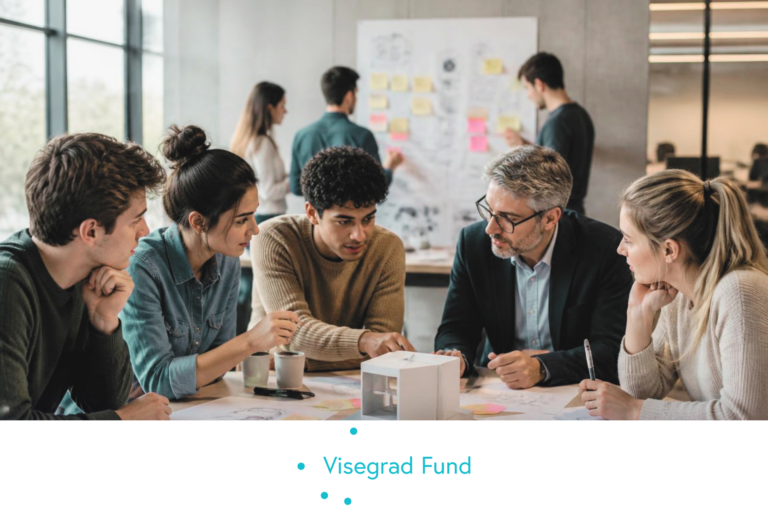
A degree alone is not enough if a graduate cannot work in a team, understand an organisation’s needs or propose a solution to a real problem. The Bridging V4 Universities and Business through Design Thinking project will examine the gap between the competences developed at universities and those expected by employers in Poland, Czechia, Slovakia and Hungary.
WUEB leads the project and coordinates the international partnership. Its team contributes expertise in international project coordination, Design Thinking methodology and university–business cooperation. Workshops in all four countries will enable students to address challenges submitted by companies and institutions.
The project will produce an open toolkit that other universities and organisations will be able to use when working with students and employers. It has received EUR 29,250 through the Visegrad Grants programme.
Source: https://badania.uew.pl/bridging-v4-universities-and-business-through-design-thinking/
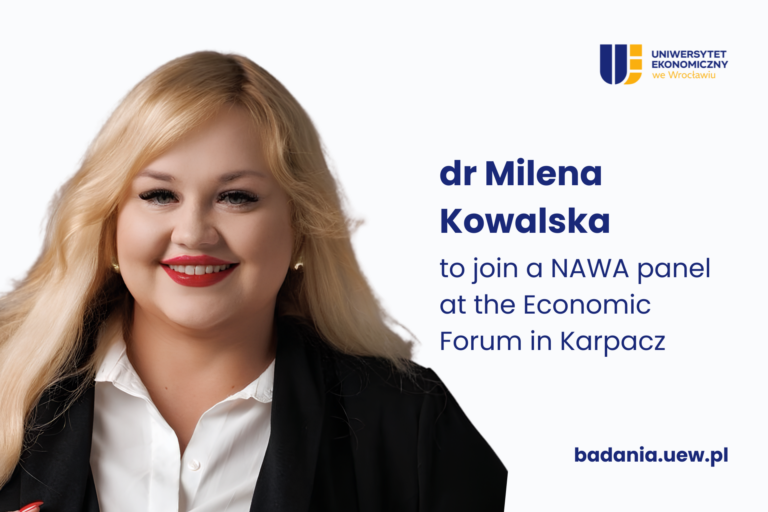
What comes after a doctorate? Dr Milena Kowalska joins a NAWA panel
WUEB expert: dr Milena Kowalska
A doctorate completes a clearly defined stage of education, but it does not always lead to an equally transparent career path. Dr Milena Kowalska will discuss development opportunities for early-career researchers at the 35th Economic Forum in Karpacz on 9 September.
The WUEB expert will participate as Chair of the ninth-term Young Scientists Council, an advisory body to the Polish Minister of Science and Higher Education. The panel, entitled What comes after a doctorate? Opportunities and risks for early-career researchers, will also feature mgr inż. Rafał Ramut, Chair of the National Representation of Doctoral Candidates. The discussion will be moderated by dr Damian Syjczak, Deputy Director General of the Polish National Agency for Academic Exchange.
Dr Milena Kowalska combines experience in science policy with research into economic and social inequalities, universal basic income and local government finance.
Source: https://badania.uew.pl/co-po-doktoracie-dr-milena-kowalska-na-forum-ekonomicznym-w-karpaczu/
The activities of WUEB experts and teams over the past week demonstrate the many forms the University’s engagement can take – from commentary on household spending, public engagement with science and university-business cooperation to participation in the debate on the future of early-career researchers.
Author: Barbara Grzelczak
See similar content
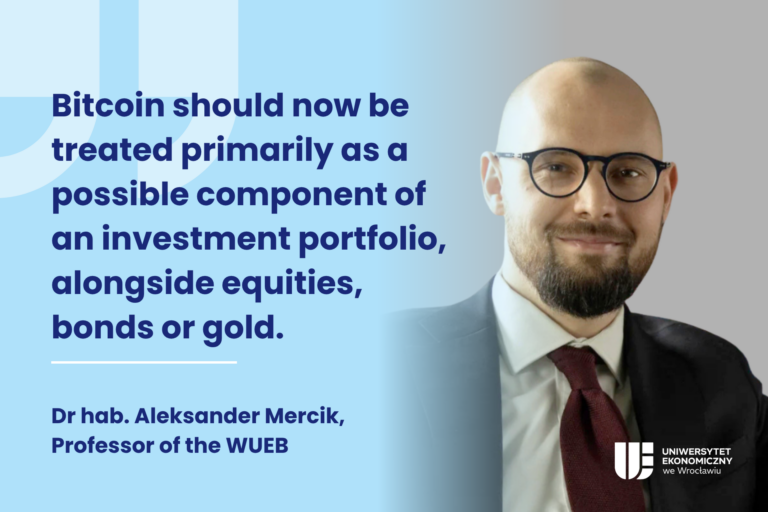
Bitcoin is not the digital equivalent of the Polish zloty. A WUEB expert explains how to understand cryptocurrencies.

WUEB Experts Weekly Review. Research, Projects and Academic Successes (24 – 30 August 2026)
WUEB experts weekly rewiev. Research, Projects and Academic Successes (17–23 August 2026)
WUEB Experts Weekly Review. Research, Projects and Academic Successes (10–16 August 2026)
See also
Bitcoin is not the digital equivalent of the Polish zloty. A WUEB expert explains how to understand cryptocurrencies.
What comes after a PhD? Dr Milena Kowalska at the Economic Forum in Karpacz
Bridging V4 Universities and Business through Design Thinking
WUEB Experts Weekly Review. Research, Projects and Academic Successes (24 – 30 August 2026)
Visual Simulation of Business Processes (WSPB) joins the Polish Roadmap for Research Infrastructures
WUEB experts weekly rewiev. Research, Projects and Academic Successes (17–23 August 2026)
WUEB awarded Visegrad grant to study the skills gap across the V4