

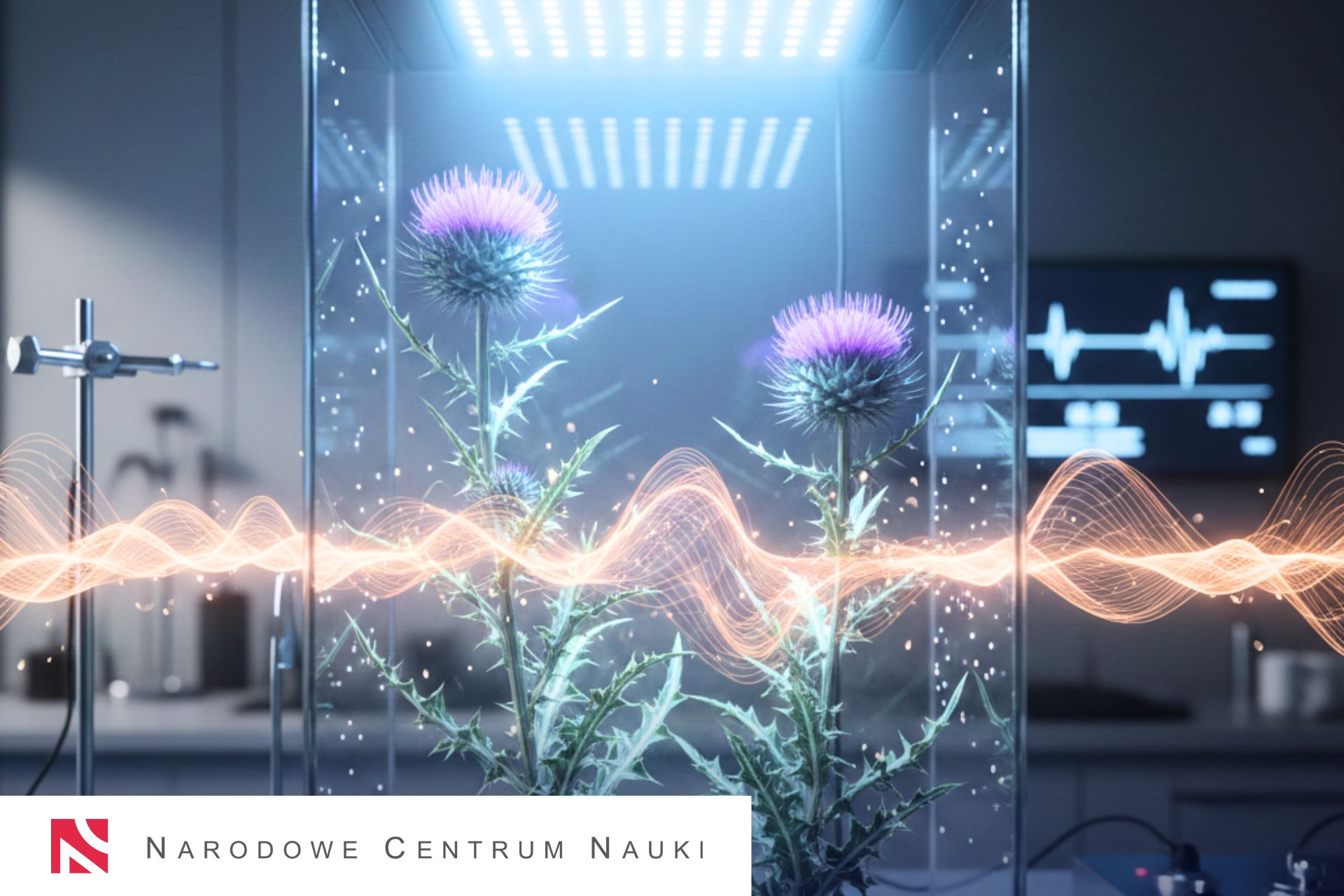
Is it possible to increase the content of silymarin-a natural flavonolignan complex-without using synthetic substances, relying only on light and microwaves? This question lies at the heart of an innovative research project that merges modern phytochemistry with physics and functional food technology. The study focuses on milk thistle (Silybum marianum L.)-a valued medicinal plant with confirmed hepatoprotective, antioxidant, and anti-inflammatory properties.
Project Objective
The main aim of the project is a comprehensive evaluation of how microwave treatment affects the nutritional value, phytochemical composition, and bioactive silymarin content in milk thistle seeds and sprouts.
Silymarin-which includes silybin, isosilybin, silydianin, and silychristin-is a key active compound in herbal raw material, playing an essential role in liver cell protection, regulation of inflammation, and counteracting oxidative stress.
Enhancing its content is of interest not only to the pharmaceutical industry but also to producers of functional foods and nutraceuticals.
Innovative Approach
Previous studies have shown that light conditions and germination time influence the biosynthesis of silymarin. IR spectroscopy has confirmed the effectiveness of this method in assessing the level of flavonolignans and metabolites of the phenylpropanoid pathway.
What’s new in this project is the use of microwaves as a physical stimulus. By affecting seed structure, microwaves may boost the intensity of bioactive compound production in sprouts.
Microwaves may act as stimulatory factors-enhancing membrane permeability, activating biosynthetic enzymes, and influencing metabolic processes—without requiring chemical intervention.
Materials and Methods
Plant material
The research material consisted of certified milk thistle seeds (Silybum marianum L.) obtained from a reputable manufacturer.
Microwave treatment
The seeds were subjected to controlled microwave treatment (specified time and power) to assess its effect on silymarin biosynthesis and the physicochemical properties of the plant material.
Germination
After microwave treatment, the seeds were germinated for 9 days under controlled conditions in a Memmert climate chamber: temperature 26°C, relative humidity 90%, light intensity 75% (6930 lx). LED lighting emitting in the 400–700 nm range was used.
Seedling separation
After germination, the seedlings were separated into cotyledons, hypocotyls, and roots.
Flavonolignan extraction
The isolated plant parts were subjected to flavonolignan extraction using 100% methanol. The resulting extracts were then freeze-dried for further analysis.
Chemical analysis
The chemical composition of the obtained extracts was analysed using FTIR spectroscopy and Raman spectroscopy. The spectra were compared with control samples and with a silymarin reference standard.
Analytical Techniques
The study uses modern, complementary analytical methods, including:
- α-amylase and α-glucosidase inhibition tests (in vitro) – to assess potential antidiabetic activity
- FTIR, Raman spectroscopy, UV-Vis – to assess functional groups characteristic of silymarin
- HPLC – to determine the content of silybin, isosilybin, and other flavonolignans
- GC – to analyze the fatty acid profile
- HPLC – to evaluate amino acid and polyphenol profiles
- ABTS, DPPH, FRAP assays – to measure antioxidant activity of extracts
Microbiological testing – to evaluate sprout purity (agar, Sabouraud medium)
All spectra will be compared to those of standard silymarin provided by the company POL-AURA.
Application Potential and ESG Perspective
The project holds strong implementation potential and aligns with ESG principles:
- Governance (G): Conducted with the highest ethical and methodological standards, with transparency and potential expansion within programs like Horizon Europe, MSCA, or EIT Food
- Environmental (E): Promotes physical methods (microwaves, light) for improving plant quality rather than chemical pesticides or GMOs
- Social (S): Supports public health by delivering functional foods with proven preventive effects (liver support, oxidative stress, diabetes)
What Can Be Achieved?
The project’s results could form the basis for:
- Launching new dietary supplements and functional foods with increased silymarin content
- Developing natural products that support liver health, metabolism, and immunity
- Creating eco-friendly methods for processing herbal raw materials
- Collaborating with the phytotherapy, nutraceutical, and cosmetic industries
External links:
More information about the project in the WIR Knowledge Base
Project leader:
Dr. Eng. Paulina Marianna Ropuszyńska-Robak
Jednostka finansująca:

National Science Centre (Poland)
Konkurs:
Miniatura 9
Kwota dofinansowania:
47 928 PLN
Czas trwania projektu:
5.12.2025 – 4.12.2026
Status projektu:
Ongoing
See similar content

Bridging V4 Universities and Business through Design Thinking
A New Form of Fat: A More Sustainable Product Formulation. WaterSmartFat Brings Together Food Technology and Water Footprint Analysis
New photoactive niobium(V)-containing oxide compounds as photocatalysts forthe purification of drinking water from organic micropollutants

Next-Gen Urban Freight Logistics for Net Zero Emissions through Innovative Solutions – NEXTLOGIC
See also

WUEB Experts Weekly Review. Research, Projects and Academic Successes (12–18 October 2026)
How can economic fluctuations be smoothed? The 2026 Nobel Prize in Economic Sciences through the eyes of WUEB researchers
The World Within Wrocław’s Reach. How the PROM research mobilities confirm WUEB’s place on the map of global academia
Wroclaw’s micro-hub at the Economic Forum. Natalia Szozda, Associate Professor, on when a city truly becomes smart
Dr hab. Aleksander Mercik, Professor of the WUEB, receives the Andrzej Gospodarowicz Award in Finance from the President of the Polish Academy of Sciences
WUEB Experts Weekly Review. Research, Projects and Academic Successes (5–11 October 2026)
Wroclaw University of Economics and Business researchers among the world’s leading scientists: six included in the 2026 World’s Top 2% Scientists database