

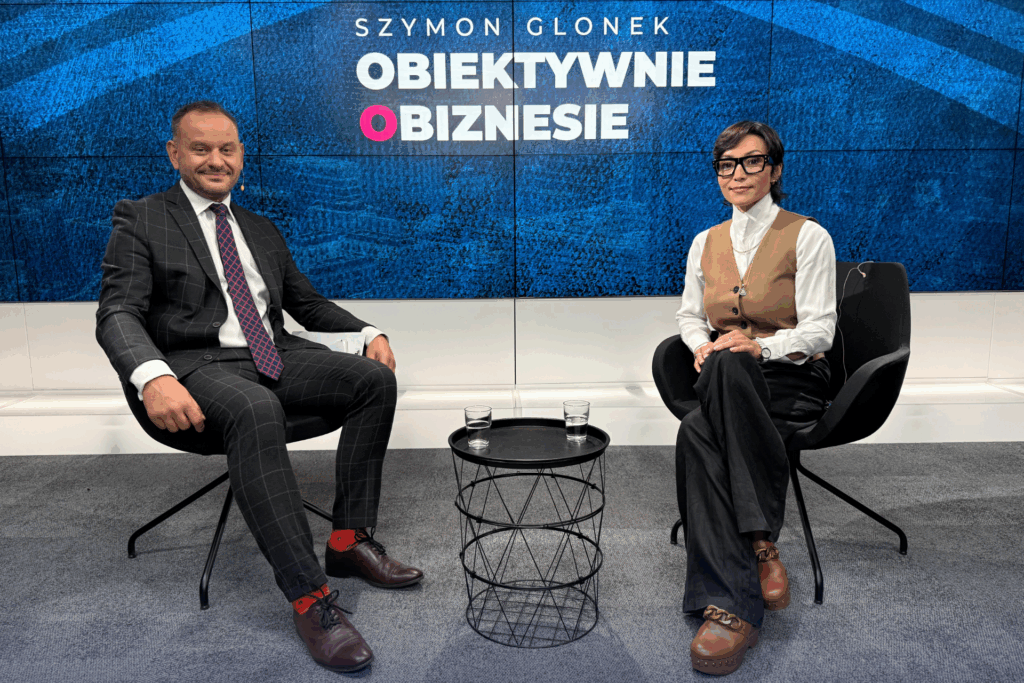
The provocative question posed in Szymon Glonka’s conversation with Assoc. Prof. Barbara Mróz-Gorgoń, WUEB, for Forsal.pl turned out to be surprisingly apt: “Should we copy like the Chinese?” – not products, but systematic and consistent identity-building strategies. Does Poland have the right momentum? Or should we draw on the experience of China, the reliability of Germany, and at the same time forge our own distinctive path?
In this piece, we examine these issues through a European and economic lens, inviting reflection on our country’s brand because “Contemporary marketing cannot be seen solely as a sales instrument – it must be rooted in values, and build trust, relationships, and long-term value.”
1. The Chinese method – consistent learning and promotion
Assoc. Prof. Barbara Mróz-Gorgoń – Plenipotentiary of the Rector of the Wroclaw University of Economics and Business for Tourism and Regional Brand Promotion, Advisor to the President at Employers of Poland, Chair of the Advisory Board of Kotler Impact Poland, and President of the Marka Polska Think Tank Foundation – argues that China has built its position not by copying products, but by systematically implementing educational, partnership, and promotional processes.
Poland should adopt this method: strategic identity-building through continuous communication of achievements, rather than one-off, uncoordinated campaigns.
2. Germany as a model of stability and recognisability
For many people, brands such as BMW or Siemens are near-synonyms for Germany as a country – an outcome of a long-term reputation strategy. Poland has strong companies (e.g., InPost, Fakro, Maspex, innovative start-ups) that could strengthen the national brand if their achievements were systematically woven into the country’s narrative. This requires broad coordination and a planned storyline, not just isolated success stories.
3. Branding is economics—the numbers speak for themselves
According to the latest research (Bloom Consulting), a 0.1-point improvement in a nation brand’s perception (on a 0–5 scale) translates into an average 12% increase in tourism revenues, which, for popular countries, equals an annual rise of USD 1.24 billion.
This is evidence that branding has a direct, measurable impact on economic performance; it is not mere marketing rhetoric. Policymakers, organisers, and media must recognise that a strong brand is an economic asset that yields tangible returns.
4. Emotions shape brands – art, sport, ambassadors
„The problem in Poland remains the lack of coordination in promotional activities and a fragmented approach to building a coherent image. A brand must integrate the voices of culture, tourism, the economy, diplomacy, and education.”
Austria has effectively built its narrative around Mozart; Poland has the potential to do so with Chopin, yet his image has long been captured by a French-centred narrative. Today, Iga Świątek and Robert Lewandowski are real ambassadors of our image—they can forge an emotional bond with Poland, provided we – as a society – learn to embed them in the country’s story.
The challenge is that we still underuse these emotional assets, instead of allowing them to serve a strong national identity.
5. Awareness – the foundation of patriotism and brand-building
Prof. Mróz-Gorgoń emphasizes that awareness of domestic achievements among students, even at the MBA level, remains low. There is a lack of knowledge about key figures, enterprises, or regional natural assets. Without this foundation, it is challenging to craft a narrative that resonates globally.
6. Directions for the future
Over the next five years, Poland has the opportunity to develop a modern branding approach grounded in three pillars:
- Education and awareness – building national pride through knowledge, and embedding national identity and values from the earliest stages of education.
- Business as brand capital – promoting global corporate successes as integral to the country’s development narrative.
- Emotional ambassadors – leveraging sport, culture, and the arts as image carriers.
The conversation with Prof. Barbara Mróz-Gorgoń makes one point clear: building a strong nation brand requires three coordinated actions—education, business capital, and emotional storytelling. Poland already has assets—in science, culture, sport, and the economy—but they lack a narrative that would make them recognisable pillars of our identity.
Deferring strategy is not an option. Success requires:
- everyday execution instead of ad-hoc campaigns,
- a narrative that connects economic achievements with the personal stories of ambassadors,
- coherent, cross-sector coordination of communication.
We encourage you to listen to the full episode of the “Obiektywnie o Biznesie” series on Forsal.pl to explore how Poland’s branding can be expertly designed and delivered—so it becomes a strategic force rather than a slogan: How to build a strong brand for Poland? What can we copy from China, and what should we learn from Germany?
WUEB Research—because Poland’s brand is not a slogan but a strategic endeavour
Author: Justyna Morawska-Płoskonka
See similar content

WUEB Experts Weekly Review. Research, Projects and Academic Successes (12–18 October 2026)
How can economic fluctuations be smoothed? The 2026 Nobel Prize in Economic Sciences through the eyes of WUEB researchers
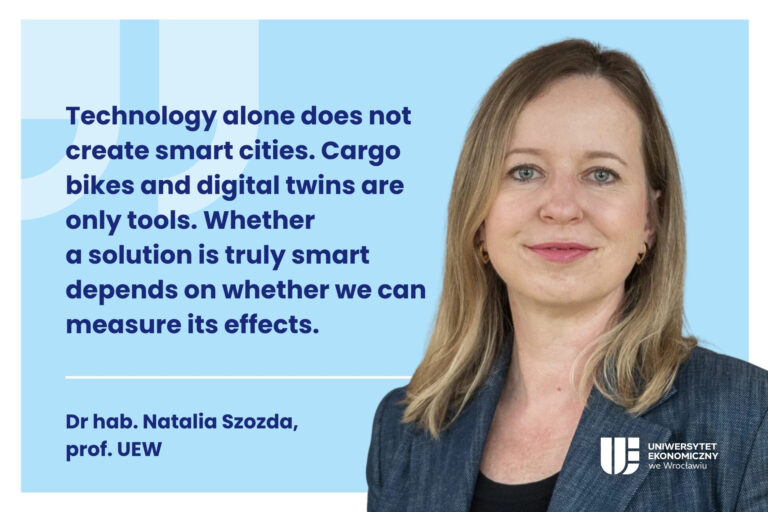
Wroclaw’s micro-hub at the Economic Forum. Natalia Szozda, Associate Professor, on when a city truly becomes smart
WUEB Experts Weekly Review. Research, Projects and Academic Successes (5–11 October 2026)
See also
WUEB Experts Weekly Review. Research, Projects and Academic Successes (12–18 October 2026)
How can economic fluctuations be smoothed? The 2026 Nobel Prize in Economic Sciences through the eyes of WUEB researchers
The World Within Wrocław’s Reach. How the PROM research mobilities confirm WUEB’s place on the map of global academia
Wroclaw’s micro-hub at the Economic Forum. Natalia Szozda, Associate Professor, on when a city truly becomes smart
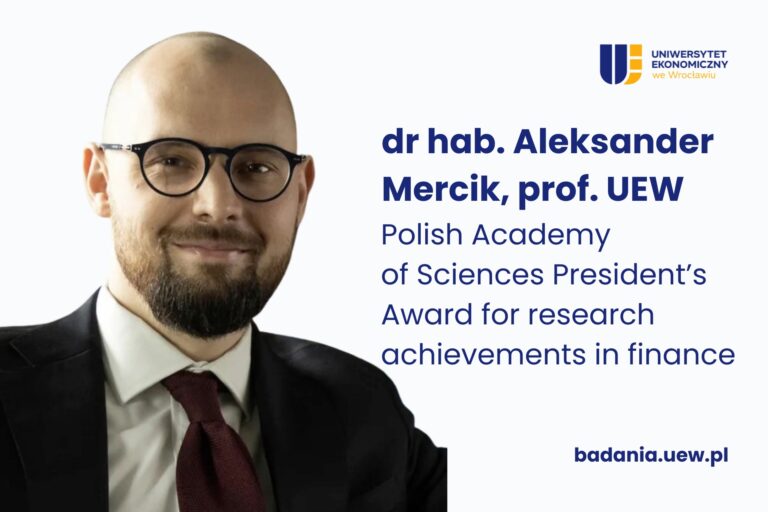
Dr hab. Aleksander Mercik, Professor of the WUEB, receives the Andrzej Gospodarowicz Award in Finance from the President of the Polish Academy of Sciences
WUEB Experts Weekly Review. Research, Projects and Academic Successes (5–11 October 2026)
Wroclaw University of Economics and Business researchers among the world’s leading scientists: six included in the 2026 World’s Top 2% Scientists database