

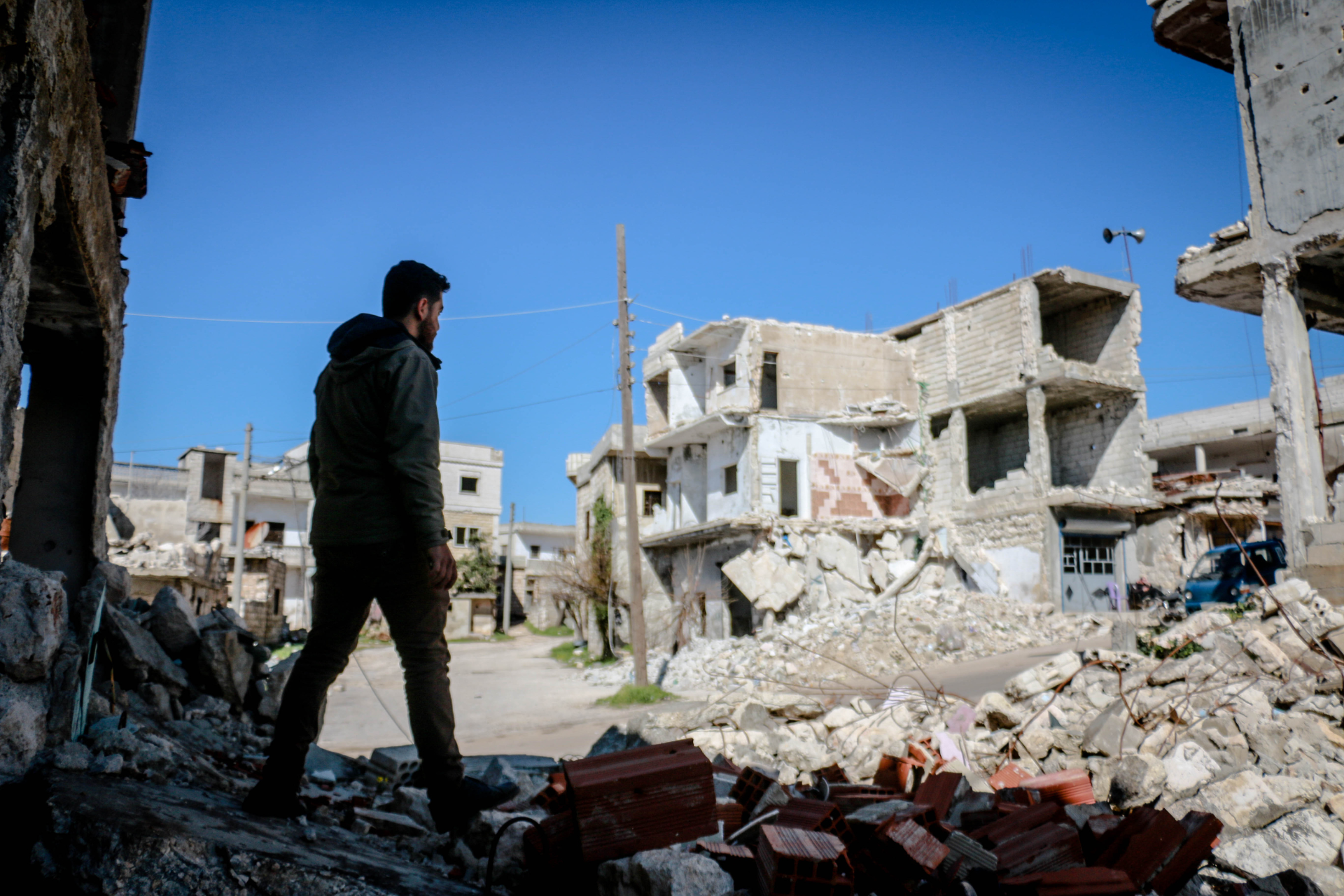
The ongoing conflict in the Middle East is exerting a significant impact on the global economy. Could the current situation in the Gaza Strip influence the daily lives of Polish citizens? This question was the focus of a recent edition of the programme “Evening from Lower Silesia” broadcast on Radio Wrocław, featuring expert analysis by Dr hab. Marcin Brol.
Hosted by Krzysztof Janoś, the programme welcomed Dr Marcin Brol (Wroclaw University of Economics and Business), Dr Katarzyna Jędrzejczyk-Kuliniak (University of Wrocław), and Dr Adam Karpiński (WSB Merito University in Wrocław).
The discussion began with the escalation of the conflict in the Middle East and focused on its potential impact on the region and the possible economic consequences for both the global economy and Poland. WUEB expert Dr Marcin Brol noted that one of the potential beneficiaries of the current situation could be Russia:
“The sanctions imposed on Russia have resulted in most of our oil arriving via tankers from Arab countries, as well as from Norway and the United States. Russia is hoping that, as a result of the conflict in the Middle East, Europeans might once again turn to Russian gas and oil. On the other hand, we are still observing market volatility, which suggests that investors do not expect the conflict to be long-lasting. However, the situation remains so unpredictable that it is difficult to say whether Russia will actually gain any advantage.”
Could the current geopolitical situation—marked by growing tensions in the Gaza Strip, the Strait of Hormuz, and around Taiwan—destabilise the global financial and trade systems? Dr Brol explains:
“Much is said about the natural resources for which the Middle East is known. However, over the last 10–15 years, the global economy has learned to rely on certain substitutes. In addition, we are on a path toward reducing reliance on fossil fuels—even Saudi Arabia has declared, at least in principle, its intention to pursue a zero-emissions economy. What is less frequently discussed is the fact that Israel, a key actor in this conflict, has become one of the most important countries in the tech sector: it has the highest number of start-ups per capita in the world and is a leader in introducing innovations in software, semiconductors, and related fields. We must not forget what happened during the pandemic when supply chains—such as for semiconductors from Asia—were disrupted. That scenario could repeat itself. I believe China might start testing the waters with Taiwan, as the United States is currently occupied elsewhere—and Taiwan is now the world’s largest producer of semiconductors. In my view, analysts often overlook the role of the technology sector, which could be a major casualty of this situation.”
Is Poland adequately prepared for potential supply shocks? The WUEB expert offers reassurance, while also pointing to possible vulnerabilities:
“Every year, our energy security improves: back in 2018, 50% of our oil imports came from Russia. The conflict in Ukraine taught us the importance of resource diversification. Let us also remember that the United States and Canada are major oil exporters, as is Norway. The key issue is not whether we can source energy elsewhere—it’s whether we can do so at a competitive price. In the coming months, we may see fuel and energy prices rise. Even if price controls are implemented—as seen in previous years—the costs will ultimately be borne by taxpayers.”
Dr Brol also highlighted the expectations of financial markets, which appear to be bracing for greater uncertainty. The WUEB expert noted that Europe’s investment credibility may be waning:
“Observing the current situation in the markets, we can see that they are anticipating chaos. When global economic turmoil strikes, the US dollar tends to appreciate, as investors seek safe havens for their capital—and indeed, after a major decline in the spring, the dollar has recently strengthened against all currencies, including the Swiss franc. This may indicate that Europe is no longer perceived as a secure investment haven, which, from our perspective, could translate into a decline in foreign direct investment.”
In conclusion, despite the risks and concerns, Dr Marcin Brol expressed confidence in the capacity of the European Union to emerge from the crisis in a stronger position—especially in terms of its defence capabilities:
“When it comes to the European Union, I remain optimistic. Although Europe does not possess hard power and cannot exert pressure through sanctions—such as those imposed on countries like Iran—it can wait out the current crisis without direct involvement, using this time to focus on military preparedness or further reducing its dependence on fossil fuels, which continue to pose strategic vulnerabilities.”
You can listen to the full discussion on Radio Wrocław at:https://www.radiowroclaw.pl/articles/view/152019/Wieczor-z-Dolnego-Slaska-Co-eskalacja-konfliktu-na-Bliskim-Wschodzie-oznacza-dla-Polski
Text by: Sebastian Rogalski
View related content

WUEB Experts Weekly Review. Research, Projects and Academic Successes (12–18 October 2026)
How can economic fluctuations be smoothed? The 2026 Nobel Prize in Economic Sciences through the eyes of WUEB researchers
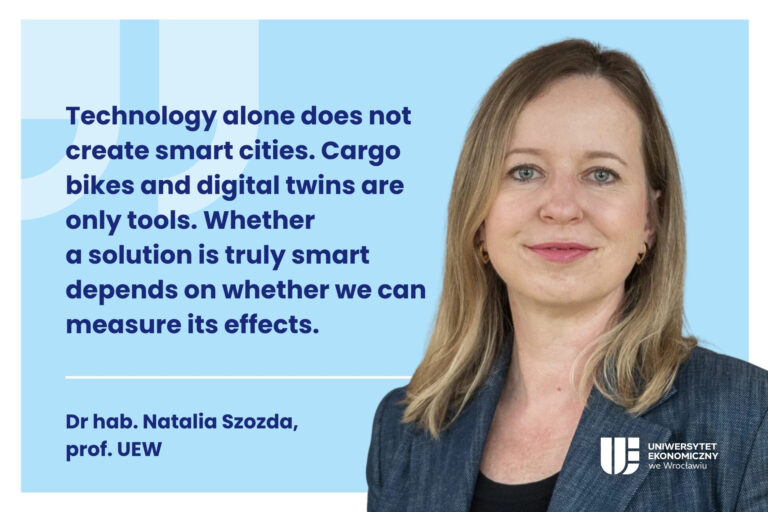
Wroclaw’s micro-hub at the Economic Forum. Natalia Szozda, Associate Professor, on when a city truly becomes smart
WUEB Experts Weekly Review. Research, Projects and Academic Successes (5–11 October 2026)
See also
WUEB Experts Weekly Review. Research, Projects and Academic Successes (12–18 October 2026)
How can economic fluctuations be smoothed? The 2026 Nobel Prize in Economic Sciences through the eyes of WUEB researchers
The World Within Wrocław’s Reach. How the PROM research mobilities confirm WUEB’s place on the map of global academia
Wroclaw’s micro-hub at the Economic Forum. Natalia Szozda, Associate Professor, on when a city truly becomes smart
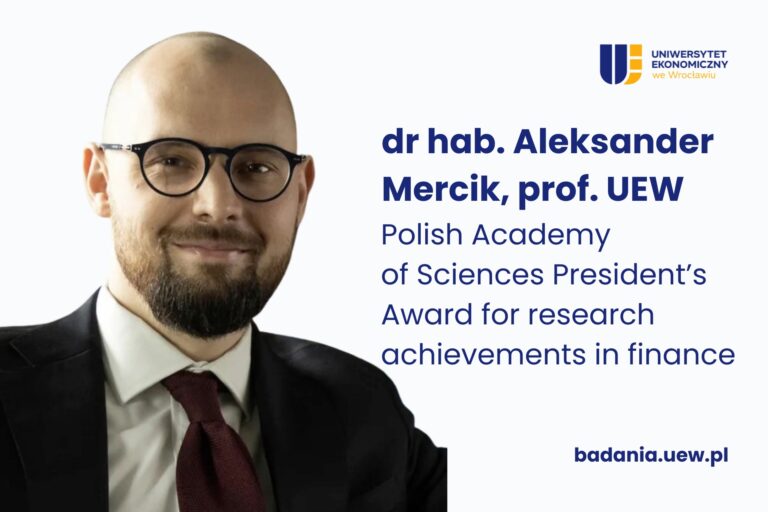
Dr hab. Aleksander Mercik, Professor of the WUEB, receives the Andrzej Gospodarowicz Award in Finance from the President of the Polish Academy of Sciences
WUEB Experts Weekly Review. Research, Projects and Academic Successes (5–11 October 2026)
Wroclaw University of Economics and Business researchers among the world’s leading scientists: six included in the 2026 World’s Top 2% Scientists database