

We are pleased to announce that scholars affiliated to the Wroclaw University of Economics and Business (WUEB) have once again been included in the prestigious World’s Top 2% Scientists 2025 ranking.
This global list identifies the most frequently cited researchers worldwide and is compiled annually by experts from Stanford University, Elsevier, and SciTech Strategies, based on Scopus data (as of 1 August 2025).
The ranking covers 22 disciplines and 174 subfields according to the Science-Metrix classification, in two dimensions: career-long (data since 1960) and single-year (the most recent calendar year). It uses the c-score (with and without self-citations), which combines, among others, the h-index, the hm-index, and citation counts weighted by authorship contribution (first/last/sole author). The separate career-long and single-year lists distinguish sustained impact from current citation dynamics.
In the current edition, Professor Stanisław Heilpern—a leading expert in statistics and decision theory and a long-standing member of WUEB’s Department of Statistics—has once again been recognized among the world’s most cited researchers for his career-long impact.
On the single-year 2024 list, four further WUEB scholars were distinguished:
- Professor Katarzyna Piwowar-Sulej — specialist in sustainability-oriented human resource management and leadership (Department of Labour, Capital and Innovation, WUEB).
- Associate Professor Agnieszka Orkusz — researcher in food technology and nutrition (Department of Biotechnology and Food Analysis, UEW).
- Associate Professor Arkadiusz Piwowar, — recognised expert in agribusiness and sustainable economics (Department of Economics and Organisation of Food Economy, WUEB).
- Adam Sulich, PhD. — specialist in sustainable development and the green economy (Department of Advanced Research in Management, WUEB).
This year’s ranking covers nearly 240,000 authors across 22 disciplines and 174 subfields, with more than one thousand researchers affiliated with Polish institutions.
It is worth noting that all of the above WUEB scholars have already appeared in previous editions of the World’s Top 2% Scientists list.
UEW scholars among leading researchers in Poland
Within the cohort of academics at Polish institutions, WUEB researchers achieved very strong positions:
- Professor Stanisław Heilpern is ranked within the national top 100 (c-score: 2.93), with an extensive body of highly regarded publications in statistics and risk analysis.
- Professor Katarzyna Piwowar-Sulej ranks among the leading Polish scholars and is the only researcher affiliated with a Polish economics-profile university recognised in the field of human resource management and organizational sustainable development (c-score: 3.18).
- Associate Professor Agnieszka Orkusz, holds one of the highest c-scores in her subfield (2.54) and is among the top Polish scientists in food technology.
- Associate Professor Arkadiusz Piwowar has ranked in the listing for the fourth consecutive time; in agribusiness and environmental economics he belongs to the very top tier (c-score: 2.64).
- Assistant Professor Adam Sulich achieved a c-score of 2.82—the second-highest in his category—securing an excellent position in research on sustainable development and “green jobs.”
Measured by total citations in 2024, WUEB scientists also rank among the top Polish authors within their disciplines, confirming the University’s growing international visibility and impact.
Methodology
The World’s Top 2% Scientists list is prepared annually by a team at Stanford University in collaboration with Elsevier and SciTech Strategies. The ranking draws on a range of bibliometric indicators, including total citations, the h-index, the author’s position in multi-authored papers, and citation-to-publication ratios.
The latest edition is based on Scopus data (as of 1 August 2025, updated through the end of 2024). Researchers are included if they are among the 100,000 highest-scoring globally by the composite c-score, or if they rank within the top 2% most cited in their field.
| Indicator | What It Measures | Why It Matters |
| C | C-score | Overall impact of your research Research collaboration tools |
| H | H-index | Consistency of impact across papers |
| Hm | Co-authorship adjusted H-index | Recognizes your role in collaborative papers |
| NCS | Citations to single-author papers | Your independent contributions |
| NCSF | Citations to single or first-author papers | Your leadership in research teams |
| NCSFL | Citations to single, first, or last-author papers | Recognizes key author roles in many disciplines |

Full rankings and the detailed methodology are publicly available via Elsevier.
Congratulations to our distinguished scholars!
Author: Justyna Morawska-Płoskonka
See similar content
Dr hab. Aleksander Mercik, Professor of the WUEB, receives the Andrzej Gospodarowicz Award in Finance from the President of the Polish Academy of Sciences
Wroclaw University of Economics and Business researchers among the world’s leading scientists: six included in the 2026 World’s Top 2% Scientists database
Vitamins C and D in a single plant-based gel: UEW researcher awarded NCN grant

Joanna Radomska of WUEB awarded the title of professor
See Also
How can economic fluctuations be smoothed? The 2026 Nobel Prize in Economic Sciences through the eyes of WUEB researchers
The World Within Wrocław’s Reach. How the PROM research mobilities confirm WUEB’s place on the map of global academia
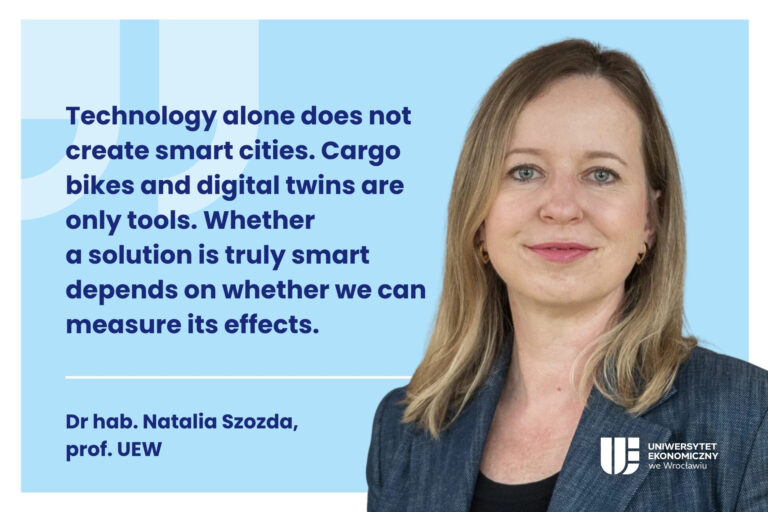
Wroclaw’s micro-hub at the Economic Forum. Natalia Szozda, Associate Professor, on when a city truly becomes smart
Dr hab. Aleksander Mercik, Professor of the WUEB, receives the Andrzej Gospodarowicz Award in Finance from the President of the Polish Academy of Sciences

WUEB Experts Weekly Review. Research, Projects and Academic Successes (5–11 October 2026)
Wroclaw University of Economics and Business researchers among the world’s leading scientists: six included in the 2026 World’s Top 2% Scientists database
WUEB Experts Weekly Review: Research, Projects and Academic Successes (28 September–4 October 2026)