

Over the past week, experts from Wroclaw University of Economics and Business commented on security and international policy, taxation and PIT settlements, including issues related to cryptoassets. WUEB was also present in discussions on health and productivity at work, analyses of the May holiday tourism period and project-based initiatives — from local government finance to innovation in sustainable food production.
“Różne punkty słyszenia”: Should Poland have nuclear weapons?
WUEB Expert: dr hab. Przemysław Skulski, Associate Professor at WUEB
The commentary looks at the arguments and costs — financial, technological and political — behind the apparently simple question of whether Poland should have nuclear weapons. It is an example of WUEB analysis that brings structure to public debate: replacing emotion with a sober assessment of risks, state capacity and the real effectiveness of deterrence.
Psychologist expenses can be deducted in PIT. This relief may reduce tax due
WUEB Expert: dr Dominika Florek-Sapkowska
The article explains when and under what conditions expenses related to psychological support can be settled in PIT, and what requirements must be met. It is practical guidance before the end of the tax settlement period: in this tax relief, documentation details determine whether a real tax benefit can be claimed.
How to recover more money from PIT? These deductions are easy to miss
WUEB Expert: dr Dominika Florek-Sapkowska
The article shows that small deductions are often missed in PIT settlements — not because they are complex, but because they are easy to overlook. It is a reminder to check the list of available reliefs and one’s own documents before submitting the tax return, as automatic settlement will not add everything on the taxpayer’s behalf.
Invested on the stock market or in crypto? You must submit PIT even without bank documents
WUEB Expert: dr Dominika Florek-Sapkowska
The material reminds readers that the absence of a PIT-8C form or documents from a financial institution does not remove the obligation to settle tax, including for stock market and cryptoasset transactions. It offers practical guidance on how to approach a settlement when data are incomplete, and where to look for the information needed to prepare a correct PIT return.
30 Creative People of Wrocław 2026
WUEB Expert: dr hab. inż. Maja Kiba-Janiak, Associate Professor at WUEB
The profile in the “30 Creative People of Wrocław” project shows how WUEB expertise is visible in areas that connect logistics, mobility and practical urban implementation. It is an example of the University’s expert recognition in fields where operational solutions, cooperation and impact on the wider environment matter.
https://www.wroclaw.pl/30-kreatywnych-wroclawia/2026/dr-hab-inz-maja-kiba-janiak
Thank you, I’ll stand. Why is movement so important when we work sitting down?
WUEB Expert: dr hab. Dorota Molek-Winiarska, Associate Professor at WUEB
The article shows that a lack of movement at work affects not only health, but also cognitive functioning and effectiveness — and therefore productivity. It is a WUEB contribution to the discussion on the quality of work: ergonomics and movement habits are becoming part of management, not an optional extra.
This year’s May holiday is exceptionally short
The commentary addresses the consequences of a short May holiday period for travel plans and the tourism sector, including regions that depend on short, intensive waves of visitor traffic. The WUEB perspective brings order to the issue: tourist decisions are shaped not only by weather, but also by logistics, costs and the availability of free time.
https://wroclaw.tvp.pl/92965406/majowka-w-tym-roku-wyjatkowo-krotka
Badanie Edukacji Finansowej Dzieci
WUEB Expert: dr Magdalena Swacha-Lech
The material presents a study on children’s financial education and encourages participation. A reliable diagnosis is the starting point for meaningful educational programmes. It shows how WUEB strengthens economic education based on data, rather than intuition or isolated observations.
https://comparic.pl/badanie-edukacji-finansowej-dzieci-wez-udzial-i-odbierz-prezenty
Is Bitcoin changing the world? “For some people, it is a huge opportunity”
WUEB Expert: dr hab. Aleksander Mercik, Associate Professor at WUEB
The commentary discusses how to read the potential of bitcoin and the crypto market, with emphasis on distinguishing between investment opportunity and systemic or regulatory risk. It brings clarity to the discussion: instead of slogans, it asks questions about liquidity, transaction security and the responsibility of market participants.
Work with those investing abroad, persuade those with potential
WUEB Expert: dr hab. Barbara Mróz-Gorgoń, Associate Professor at WUEB
The article addresses the challenges and opportunities facing Polish companies in internationalisation, focusing on how to build competences, brand strength and readiness for expansion. The WUEB expert contribution brings structure to the discussion of “potential”: what matters is strategy, consistency and investment in competences, not only a one-off market opportunity.
Presentation of the 2025 Financial Ranking of Local Government Units
WUEB
The material concerns a ranking that makes it possible to compare the financial condition of local government units and better understand where differences in their capacity to invest and deliver public services come from. It shows WUEB’s role in providing analytical tools for administration and public finance debate in the form of useful, comparable data.
https://www.pap.pl/mediaroom/prezentacja-rankingu-finansowego-samorzadu-terytorialnego-za-2025-r
Less water in food production. WUEB project ranked first in the Nestlé for Science programme
WUEB Experts: prof. dr hab. Inż. Joanna Harasym – scientific supervisor. Mgr inż. Oliwia Paroń,
dr inż. Szymon Juchniewicz
The material shows that WUEB solutions aimed at reducing water use in food production were recognised in the Nestlé for Science programme. It is an example of research impact with environmental and implementation value: reducing resource use translates into real costs and greater supply chain resilience.
Author: Barbara Grzelczak
See similar content

WUEB Experts Weekly Review. Research, Projects and Academic Successes (12–18 October 2026)
How can economic fluctuations be smoothed? The 2026 Nobel Prize in Economic Sciences through the eyes of WUEB researchers
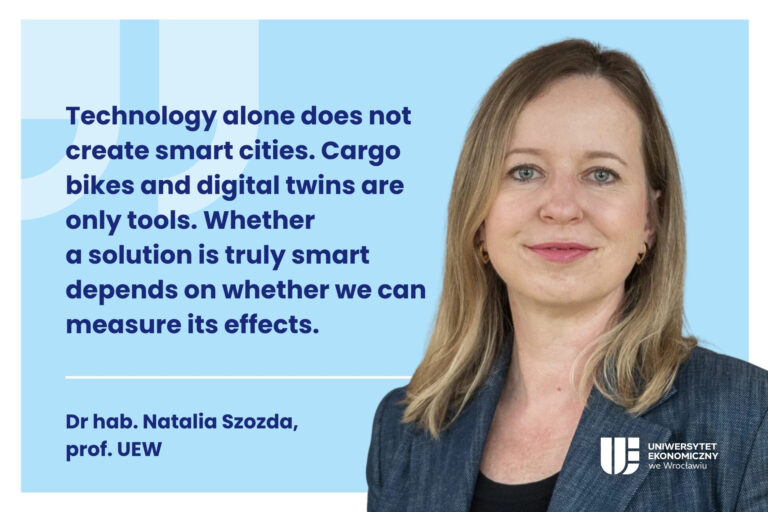
Wroclaw’s micro-hub at the Economic Forum. Natalia Szozda, Associate Professor, on when a city truly becomes smart
WUEB Experts Weekly Review. Research, Projects and Academic Successes (5–11 October 2026)
See also
WUEB Experts Weekly Review. Research, Projects and Academic Successes (12–18 October 2026)
How can economic fluctuations be smoothed? The 2026 Nobel Prize in Economic Sciences through the eyes of WUEB researchers
The World Within Wrocław’s Reach. How the PROM research mobilities confirm WUEB’s place on the map of global academia
Wroclaw’s micro-hub at the Economic Forum. Natalia Szozda, Associate Professor, on when a city truly becomes smart
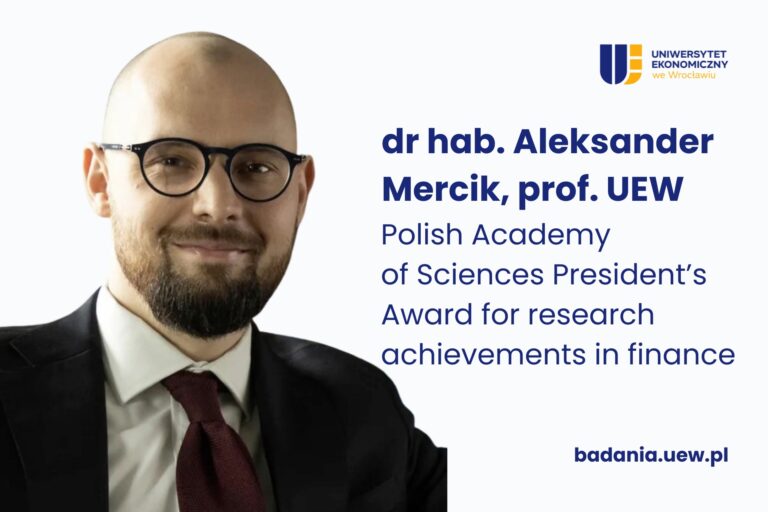
Dr hab. Aleksander Mercik, Professor of the WUEB, receives the Andrzej Gospodarowicz Award in Finance from the President of the Polish Academy of Sciences
WUEB Experts Weekly Review. Research, Projects and Academic Successes (5–11 October 2026)
Wroclaw University of Economics and Business researchers among the world’s leading scientists: six included in the 2026 World’s Top 2% Scientists database