

The Inter-University Scientific Committee has announced the results of the 3rd edition of the Inter-University Research Grants, jointly organised by five economics universities: SGH Warsaw School of Economics (SGH), Wroclaw University of Economics and Business (WUEB), Krakow University of Economics (KUE), Poznań University of Economics and Business (PUEB) and UE Katowice (University of Economics in Katowice).
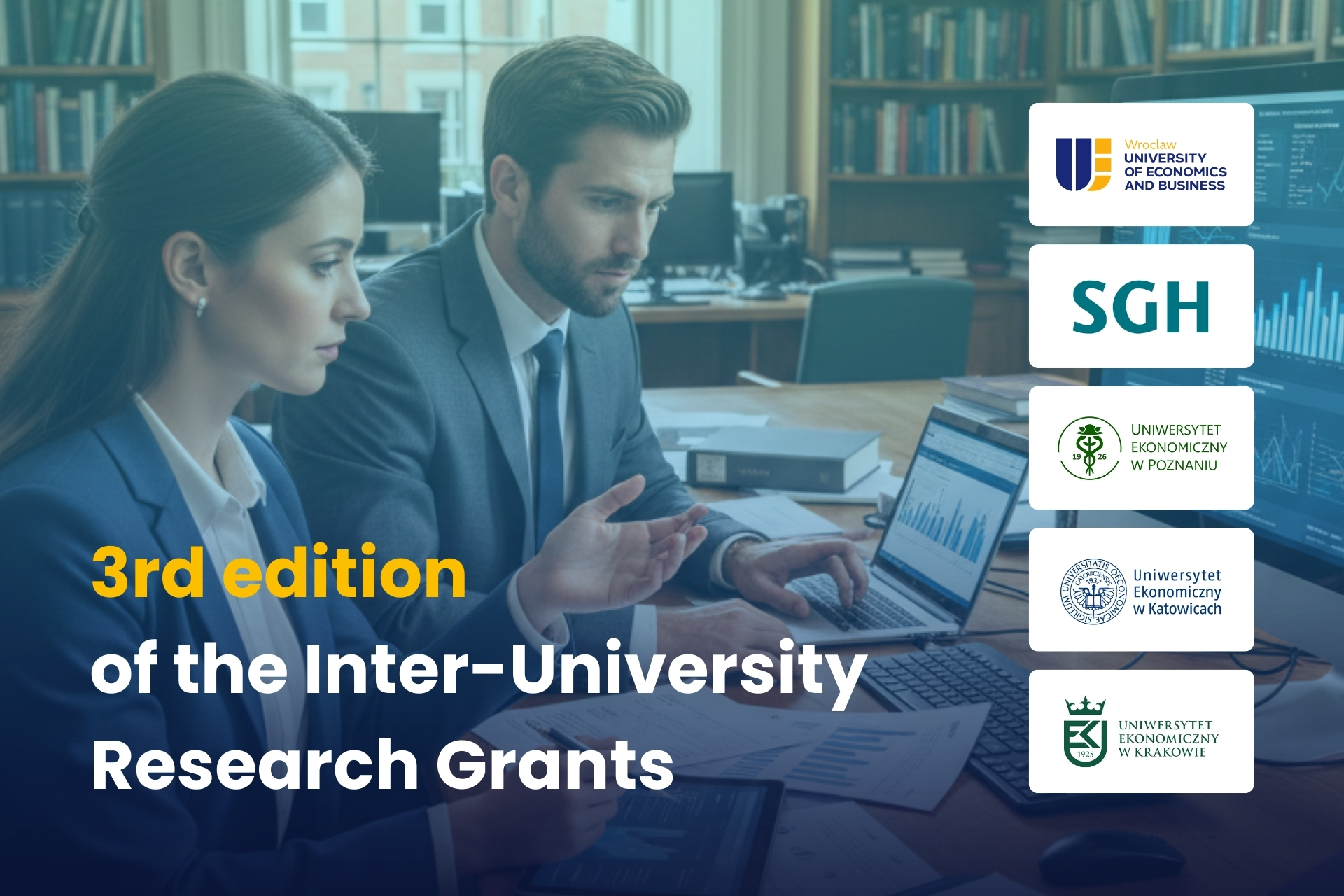
Out of 16 submitted applications, funding was awarded to 5 inter-university research teams (4 with WUEB teams) implementing projects with strong scientific merit and high application potential.
A clear emphasis emerges from this year’s selection: these are studies that do not stop at describing phenomena, but identify mechanisms that can be translated into decisions, standards and implementable solutions. The projects address social changes that are already shaping the economy and quality of life: employee–organisation relations and trust at work, c decision support system in deconsumption of dietary supplements, the resilience of public systems in the face of population ageing, and the transparency of information on which capital markets depend.
In practice, this means recommendations and tools that may reduce the social costs of misguided decisions—affecting employees, consumers, public institutions and investors.
Below, we present four WUEB funded projects together with the full research team line-ups, as listed in the competition documentation:
1) Towards HRM for the common good: processes, barriers and implementation practices in Polish organisations
KiePrincipal Investigator (PI) / Project Lead: Ph.D. Agata Austen (habilitation), Associate Professor — UE Katowice, Department of Human Resource Management
Research team:
- Katarzyna Piwowar-Sulej, Professor — WUEB, Department of Labour, Capital and Innovation
- Ph.D. (habilitation) Marzena Fryczyńska, Associate Professor — SGH, Institute of Enterprise
- Ph.D. (habilitation) Katarzyna Tracz-Krupa, Associate Professor – UEW, Department of Human Resource Management
- Ph.D. Łucja Waligóra — UE Katowice, Department of Human Resource Management
- Krzysztof Dróżdż, MA — Doctoral Researcher (PhD candidate) — UE Katowice, Department of Economics
The project examines how to implement common-good-oriented human resource management in Polish organisations: which processes enable it, which barriers actually block change, and which practices work under Poland’s institutional conditions.
Change pathway: it targets one of the most “silent” sources of social tension—the quality of employee–organisation relations. The outcomes may inform HR standards that strengthen trust, ethics and workplace wellbeing, reduce turnover and burnout, and increase organisational resilience.
2) A decision-support system for reducing consumption of dietary supplements, based on consumer behaviour analysis
Principal Investigator (PI) / Project Lead: Anna Dąbrowska, Professor — SGH, Department of Consumer Behaviour Research
Research team:
- Professor Małgorzata Krzywonos, Full Professor — WUEB, Department of Process Management
- Ph.D. Magdalena Ankiel (habilitation), Associate Professor — PUEB, Institute of Marketing, Department of Product Marketing
- Ph.D. Eng. Małgorzata Twardzik (habilitation), Associate Professor — SGH, Department of Consumer Behaviour Research
- Ph.D. Eng. Michał Halagarda (habilitation), Associate Professor — KUE, Institute of Quality Sciences and Product Management, Department of Food Product Quality
- Ph.D. Eng. Bogdan Pachołek (habilitation), Associate Professor — PUEB, Institute of Marketing, Department of Product Marketing
- Ph.D. Bartłomiej Jefmański, Assistant Professor — WUEB, Department of Econometrics and Computer Science
- Ph.D. Agnieszka Piekara — WUEB, Department of Process Management
- Ph.D. Eng. Sylwia Sady — PUEB, Institute of Quality Science, Department of Natural Science and Quality Assurance
- Dr Szymon Michalak — PUEB, Institute of Marketing, Department of Product Marketing
- Anna Wójcik-Lubzińska, MA — Doctoral Researcher (PhD candidate) — WUEB, Doctoral School, Department of Sociology and Social Policy
- Ewa Pawliczek, MEng — Doctoral Researcher (PhD candidate) — WUEB, Doctoral School, Department of Economics and Organization of Food Economy
The study focuses on the mechanisms behind the (over)use of dietary supplements and decisions to reduce them—under information overload, “wellness” trend pressure, and packaging-driven marketing (including “eco” and “natural” claims). The expected outcome is a prototype decision-support system based on consumer behaviour analysis.
Change pathway: it strengthens consumer protection and supports more rational purchasing and health decisions by reducing risks linked to marketing-driven choices. It may also contribute to higher standards of responsible communication in the sector.graniczając ryzyka wynikające z decyzji podejmowanych pod wpływem marketingu. Potencjalnie może też podnieść standardy odpowiedzialnej komunikacji w branży.
3) Stages of old age and the activity of people aged 50+: in search of effective directions for public support
Principal Investigator (PI) / Project Lead: Ph.D. Joanna Rutecka-Góra (habilitation), Associate Professor — SGH, Institute of Statistics and Demography, Demography Unit
Research team:
- Ph.D. Marta Borda, Associate Professor — WUEB, Department of Insurance
- Ph.D. Patrycja Kowalczyk-Rólczyńska, Associate Professor — WUEB, Department of Insurance
- Ph.D. Izabela Grabowska— SGH, Institute of Statistics and Demography
- Ph.D. Marta Marszałek — SGH, Institute of Statistics and Demography, Applied Statistics Unit
- Ph.D. Alicja Jajko-Siwek — PUEB, Department of Econometrics
- Ph.D. Tomasz Jedynak (habilitation), Associate Professor — KUE, Department of Risk Management and Insurance
- Ph.D. Joanna Ratajczak-Leszczyńska (habilitation), Associate Professor — PUEB, [
- Department of Labour and Social Policy
- Bartłomiej Chinowski, MA — Doctoral Researcher (PhD candidate) — SGH Doctoral School
- Martyna Smółka, MA — Doctoral Researcher (PhD candidate) — SGH Doctoral School
The project analyses differences in the activity of people aged 50+ across successive stages of old age—rather than treating the group as a single, uniform category. It aims to better understand changes in professional, social and health activity and to identify which forms of public support are genuinely effective at different life stages.
Change pathway: it provides evidence for more precise public policies (labour market, health, care, education, activation) that respond to demographic pressure, reduce the risk of exclusion, and strengthen public-system resilience.ją ryzyko wykluczenia i wzmacniają odporność systemów publicznych.
4) Strategic management of readability in financial and non-financial reports: areas, moderators and stock-market consequences
KPrincipal Investigator (PI) / Project Lead: Ph.D. Anna Doś (habilitation), Associate Professor — KUE, Department of Financial Markets
Research team:
- Maria Aluchna, Professor — SGH, Department of Management Theory
- Bogumił Kamiński, Professor — SGH, Institute of Econometrics
- Ph.D. Marcin Czupryna (habilitattion), Associate Professor — KUE, Department of Financial Markets
- Ph.D. Joanna Błach (habilitation), Associate Professor — UE Katowice, Department of Corporate Finance and Business Insurance
- Ph.D. Monika Foltyn-Zarychta (habilitation), Associate Professor — UE Katowice, Department of Investment and Real Estate
- Ph.D. Marek Pauka (habilitation), Associate Professor — WUEB, Department of Finance
- Anna Sikora, MA — Doctoral Researcher (PhD candidate) — UE Katowice
- Robert Tkocz, MA — Doctoral Researcher (PhD candidate) — UE Katowice
The study examines whether—and how—companies strategically shape the readability of financial and non-financial (ESG) reports, and what effects this has on the stock market. A key component is the use of modern text-analysis methods (including approaches based on large language models) to assess transparency and the quality of reporting narratives.
What change this can enable: it strengthens tools for evaluating reporting transparency for markets and stakeholders, reduces information asymmetry, and supports standards of responsible reporting—important for investment decision quality and trust in capital markets.cnia narzędzia oceny transparentności raportowania dla rynku i interesariuszy, ogranicza asymetrię informacji i wspiera standardy odpowiedzialnego raportowania — co ma znaczenie dla jakości decyzji inwestycyjnych i zaufania do rynku.
Inter-University Research Grants are an example of collaboration that combines the strengths of academic centres and reinforces research that matters both scientifically and for socio-economic practice. Congratulations to the winners, and best wishes for successful project implementation. This is only the beginning—we will continue to share updates on results and their real-world applications.
Author: Justyna Morawska-Płoskonka
See similar content
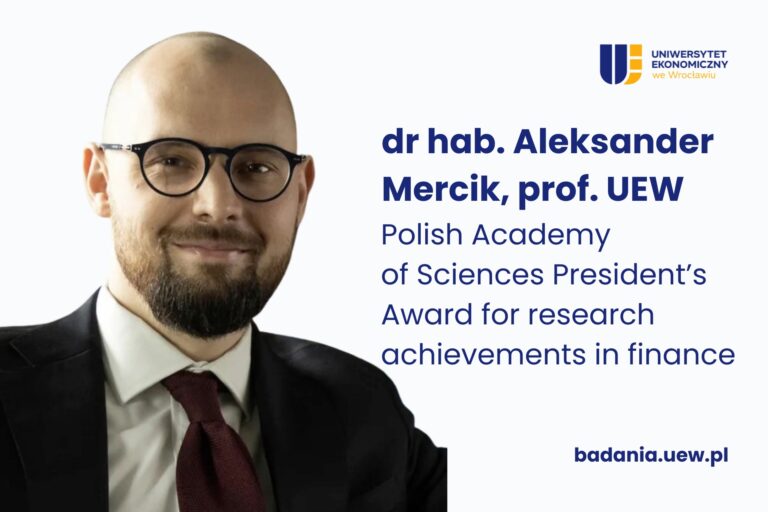
Dr hab. Aleksander Mercik, Professor of the WUEB, receives the Andrzej Gospodarowicz Award in Finance from the President of the Polish Academy of Sciences
Wroclaw University of Economics and Business researchers among the world’s leading scientists: six included in the 2026 World’s Top 2% Scientists database
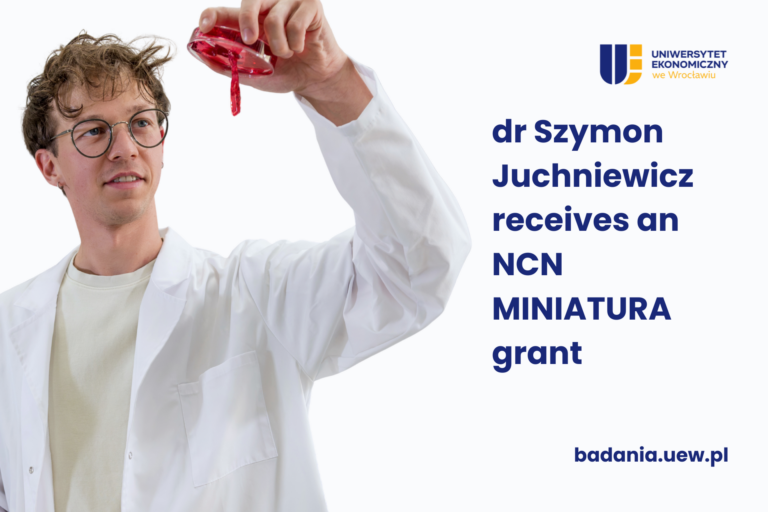
Vitamins C and D in a single plant-based gel: UEW researcher awarded NCN grant
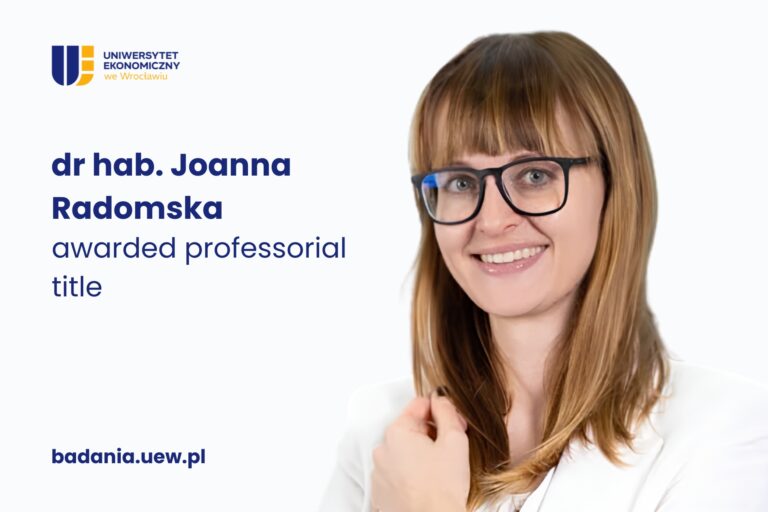
Joanna Radomska of WUEB awarded the title of professor
See also
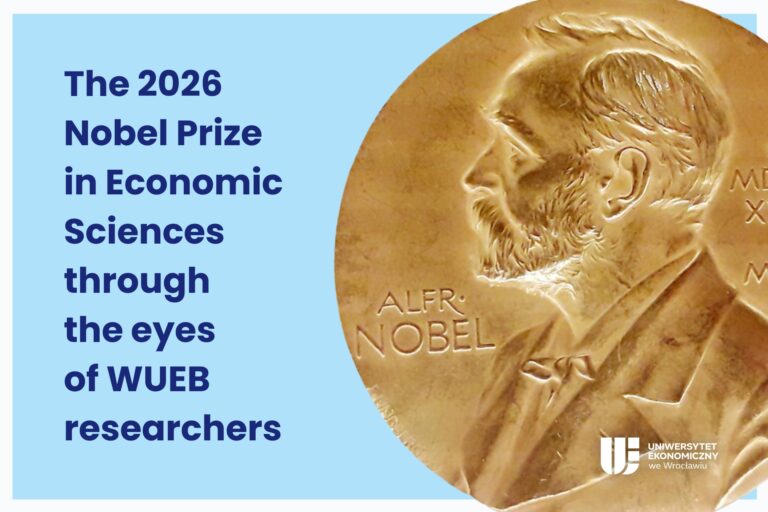
How can economic fluctuations be smoothed? The 2026 Nobel Prize in Economic Sciences through the eyes of WUEB researchers
The World Within Wrocław’s Reach. How the PROM research mobilities confirm WUEB’s place on the map of global academia
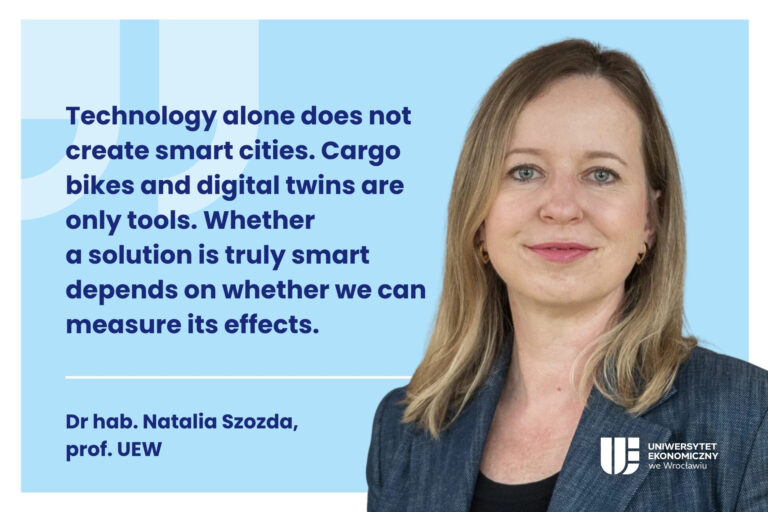
Wroclaw’s micro-hub at the Economic Forum. Natalia Szozda, Associate Professor, on when a city truly becomes smart
Dr hab. Aleksander Mercik, Professor of the WUEB, receives the Andrzej Gospodarowicz Award in Finance from the President of the Polish Academy of Sciences

WUEB Experts Weekly Review. Research, Projects and Academic Successes (5–11 October 2026)
Wroclaw University of Economics and Business researchers among the world’s leading scientists: six included in the 2026 World’s Top 2% Scientists database
WUEB Experts Weekly Review: Research, Projects and Academic Successes (28 September–4 October 2026)