

Has the European Union truly “fallen asleep” on security? Or, despite delays and past neglect, does it still retain the potential to act-provided that Member States act together? These questions framed the Conversation of the Day on Polish Radio Wrocław, featuring dr hab. Przemysław Skulski, Associate Professor at WUEB. The discussion focused on the SAFE programme, Europe’s defence-related dilemmas, and the potential consequences for the Polish economy.
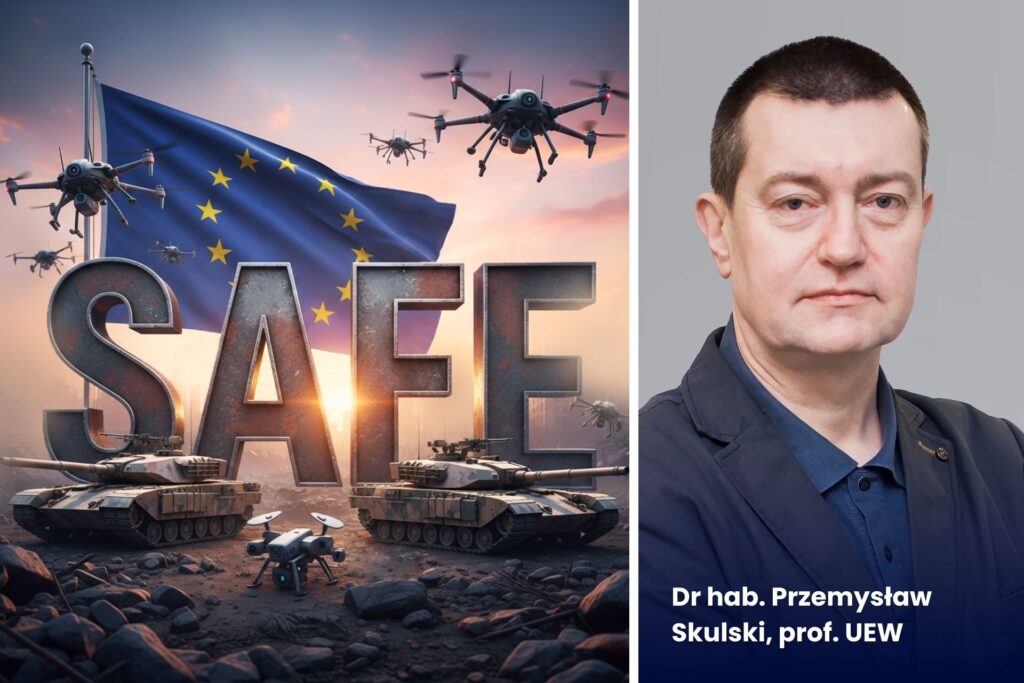
The SAFE Programme: A Necessary Impulse, but Not a Free One
The EU SAFE programme, under which Poland may access approximately €44 billion, is often presented in highly polarised terms – from a “lifeline for European defence” to “yet another financial illusion”. As dr hab. Skulski emphasises, emotions should be separated from facts. SAFE is a loan, not a grant, and the funds will have to be repaid.
At the same time, the current financial conditions are favourable: a ten-year grace period, long repayment horizons extending over several decades, and interest rates linked to EU bonds, currently at around 3 per cent. What matters most, however, is that SAFE creates fiscal space. By using EU-level financing, Member States can free up national resources and allocate them to defence procurement outside Europe-such as in the United States or South Korea – without breaching EU rules. The localisation requirement applies only to SAFE funds themselves: 65 per cent of procurement must take place within the EU, EFTA countries, and selected partner states, including the United Kingdom and Ukraine.
A United Europe or Costly Dependence
A key point raised in the discussion was clear: Europe is not weak-it is divided. The Union’s economic, technological, and military potential remains significant, but only if Member States act collectively. For decades, security was treated as a secondary concern, which today results in tangible shortages, including limited production capacity for basic 155 mm ammunition.
Dr hab. Skulski also highlighted the risks associated with excessive dependence on external suppliers of advanced military technologies. In the case of certain systems—such as F-35 aircraft or HIMARS launchers—software control remains with the manufacturer, which in extreme circumstances may restrict operational autonomy. This is not an argument against foreign procurement, but rather in favour of balancing it with the development of domestic industrial, technological, and maintenance capabilities.
“Europe is not defenceless. There is only one condition: it must act as one.”
The Polish Economy: A Major Opportunity, and a Significant Risk
Can SAFE funds become a genuine development impulse for Poland’s defence industry and, more broadly, for the economy as a whole? According to the UEW expert, this is possible – but only if spending decisions are rational and transparent. Declarations that as much as 70-80 per cent of the funds could be directed to domestic industry sound promising, yet financial resources alone do not resolve structural constraints.
Defence production faces real limitations: manufacturing capacity, access to technology, and the need to build new plants and production lines. There is also a well-known global challenge – the tendency of domestic suppliers to inflate prices, referred to in the United Kingdom as “gold-plating”. Without effective oversight, public spending may fail to translate into a real increase in defence capabilities.
In a broader perspective, however, SAFE may act as a catalyst for economic activity. Investments in defence stimulate related sectors, including materials, energy, logistics, and research and development. These are areas in which Poland has the potential to strengthen its position within European value chains.
Raw Materials, China, and the Nuclear Reality
The conversation also addressed Europe’s dependence on critical raw materials, where China holds a strong negotiating position. Rather than confrontation, Europe should pursue greater self-reliance in areas crucial for security and industry, while maintaining channels of dialogue.
In the background, the issue of nuclear deterrence re-emerged. Europe does possess real capabilities—France and the United Kingdom are nuclear powers—yet the modernisation of delivery systems and the weakening of international arms-control agreements contribute to growing global uncertainty.
What Comes Next?
The SAFE programme is not a miracle solution. It is a tool that may strengthen both security and the economy-or become another costly mistake. The outcome will depend on European unity, the quality of investment decisions, and transparency in the use of funds.
badania.uew.pl – because the world needs competent voices when information noise drowns out reason.
Author: Barbara Grzelczak
See similar content

WUEB Experts Weekly Review. Research, Projects and Academic Successes (12–18 October 2026)
How can economic fluctuations be smoothed? The 2026 Nobel Prize in Economic Sciences through the eyes of WUEB researchers
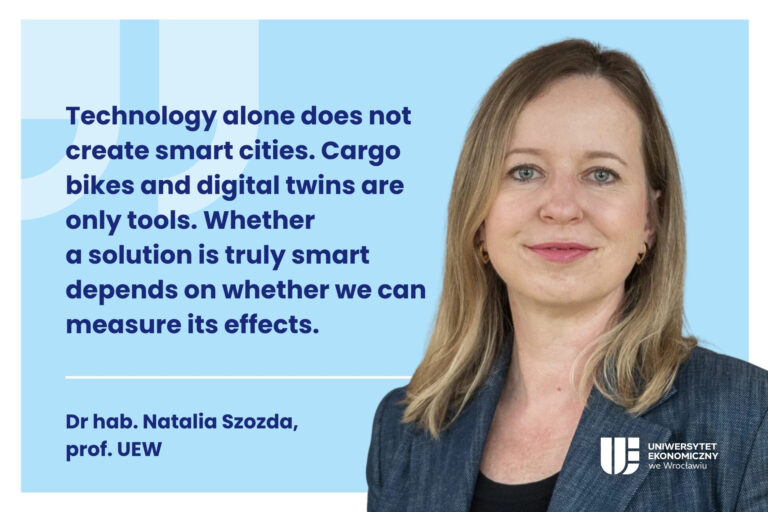
Wroclaw’s micro-hub at the Economic Forum. Natalia Szozda, Associate Professor, on when a city truly becomes smart
WUEB Experts Weekly Review. Research, Projects and Academic Successes (5–11 October 2026)
See also
WUEB Experts Weekly Review. Research, Projects and Academic Successes (12–18 October 2026)
How can economic fluctuations be smoothed? The 2026 Nobel Prize in Economic Sciences through the eyes of WUEB researchers
The World Within Wrocław’s Reach. How the PROM research mobilities confirm WUEB’s place on the map of global academia
Wroclaw’s micro-hub at the Economic Forum. Natalia Szozda, Associate Professor, on when a city truly becomes smart
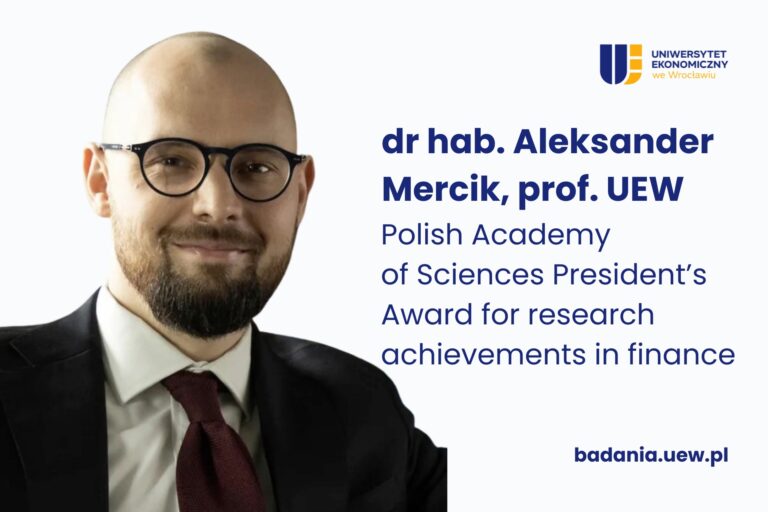
Dr hab. Aleksander Mercik, Professor of the WUEB, receives the Andrzej Gospodarowicz Award in Finance from the President of the Polish Academy of Sciences
WUEB Experts Weekly Review. Research, Projects and Academic Successes (5–11 October 2026)

Wroclaw University of Economics and Business researchers among the world’s leading scientists: six included in the 2026 World’s Top 2% Scientists database