


Are we defenceless online? University experts say no. Polish banks follow strict standards, but outcomes depend on our daily choices: what we click, how we log in, and how we pay.
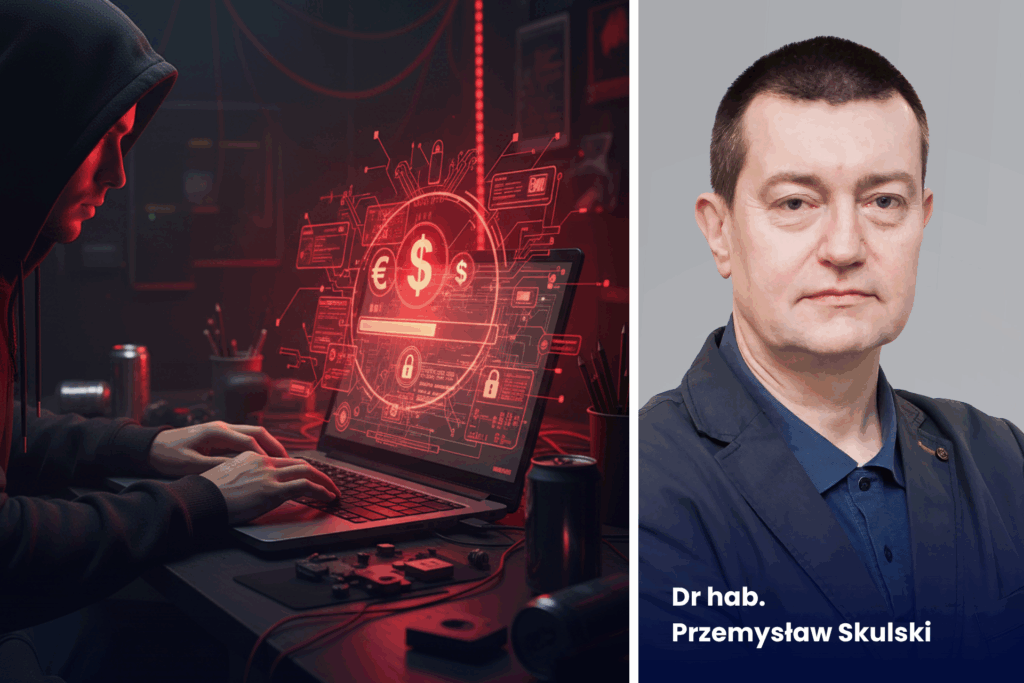
The core question
The Radio Szczecin debate began with a simple prompt: is cyberspace already dangerous – and are we helpless? The reply is balanced. Attacks are more frequent and louder, yet the sector’s safeguards are robust. The weak link is often human behaviour.
Safer than cash
Prof. Przemysław Skulski (Wroclaw University of Economics and Business) notes we live fully digital lives and too easily forget basic security. Cash has an emergency role, but “a good bank is definitely safer.” System resilience matters; so do our habits.
Dr Paweł Rajba (University of Wrocław) adds the technical frame: banks operate under tight regulation and invest heavily in security, so direct theft is hard. Criminals therefore target the human-device interface-phishing and social engineering – where a moment of routine can be nudged off course. These are organised, costly operations – not a “press one button to steal” scenario.
Outages vs attacks: what users can (and can’t) see
Can you tell an attack from a fault at first glance (as with recent BLIK issues)? In practice, no. Only log analysis improves certainty, and that takes time. Users should follow procedures instead: don’t force-repeat failed payments, wait for official messages, and watch account activity.
The same applies to ATMs. “Spot the overlay” sounds sensible, but high-grade skimming may be invisible. Reduce risk: favour contactless cash withdrawals or BLIK, pick machines in branches or monitored places, cover the keypad, and keep reasonable transaction limits.
Strong passwords, passphrases, and 2FA
Password hygiene is non-negotiable. The biggest mistake is reusing the same password across services. Use a password manager to store and generate unique credentials. When you must create them yourself, prefer a passphrase-several unrelated words; length is strength. Don’t change passwords on a fixed schedule; change them after a breach or credible suspicion.
Add multi-factor authentication everywhere you can. SMS codes or app prompts are standard; a physical U2F/FIDO key is an extra-strong option for critical accounts. Prof. Skulski also advises splitting funds (current ≠ savings) and setting transaction limits. You barely notice them day to day – but in an incident they act as a fuse.
“Everything can be superbly secured, but if a criminal phones us and we hand over codes and passwords-nothing will help.”
– prof. Przemysław Skulski
Hybrid warfare and the cost ledger
The scale is growing, including in hybrid-warfare contexts. As Prof. Skulski stresses, losses are economy-wide – beyond banking to firms and citizens. We need two pillars in parallel: technology (standards, procedures, tools) and common sense (awareness of social engineering, vigilance, and consistent habits).
Recommendations for society and business
- For business, build password policies around passphrases and managers. Roll out 2FA “everywhere possible.” Train staff on social engineering and run incident playbooks.
- For schools and universities, include cyber hygiene in core curricula.
- For public bodies, use plain language in alerts and test notification systems for transactions and data leaks.
- For all of us – Don’t click by habit. Don’t “forward” codes. Don’t bow to time pressure.
Listen to the full interview on the Radio Szczecin website:: https://radioszczecin.pl/276,14696,hakerzy-atakuja-polskie-banki-i-instytucje-finan
Quick guide (at a glance)
Passwords & accounts
- Use a password manager; for exceptions, create passphrases (min. four unrelated words).
- Never reuse passwords between services.
- Don’t rotate on a timer; change after a breach or credible suspicion.
Authentication
- Enable 2FA everywhere; consider a U2F/FIDO key for critical accounts.
- Never share one-time codes on the phone—banks do not ask for them.
Payments & limits
- Set transaction limits and review them after large purchases.
- Separate current and savings accounts to reduce exposure.
ATMs
- Prefer contactless withdrawals or BLIK; choose monitored locations.
- Cover the keypad; don’t “fix” failed transactions with repeated attempts.
Monitoring & response
- Turn on transaction alerts; react quickly to unauthorised activity.
- Report incidents and block cards immediately; keep emergency numbers handy.
badania.uew.pl – because calm, expert voices cut through the noise.
Author: Barbara Grzelczak
See similar content

WUEB Experts Weekly Review. Research, Projects and Academic Successes (12–18 October 2026)

How can economic fluctuations be smoothed? The 2026 Nobel Prize in Economic Sciences through the eyes of WUEB researchers
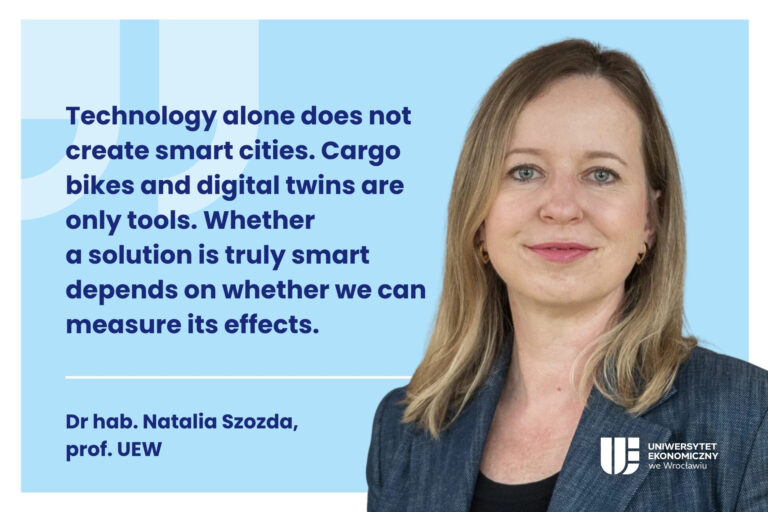
Wroclaw’s micro-hub at the Economic Forum. Natalia Szozda, Associate Professor, on when a city truly becomes smart
WUEB Experts Weekly Review. Research, Projects and Academic Successes (5–11 October 2026)
See also
WUEB Experts Weekly Review. Research, Projects and Academic Successes (12–18 October 2026)
How can economic fluctuations be smoothed? The 2026 Nobel Prize in Economic Sciences through the eyes of WUEB researchers
The World Within Wrocław’s Reach. How the PROM research mobilities confirm WUEB’s place on the map of global academia
Wroclaw’s micro-hub at the Economic Forum. Natalia Szozda, Associate Professor, on when a city truly becomes smart

Dr hab. Aleksander Mercik, Professor of the WUEB, receives the Andrzej Gospodarowicz Award in Finance from the President of the Polish Academy of Sciences
WUEB Experts Weekly Review. Research, Projects and Academic Successes (5–11 October 2026)

Wroclaw University of Economics and Business researchers among the world’s leading scientists: six included in the 2026 World’s Top 2% Scientists database