
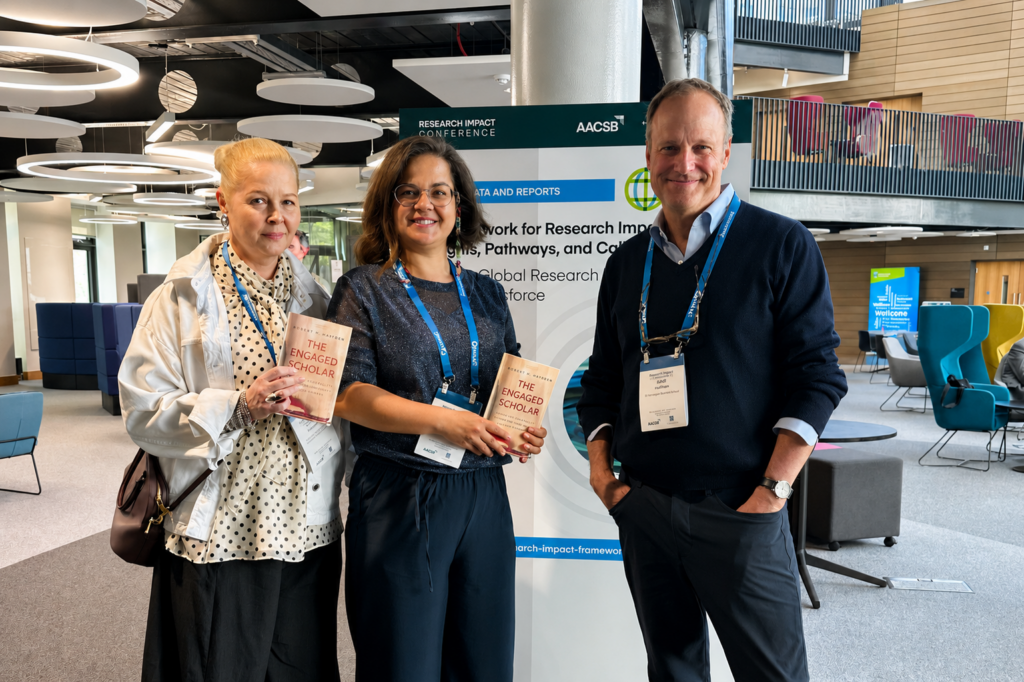
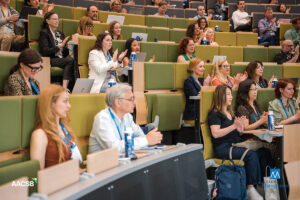
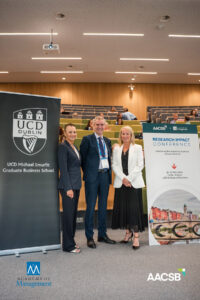
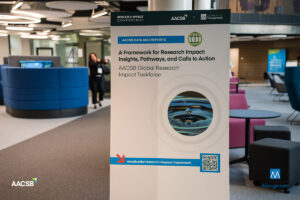
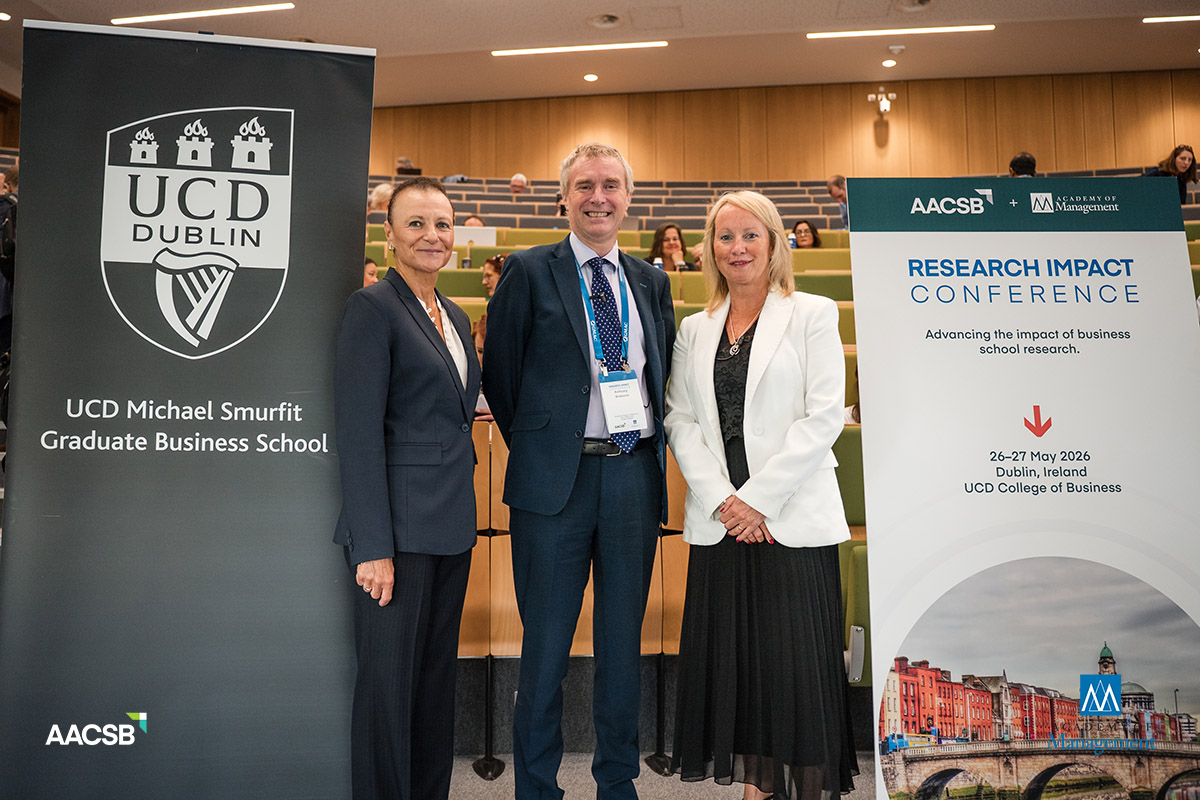
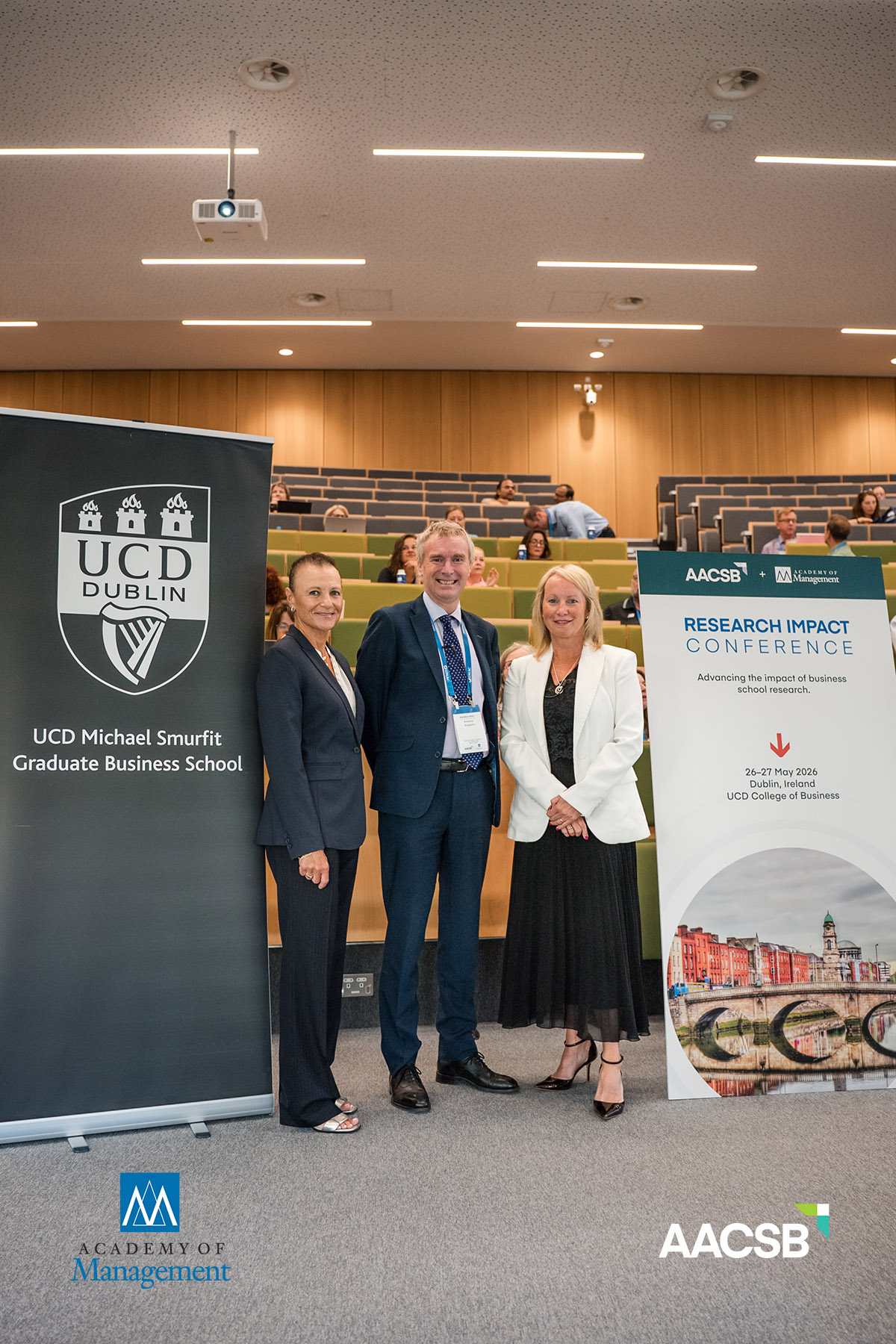
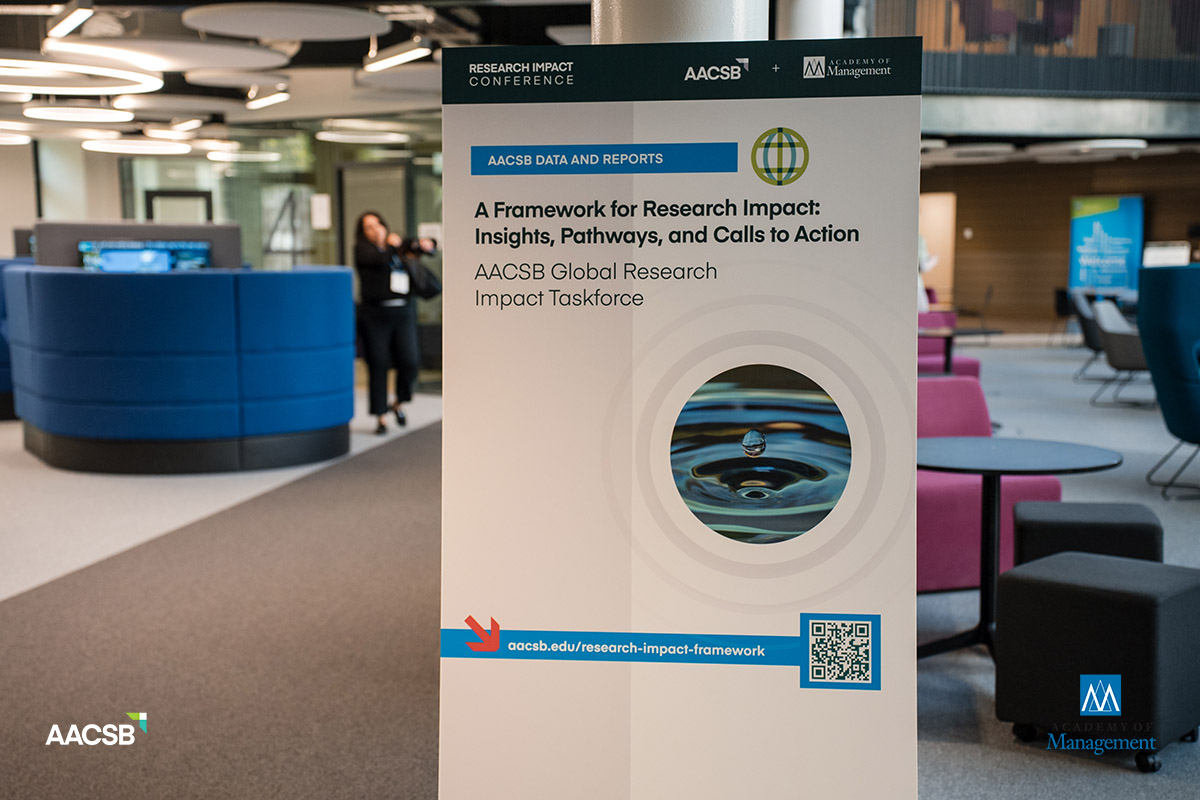
In late May 2026, in Dublin, AACSB, together with the Academy of Management, launched the report “A Framework for Research Impact: Insights, Pathways, and Calls to Action”, shifting the conversation about research impact from the level of declarations to concrete mechanisms of assessment, funding and accreditation (conference materials, opening session). The most important conclusion for business and economics schools is an uncomfortable one. The field largely agrees that the dominant metrics do not measure impact, and yet it continues to treat publication in a prestigious journal as an end in itself. This is not a debate about whether quality matters. It is a question of whether we are able to measure it in a way that reflects the genuine value of research for the economy and for society.
A diagnosis the field agrees on
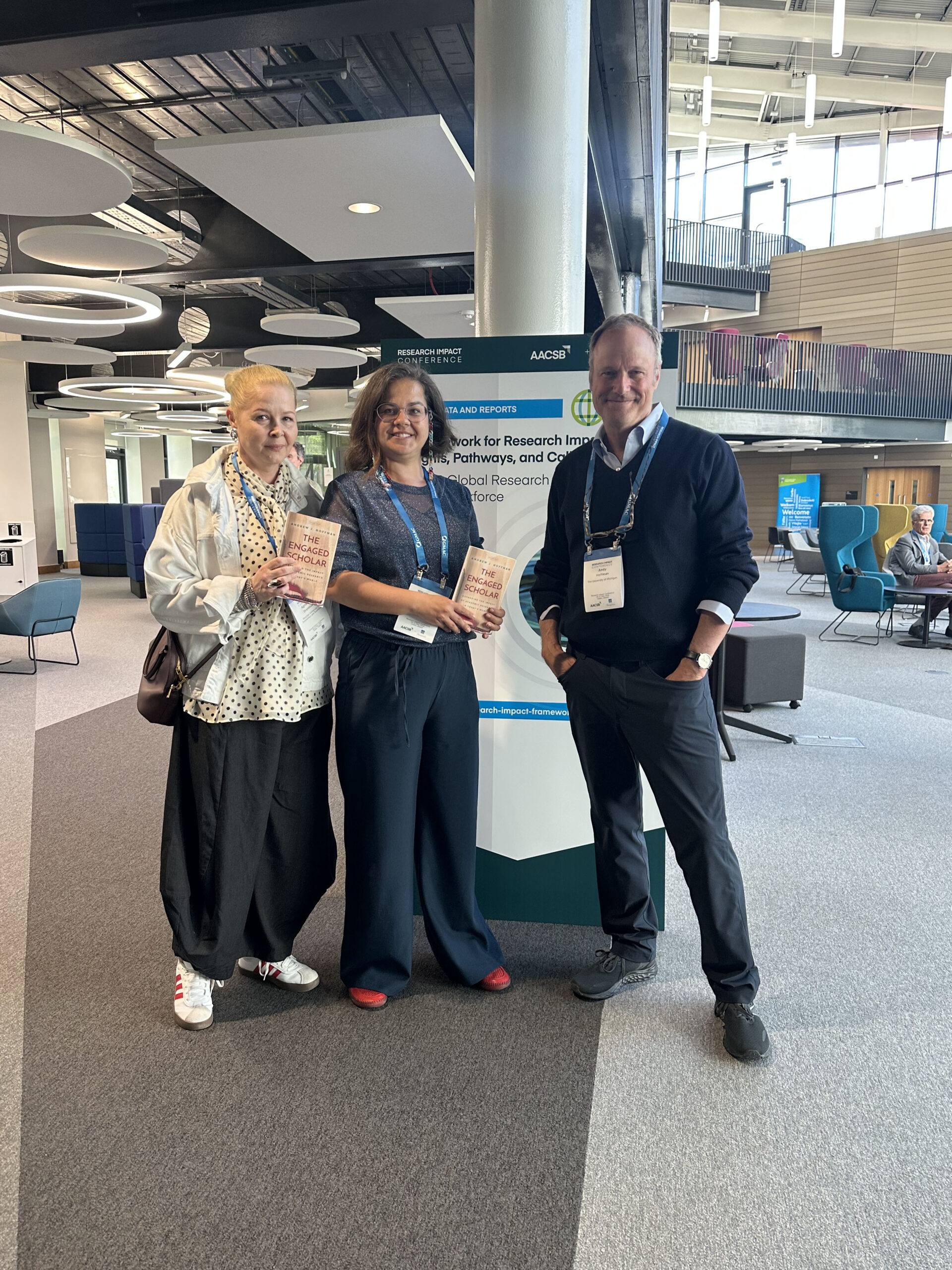
The scale of the problem is well documented. In his opening keynote, Andrew Hoffman of the University of Michigan recalled that around five million academic articles are published each year, and a significant share of them are never cited (keynote by A. Hoffman, AACSB Research Impact Conference 2026). At the same time, fewer than 10 per cent of business school studies are cited outside academia, and business leaders consistently point out that universities’ work does not address their problems (conference materials, session on building a research culture).
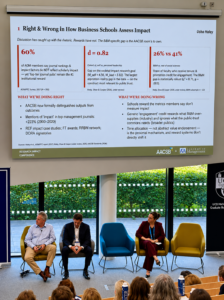
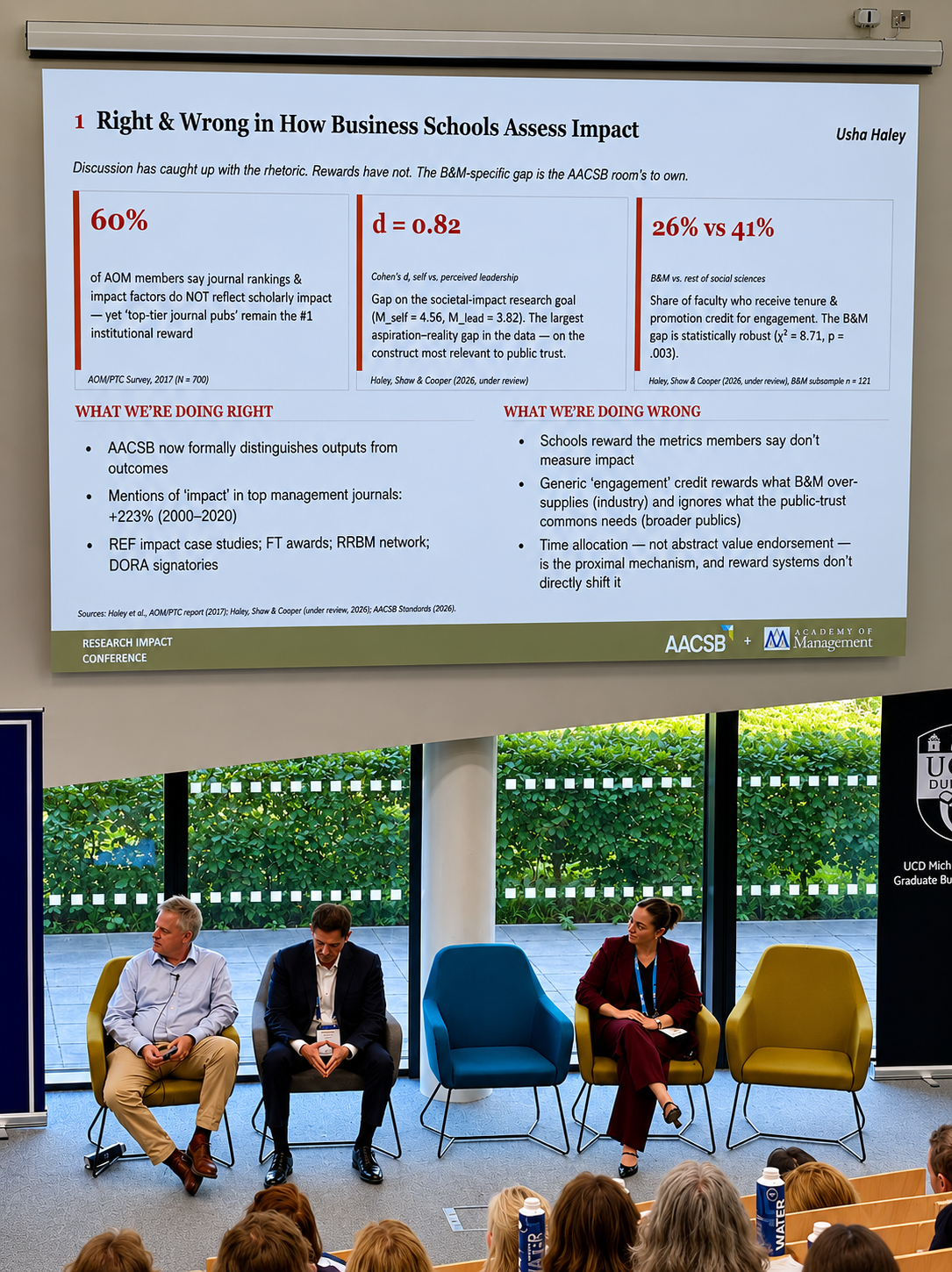
The source of the tension is the instrument we use to measure success. The journal impact factor was created to help librarians make subscription decisions, and over time it became a criterion for assessing individual scholars in hiring and promotion (conference materials, session on measuring impact). The consequence is a classic management error: rewarding one behaviour in the hope of an entirely different result. Importantly, the appetite for change is already clear. According to figures presented at the conference, 87 per cent of deans and 82 per cent of faculty consider that the quality of research is also determined by its relevance and impact, not by methodological rigour alone (conference materials, opening session).
What the AACSB framework proposes
The report does not stop at criticism. At its core is a shift from a linear model, in which impact is an activity that follows publication, to a model of knowledge co-creation, in which researchers and stakeholders work together from the outset. In this logic, research, teaching and societal engagement are three connected channels of influence rather than competing obligations (conference materials, opening session). This is reflected in the AACSB 2026 accreditation standards, which integrate impact within the “Pathways to Impact” section.
From this follows a practical recommendation, repeated in Dublin in various forms. Instead of a single number, what is needed is a portfolio of impact that combines publications, grants, doctoral training and engagement, while distinguishing influence on business practice from influence on public policy and rewarding both separately. This is accompanied by a sober observation about the mechanism of change. Reform of assessment criteria will only work if it is accompanied by reform of workload, because it is researchers’ time, and not their declarations, that is the genuine resource (conference materials, session on measuring impact). For teams that do not want to build a system from scratch, a ready starting point is the societal impact framework developed by the Australian Business Deans Council, which organises outputs and engagement by stakeholder group and by stage of the impact pathway.
Evidence that it can be done
The strongest argument of the conference was not its postulates but its examples. The Irish research centre FutureNeuro showed that a model oriented towards impact can be reconciled with scientific excellence. It brings together more than thirty teams across eight universities and four hospitals, its publications are cited almost twice as often as the field average, and the company built on its foundations raised twenty million euros to develop a drug, with documented impact on patients (conference materials, session on learning from other fields).
On the business school side, the University of Pittsburgh redesigned its promotion criteria, broadening them to include practice, policy and public engagement and supporting faculty teams with seed funding (conference materials, session on building a research culture). In turn, the collaboration between Trinity College Dublin and a technology partner translated research into the language of business decisions, estimating the potential of artificial intelligence for the Irish economy at a level counted in hundreds of billions of euros (conference materials, session on the influence of business research on policy and practice). Finally, a European alliance of universities working on responsible artificial intelligence demonstrated that funding for impact requires treating it as a design principle rather than as a communication task added at the end of a proposal, and that a collaboration network must already exist rather than be assembled for a specific call (conference materials, session on funding for impact).
What this means for the research community
For an economics university, the conclusions from Dublin form a coherent programme rather than a set of loose slogans. First, impact ceases to be a voluntary add-on and becomes a subject of accreditation assessment and of funders’ expectations, which moves it from the margins to the centre of research strategy. Second, change that is to be lasting requires not only new criteria but also the protection of researchers’ time and a shared language for describing impact, without which assessment will remain inconsistent and labour-intensive. Third, the experience of other disciplines and centres shows that relevance and rigour are not opposites but two sides of the same coin.
From the perspective of Wroclaw University of Economics and Business, the AACSB framework does not set a new direction so much as it organises one the University has already taken. What the report describes as an ecosystem of impact, namely strategy, the roles and teams responsible for research impact, its evaluation and science communication, the dedicated social impact area on badania.uew.pl, and the University’s long-running preparations for AACSB accreditation, is already in place at WUEB and is being developed consistently. The report allows these activities to be described in a shared language and assessed for coherence, rather than built from scratch.
For the researchers of Wroclaw University of Economics and Business, the practical step is simple and does not require waiting for systemic change. It is worth describing one’s own projects in terms of an impact pathway now, that is, identifying stakeholders, the intended influence and the evidence that can be gathered. This is the same thinking that the best grant competitions now expect and that the AACSB framework organises. The report “A Framework for Research Impact” is available from AACSB and provides a useful point of reference for teams planning new research.
Authors: Justyna Morawska-Płoskonka, Agnieszka Dramińska
See similar content

See also
Vitamins C and D in a single plant-based gel: UEW researcher awarded NCN grant

Joanna Radomska of WUEB awarded the title of professor
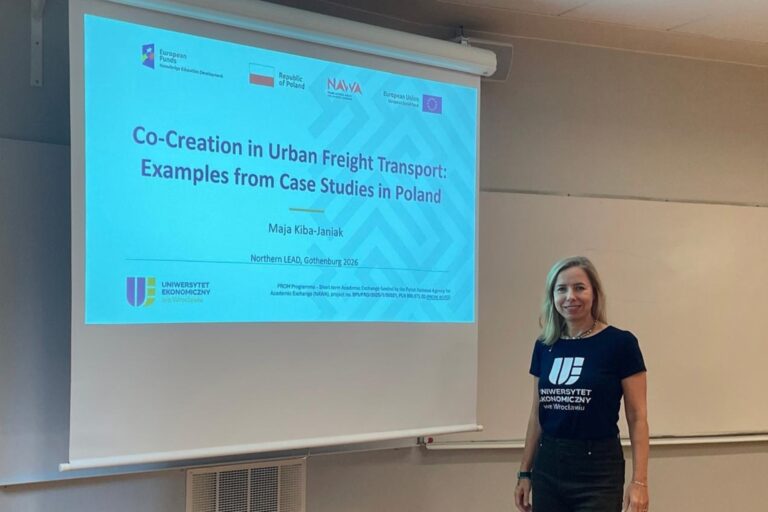
How can solutions for urban freight transport be co-created? Dr hab. inż. Maja Kiba-Janiak’s, Professor of the WUEB research fellowship in Gothenburg

WUEB Experts Weekly Review: Research, Projects and Academic Successes (21–27 September 2026)
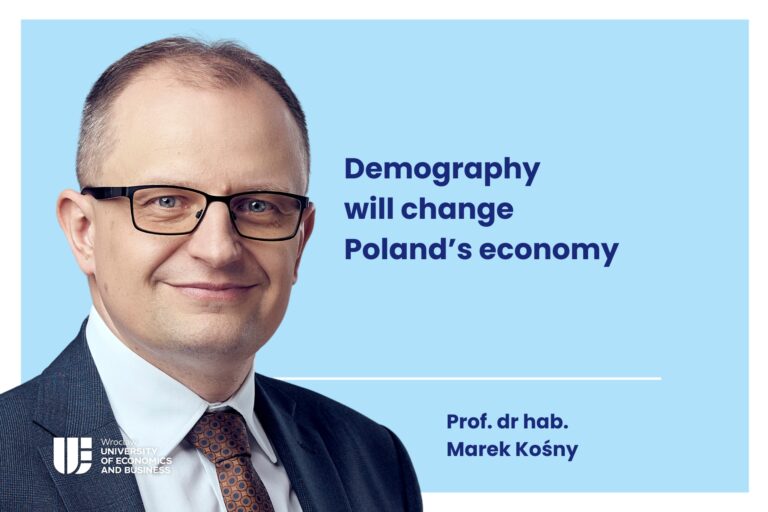
Poland’s demographic crisis: Professor Marek Kośny on the economic consequences

What is Bitcoin and How is it Changing Finance? dr Michał Kisiel on the Future of Money
WUEB Experts Weekly Review: Research, Projects and Academic Successes (14–20 September 2026)