

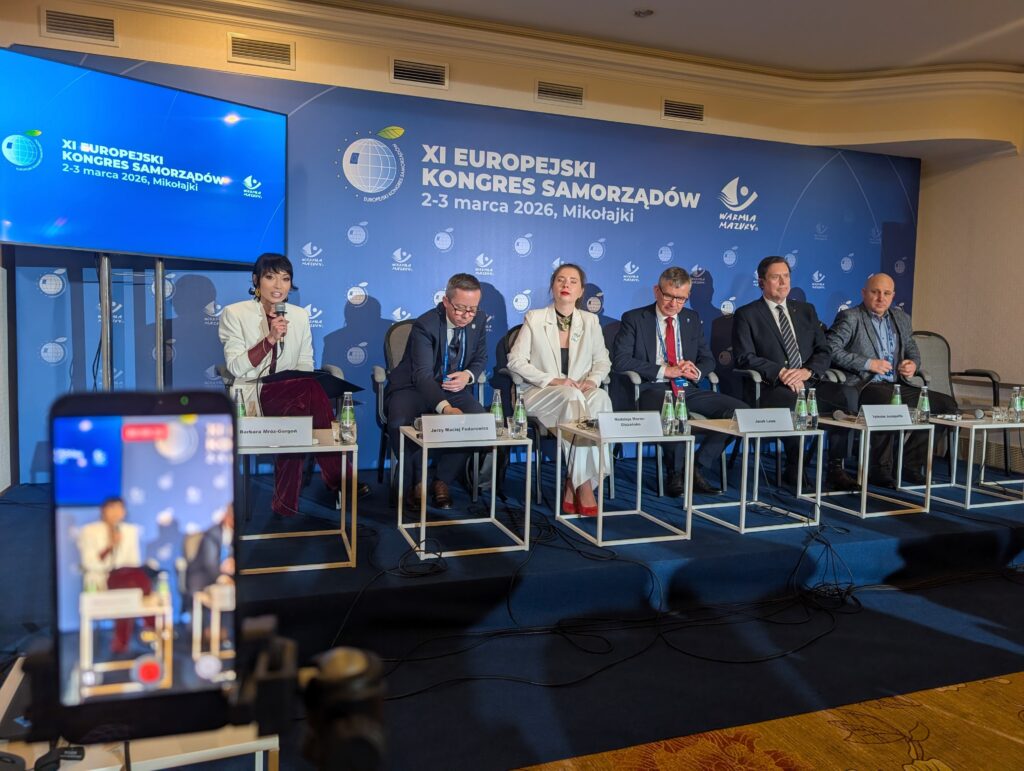
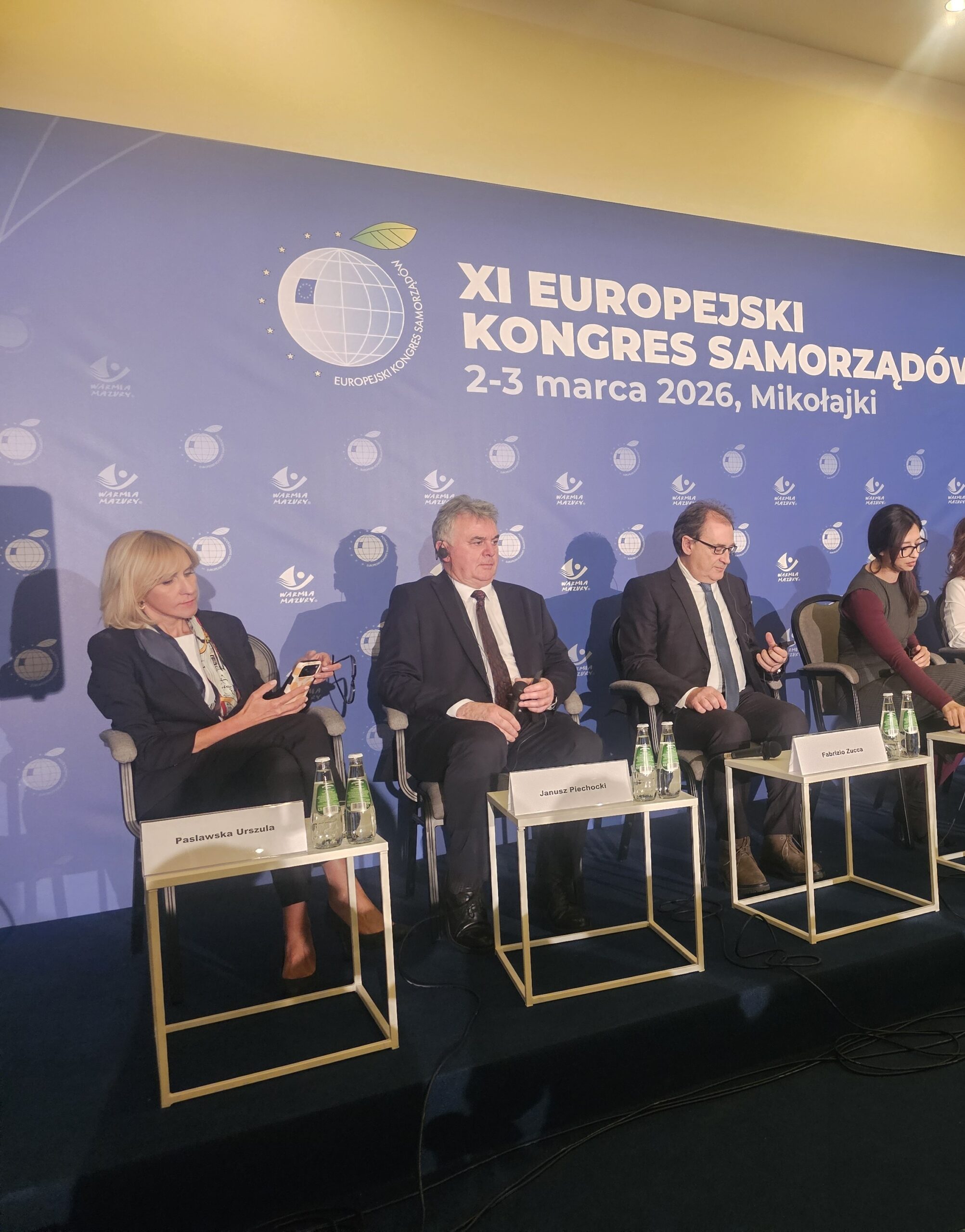
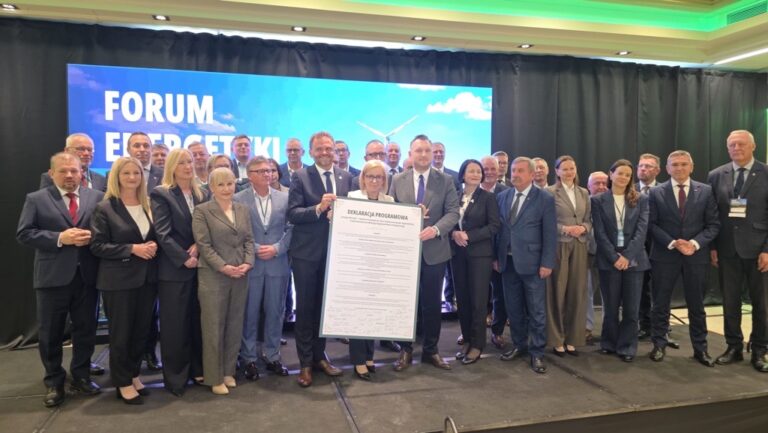
The 11th European Congress of Local Governments in Mikołajki (2-3 March 2026) is one of Poland’s key forums for dialogue on public policy and local governance. Over two days, the Congress hosted 250+ panels, debates and accompanying events under the motto “Local government in times of uncertainty – local answers to global challenges.” The agenda was structured around eight thematic tracks: Politics and Security, Sustainable Development, Regional Investments, Economy and Finance, Society, Health, Digital Local Government, and Culture, Recreation and Tourism.
High-profile opening and policy-focused discussions
The Congress opened with a press conference featuring national and regional decision-makers, including Deputy Prime Minister and Minister of Digital Affairs Dr Krzysztof Gawkowski and Minister of Funds and Regional Policy Katarzyna Pełczyńska-Nałęcz. The programme also included discussions on security, the economy and the future of local government, along with the presentation of the Economic Forum Award for building bridges between academia, business and local authorities.
WUEB on the main stage, not on the sidelines
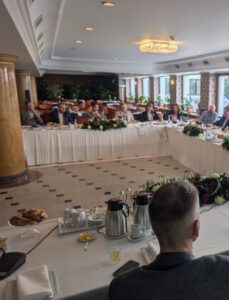
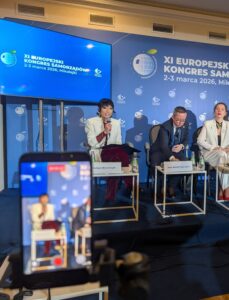
Against this backdrop, WUEB (Wroclaw University of Economics and Business) had a strong presence. Our researchers not only took part in the discussions, but also helped shape them by hosting and moderating key sessions.
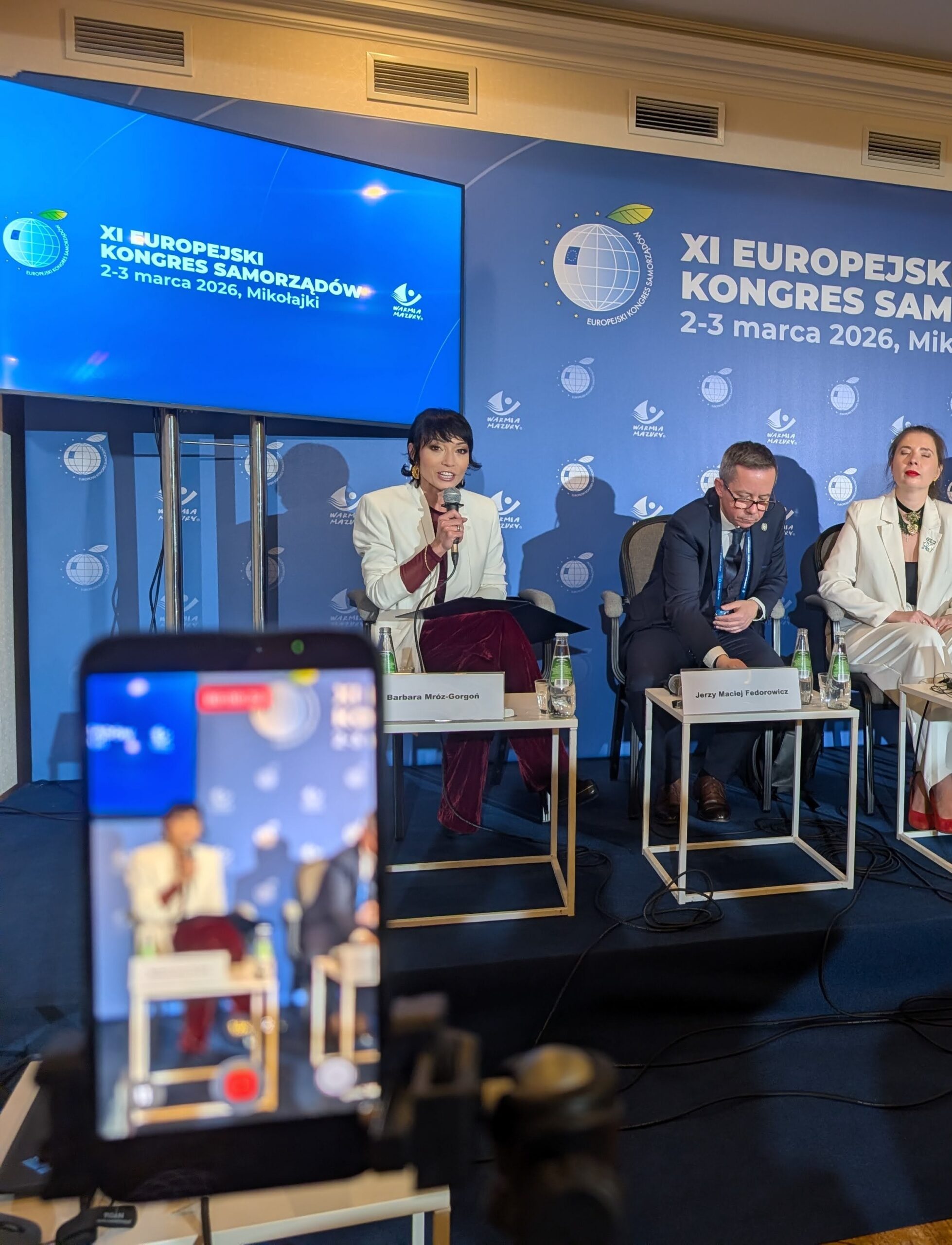
Culture and AI in action, Assoc. Prof. Barbara Mróz-Gorgoń, prof. WUEB
Assoc. Prof. Barbara Mróz-Gorgoń, prof. WUEB contributed actively to debates on the future of local governments, communication and public policy. She served as a host, speaker and panel moderator, and presented results from social research. Part of her activity was delivered within the Marka Polska Think Tank, while also representing WUEB as an academic expert.
During the Congress, she:
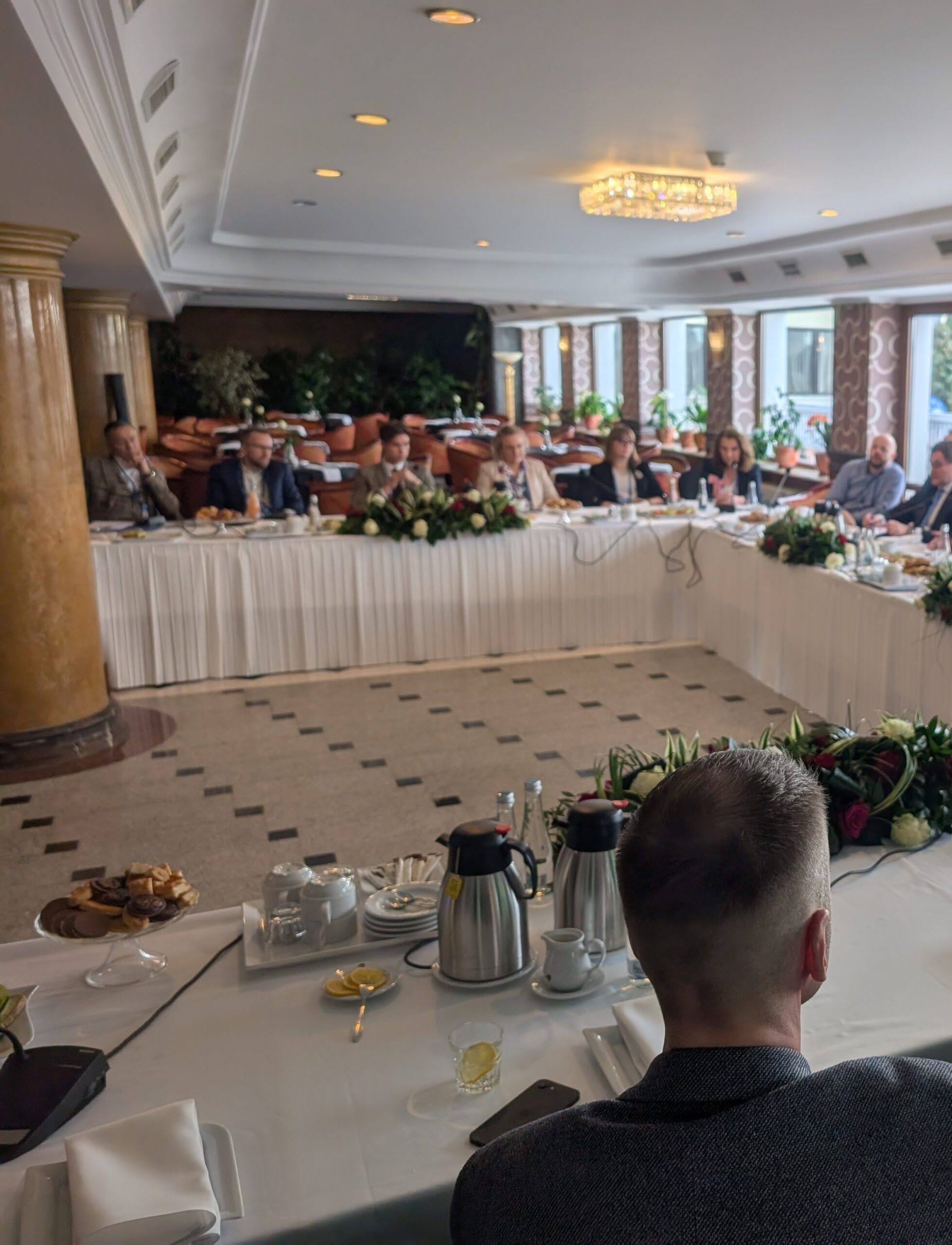
- led a Working Round Table session,
- delivered a “What Science Says” lecture titled “Reducing Aversion to Artificial Intelligence in Advertising Through Humour”,
- moderated the panel “Cultural Investments as a Driving Force for Local Governments”,
- presented the report “A Self-Portrait of Poles, Part 2” at the Authors’ Meetings Stage.
After 2027, a tougher financial reality for local governments
Assoc. Prof. WUEB Agnieszka Bem, prof. WUEB moderated the panel “European funds and local government budgets in the new 2027+ perspective”, focused on the investment gap expected after the 2021-2027 EU cycle is exhausted and the National Recovery Plan comes to an end. The discussion explored risks to local investment capacity, rising costs and strategies to mitigate the impact.
Financial resilience under pressure
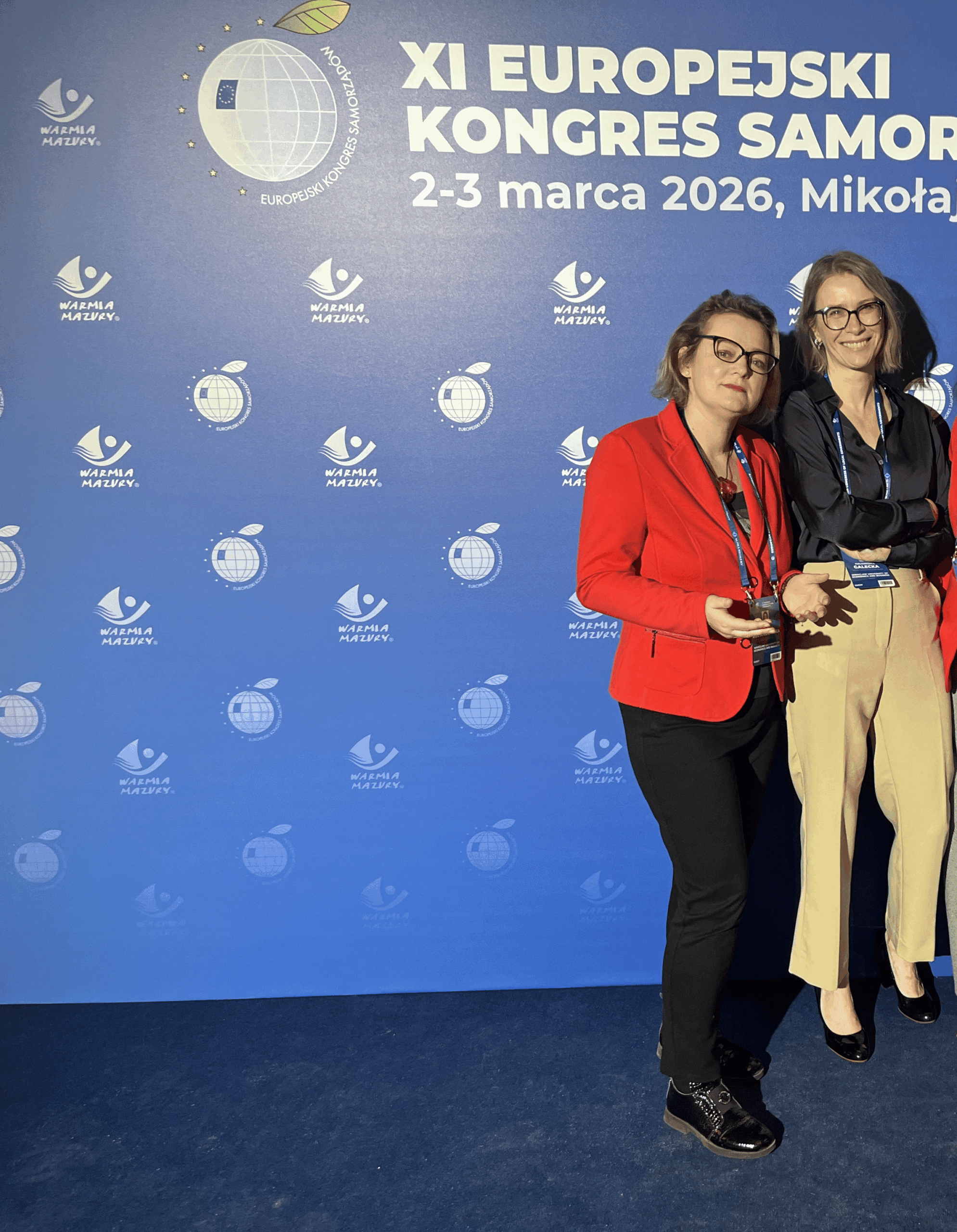
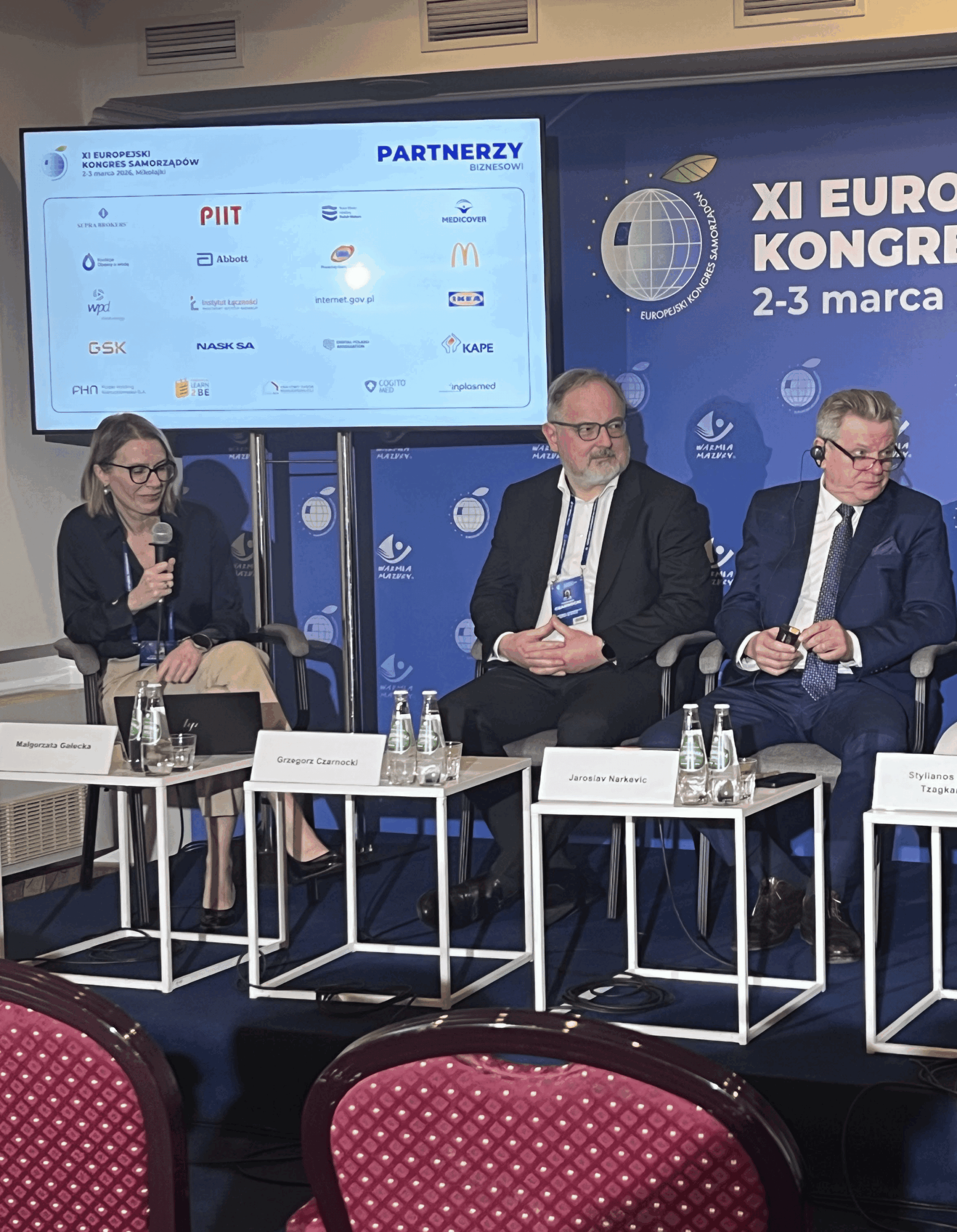
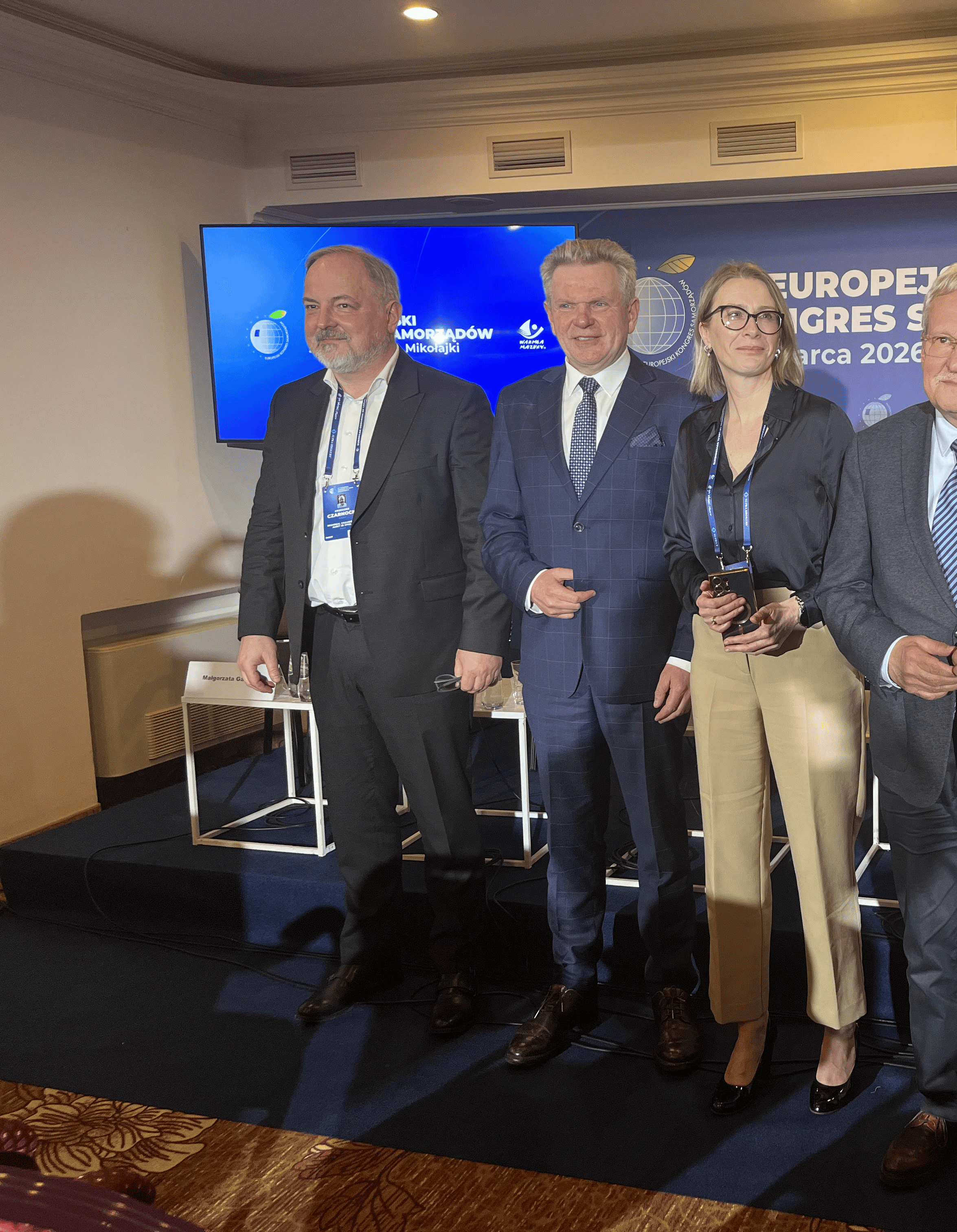
Dr Małgorzata Gałecka moderated the panel “Local government in times of uncertainty – local answers to global challenges”, analysing how inflation, debt, energy costs and global shocks translate into local budgets, investment plans and credit capacity. Speakers also examined practical anti-crisis strategies for municipalities, counties and regions.
The Green Deal locally, beyond slogans and into implementation
Magdalena Rozwadowska (Department of Corporate Finance and Public Finance) moderated the panel “The Green Deal locally: financing and implementation”, addressing practical pathways for local green transition. The discussion covered access to EU and NRP instruments, legal barriers, costs and long-term economic benefits for local communities.
Research that translates into real-world decisions
The engagement of our experts at the Congress shows how WUEB research supports evidence-based public debate and strengthens cooperation with local government stakeholders.
Takeaways after the 11th European Congress of Local Governments (ECLG)
Dr Małgorzata Gałecka’s commentary: global crises, local consequences
In an era of “polycrisis”, local government units (LGUs) face multiple pressures at the same time: rising energy costs, wage pressure, new security-related responsibilities, residents’ expectations, and budget constraints.
Kluczowe wnioski dlaKey takeaways for LGUs: JST:
- Decentralisation works, but it cannot be an illusion of autonomy
Decentralisation remains a rational model for allocating public funds, provided that responsibilities are clearly defined and revenue sources are stable. Autonomy without adequate own-source revenues shifts fiscal risk to the local level. - Central government – local government cooperation is crucial in extraordinary situations
Without systemic financial support and coordination, it is difficult to maintain comparable standards of security and development across regions. - Autonomy requires stable, realistic financial planning
Aggregated data for Q3 2025 indicate an improvement in LGU finances, but a more detailed analysis reveals a recurring problem: some units present a stable outlook and positive results in their multiannual financial forecasts, yet end up closing their budgets with a deficit year after year. If this pattern repeats cyclically, it is not an isolated incident but a sign of weak planning, overly optimistic revenue assumptions, or insufficient corrective measures. - New tasks mean new fixed costs
Even when investments are funded centrally, their maintenance burdens the current budgets of LGUs and reduces future investment capacity. .
Communication with residents is becoming a strategic competence
Shifting funds to security or infrastructure requires clear explanations of why other areas, such as culture or education, are being reduced at a given time. Without transparency, it is difficult to maintain public trust.
The question that remains open: does the observed improvement in financial indicators translate into building lasting, system-wide resilience for LGUs, or is it merely the “consumption” of a temporary upswing in fiscal conditions?
badania.uew.pl – because the world needs competent voices when noise drowns out reason.
Author: Justyna Morawska-Płoskonka
See similar content
See also
How can economic fluctuations be smoothed? The 2026 Nobel Prize in Economic Sciences through the eyes of WUEB researchers
The World Within Wrocław’s Reach. How the PROM research mobilities confirm WUEB’s place on the map of global academia
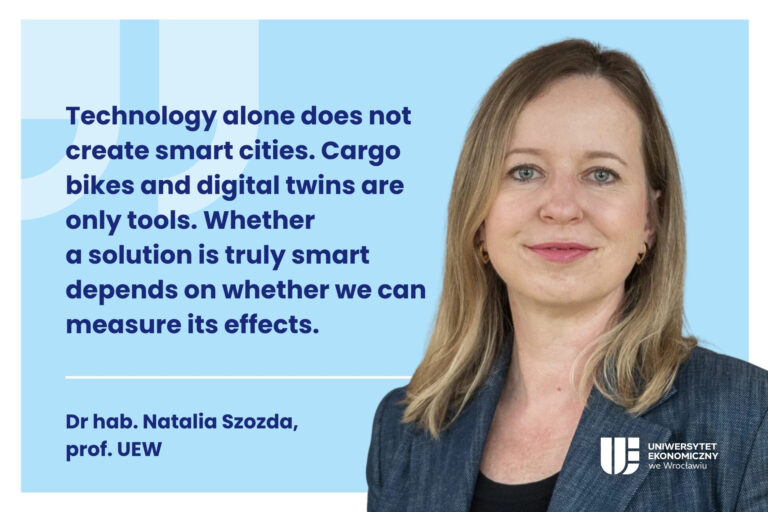
Wroclaw’s micro-hub at the Economic Forum. Natalia Szozda, Associate Professor, on when a city truly becomes smart
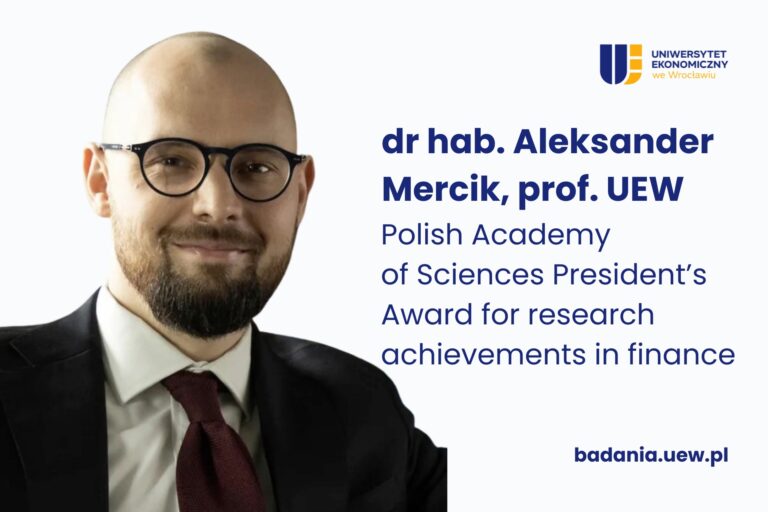
Dr hab. Aleksander Mercik, Professor of the WUEB, receives the Andrzej Gospodarowicz Award in Finance from the President of the Polish Academy of Sciences

WUEB Experts Weekly Review. Research, Projects and Academic Successes (5–11 October 2026)

Wroclaw University of Economics and Business researchers among the world’s leading scientists: six included in the 2026 World’s Top 2% Scientists database
WUEB Experts Weekly Review: Research, Projects and Academic Successes (28 September–4 October 2026)