

At first glance, it’s just a store. Small, open from early morning until late evening, instantly recognisable thanks to its green logo. But for millions of Poles, Żabka is a fixture of everyday life – a place to grab breakfast, pay a bill, collect a parcel or simply pause for a moment between meetings.
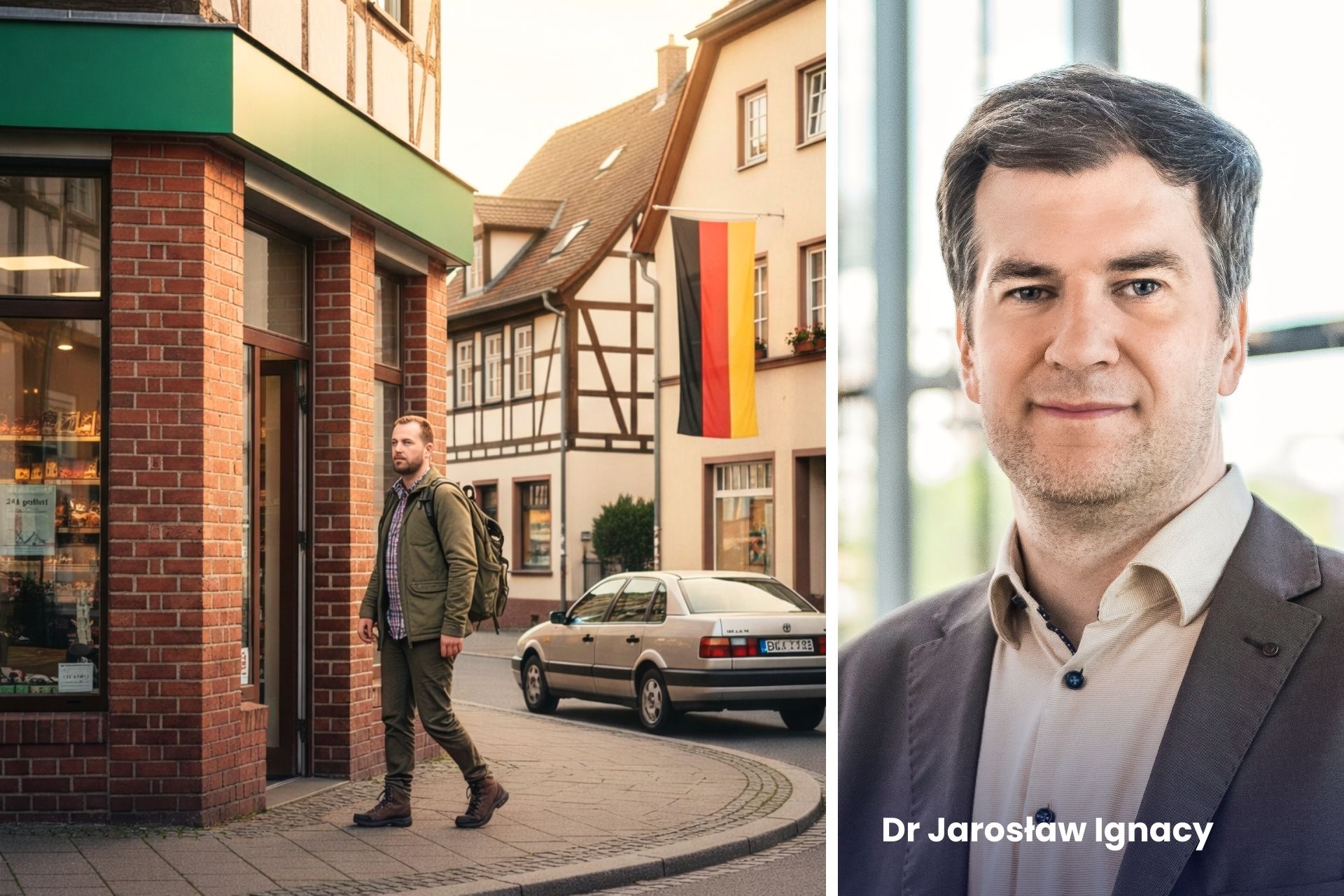
This Polish convenience store chain has now become the focus of one of the latest features by Germany’s public radio broadcaster Deutschlandfunk Kultur, which set out to explore why Żabka’s highly efficient and widespread model thrives in Poland – but has yet to take hold in Germany.
Serving as the guide for German listeners: Dr Jarosław Ignacy from the Wrocław University of Economics and Business (UEW) – an expert in organizational development strategies and consumer trends. His commentary helps unpack something that feels intuitive for Polish consumers but appears surprising from the outside – because of its scale, speed and social impact.
“Żabka reflects the modern rhythm of life in Poland. We’re seeing a growing number of young, mobile households – students, hybrid workers, people constantly on the move. Shopping today is part of that daily rhythm, not a planned event. Żabka fits perfectly into this lifestyle – it’s on the way, always open, always nearby.”
As Dr Ignacy explains, it’s no coincidence that one in three Poles lives within 300 metres of a Żabka store. This density isn’t just the result of rapid expansion – it’s the outcome of a carefully designed franchise model, allowing new locations to open quickly and with relatively low barriers to entry.
“From a German perspective, what may be surprising is how easily the franchise model adapts to the Polish context. Żabka franchisees don’t need prior retail experience – they’re provided with know-how, store locations, equipment, training and logistics systems. This ease of entry has been a major driver of growth.”
Żabka stores aren’t limited to big cities. As the German reporters observed, they’re now opening in towns with just a few hundred residents. In some places, they’ve become the only accessible service point, blending the role of grocery store, coffee bar, parcel pickup, kiosk and even a micro pharmacy.
But this isn’t a story without questions. The German programme also explores concerns: Is this level of market dominance coming at the expense of small, local businesses? What are the broader socioeconomic effects of such rapid growth?
“It’s a complex issue. On the one hand, we’re seeing greater accessibility and convenience. On the other – questions about sustainability, franchisee profitability and the future of independent retail. Regardless of one’s stance, Żabka has become part of Poland’s urban infrastructure – shaping new consumer habits and largely replacing other convenience models.”
So why isn’t the green frog jumping into Germany?
On one hand, as experts note, Germany already has equivalents: petrol stations with extended retail offers, “Rewe to go” outlets, and a dense network of kiosks. On the other – consumer habits differ, shopping is often more planned and less spontaneous, and retail in public space is subject to stricter regulation.
As a result, what works efficiently in Poland cannot be simply transplanted to the German market. And yet – as the report suggests – that’s exactly why Żabka’s case is so fascinating to Western European observers: it shows how local adaptation of a format can generate an entirely new model embedded in the fabric of everyday life.
The expertise of Dr Jarosław Ignacy, featured in a report by one of Germany’s leading public broadcasters, is yet another example of the international relevance of research conducted at UEW. When global media seek to understand market dynamics and social change in Poland, they turn to voices like ours.
badania.uew.pl/en – because the world needs informed voices when noise drowns out reason.
Author: Justyna Morawska-Płoskonka
See similar content

WUEB Experts Weekly Review. Research, Projects and Academic Successes (12–18 October 2026)
How can economic fluctuations be smoothed? The 2026 Nobel Prize in Economic Sciences through the eyes of WUEB researchers
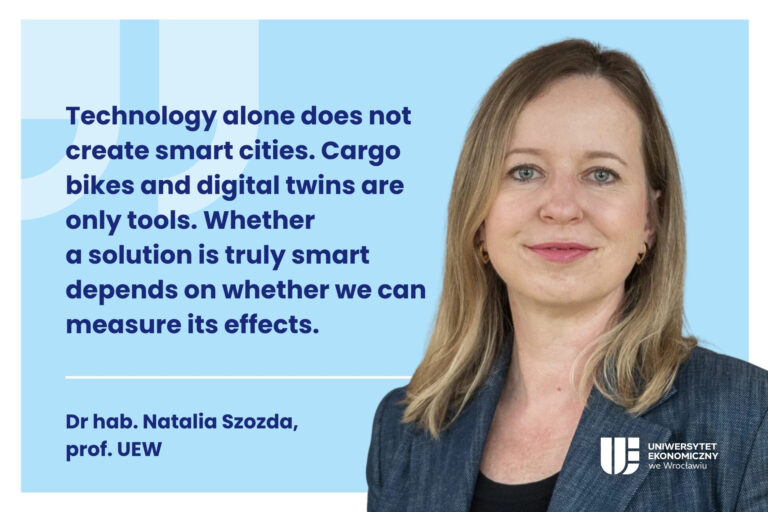
Wroclaw’s micro-hub at the Economic Forum. Natalia Szozda, Associate Professor, on when a city truly becomes smart
WUEB Experts Weekly Review. Research, Projects and Academic Successes (5–11 October 2026)
See also
Why do some regions of Europe grow faster than others? Dr hab. Paweł Dobrzański, Associate Professor at UEW, wins the PTE Award
WUEB Experts Weekly Review. Research, Projects and Academic Successes (12–18 October 2026)
How can economic fluctuations be smoothed? The 2026 Nobel Prize in Economic Sciences through the eyes of WUEB researchers
The World Within Wrocław’s Reach. How the PROM research mobilities confirm WUEB’s place on the map of global academia
Wroclaw’s micro-hub at the Economic Forum. Natalia Szozda, Associate Professor, on when a city truly becomes smart
Dr hab. Aleksander Mercik, Professor of the WUEB, receives the Andrzej Gospodarowicz Award in Finance from the President of the Polish Academy of Sciences
WUEB Experts Weekly Review. Research, Projects and Academic Successes (5–11 October 2026)