


We often remember Christmas not as a list of dishes, but as a scent. Stepping into a familiar home, opening a tin of spices, reheating dried-fruit compote, or peeling an orange is enough for memories to return instantly: a childhood kitchen, familiar voices, a sense of warmth and safety. This mechanism also carries cultural significance. Christmas flavours and aromas vary across regions and family traditions, while contemporary dietary choices (including alternative diets) continue to reshape what we consider a “classic” festive repertoire.
It is precisely this perspective — and the view from the level of raw ingredients — that is explored by prof. WUEB Zuzanna Goluch, in her article devoted to the herbal and fruit-based notes of Christmas.
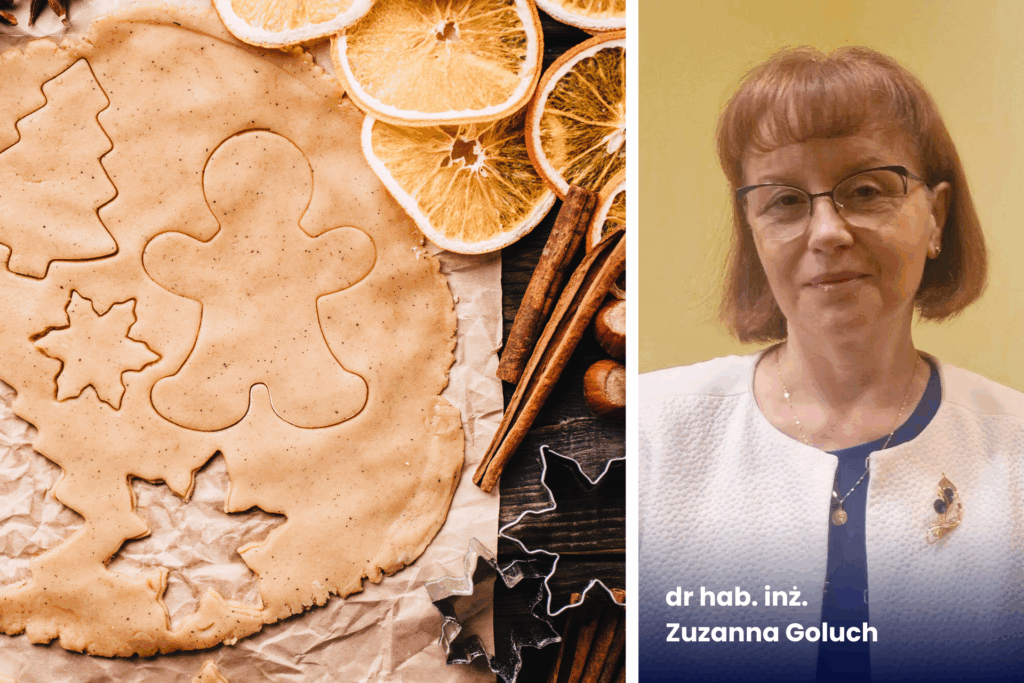
The Aroma of the Festive Table: What Is It Really Made Of?
For many of us, the scent of Christmas is shaped by coniferous trees (fir, pine, spruce), fresh and dried fruit (apples, citrus fruits, peels, plums), and — in the background — herbs and spices added to specific dishes: beetroot borscht, dried-fruit compote, fish dishes, fillings for dumplings, and festive baked goods. As the author reminds us, herbs in food are not merely decorative flavourings. They stimulate digestion, engage the senses and improve well-being — actively shaping our experience of the Christmas table.
“Just Open a Tin of Gingerbread Spices…”
In festive cooking, spiced flavours are usually associated with gingerbread, warming teas, coffee or herbal infusions. The article shows that this sensory impression has a very concrete foundation: cinnamon, derived from the bark of young cinnamon tree branches, and its constituents — including cinnamaldehyde and other compounds present in its essential oil. Cinnamon appears here not as a one-dimensional sweet spice, but as an ingredient used more broadly — in marinades, fillings and vegetable dishes — and as a raw material associated with specific biological effects.
At the same time, an important note of responsibility is introduced. What is natural and “homemade” can also be biologically active. The author clearly identifies groups for whom cinnamon is not recommended and notes the possibility of allergic reactions. This part of the article brings balance to the discussion — without alarmism, but also without simplification.
A similarly expressive and intense profile is attributed to nutmeg. The author describes its wide range of applications, from meat processing and confectionery to soups, sauces and beverages such as mulled wine. She also draws attention to its composition and related limitations: in larger quantities, nutmeg may produce undesirable effects, and some individuals should avoid it altogether. Notably, the text proposes a practical culinary alternative — achieving a similar flavour profile through a blend of safer spices.
“Lemon Juice in Herring Does More Than Just Add Acidity…”
If spiced notes provide warmth and depth, citrus fruits play the opposite role at Christmas: they bring freshness, enhance aroma and balance flavour. Although citrus fruits are not herbs, the author reminds us that they hold a permanent place on the festive table and are used in their entirety — juice, peel and pulp — depending on the dish.
The article offers concrete culinary examples: lemon juice in herring dishes and salads, citrus peels in dried-fruit compote, warming teas and baked goods, and citrus pulp used in selected salad variations. This is accompanied by a concise nutritional profile, including vitamin C, minerals, fibre and antioxidant compounds.
“Vanilla Only Becomes Fragrant Through a Process…”
Vanilla is commonly associated with warmth, desserts and the final “rounding off” of festive flavours. Yet the article highlights something less obvious: vanilla’s aroma is not inherent from the outset. The author explains the process in which odourless glucovanillin is transformed into aromatic vanillin — the moment when the scent we instantly recognise actually emerges. This provides a compelling example of how processing and technology shape our final sensory experience.
Vanilla then reappears in culinary practice: as pods, extracts, powders or pastes, in festive cakes and desserts, as well as in poppy-seed dishes and confectionery additions. The author also notes the need for caution among individuals prone to allergic reactions.
Cuisine, Tradition and Relationships: The Full “Recipe” for the Festive Mood
In the closing section, the author reminds us that the “scent of the Christmas table” is not created by spices and citrus fruits alone. It is completed by the aromas of ingredients regularly present in Polish festive cuisine: mushrooms, sauerkraut, garlic, horseradish, poppy seeds, honey, nuts, fish and many others. Above all, however, there is something that cannot be weighed or measured with a kitchen scale: relationships, shared time, winter scenery and attentiveness to being together.
Read the Full Article Ziołowy zapach Świąt Bożego Narodzenia
For a more detailed exploration of these themes — including specific dishes and ingredient descriptions — we invite you to read the original article by Zuzanna Goluch, prof. WUEB.
badania.uew.pl — because the world needs competent voices when noise drowns out reason.
Zobacz podobne treści

WUEB Experts Weekly Review. Research, Projects and Academic Successes (12–18 October 2026)
How can economic fluctuations be smoothed? The 2026 Nobel Prize in Economic Sciences through the eyes of WUEB researchers
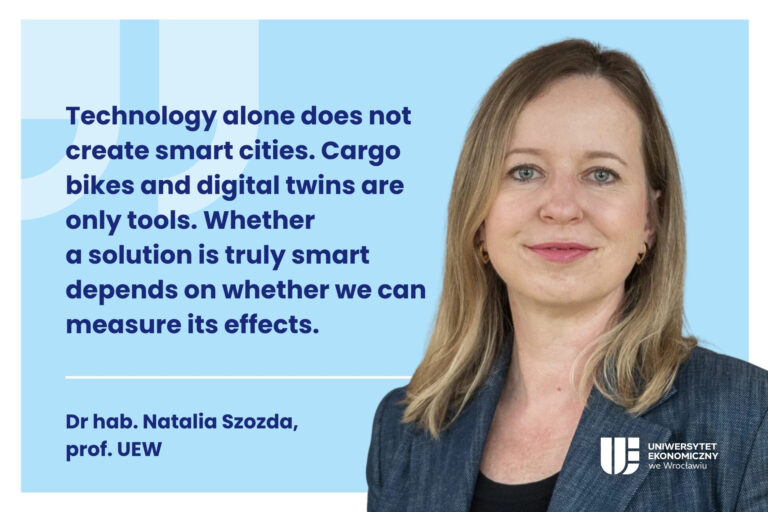
Wroclaw’s micro-hub at the Economic Forum. Natalia Szozda, Associate Professor, on when a city truly becomes smart
WUEB Experts Weekly Review. Research, Projects and Academic Successes (5–11 October 2026)
Zobacz również
WUEB Experts Weekly Review. Research, Projects and Academic Successes (12–18 October 2026)
How can economic fluctuations be smoothed? The 2026 Nobel Prize in Economic Sciences through the eyes of WUEB researchers

The World Within Wrocław’s Reach. How the PROM research mobilities confirm WUEB’s place on the map of global academia
Wroclaw’s micro-hub at the Economic Forum. Natalia Szozda, Associate Professor, on when a city truly becomes smart

Dr hab. Aleksander Mercik, Professor of the WUEB, receives the Andrzej Gospodarowicz Award in Finance from the President of the Polish Academy of Sciences
WUEB Experts Weekly Review. Research, Projects and Academic Successes (5–11 October 2026)

Wroclaw University of Economics and Business researchers among the world’s leading scientists: six included in the 2026 World’s Top 2% Scientists database