

Lower Silesia has its own flavour – it just needs to be rediscovered. As many as 87% of residents and tourists do not know the region’s local cuisine. Doctoral student Paulina Graczyk from the Wrocław University of Economics and Business has turned this research insight into concrete action: the Map of Sustainable Food Venues in Wrocław and the Climate Academy “Local Flavours – Global Values”.
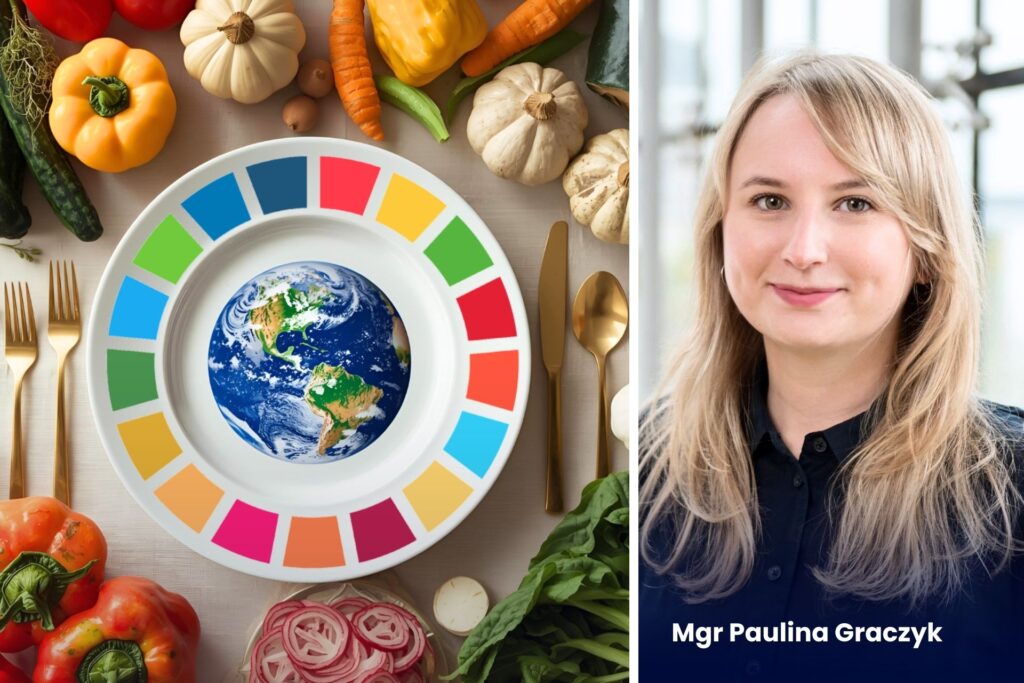
The starting point was a doctoral research project. The results were clear: 87% of tourists visiting Wrocław are unaware of local dishes, and most people pay little attention to the origin of ingredients – price is what matters most. For Paulina Graczyk, a WUEB doctoral student researching sustainable culinary tourism and product certification, this was more than just a survey result. It was a call to act.
This is precisely the starting point for this year’s Academy of Climate, organised by members of the Green Team – the Centre for Sustainable Development and the Sustainability Office at WUEB, with doctoral students joining the initiative. The sixth edition, held on 18 November 2025, focused entirely on how to prevent food waste at every stage of a food product’s life cycle – from production and transport to the moment it reaches a guest’s plate
The sixth edition, held on 18 November 2025, focused entirely on how not to waste food at any stage of the product life cycle – from production, through transport, to the guest’s plate.
Lectures were led by experts addressing, among other topics:
- the impact of food production on the climate,
- culinary upcycling (creative use of “leftovers”),
- the potential of local products from Lower Silesia.
In the workshop part, participants could see these ideas in practice. They prepared salads with local blue cheese and Wrocław tofu, baked bread on site and served it with honey and freeze-dried redcurrants – one of the most local fruits of the region.
The Academy is not a one-off event. It is a living laboratory of sustainable gastronomy where academic research meets the kitchen, education and business.
Map of sustainable venues: 30 addresses reshaping the city
The most tangible outcome of the research by Paulina Graczyk and her team is the Map of Sustainable Food Venues in Wrocław. It is not a standard list of fashionable restaurants. It is a curated selection of 30 places that combine local flavours with a responsible approach to the environment and local communities.
“We have created a map of sustainable venues in Wrocław. It is a step towards promoting not only local flavours, but also a sustainable lifestyle,” emphasises Paulina Graczyk.
The map focuses above all on smaller, less recognisable venues – places that rarely feature in popularity rankings, yet do essential groundwork. They work with local farmers, shorten supply chains and ensure that food is not wasted.
A “sustainable venue” in the team’s understanding is not just about a fashionable “eco” label. The criteria draw on the 17 Sustainable Development Goals of the United Nations and cover, among others:
- Responsible consumption and production (Goal 12)
- use of local and seasonal products,
- FIFO systems (“first in, first out”) in storage,
- use of apps such as foodsi to limit food waste,
- ecological packaging.
- Climate action (Goal 13)
- shortening delivery routes,
- efficient energy and water use,
- promoting plant-based cuisine.
- Sustainable cities and communities (Goal 11)
- preserving regional culinary traditions,
- supporting local initiatives,
- donating products to community events.
- Decent work and economic growth (Goal 8)
- cooperation with local suppliers,
- stable employment,
- including people after mental health crises or with disabilities in teams,
- adhering to FAIRTRADE principles.
The map includes, among others, social enterprises, venues with fully plant-based menus, places that work with charities, and those that care for animals. The map is available at the Tourist Information Centre and on the city’s website. The next step is an extended digital version, to which new venues will be able to apply based on clearly described criteria.
New habits and trends: alcohol-free choices, mountain herbs and early education
The project of building the region’s culinary identity does not end with restaurants. Paulina Graczyk is also involved in promoting alcohol-free alternatives and culinary tourism products beyond the university walls.
In the “Kulinarny Wrocław” podcast she talks with Marta Szymańska about alcohol-free drinks based on herbs collected in the Bardzkie Mountains. This is yet another example of how locality, health and responsibility can come together in a single glass.
During the Climate Academy, the “sober bar” zone offered participants recipes for natural, alcohol-free drinks with herbs from Lower Silesia. The idea was not to imitate classic cocktails, but to shape a new social norm: that choosing not to drink alcohol is simply a choice, one that does not require explanation or social pressure.
At the same time, the team points to systemic challenges. In Poland, the promotion of local food often falls to officials, and producers complain that certificates do not translate into real sales. In Italy, as shown by Paulina Graczyk’s analyses, food consortia and nutrition education for children are the key. This model is inspiring, but in Lower Silesia it has to be adapted to local realities.
For this reason, the Climate Academy, the venues map, podcasts and workshops form one coherent message. Sustainable gastronomy is not a passing trend. It is a long-term shift in lifestyle that needs research, patient education and cooperation between the university, businesses, civil society organisations and residents.
What next?
The Map of Sustainable Food Venues in Wrocław is only the beginning. Upcoming editions of the Climate Academy, further research into product certification and consumer behaviour, and new educational formats – from workshops to podcasts – will gradually change how we think about food: as part of the region’s heritage and as a tool for responsible change.
badania.uew.pl – because in a noisy world, calm and competent voices grounded in reliable data matter most.
Author : Barbara Grzelczak
See similar content

WUEB Experts Weekly Review. Research, Projects and Academic Successes (12–18 October 2026)
How can economic fluctuations be smoothed? The 2026 Nobel Prize in Economic Sciences through the eyes of WUEB researchers
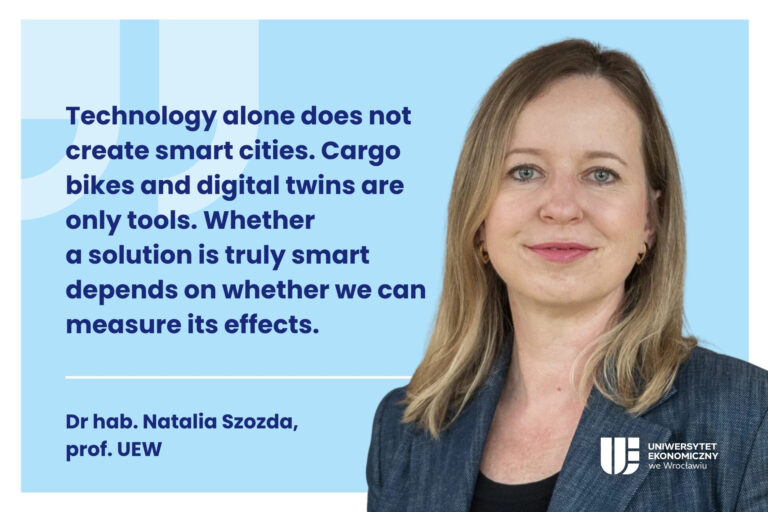
Wroclaw’s micro-hub at the Economic Forum. Natalia Szozda, Associate Professor, on when a city truly becomes smart
WUEB Experts Weekly Review. Research, Projects and Academic Successes (5–11 October 2026)
See also
WUEB Experts Weekly Review. Research, Projects and Academic Successes (12–18 October 2026)
How can economic fluctuations be smoothed? The 2026 Nobel Prize in Economic Sciences through the eyes of WUEB researchers
The World Within Wrocław’s Reach. How the PROM research mobilities confirm WUEB’s place on the map of global academia
Wroclaw’s micro-hub at the Economic Forum. Natalia Szozda, Associate Professor, on when a city truly becomes smart
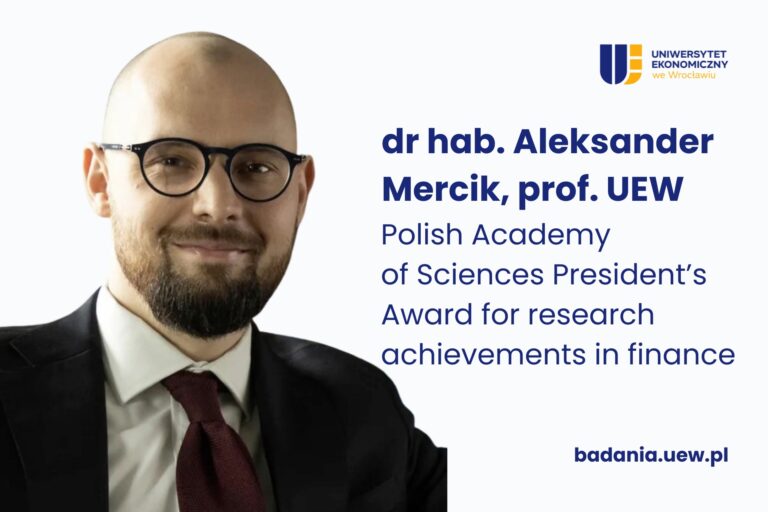
Dr hab. Aleksander Mercik, Professor of the WUEB, receives the Andrzej Gospodarowicz Award in Finance from the President of the Polish Academy of Sciences
WUEB Experts Weekly Review. Research, Projects and Academic Successes (5–11 October 2026)
Wroclaw University of Economics and Business researchers among the world’s leading scientists: six included in the 2026 World’s Top 2% Scientists database