

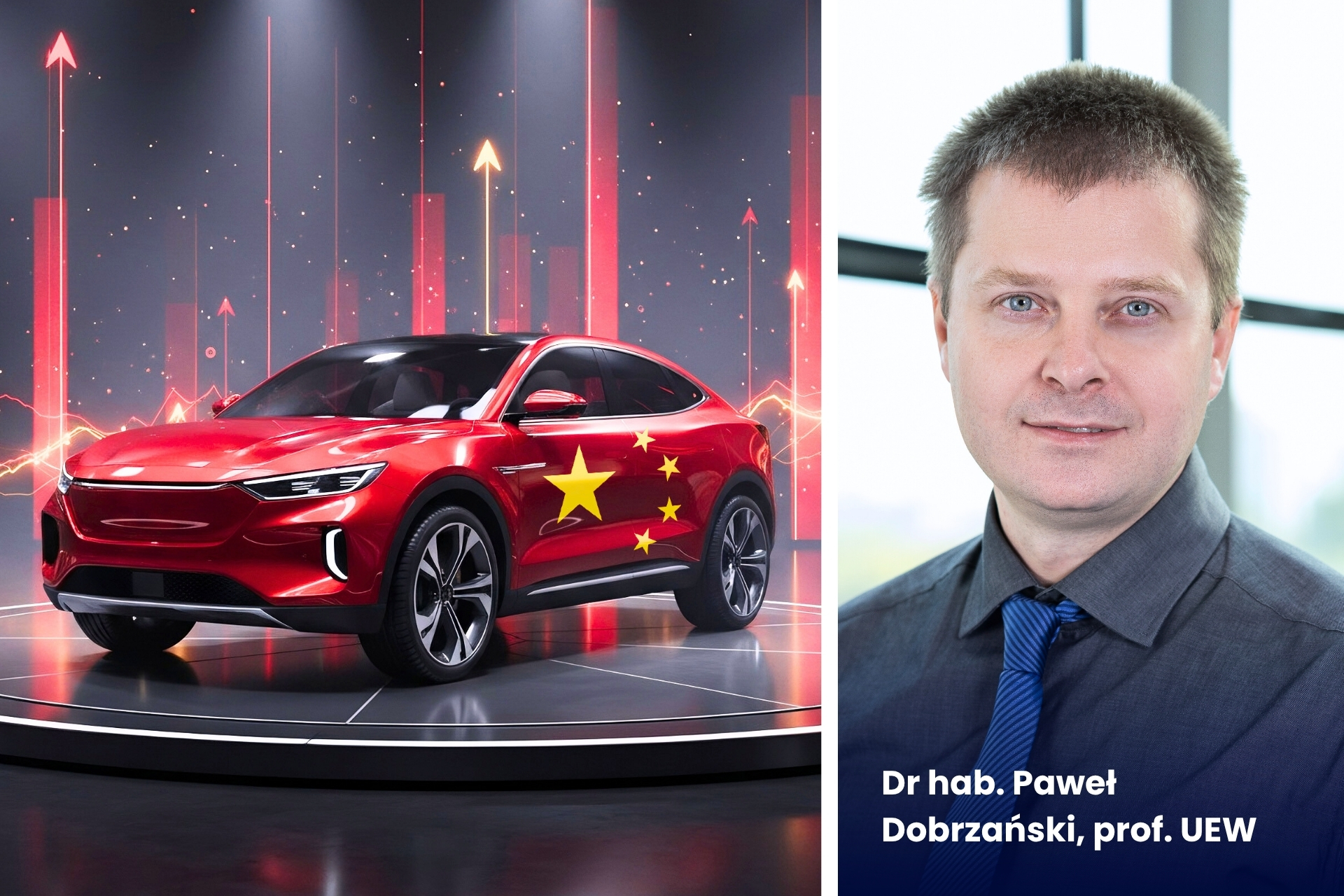
Chinese marques are gaining ground in Poland as sales approach a record in 2025. Lower prices please buyers, but pressure on critical-metal supply chains could hit Europe’s automotive base – especially regions like Lower Silesia. Prof. Paweł Dobrzański (WUEB) emphasises the need for rapid, coordinated action and diversification.
The broadcast in brief
A Radio Wrocław panel brought together Tomasz Siwiński (“Fleet”), Dr Adam Karpiński (WSB Merito) and Paweł Dobrzański, Associate Professor at WUEB. The context: brisk growth in new-car registrations in 2025, accompanied by a rapidly rising share of Chinese brands. The discussion is available on Radio Wrocław’s website and YouTube.
“We’ve no time; we need to act like the Chinese – fast.” — attributed to prof. Paweł Dobrzański.
Prices vs. reputation: why share gains aren’t guaranteed
Lower transaction prices pull some buyers back into showrooms. However, rapid share gains may not be sustained if brand reputation and proven product lifecycles remain decisive, especially in Western Europe. This nuance appeared throughout the debate.
From monthly payments to materials: the real bottleneck
The conversation moved from retail pricing to inputs. China’s dominance in processing rare-earth elements – vital for electric motors and batteries and talk of tighter export rules raise the risk of a domino effect in European supply chains. The pandemic lesson – “five missing parts halt the line” still applies.
Three actions prof. Dobrzański highlights
- Diversify sources of critical materials (e.g., the US, Australia, select African markets, Greenland) to reduce single-point exposure.
- EU-level, fast, coordinated decisions. Tariffs alone won’t help if Europe lacks end-to-end materials and processing capacity.
- Stable rules for R&D. Predictable frameworks to finance research in powertrains, materials and electronics, so Europe competes on quality—not subsidies.
Lower Silesia: first to feel the shock
Lower Silesia hosts a dense network of automotive suppliers and assembly. If critical-metal tension bites, regions like this will feel it first: curtailed output, contractual penalties for delays, and thinner development budgets. Hence, there is a need for a contingency plan for raw materials and clear investment priorities.
Defence spillovers
If restrictions hit defence, where advanced materials demand is highest, the pressure would extend beyond civilian markets. Panellists converged on this point: the issue is no longer “a cheaper SUV on a lease” but economic security and resilience.
Today’s buyer, tomorrow’s strategy
Leasing and long-term rental make EV adoption easier and cap residual – value risk. Yet, focusing only on low instalments without building supply capacity, processing, and R&D deepens dependence – risky in an industry with thousands of components per vehicle.
What this means for the EU, Poland and the region
- Diversify critical metal supply now – before the “five missing parts” stop lines again.
- Rebuild processing capacity – not only mining, but refining and purification technologies.
- Provide stable R&D frameworks for powertrains, materials, and electronics.
- Establish rapid decision forums across industry, government, and academia with clear timelines.
Listen/watch the full conversation on Radio Wrocław: https://www.radiowroclaw.pl/articles/view/155162/Rozne-punkty-slyszenia-Nowe-auta-z-Chin-bija-rekordy-Dolny-Slask-moze-na-tym-stracic
badania.uew.pl — because today, more than ever, we need competent voices when noise drowns out reason.
Author: Barbara Grzelczak
See similar content

WUEB Experts Weekly Review. Research, Projects and Academic Successes (12–18 October 2026)
How can economic fluctuations be smoothed? The 2026 Nobel Prize in Economic Sciences through the eyes of WUEB researchers
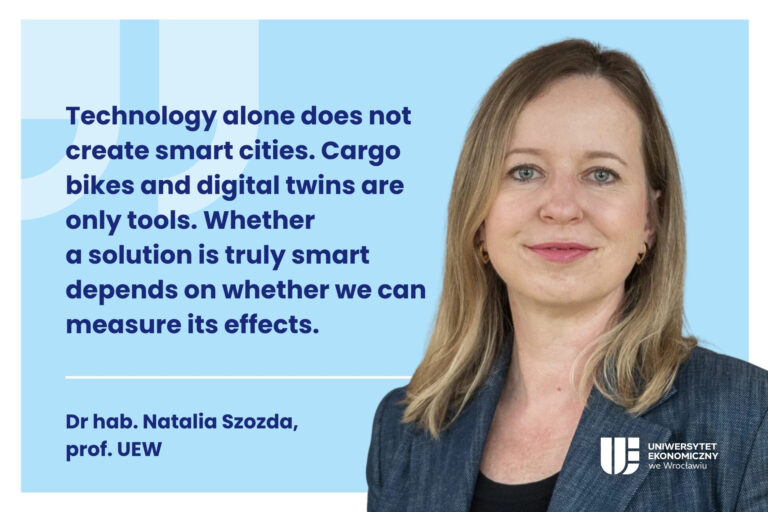
Wroclaw’s micro-hub at the Economic Forum. Natalia Szozda, Associate Professor, on when a city truly becomes smart
WUEB Experts Weekly Review. Research, Projects and Academic Successes (5–11 October 2026)
See also
WUEB Experts Weekly Review. Research, Projects and Academic Successes (12–18 October 2026)
How can economic fluctuations be smoothed? The 2026 Nobel Prize in Economic Sciences through the eyes of WUEB researchers
The World Within Wrocław’s Reach. How the PROM research mobilities confirm WUEB’s place on the map of global academia
Wroclaw’s micro-hub at the Economic Forum. Natalia Szozda, Associate Professor, on when a city truly becomes smart
Dr hab. Aleksander Mercik, Professor of the WUEB, receives the Andrzej Gospodarowicz Award in Finance from the President of the Polish Academy of Sciences
WUEB Experts Weekly Review. Research, Projects and Academic Successes (5–11 October 2026)
Wroclaw University of Economics and Business researchers among the world’s leading scientists: six included in the 2026 World’s Top 2% Scientists database