

Half a century ago, Venezuela symbolised prosperity in Latin America. Today, it stands as one of the most severe cases of economic collapse not caused by war or natural disaster. The United States’ decision to draw on Venezuelan oil supplies closes this trajectory with brutal consistency.
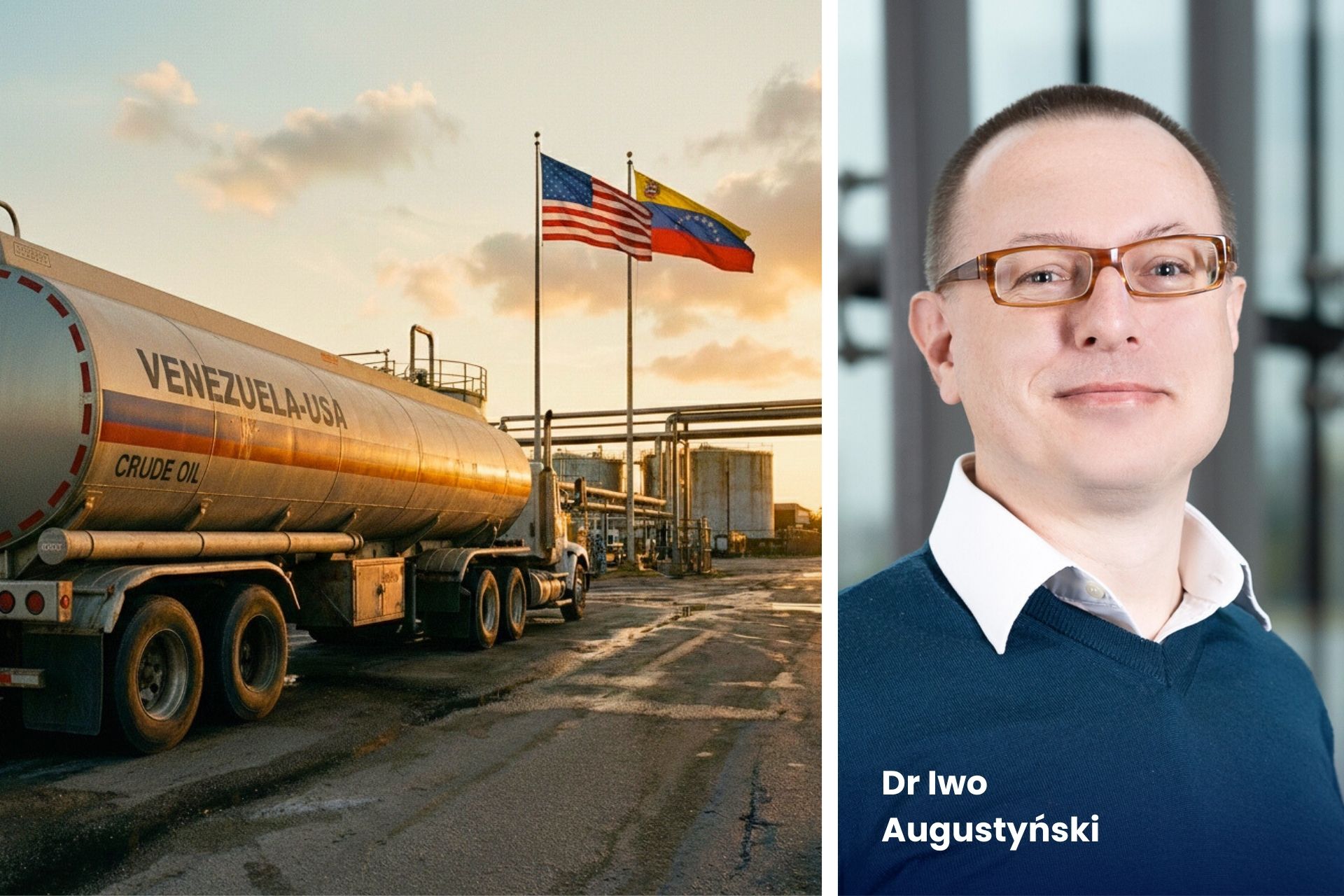
In the interview broadcast on Polish Radio 24, Dr Iwo Augustyński of the Wrocław University of Economics and Business points to the scale of Venezuela’s regression. Between 2013 and 2023, living standards fell by approximately 74 per cent. It is one of the deepest economic crises in recent global history – without armed conflict.
The roots of the collapse lie in an economic structure almost entirely dependent on oil extraction. When prices were high, the state could afford expansive policies. When prices fell, there were no buffers. As Dr Augustyński explains, this is a textbook case of the resource curse and Dutch disease: reliance on a single sector at the expense of industry, processing capacity and innovation.
In practice, Venezuela exported oil and imported almost everything else. Revenues were not translated into long-term development. They were consumed, partly misappropriated, and partly redirected towards short-term political objectives.
Nationalisation without a strategy
Nationalisation of the oil sector is often presented as the turning point. Dr Augustyński cautions against such simplifications. State control over natural resources does not automatically lead to failure. The problem was not nationalisation itself, but the absence of a coherent strategy for using the revenues.
After taking control of the oil industry, the state failed to invest adequately in infrastructure maintenance and technological development. Venezuelan oil is technically demanding: heavy, dense and costly to refine. Without access to advanced technologies and expertise, production declined and the sector’s potential eroded. A return to previous output levels would now require billions in investment and many years of reconstruction.
US intervention: power over rules
This structural crisis was intensified by external pressures. US sanctions and embargoes hit the oil sector directly – the country’s only significant source of income. They restricted not only exports, but also access to capital and technology.
In this context, the Trump administration’s decision to draw on Venezuelan oil supplies is not an exception, but a consequence of global power politics. As Dr Augustyński states bluntly, there is no force stronger than the United States capable of preventing such action. In situations like this, international law becomes secondary to political, military and financial dominance.
From the US perspective, this is a cold calculation: Venezuela has debt, and oil becomes a form of repayment. From the Venezuelan perspective, it is another stage in the loss of control over national wealth.
Geopolitics instead of economics
The discussion also touches on Russia and China. Russia’s engagement in Venezuela was primarily political, including arms deliveries settled through oil shipments. China treated Venezuela as an element of its global influence strategy rather than as a key economic partner. What appears significant to public opinion is marginal economically for Washington or Beijing, but strategically meaningful.
This highlights a broader reality. Venezuela’s crisis is not only a story of economic mismanagement. It is also an example of an economy subordinated to competition between great powers, where the interests of ordinary citizens are pushed aside.
What this means for society – and for others
Today, the average Venezuelan survives on the equivalent of a few US dollars per month, while living costs reach into the hundreds. Lifting sanctions may open the country to investment and financing, but, as Dr Augustyński notes, there is no guarantee that the benefits will reach society rather than new owners and elites.
Venezuela’s experience serves as a warning. Natural resources are neither a curse nor a blessing in themselves. Their impact depends on institutions, long-term strategy and a state’s capacity to defend the public interest in a world where power still prevails over rules.
badania.uew.pl – because the world needs competent voices when noise overwhelms reason.
Author: Barbara Grzelczak
See similar content

WUEB Experts Weekly Review. Research, Projects and Academic Successes (12–18 October 2026)
How can economic fluctuations be smoothed? The 2026 Nobel Prize in Economic Sciences through the eyes of WUEB researchers
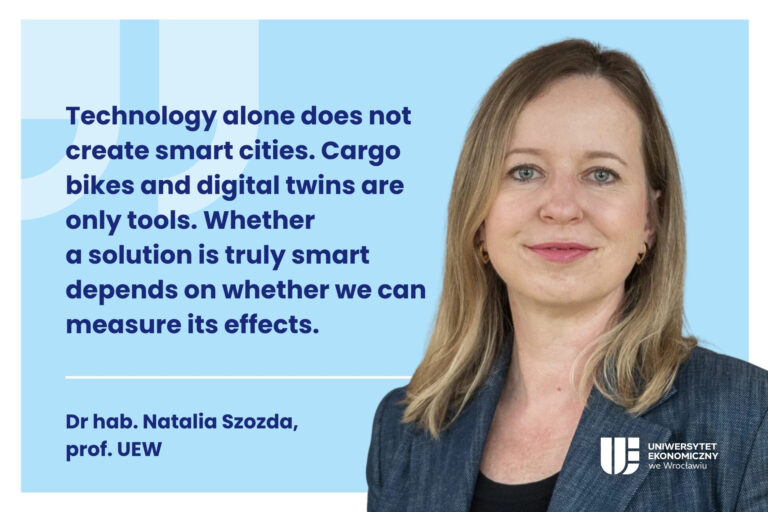
Wroclaw’s micro-hub at the Economic Forum. Natalia Szozda, Associate Professor, on when a city truly becomes smart
WUEB Experts Weekly Review. Research, Projects and Academic Successes (5–11 October 2026)
See also

Why do some regions of Europe grow faster than others? Dr hab. Paweł Dobrzański, Associate Professor at UEW, wins the PTE Award
WUEB Experts Weekly Review. Research, Projects and Academic Successes (12–18 October 2026)
How can economic fluctuations be smoothed? The 2026 Nobel Prize in Economic Sciences through the eyes of WUEB researchers
The World Within Wrocław’s Reach. How the PROM research mobilities confirm WUEB’s place on the map of global academia
Wroclaw’s micro-hub at the Economic Forum. Natalia Szozda, Associate Professor, on when a city truly becomes smart

Dr hab. Aleksander Mercik, Professor of the WUEB, receives the Andrzej Gospodarowicz Award in Finance from the President of the Polish Academy of Sciences
WUEB Experts Weekly Review. Research, Projects and Academic Successes (5–11 October 2026)