

Karol was born in Poland, raised in Belgium, and returned in his thirties – to open a café in the centre of Warsaw. Ingrid arrived for a three‑month internship at the Belgian Embassy. She decided to stay. Both could have gone back to Brussels. Both chose a different path.
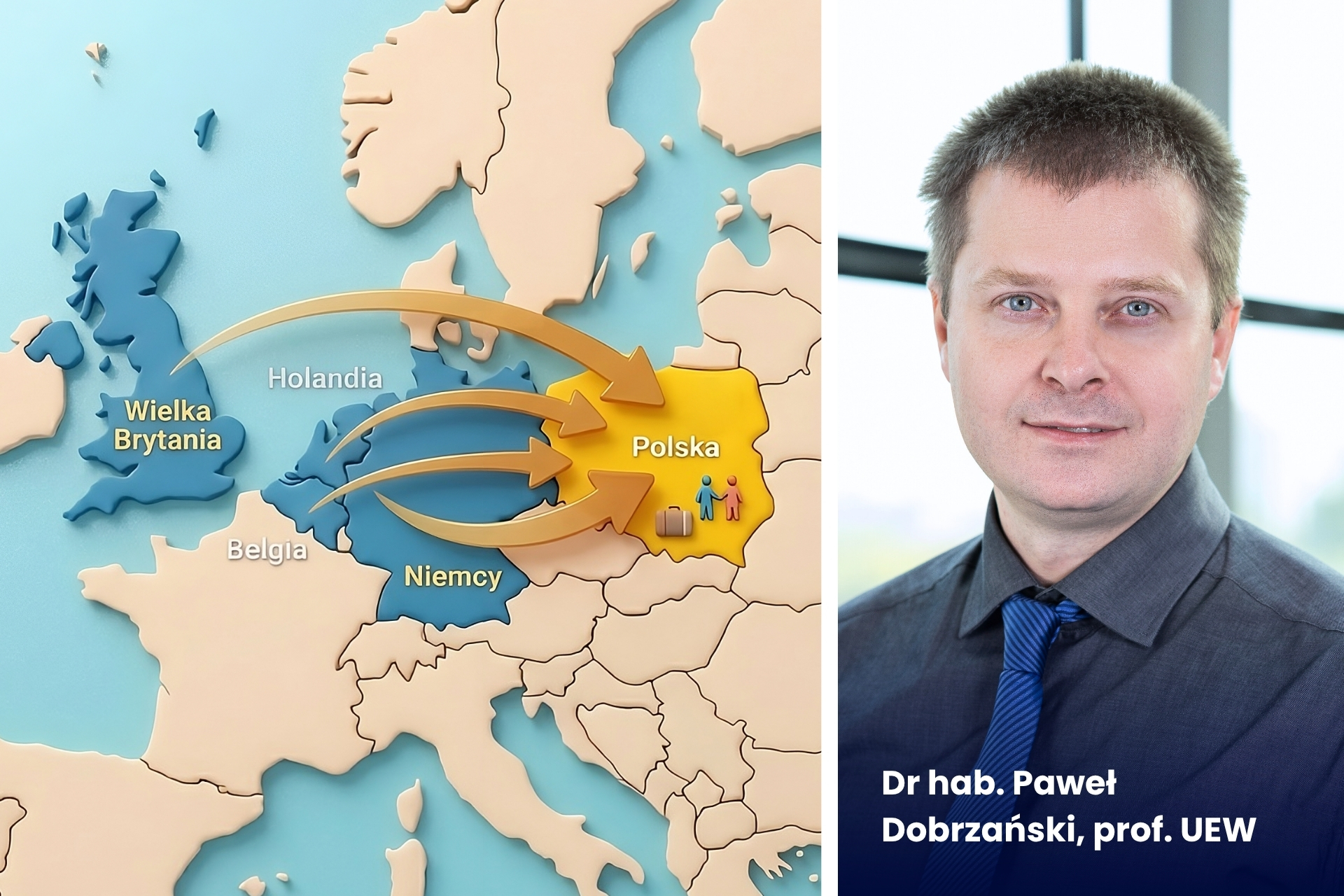
Their story is not an exception. It reflects a broader transformation described by Dr Paweł Dobrzański, Associate Professor at Wroclaw University of Economics and Business. In February 2026, his analysis appeared in The Brussels Times, and shortly after, the same themes were discussed on TVP3 Wrocław. The message in both places was clear: Poland is no longer a country that merely catches up.
The End of the Old Hierarchy
For decades, Europe’s mental map seemed simple: Western Europe on top, Central and Eastern Europe behind. As Dr Paweł Dobrzański, Associate Professor at WUEB argues, this hierarchy no longer reflects reality.
“What we are witnessing is not a reversal of the hierarchy, but its gradual dissolution. Poland is no longer the country left behind – it has caught up faster than many in Western Europe are willing to admit.”
In real terms, Poland’s GDP is now three times higher than in the 1990s. And the cost‑to‑income ratio has shifted so significantly that the old saying “you earn more abroad” no longer answers the question of where life is actually better.
In a television interview, Dr Paweł Dobrzański, Associate Professor at WUEB, said that Europe today is not a ladder with the West at the top and the East at the bottom, but a network of competing states and metropolitan areas. This metaphor – more powerful than statistics alone – captures the direction of change: Europe increasingly functions as a constellation of equal hubs competing for talent.
The Numbers Reveal a Clear Trend
Data from Belgium’s statistical office Statbel shows that migration from Poland to Belgium fell from around 6,300 annually (2015) to 3,600 (2025), while movement in the opposite direction remains stable at roughly 2,500 people per year. Poland now hosts over 700 Belgian companies, and the European Commission forecasts continued strong economic growth in 2026.
As Dr Paweł Dobrzański, Associate Professor at WUEB explains:
“Millions of Poles left out of necessity. Today, many of them return with experience, capital and networks. Return migration has become a powerful mechanism of economic advancement and knowledge transfer.”
It is a pattern well known from the success stories of Ireland, South Korea or Taiwan – but rarely associated with Central Europe.
What Poland Offers – and What the West No Longer Guarantees
In his research, Dr Paweł Dobrzański, Associate Professor at WUEB identifies several overlapping factors behind Poland’s growing attractiveness.
1. Access to housing
In Belgium or the Netherlands, prices exceeding €10,000 per square metre make home ownership unrealistic for most graduates entering the labour market. In Poland – despite rising prices – the income‑to‑housing ratio remains significantly more favourable.
2. Twenty years of rapid infrastructure development
Poland became one of the largest beneficiaries of EU cohesion funds. Highways, rail modernisation, airports, digital administration and revitalised public spaces have not only improved living standards but also drawn foreign investors. Where Poland once envied Western connectivity, today it competes with it.
3. A flow of ready‑trained specialists from abroad
This phenomenon is particularly visible at universities. Students from Italy, Spain and Germany come to Polish cities – and increasingly choose to stay. Dr Paweł Dobrzański, Associate Professor at WUEB, has compared Poland to the ‘Japanese model of seizing opportunities’, calling it the Japan of Europe: a country that absorbs every developmental impulse with determination.
Strengths and Risks
The picture is not unambiguously optimistic. Associate Professor Dobrzański identifies weaknesses with equal clarity. Infrastructure remains the country’s strongest asset. Political polarisation, however, carries an economic cost: it deters investment and weakens Poland’s image abroad. Demographics remain a structural challenge – policies supporting young families and retaining talent are a precondition for sustaining the pace of development Poland has achieved.
Poland’s strongest assets include infrastructure, human capital, social stability and a growing appeal to foreign graduates. But the picture is not exclusively optimistic.
Dr Paweł Dobrzański, Associate Professor at WUEB points to several structural risks:
- political polarisation, which affects investor confidence
- demographic decline, requiring serious investment in families and talent retention
- the need for balanced pacing in climate and energy reforms to avoid undermining competitiveness
Poland’s trajectory is promising – but not predetermined.
Europe Is Paying Attention
This shift in migration flows is not unique to Belgium. The UK, Germany and the Netherlands also report negative net migration of Poles. What is changing is not only the direction, but the motivation: European graduates increasingly choose Poland not as a “temporary alternative”, but as a deliberate career destination.
No surprise, then, that anglophone media in Brussels decided to document this trend – and regional Polish broadcasters soon followed. Each reached a different audience, but both drew on the same research conducted at the Wroclaw University of Economics and Business.
Sources:
The Brussels Times, 28 February 2026: https://www.brusselstimes.com/belgium/1995566/a-better-life-why-belgians-of-polish-descent-are-choosing-to-pack-up-and-move-east
TVP3 Wrocław, Południówka z Faktami, 16 March 2026 – https://wroclaw.tvp.pl/92118392/16032026 z 16.03.2026
Paweł Dobrzański – Associate Professor, Wroclaw University of Economics and Business. Specialises in economic growth, convergence and economic policy.
Author: Justyna Morawska-Płoskonka
See similar content

WUEB Experts Weekly Review. Research, Projects and Academic Successes (12–18 October 2026)
How can economic fluctuations be smoothed? The 2026 Nobel Prize in Economic Sciences through the eyes of WUEB researchers
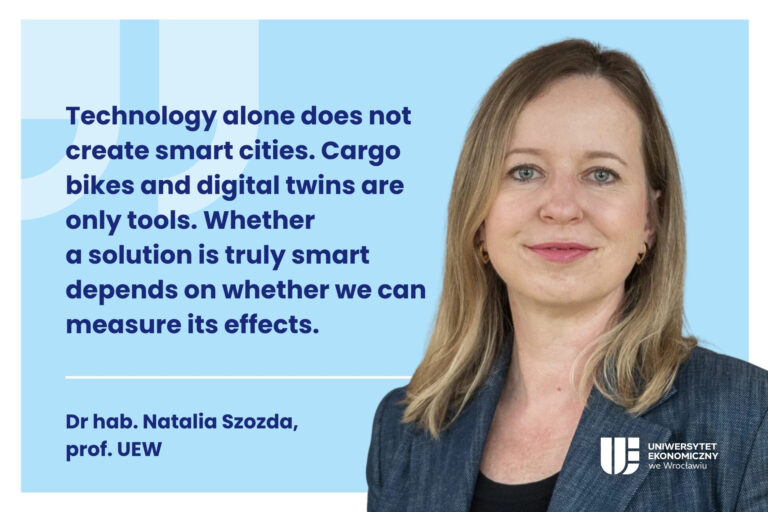
Wroclaw’s micro-hub at the Economic Forum. Natalia Szozda, Associate Professor, on when a city truly becomes smart
WUEB Experts Weekly Review. Research, Projects and Academic Successes (5–11 October 2026)
See also
WUEB Experts Weekly Review. Research, Projects and Academic Successes (12–18 October 2026)
How can economic fluctuations be smoothed? The 2026 Nobel Prize in Economic Sciences through the eyes of WUEB researchers
The World Within Wrocław’s Reach. How the PROM research mobilities confirm WUEB’s place on the map of global academia
Wroclaw’s micro-hub at the Economic Forum. Natalia Szozda, Associate Professor, on when a city truly becomes smart
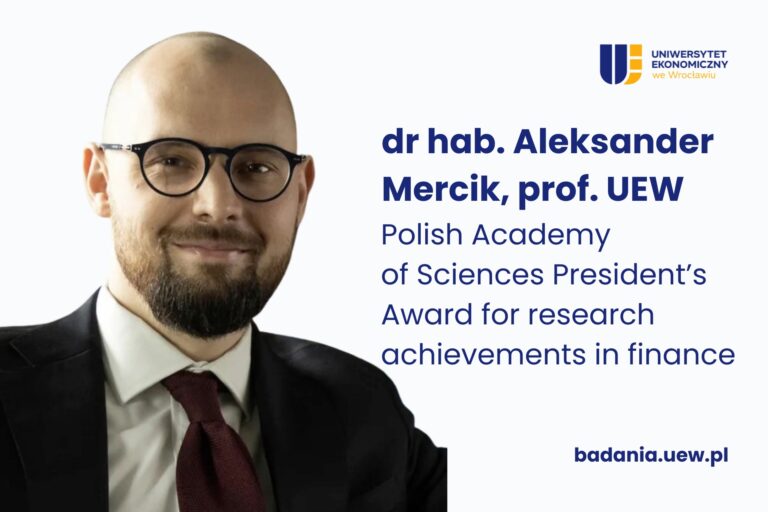
Dr hab. Aleksander Mercik, Professor of the WUEB, receives the Andrzej Gospodarowicz Award in Finance from the President of the Polish Academy of Sciences
WUEB Experts Weekly Review. Research, Projects and Academic Successes (5–11 October 2026)

Wroclaw University of Economics and Business researchers among the world’s leading scientists: six included in the 2026 World’s Top 2% Scientists database