

In discussions about the negotiated EU–India trade agreement, the narrative is usually dominated by opportunities: trade liberalisation, easier conditions for companies, and access to a large market with strong growth momentum. An Interia Biznes piece, however, highlights another—equally important—side of the equation: potential economic gains must be assessed alongside risks stemming from geopolitics and sanctions regimes. This perspective is structured by an expert comment from Dr habil. Sebastian Bobowski, Professor at the Wroclaw University of Economics and Business (WUEB).

The interview with Dr habil. Sebastian Bobowski, Professor at WUEB, was conducted by Sebastian Tałach (Interia Biznes), the author of the publication.
EU–India: an economic opportunity, but not an unconditional one
The expert from the Wroclaw University of Economics and Business points to a key context for EU–India relations: “A shadow over EU–India relations is cast by New Delhi’s partnership with the Kremlin.” This is an important clarification, because it shifts the discussion from the general question “Is cooperation with India profitable?” to a more operational one: in which sectors and transaction types does risk become material from a compliance and business security perspective?
Sanctions as part of risk management, not “a legal issue dealt with at the end”
From a business standpoint, this implies a practical change: a mere declaration of compliance is no longer sufficient. Increasingly, what matters is the ability to demonstrate due diligence—that the company screened the counterparty, assessed risks, documented its decision-making process, and monitored the transaction. As a result, sanctions risk becomes part of strategy, compliance, and operational management, rather than a purely formal legal “checkbox.”
Why “paper compliance” is no longer enough
The article accurately shows that modern sanctions rarely boil down to a simple ban on trade. Their real impact often emerges in indirect situations—for example, when a company is involved in a transaction or supply chain linked to entities under restrictions, even without any intent to circumvent the rules. Hence the growing importance of risks related to re-export, opaque intermediary chains, and complex corporate links that are not easy to identify quickly.
Risk is not “everywhere”—it is sector-specific
The value of the expert comment lies in avoiding simplistic conclusions such as “India is safe” or “India is risky.” Instead, it stresses that sanctions risk tends to cluster in sensitive areas, which calls for selective, sector-based risk assessment, rather than broad assumptions.
Where heightened caution is needed
The piece points to examples of areas requiring increased vigilance: technology sectors and goods with potential dual-use (civilian and strategic) applications, including microelectronics, CNC machine tools, and UAVs/drones, as well as selected issues related to refined petroleum products. At the same time, indirect risks are growing in logistics and finance—covering maritime transport, ports, and financial services that may be used to circumvent restrictions.
Links to Russia: when risk becomes critical
If a potential counterparty regularly cooperates with Russian entities, for many EU companies this may translate into unacceptably high risk, and in practice even rule out safe cooperation. This is not only a reputational matter: it also involves legal and financial consequences that management should factor in at the deal-approval stage—not only after problems arise.
Consequences of breaches: tangible costs and real liability
The article also reminds readers that in Poland, breaches of sanctions regulations may result in high administrative fines and, in certain cases, criminal liability. This reinforces the central point: sanctions should be treated as a strategic risk area, with a direct impact on commercial decisions, partner selection, and internal processes.
Regulatory gaps and the need for clarification
Another important systemic point is the observation that Polish sanctions regulations require clarification—for example, in terms of mechanisms that could recognise voluntary self-disclosure of a breach as a potential mitigating factor when financial penalties are imposed. This matters not only to lawyers, but also to compliance and risk managers.
Contract clauses are not enough
Against this backdrop, a key practical conclusion stands out: contract clauses and counterparties’ declarations of sanctions compliance are, at best, an add-on. In cross-border relationships, their effectiveness can be limited, especially when it comes to enforcement. Therefore, contractual tools should complement—rather than replace—robust screening procedures, transaction monitoring, and ongoing risk assessment.
How businesses can reduce risk in practice
The article points to several directions: using information tools (including official sources and helpdesks) and seeking support from specialised providers focused on risk assessment and business intelligence. The core principle remains self-responsibility: the company is ultimately accountable for properly vetting the transaction and the partner.
Why this voice matters in the debate
Dr habil. Sebastian Bobowski, Professor at WUEB, plays the expert role effectively: he translates a complex geoeconomic context into the language of business decisions. In the case of EU–India relations, such analyses—precise, sector-focused, and grounded in regulatory realities—are exactly what internationally active companies need today.
Read the full piece on Interia Biznes (in Polish)
Authors: Justyna Morawska-Płoskonka, Agnieszka Dramińska
See similar content

WUEB Experts Weekly Review. Research, Projects and Academic Successes (12–18 October 2026)
How can economic fluctuations be smoothed? The 2026 Nobel Prize in Economic Sciences through the eyes of WUEB researchers
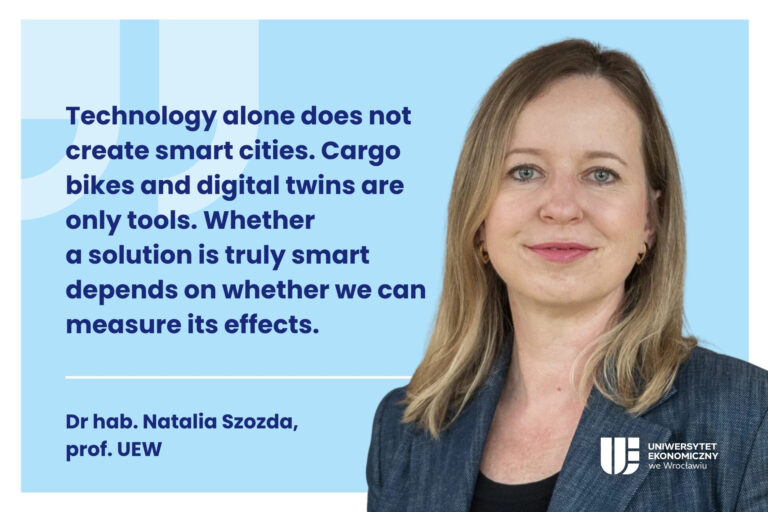
Wroclaw’s micro-hub at the Economic Forum. Natalia Szozda, Associate Professor, on when a city truly becomes smart
WUEB Experts Weekly Review. Research, Projects and Academic Successes (5–11 October 2026)
See also
WUEB Experts Weekly Review. Research, Projects and Academic Successes (12–18 October 2026)
How can economic fluctuations be smoothed? The 2026 Nobel Prize in Economic Sciences through the eyes of WUEB researchers
The World Within Wrocław’s Reach. How the PROM research mobilities confirm WUEB’s place on the map of global academia
Wroclaw’s micro-hub at the Economic Forum. Natalia Szozda, Associate Professor, on when a city truly becomes smart
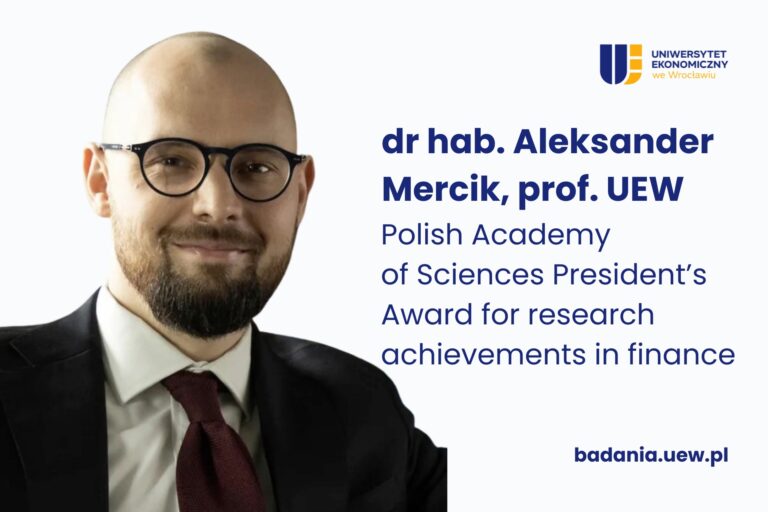
Dr hab. Aleksander Mercik, Professor of the WUEB, receives the Andrzej Gospodarowicz Award in Finance from the President of the Polish Academy of Sciences
WUEB Experts Weekly Review. Research, Projects and Academic Successes (5–11 October 2026)

Wroclaw University of Economics and Business researchers among the world’s leading scientists: six included in the 2026 World’s Top 2% Scientists database