

Can sport truly shape public policy? Can it become a driver of social inclusion that reaches far beyond the playing field and into local decision-making processes?
In late January 2026, Poland hosted the “Advocacy for Inclusive Sport Policies” workshops as part of the international Sport for Equality 2.0 initiative. The event demonstrated that inclusion in sport does not begin on the field — it begins at the decision-making table.
The project is financed by the European Union and implemented in Poland, Spain and Portugal. The Fundacja Śląska Wrocław, founded by WKS Śląsk Wrocław S.A., is responsible for activities in our country. The aim of these activities is to show that sport is for everyone, regardless of gender, origin, social status or physical and intellectual abilities. Integration through sport teaches cooperation, respect, and healthy competition. As part of the project, workshops are held for NGO representatives, focusing on the challenge of how to translate the values of integration and inclusiveness through sport into the language of benefits and arguments relevant to public institutions and local decision-makers.
The workshops were led by dr Magdalena Daszkiewicz from Wrocław University of Economics and Business, an expert in territorial and social marketing. Her academic insight combined with practical experience created a powerful bridge between research and real-world challenges faced by NGOs. This synergy of theory and practice became one of the defining strengths of the programme.
From Values to Decisions
The workshops brought together representatives of NGOs working with vulnerable and socially excluded groups. The objective went far beyond improving communication skills. The aim was to equip participants with tools for real, systemic influence.
The programme included:
- stakeholder analysis and decision-maker mapping,
- building evidence-based advocacy arguments,
- strategic communication planning,
- crafting tailored messages for public administration,
- simulations of meetings with policymakers and NGO leaders.
Under the guidance of Dr Magdalena Daszkiewicz, participants worked on how to plan activities and communicate inclusive sport in ways that are understandable to public administration and effective in the decision-making process. Developing advocacy skills increases the effectiveness of non-governmental organisations and strengthens cooperation with local authorities and sports institutions
Sport as a Systemic Lever
Inclusive sport depends heavily on local policy decisions: funding allocations, infrastructure access, investment priorities, and development strategies. Without a structured presence in policymaking processes, even the most impactful grassroots initiatives risk remaining temporary and fragmented.
Advocacy therefore becomes a systemic tool. It enables organisations to:
- shape local sport policies more effectively,
- build sustainable partnerships with public authorities and sport institutions,
- strengthen cross-sector cooperation,
- design solutions that outlast single funding cycles.
This marks a shift from project-based interventions to long-term structural change.
Strengthening the Voice of Civil Society
One of the key outcomes of the workshops was strengthening participants’ competencies in:
- framing arguments aligned with public sector priorities,
- strategically planning advocacy activities,
- communicating inclusion initiatives coherently and professionally,
- building lasting relationships with decision-makers and institutional partners.
From a social impact perspective, the initiative addresses a critical competency gap within the NGO sector. Organisations working for inclusion through sport often possess deep field experience and community knowledge, yet lack systemic advocacy tools. “Sport for Equality 2.0” responds directly to this need by empowering civil society actors to engage in meaningful policy dialogue.
When Sport Becomes a Space for Equality
In practice, this means a greater capacity to design and sustain inclusive sport systems at local and regional levels. It is also an investment in social cohesion — creating structures that ensure access to sport for individuals at risk of exclusion.
The project aligns with the university’s mission to connect expert knowledge with real societal needs and to strengthen the capacities of public institutions and civic organisations through knowledge transfer.
badania.uew.pl – because effective social policies begin with knowledge that can translate values into decisions.
Author: Justyna Morawska-Płoskonka
See similar content
See also

WUEB Experts Weekly Review. Research, Projects and Academic Successes (12–18 October 2026)
How can economic fluctuations be smoothed? The 2026 Nobel Prize in Economic Sciences through the eyes of WUEB researchers
The World Within Wrocław’s Reach. How the PROM research mobilities confirm WUEB’s place on the map of global academia
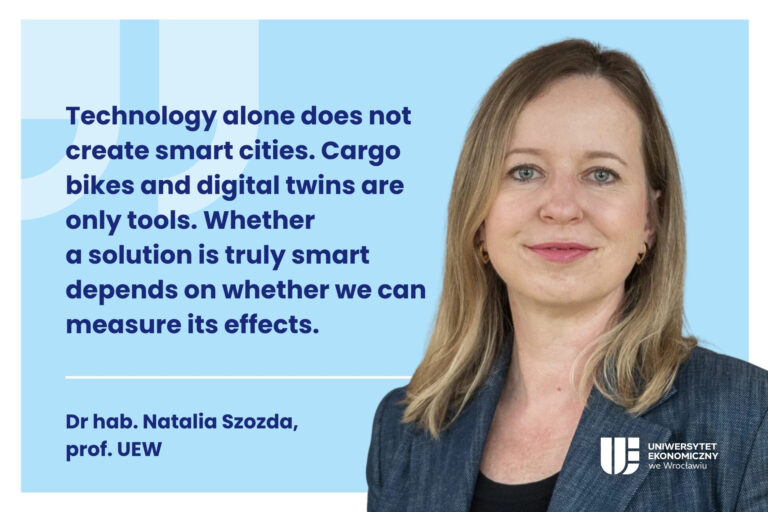
Wroclaw’s micro-hub at the Economic Forum. Natalia Szozda, Associate Professor, on when a city truly becomes smart
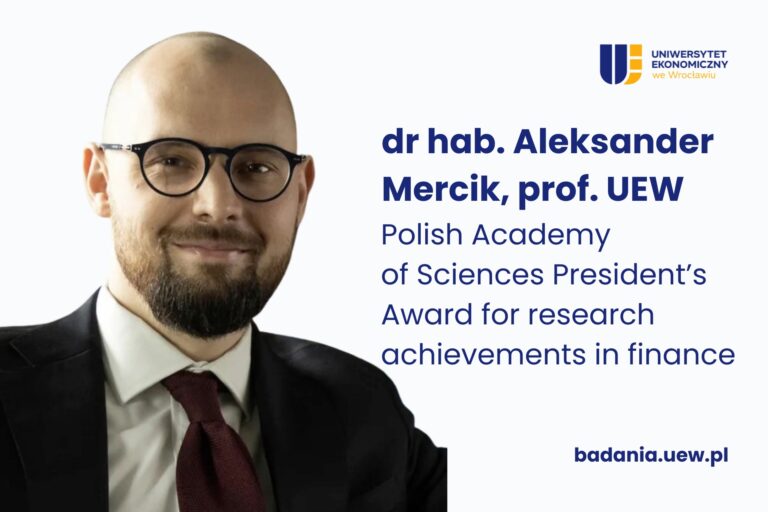
Dr hab. Aleksander Mercik, Professor of the WUEB, receives the Andrzej Gospodarowicz Award in Finance from the President of the Polish Academy of Sciences
WUEB Experts Weekly Review. Research, Projects and Academic Successes (5–11 October 2026)
Wroclaw University of Economics and Business researchers among the world’s leading scientists: six included in the 2026 World’s Top 2% Scientists database