
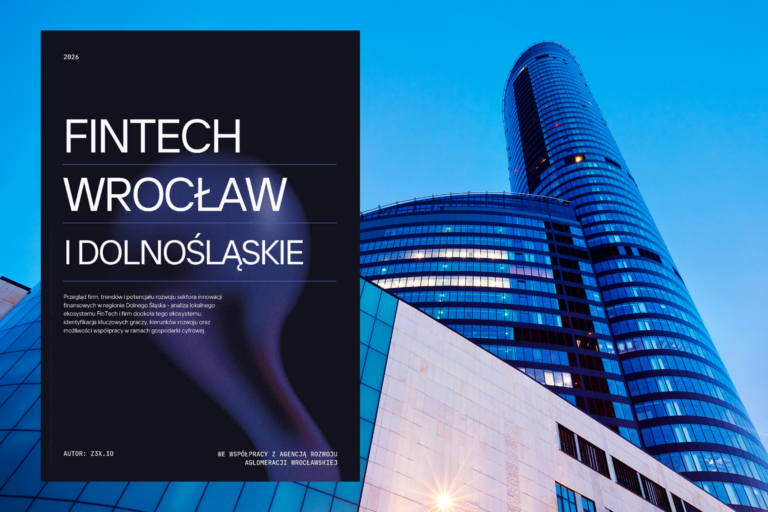
Dr hab. Andrzej Raszkowski, Prof. WUEB, co-author of the report “FinTech – Wrocław and Lower Silesia”, discusses how financial technologies expose both the ambitions and the limitations of the region.

Can a report on the local FinTech market change the way we understand regional development? It can – if it does not stop at data, but maps opportunities, barriers, and directions for action.
That is precisely the ambition of “FinTech – Wrocław and Lower Silesia”, produced in collaboration between industry experts, the Wrocław Agglomeration Development Agency, and Dr hab. Andrzej Raszkowski, Prof. at Wrocław University of Economics and Business. This is not another publication about start-ups. It is a document that encourages rigorous thinking and uncomfortable questions.
What makes this report a significant contribution?
It does not focus solely on market leaders. It examines the full complexity of the sector: from large global firms, through start-ups, to investment funds, software houses, and even debt collection companies that have undergone digital transformation.
Rather than analysing data in isolation, it draws attention to relationships: between technology and education, local government and business, investors and universities.
It raises important questions: why, despite considerable potential, has the region not yet produced a FinTech unicorn? Is the diversity of companies and approaches a strength or a constraint? What is needed for Wrocław to genuinely become one of the leading financial innovation hubs in this part of Europe?
Expert perspective: Prof. Andrzej Raszkowski
“Wrocław has real prospects to become one of the leading FinTech hubs in Poland and Central and Eastern Europe,”
— says Prof. Raszkowski.
As the only academic representative in the authoring team, he brought a regional development and strategic perspective to the report. For Prof. Raszkowski, FinTech is more than a sector – it is an indicator of a region’s capacity for collaboration, long-term planning, and investment in the future. He nonetheless notes that this potential will not materialise on its own. Without investment in digital infrastructure, without support for scale-ups, without genuine cooperation between universities, local authorities, and investors, many opportunities may be lost.
Key findings:
- FinTech is not only about start-ups – debt collection companies and software houses offering advanced solutions play a significant role in the sector.
- Wrocław has considerable potential – but requires systemic support: infrastructure, investors, and specialist talent.
- FinTech is also a domain of social innovation: microdonations, open banking, AI, and ESG demonstrate that financial technologies can support not only economic development but also the construction of a more equitable society.
Knowledge that informs decisions
“FinTech – Wrocław and Lower Silesia” is a tool for decision-makers, universities, businesses, and investors. It reveals the complexity of the sector and demonstrates the value of those who can understand it and support its development.
Full report “FinTech – Wrocław and Lower Silesia” https://z3x.io/pl/raporty/fintech-wroclaw-dolnoslaskie
Meet the author of the article
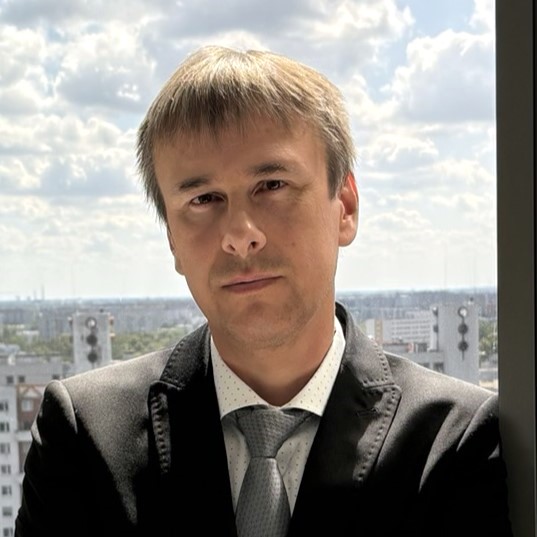
Dr hab. Andrzej Raszkowski, Professor of the WUEB
Expert in the field of: Local government & public administration, Socio-economic policy
badania.uew.pl – supporting decisions that build responsible development.
Author of text: Justyna Morawska-Płoskonka
See also

Video games are more than entertainment. WUEB researchers on cooperation between game developers and the cultural and creative industries

Space Logistics, Interplanetary Supply Chains and Interdisciplinary Research and Educational Projects Related to Space at UEW in Jelenia Góra
Wrocław has FinTech potential. A WUEB expert argues it is time to turn that potential into advantage
Academic Entrepreneurship as Architecture of Impact. The New Issue of „Impakt Dolny Śląsk” (2/2025)
See similar content
Vitamins C and D in a single plant-based gel: UEW researcher awarded NCN grant
Joanna Radomska of WUEB awarded the title of professor
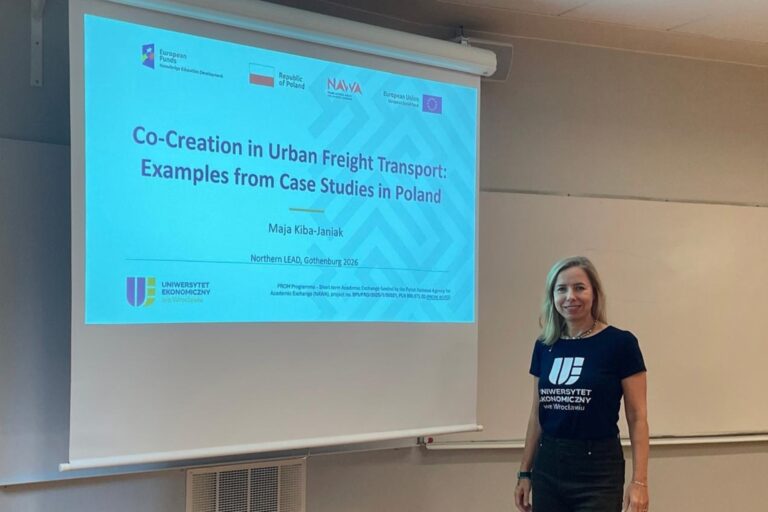
How can solutions for urban freight transport be co-created? Dr hab. inż. Maja Kiba-Janiak’s, Professor of the WUEB research fellowship in Gothenburg

WUEB Experts Weekly Review: Research, Projects and Academic Successes (21–27 September 2026)
Poland’s demographic crisis: Professor Marek Kośny on the economic consequences
What is Bitcoin and How is it Changing Finance? dr Michał Kisiel on the Future of Money
WUEB Experts Weekly Review: Research, Projects and Academic Successes (14–20 September 2026)