

In 2024, the number of individuals registered for permanent residence in Poland after having previously lived abroad increased by as much as 30% compared to the previous year. This data clearly indicates a growing trend of Polish nationals returning from emigration. What are the underlying reasons for this phenomenon? Expert insight is provided by Dr Paweł Dobrzański, Professor at the Wroclaw University of Economics and Business.
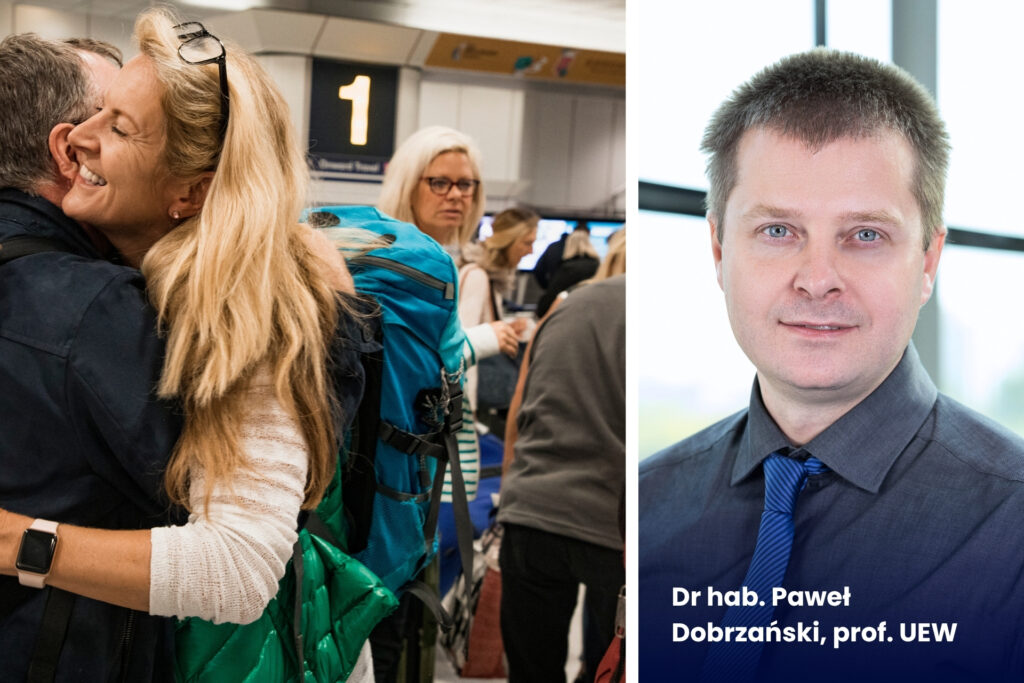
In the article “They’re Exchanging Euros for Zlotys. Poles Are Packing Their Bags in the Opposite Direction,” published on Bankier.pl, the return of Polish emigrants is presented as a rational decision from an economic standpoint. The author of the article highlights, among other things, the positive migration balance for permanent residence, which reached +9.3 thousand last year. In other words, significantly more people are coming back to Poland than leaving. What explains this trend?
Dr Paweł Dobrzański, WUEB Professor, draws attention to Poland’s remarkable economic progress over the past three decades:
“Many economists describe Poland as a ‘regional leader’ and a case of ‘transformational success’—a view shared by many Poles living abroad. Between 1989 and 2024, Poland’s GDP grew by over 300%, which is the highest rate in Central and Eastern Europe.”
This surge in GDP has translated into a noticeable improvement in quality of life. According to the WUEB expert, this is one of the key drivers behind the return of the Polish diaspora. In addition, the growing sense of economic patriotism plays an important role:
“The increase in returns to Poland is influenced by rising wages, lower living costs, and a growing sense of economic patriotism, supported by programmes designed to ease reintegration. Poles also value the opportunity for their children to receive education in Polish and the access to free healthcare. Poland is beginning to benefit from its ‘emigration capital.’ We are witnessing the tangible effects of the diaspora, which intensified between 2020 and 2025. This phenomenon has economic, social, and cultural dimensions.”
Safety and security are also key considerations. According to Dr Dobrzański, Poland is perceived as a country that does not face the same societal challenges that have emerged in many Western nations due to shifting demographics:
“Poland is widely regarded as a very safe and culturally homogenous country, which is a distinct advantage in the context of migration-related challenges experienced by other European nations.”
Read the full article on Bankier.pl: https://www.bankier.pl/wiadomosc/Zamienili-euro-na-zlotowki-Masowo-wracaja-do-Polski-8983637.html
Author: Sebastian Rogalski
View related content

WUEB Experts Weekly Review. Research, Projects and Academic Successes (12–18 October 2026)
How can economic fluctuations be smoothed? The 2026 Nobel Prize in Economic Sciences through the eyes of WUEB researchers
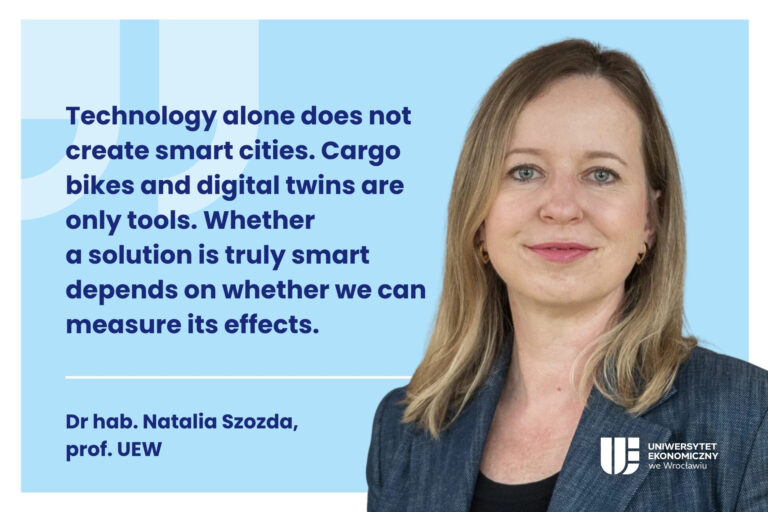
Wroclaw’s micro-hub at the Economic Forum. Natalia Szozda, Associate Professor, on when a city truly becomes smart
WUEB Experts Weekly Review. Research, Projects and Academic Successes (5–11 October 2026)
See also
WUEB Experts Weekly Review. Research, Projects and Academic Successes (12–18 October 2026)
How can economic fluctuations be smoothed? The 2026 Nobel Prize in Economic Sciences through the eyes of WUEB researchers
The World Within Wrocław’s Reach. How the PROM research mobilities confirm WUEB’s place on the map of global academia
Wroclaw’s micro-hub at the Economic Forum. Natalia Szozda, Associate Professor, on when a city truly becomes smart
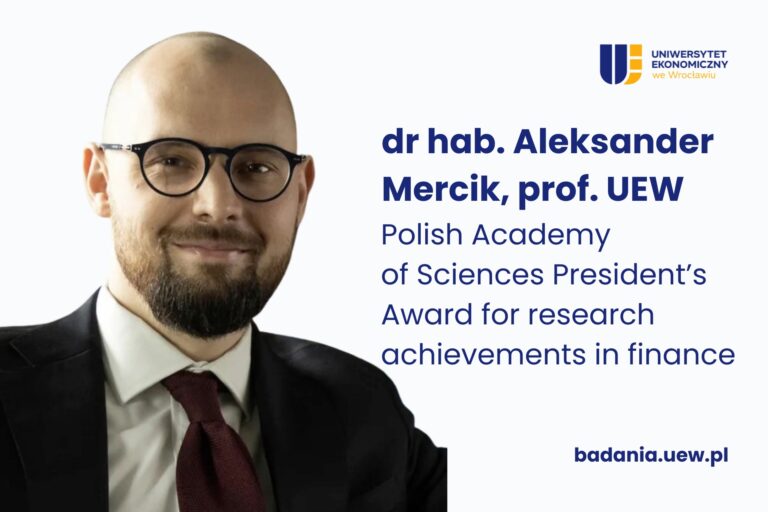
Dr hab. Aleksander Mercik, Professor of the WUEB, receives the Andrzej Gospodarowicz Award in Finance from the President of the Polish Academy of Sciences
WUEB Experts Weekly Review. Research, Projects and Academic Successes (5–11 October 2026)

Wroclaw University of Economics and Business researchers among the world’s leading scientists: six included in the 2026 World’s Top 2% Scientists database