
Building more wind farms and installing more solar panels will not, on its own, bring electricity bills down. Dr Paweł Brusiło of Wroclaw University of Economics and Business explains why Poland needs to expand its electricity networks, make them more flexible, increase storage capacity and make better use of funding for investments that cut emissions.
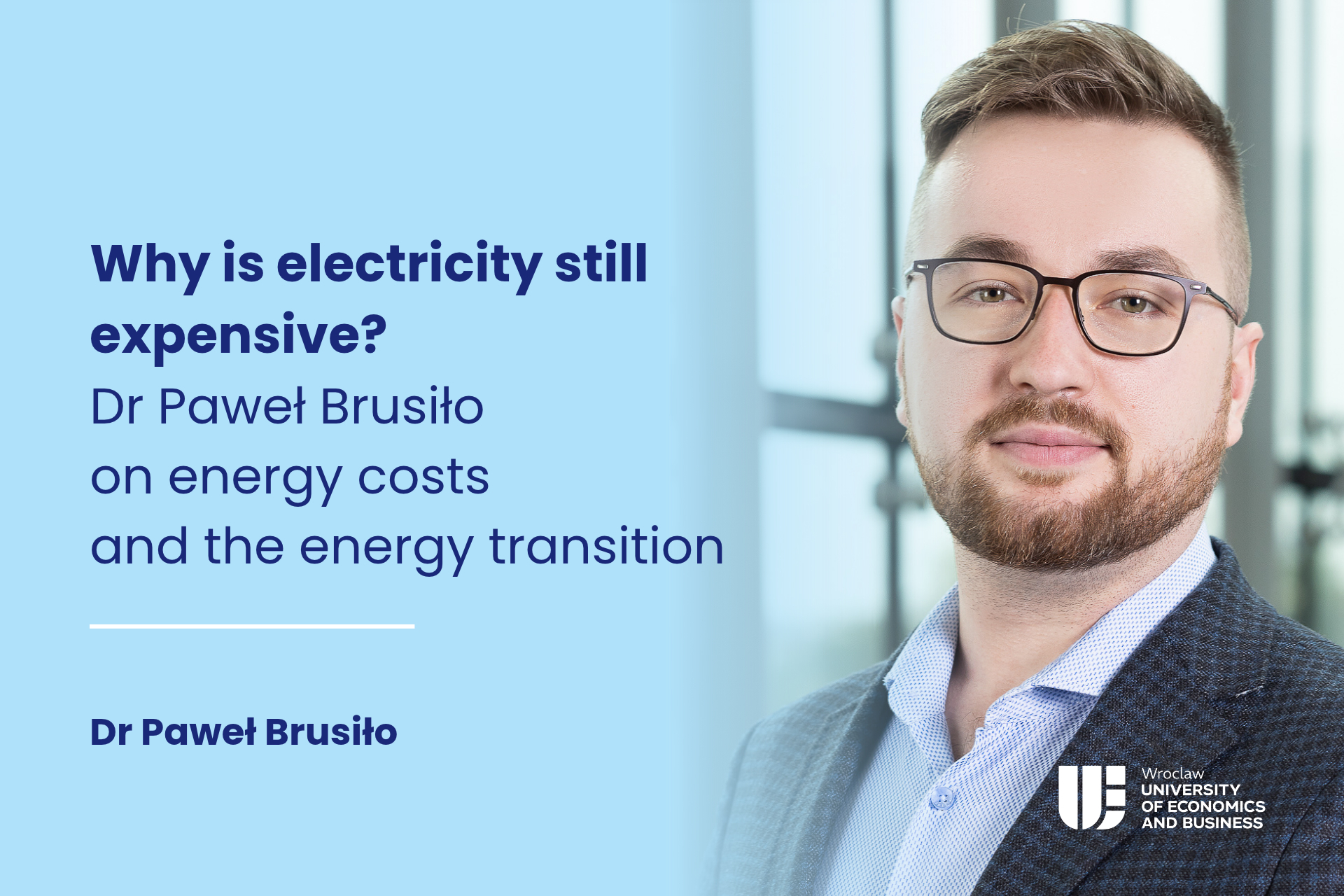
When renewable sources generate large amounts of electricity, Poland cannot always use it all. Yet households and businesses still face high energy costs. On the TVP3 Wrocław programme ‘Przyszłość jest teraz’ (The Future Is Now), Dr Brusiło discussed the reasons for this and the decisions that will shape Poland’s energy transition.
An economist, Brusiło is an Assistant Professor in the Department of International Business at WUEB and a member of the European Commission’s Team Europe Direct expert network. He studies how well energy transition policies work, particularly those intended to develop a low-carbon hydrogen economy and encourage the wider use of alternative fuels. He combines econometric analysis with qualitative research to assess which policies help bring new technologies into use. In the interview, he draws on this work to explain the difficulties facing energy consumers in Poland.
Getting electricity to consumers when they need it
Brusiło sees the limited flexibility of Poland’s electricity system as one of the main obstacles to the transition. Flexibility is the ability to respond to changes in how much electricity people use and how much is generated. When renewable output is high, Poland needs to be able to use that electricity straight away or store it for later. The grid also has to deliver it when consumers need it.
Location matters. Poland is developing offshore wind in the north, where it also plans to build a nuclear power station. Homes and businesses elsewhere in the country will need the electricity these facilities generate. As Poland expands its range of energy sources, it also needs transmission lines to carry electricity across the country and distribution networks to deliver it to homes and businesses.
Without that investment, some generating capacity goes unused. To assess progress, Brusiło argues, we need to look at what happens after electricity is generated. New installations increase both installed capacity and the amount of electricity supplied. Limited transmission and storage capacity make it harder to match that supply to demand.
This affects household bills. As Brusiło points out, households pay for the electricity they use and for its delivery, as well as taxes and other charges. In his view, bringing costs down requires changes in how electricity is generated and improvements in how the grid operates. Renewables have a part to play, but bills reflect the cost of running the whole system.
A temporary surplus of electricity therefore offers no guarantee of a lasting fall in bills. That also depends on whether the electricity can be delivered and used, and on the cost of maintaining the network.
How can firms finance the shift away from high-emission production?
The EU Emissions Trading System (EU ETS) puts a price on emissions to encourage firms to reduce them. Brusiło questions how effectively Poland uses the funds available to modernise its economy.
‘We are not making effective use of the funds we have,’
— says Dr Paweł Brusiło.
He identifies several investments firms need to make, from replacing heating equipment to improving energy efficiency in production and adopting technologies that cut emissions. Decarbonisation, or reducing carbon dioxide emissions, takes investment. In Brusiło’s view, Poland needs a more effective way of getting funds to businesses ready to make those investments.
For a business, the question is whether the funding available will allow it to replace equipment or cut energy use in production. Brusiło sees the way these improvements are financed as one factor influencing the pace of the transition.
Brusiło also examined the effectiveness of public support in research on the hydrogen vehicle market with researchers at the University of California San Diego in the United States. The researchers interviewed people working in industry, government and academia. Their findings point to the importance of predictable industrial policy, infrastructure that develops alongside the vehicle market and access to renewable hydrogen. Even after years of substantial support, hydrogen vehicles remain a niche market. That experience offers lessons for the design of industrial policy in other sectors where emissions need to fall.
Energy management in Lower Silesia and security of supply
Asked about Lower Silesia, Brusiło cites Promet-Plast as a company that effectively manages how it generates, stores and uses energy. He would like to see projects of this kind put into practice on a scale that extends well beyond individual firms.
Within a business, managing energy means coordinating generation and consumption. At national level, it also means managing the sector as a whole and exchanging electricity with neighbouring countries. Interconnectors link national power grids and allow electricity to flow across European borders.
Brusiło also makes the case for change on the grounds of Poland’s dependence on imported fossil fuels. He argues that this leaves consumers and the wider economy exposed to unfavourable contract terms and a weak negotiating position. Reducing that dependence is one reason he advocates investing in domestic energy production and moving away from coal more quickly.
When might electricity become cheaper? Brusiło hopes that in the 2030s Poland will have a more resilient energy system, greater control over its energy supply and more to offer investors. He gives no date for a fall in prices.
For businesses deciding where to invest or whether to expand production, the ability to anticipate energy costs matters alongside the price itself. Brusiło returns to those decisions at the close of the interview.
Author of text: Barbara Grzelczak
See similar content

WUEB Experts Weekly Review: Research, Projects and Academic Successes (09.11–15.11.2026 r.)
WUEB Experts Weekly Review: Research, Projects and Academic Successes (2–8 November 2026)
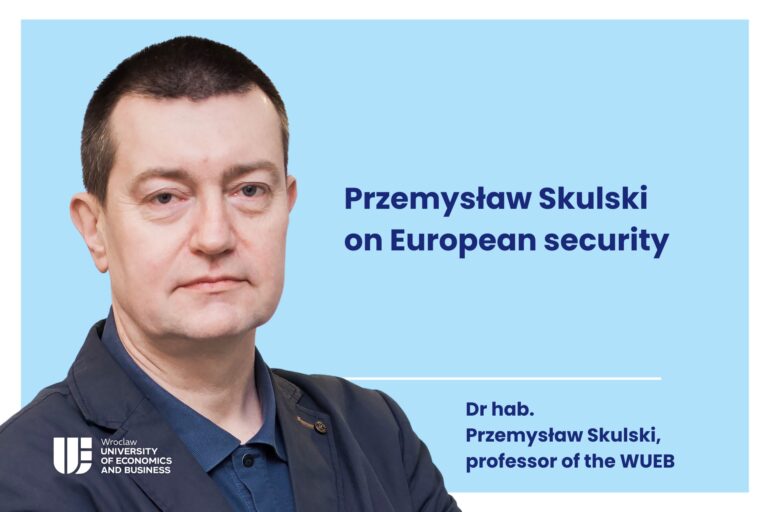
Can Europe act together? Dr hab. Przemysław Skulski, professor of the WUEB on collective defence
WUEB Experts Weekly Review. Research, Projects and Academic Successes (26 October–1 November 2026)
See also
WUEB Experts Weekly Review: Research, Projects and Academic Successes (09.11–15.11.2026 r.)
WUEB Experts Weekly Review: Research, Projects and Academic Successes (2–8 November 2026)
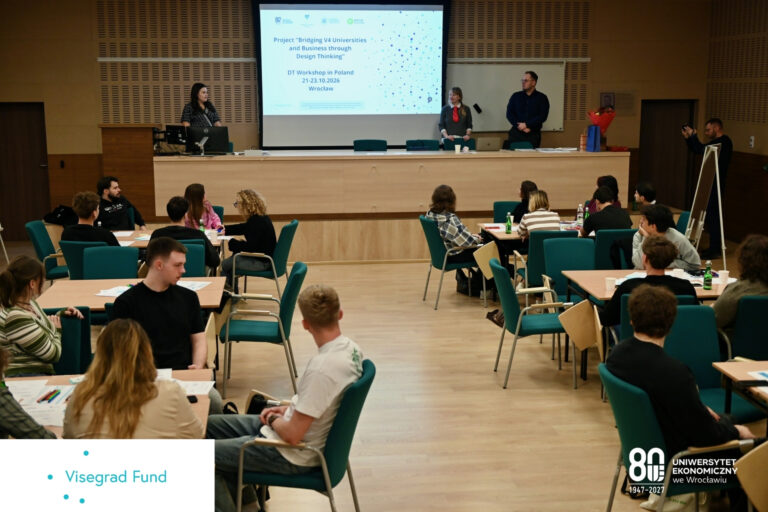
Design Thinking in an international setting – the first workshop of the “Bridging V4 Universities and Business through Design Thinking” project is behind us!
Can Europe act together? Dr hab. Przemysław Skulski, professor of the WUEB on collective defence
WUEB Experts Weekly Review. Research, Projects and Academic Successes (26 October–1 November 2026)

What does good social policy cost? Professor Marek Kośny reappointed to the IPiSS Scientific Council
WUEB Experts Weekly Review. Research, Projects and Academic Successes (19–25 October 2026)